
Quick project answer
Review focus: tender priced schedule.
Movable partition tender priced schedule omission detection is the discipline of comparing what the drawings show, what the specification requires and what the priced schedule actually includes before a bid is finalised. For overseas contractors, architects, interior designers, owners and renovation teams, the risk is rarely a single missing line. It is a chain of small assumptions that only becomes visible when panels must move, turn and park in a real room.
This article offers an evidence-bounded review framework. It does not replace project-specific engineering, acoustic or dimensional confirmation. The suitability of each route and parking arrangement depends on the approved layout, circulation, ceiling interfaces and operating sequence.
Why Omissions Hide in Movable Partition Tenders
Project review term: tender priced schedule.
Movable partitions are often priced from a schedule that lists panels, tracks and finishes. A schedule may appear complete while still omitting the relationship between the track route, the parking position and the surrounding construction.
Omission detection is therefore a cross-document exercise. It compares the priced schedule against the layout, the reflected ceiling plan, the finish schedule and the tender clarifications. Where those documents disagree, the priced schedule should not be assumed to cover the difference.
Common omission categories
- Track route shown as a straight line while the layout requires a turning or stacking path.
- Parking position indicated on a plan but not described in the priced schedule.
- Finish schedule naming a surface that is not carried into the partition line items.
- Pass-door requirements mentioned in a note but absent from the priced scope.
- Interface items at head, jamb and adjacent construction left to another trade without a stated boundary.
Reading the Priced Schedule Against the Drawings
Coordination scope: tender priced schedule.
A priced schedule is only as reliable as the drawing set it references. Start by confirming that the schedule and the latest layout share the same revision. Then trace the partition line from the first panel position to the planned parking position. Every change of direction should be visible in both documents.
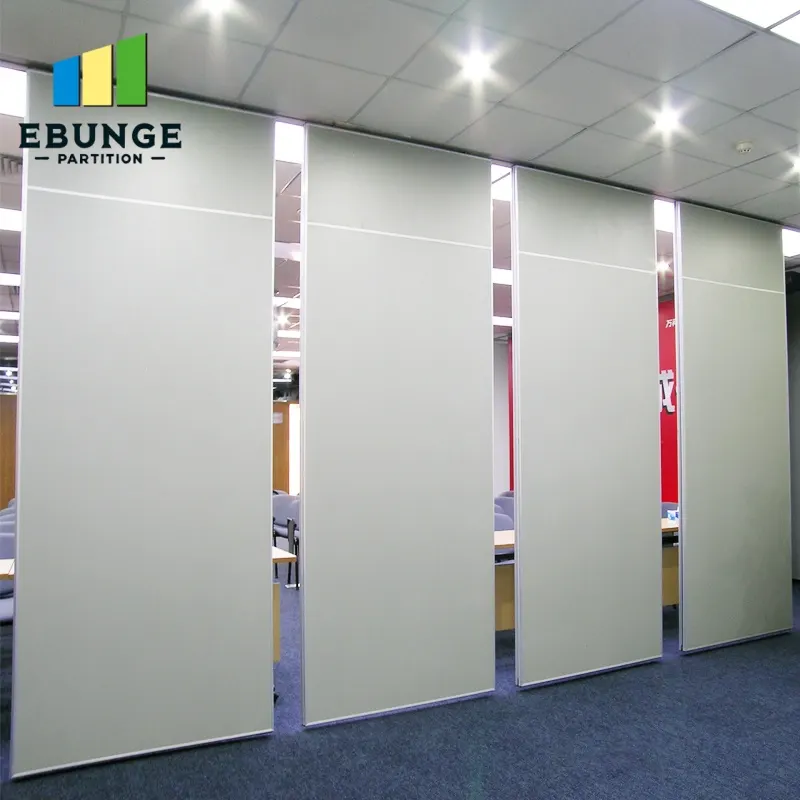
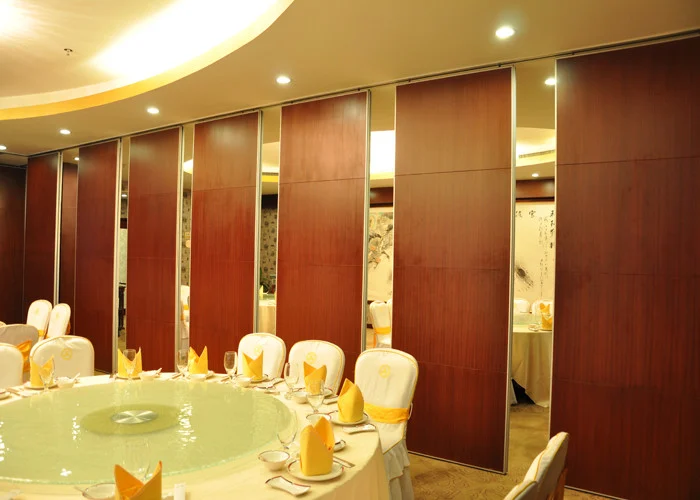
EBUNGE movable partition panels are individually movable, suspended from a top track, cross the opening without a floor track and park at a planned stacking position. Straight, turning and stacking routes are reviewed from the layout. If a priced schedule describes only a straight run, the review should ask whether the layout actually requires something else.
Questions that expose gaps
- Does the priced schedule state the full movement route, including any turn or stack?
- Is the parking position shown on the same drawing revision as the partition line?
- Are finish selections listed against each partition element or only in a general note?
- Is the pass-door requirement described as part of the package or left as a separate item?
- Are interface responsibilities at the head and jambs clearly assigned?
Scope Boundaries and Trade Interfaces
Checklist focus: tender priced schedule.
Many tender omissions are not product omissions at all. They are boundary omissions. The partition package may be priced correctly while the supporting structure, ceiling coordination or adjacent finishes are assumed to be included by someone else. Detecting this requires a simple responsibility map.
Use a compact comparison to separate what is visibly stated from what still needs confirmation. The table below is a review aid, not a statement of what any particular project includes.
| Review area | Visible in priced schedule | Needs project confirmation |
|---|---|---|
| Movement route | Straight run or turning path | Continuous connected overhead route and support review |
| Parking | Stacking position noted | Customised parking arrangement for the layout |
| Finishes | Laminate, melamine, fabric, leather, glass or other approved surface | Final surface selection and coordination with adjacent finishes |
| Pass door | Mentioned or omitted | Requirement and documentation discussed for the project |
| Acoustic intent | Generic acoustic note | Project-specific acoustic requirement confirmed separately |
Finish Schedule and Surface Coordination
Review focus: tender priced schedule.
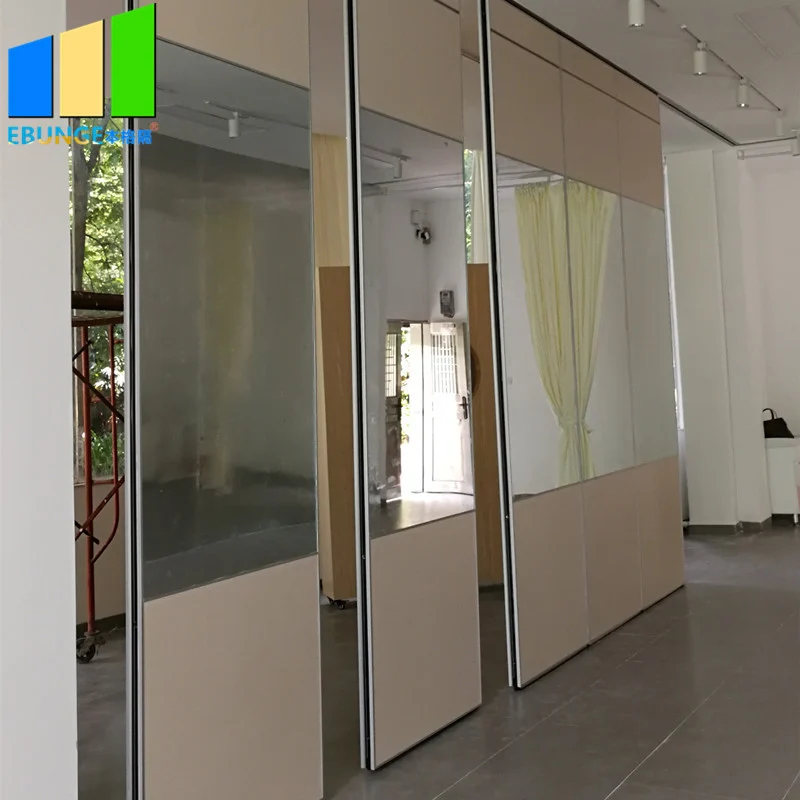
Finish omissions are easy to overlook because they often sit in a different document from the partition schedule. A tender may price a partition system while the finish schedule names a surface that has not been carried into the line items. The review should connect the two.
Confirmed finish options include laminate, melamine, fabric, leather, glass and other approved surfaces. The exact overhead route and support arrangement must be confirmed by the responsible project team from coordinated drawings.
Evidence note
Where a tender states a performance expectation, the priced schedule should be read alongside the project-specific evidence for that expectation. STC and Rw are rating concepts used to describe acoustic performance; they are not a simple count of decibels and should not be reduced to one. Confirm project-specific acoustic requirements with the responsible consultant.
Acoustic and Dimensional Statements in Tender Documents
Project review term: tender priced schedule.
Acoustic language in tenders can be broad. A note may say the partition should provide acoustic separation without stating how that is to be demonstrated. Omission detection should flag the gap between the stated intent and the evidence required to support it.
Similarly, dimensional statements should be checked against the layout rather than assumed. Panel widths, opening sizes and parking clearances all depend on the coordinated design. Where dimensions are missing or inconsistent, the priced schedule should be treated as incomplete until clarified.
Documentation and Clarification Process
A structured clarification process reduces the chance that omissions become commercial disputes later. The goal is not to add paperwork but to make assumptions visible before pricing is fixed.
- Collect the latest layout, ceiling plan, finish schedule and tender clarifications.
- Mark every partition line, turn and parking position on a single coordinated drawing.
- Compare the priced schedule line by line against those marked routes.
- List each omission with the document that should resolve it.
- Issue clarifications that ask for confirmation, not for a revised performance promise.
- Record the confirmed scope in the tender return so all parties work from the same basis.
Project documentation and pass-door requirements can be discussed with the supplier during this process. The purpose is to align the priced schedule with the design intent, not to substitute for project-specific review.
FAQ: Tender Priced Schedule Omission Detection
What is movable partition tender priced schedule omission detection?
It is the review of a priced schedule against the drawings, specification and clarifications to find items that are missing, assumed or left to another trade before the bid is finalised.
Which documents should be compared?
At minimum, compare the priced schedule with the latest layout, reflected ceiling plan, finish schedule and tender clarifications. Where these disagree, the difference should be clarified rather than assumed.
Does a straight track line in the schedule always match the layout?
Not necessarily. Straight, turning and stacking routes are reviewed from the layout. If the layout shows a turn or a parking position, the priced schedule should reflect that route.
Can finish names in a schedule confirm acoustic performance?
No. Finish options such as laminate, melamine, fabric, leather, glass and other approved surfaces describe appearance and surface selection.
How should acoustic ratings be treated in a tender?
Provide the current layout, opening dimensions, ceiling information, intended room use, and relevant project drawings for review. The exact overhead route and support arrangement must be confirmed by the responsible project team from coordinated drawings.
When should the supplier be involved?
Involve the supplier when the movement route, parking arrangement, finish schedule or pass-door requirement needs clarification. Early coordination helps the priced schedule reflect the coordinated design.
Conclusion and Next Step
Omission detection is a review habit, not a guarantee. The exact route, junction arrangement, continuous overhead path and parking position must be confirmed from the coordinated project drawings. This approach keeps the tender grounded in visible evidence rather than assumed performance.
For movable partition packages, confirm project-specific support, acoustic and dimensional requirements before finalising the priced schedule. Review the movable wall systems and the planning resources for maintained product context, then contact EBUNGE to discuss your project documentation and pass-door requirements.