
Quick project answer
Review focus: tender compliance matrix verification.
Movable partition wall tender compliance matrix verification is the discipline of checking whether each bidder’s submitted evidence actually answers the clause it claims to satisfy. A matrix that merely repeats the specification back to the reviewer is not evidence. This framework helps contractors, architects, owners and procurement teams separate maintained product facts from assumptions, and route every unresolved item to a project-specific confirmation.
Why a Compliance Matrix Is Not a Marketing Summary
Project review term: tender compliance matrix verification.
A tender compliance matrix is a mapping tool. Each row should connect one specification clause to one piece of bidder evidence, and that evidence should be traceable to a document, drawing or written statement. When a bidder writes “compliant” without a supporting reference, the reviewer cannot tell whether the requirement was understood or simply acknowledged.
The matrix also protects the project. If a clause about movement routes, parking position or finish is left vague, the gap often surfaces later during coordination. Reviewers should treat every blank cell as an open question, not a minor formatting issue.
Reading the Specification Before Reading the Bids
Coordination scope: tender compliance matrix verification.
Reviewers who start with the bid documents tend to inherit the bidder’s framing. Start instead with the specification and the layout drawings. Identify which clauses describe physical movement, which describe finish, and which describe documentation or pass-door requirements.
Clauses That Need Drawing Evidence
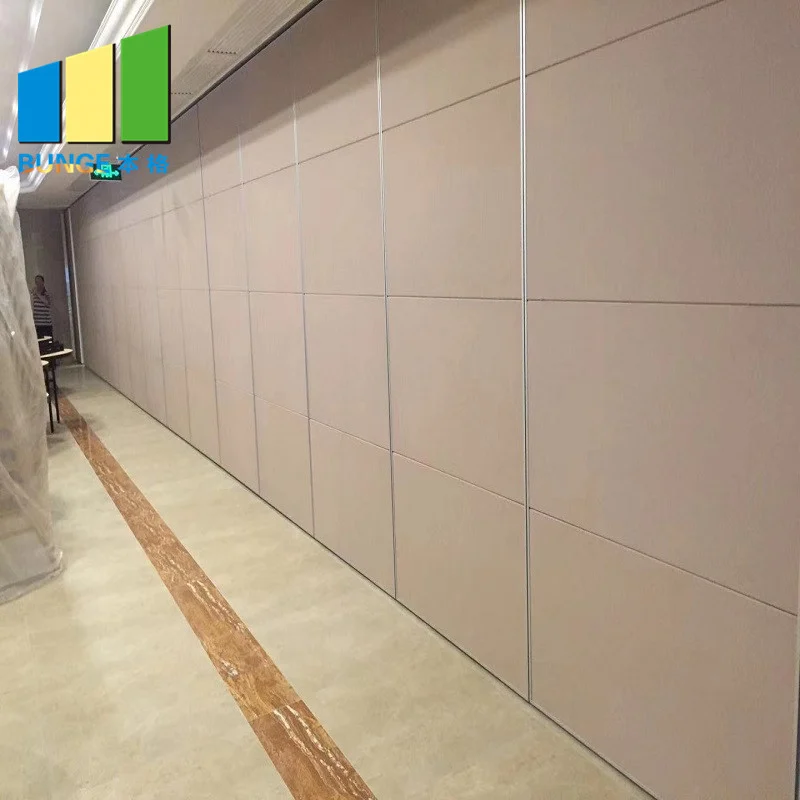
Movement-related clauses cannot be verified from a product photograph. The exact route, junction arrangement, continuous overhead path and parking position must be confirmed from the coordinated project drawings. EBUNGE movable wall panels are individually movable, suspended from a top track, cross the opening without a floor track, and park at a planned stacking position. A bidder should show how the proposed route connects to that parking location on the project drawings.
Clauses That Need Written Confirmation
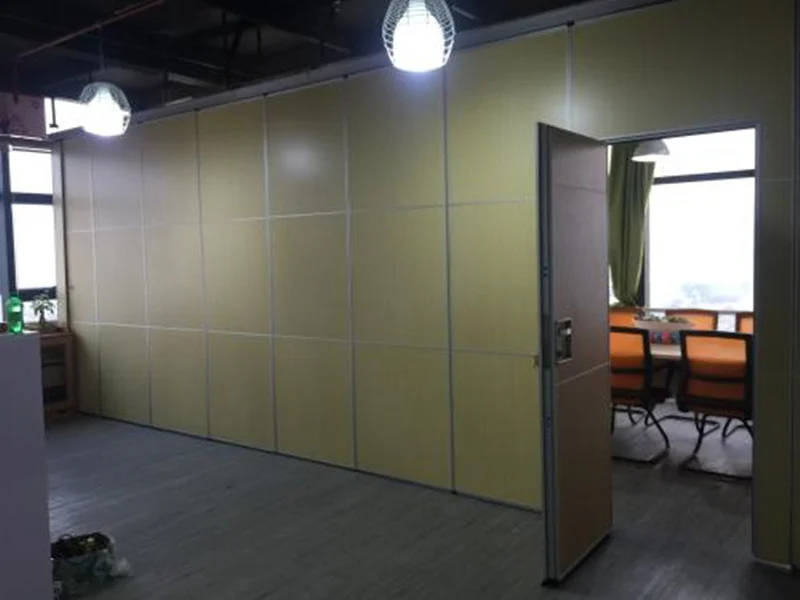
Finish selection, pass-door requirements and project documentation are usually confirmed in writing rather than inferred from a sample. Confirmed finish options include laminate, melamine, fabric, leather, glass and other approved surfaces. If a clause names a finish, the matrix should point to the specific confirmation, not to a general catalogue page.
A Clause-by-Clause Verification Sequence
Checklist focus: tender compliance matrix verification.
The following numbered process keeps the review repeatable across multiple bidders and reduces the chance that one strong submission sets the standard for all others.
- Number every specification clause and record its exact wording.
- List the evidence type the clause logically requires: drawing, written confirmation, sample reference or layout review.
- Check whether the bidder supplied that evidence type, not a substitute.
- Mark each row as verified, partially evidenced or unresolved.
- Send unresolved rows back as written questions before scoring.
- Re-check revised submissions against the same numbered clauses.
This sequence does not rank bidders. It simply prevents an unevidenced statement from being treated as a satisfied requirement.
Evidence Boundaries Reviewers Should Apply
Review focus: tender compliance matrix verification.
Some claims look specific but carry no verifiable content. Reviewers should apply consistent boundaries so that every bidder is measured the same way.
What Visible Evidence Can and Cannot Show
A drawing can show a proposed route, a parking zone and a panel layout. The suitability of each route and parking arrangement depends on the approved layout, circulation, ceiling interfaces and operating sequence. Those require separate project-specific confirmation. Reviewers should not derive hidden performance from a visible shape, finish or photograph.
Compact Comparison Table for Matrix Rows
The table below is a review aid, not a scoring formula. It helps reviewers decide what kind of evidence a row needs before they judge whether the bidder supplied it.
| Clause type | Expected evidence form | Reviewer check |
|---|---|---|
| Movement route | Layout drawing showing straight, turning and stacking paths | Does the route stay on a continuous connected overhead track? |
| Parking position | Drawing or written statement of planned stacking location | Is the parking zone coordinated with the room layout? |
| Finish | Written confirmation of the selected approved surface | Does the confirmation name the finish, not a generic category? |
| Pass-door | Written requirement statement | Is the pass-door requirement discussed rather than assumed? |
| Documentation | Project documentation list | Are the required documents identified for this project? |

Common Matrix Weaknesses and How to Flag Them
Reviewers see the same weaknesses repeatedly. Naming them in the review notes keeps the feedback consistent and gives bidders a fair chance to respond.
- Blank cells treated as compliance rather than as open questions.
- Evidence copied from a different project without a project-specific statement.
- Performance language that is not tied to any submitted document.
- Movement routes shown without a continuous connected overhead path.
- Finish references that name a category but not the selected surface.
Each flagged item should be returned as a written question. The goal is a complete matrix, not a rejected bidder.
Coordinating the Matrix With the Wider Project Team
Architects can confirm whether a proposed route matches the room layout. Contractors can confirm whether the parking position is workable on site. Owners can confirm whether the finish and pass-door requirements reflect the intended use.
The matrix should not resolve engineering questions by assumption.
FAQ: Tender Compliance Matrix Verification
What is movable partition wall tender compliance matrix verification?
It is the process of mapping each specification clause to the evidence a bidder actually submitted, then marking each row as verified, partially evidenced or unresolved.
Which clauses need drawings rather than written statements?
Clauses about movement routes, turning paths and parking positions generally need layout drawings, because those are spatial questions that a written statement cannot fully answer.
Can a finish sample prove acoustic performance?
No. A finish sample shows the selected surface only.
How should reviewers treat a bidder who writes only “compliant”?
Treat it as an unresolved row and request the specific evidence type the clause requires. A compliance statement without a supporting reference does not verify the clause.
Does every project need the same matrix structure?
No. The clause numbering and evidence types should follow the project specification and layout. Reviewers should confirm project-specific support, acoustic and dimensional requirements before finalising the matrix.
When should the matrix be shared with the design team?
Before scoring, so that route, parking and finish questions can be checked against the drawings and the intended room use.
Conclusion and Next Step
A compliance matrix is only as strong as the evidence behind each row. Reviewers who separate maintained product facts from assumptions, and who route every unresolved item to a written question, give themselves a defensible basis for comparison. Confirm project-specific support, acoustic and dimensional requirements before treating any row as closed.
To discuss pass-door requirements, project documentation or a movable partition package for your next tender, contact the EBUNGE team. You can also review the movable wall product range and browse the project resources for further planning context.