
Quick answer: movable partition tender clarification register
Review focus: movable partition tender clarification register.
A movable partition tender clarification register evaluation is only as strong as the questions it records and the evidence it attaches. When bids arrive, unresolved scope items become assumptions, and assumptions become disputes. A disciplined register turns every query into a traceable line item with a written answer, a responsible party, and a clear boundary between confirmed product facts and project-specific requirements. This guide explains how to build that register before evaluation begins, so your team can compare bids on the same basis.
Why a Clarification Register Matters in Movable Partition Tenders
Project review term: movable partition tender clarification register.
The suitability of each route and parking arrangement depends on the approved layout, circulation, ceiling interfaces and operating sequence. A bidder may price a top-hung system with panels that cross an opening without a floor track, but the same bidder may assume a different parking arrangement or finish schedule. Without a register, those differences stay hidden until after award.
The register is not a substitute for drawings or specifications. It is a controlled log that captures what was asked, what was answered, and what remains open. During evaluation, it lets you compare bidders against the same clarified scope rather than against their own interpretations.
Set Up the Register Before Bids Arrive
Coordination scope: movable partition tender clarification register.
Start the register when the tender package is issued, not after opening. Assign a single owner, usually the project manager or procurement lead, and a review group that includes design, construction, and operations. Each entry should have a unique number, date raised, originator, topic, question, answer, answer date, and status.
Group entries by work package. For movable partitions, useful groups include layout and movement routes, support and overhead structure, finish schedule, pass-door requirements, and documentation deliverables. This structure helps bidders respond to the right discipline and prevents answers from being buried in general correspondence.
Minimum fields for each register line
- Clarification number and revision
- Drawing or specification reference
- Question in plain language
- Answer with source or evidence note
- Responsible party and due date
- Status: open, answered, closed, or superseded
Write Questions That Produce Usable Answers
Checklist focus: movable partition tender clarification register.
Broad questions invite broad answers. Visible references can support layout discussion but do not verify hidden construction or performance. Instead of asking whether panels are movable, ask the bidder to confirm the proposed movement path from the closed position to the planned stacking position.
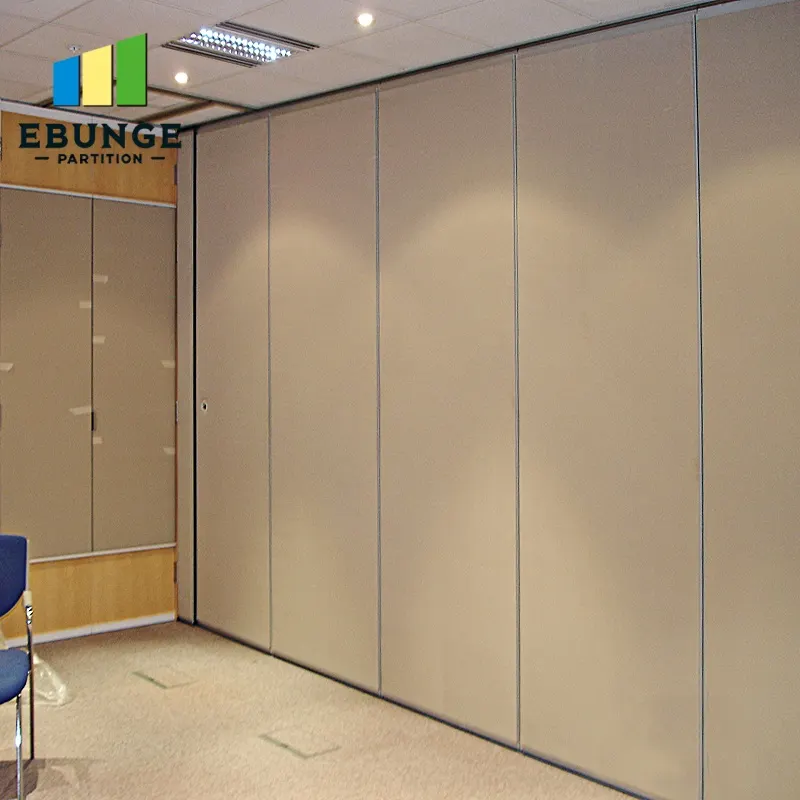
For each question, state the evidence you expect. The exact route, junction arrangement, continuous overhead path and parking position must be confirmed from the coordinated project drawings. If the answer depends on finish, ask for the finish schedule and sample reference.
Evidence note: what the register can and cannot prove
A clarification answer confirms what a bidder has stated for this project. It does not by itself prove acoustic performance, structural capacity, or compliance with a standard. Those claims require separate project-specific documentation and review.
Bind Answers to Maintained Product Facts
Review focus: movable partition tender clarification register.
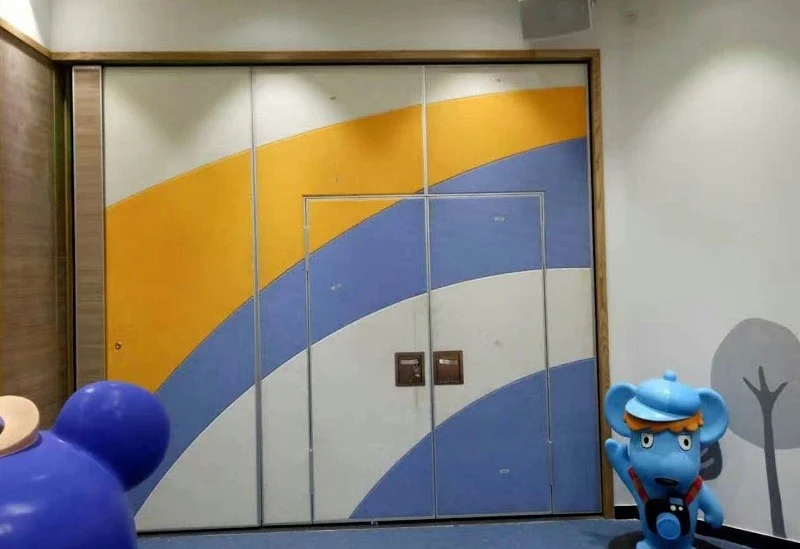
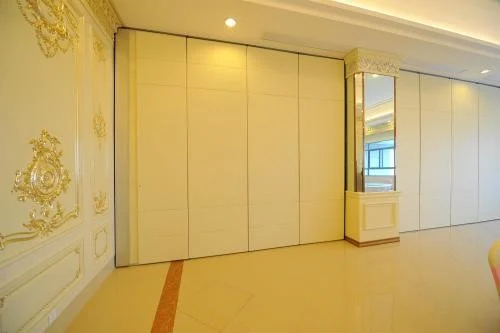
When a bidder describes a movable partition, compare the description with maintained product facts. EBUNGE movable wall panels are individually movable, suspended from a top track, cross the opening without a floor track, and park at a planned stacking position. Straight, turning, and stacking routes are reviewed from the layout. Confirmed finish options include laminate, melamine, fabric, leather, glass, and other approved surfaces.
If a bidder introduces a feature that is not in the maintained facts, log it as an open item. Do not accept it as equivalent without written confirmation. This is especially important for acoustic concepts.
Run the Evaluation Against the Register
Evaluation should follow the register, not the other way around. Before scoring, issue a consolidated clarification response to all bidders so everyone prices the same scope. Then check each bid against the closed items. If a bidder has not addressed a closed item, mark it as a deviation and request a written position.
Use a simple comparison table to keep the review visible. The exact overhead route and support arrangement must be confirmed by the responsible project team from coordinated drawings.
| Evaluation area | Register reference | Evidence requested | Status |
|---|---|---|---|
| Movement route and parking | CL-01 to CL-05 | Layout drawing with route and stacking position | Open |
| Overhead support coordination | CL-06 to CL-09 | Structural coordination drawing | Open |
| Finish schedule | CL-10 to CL-14 | Finish samples and schedule | Open |
| Pass-door requirements | CL-15 to CL-17 | Written confirmation of location and operation | Open |
| Project documentation | CL-18 to CL-20 | Document list and delivery format | Open |
Close Out the Register Before Award
A register that stays open after award creates risk. Before recommending a bidder, review every line and confirm that no critical item remains unresolved. Critical items typically include movement routes, support coordination, pass-door requirements, and documentation deliverables. If an item cannot be closed, record the assumption and the party responsible for confirming it later.
Keep the final register as part of the contract documents. It becomes a reference during submittals, installation planning, and handover. For broader procurement guidance, see the EBUNGE resources page and the movable walls product page.
Common Pitfalls That Weaken Bid Evaluation
One common pitfall is treating a bidder’s brochure as a clarification answer. Brochures describe general product families, not your project. Another is allowing verbal answers to stand without written confirmation. A third is failing to distinguish between a confirmed finish option and a confirmed finish for your specific layout and use.
Also avoid reducing acoustic requirements to a single number without context. Do not infer performance from a finish sample, a photograph, or a drawing.
FAQ: Tender Clarification Register for Movable Partitions
What is a tender clarification register?
It is a controlled log of questions, answers, and evidence references raised during a tender. It helps ensure all bidders price the same clarified scope.
Who should own the register?
A single owner, usually the project manager or procurement lead, should maintain it. Design, construction, and operations should review entries that affect their scope.
How do I handle acoustic claims in the register?
Ask for the project-specific acoustic requirement and the documentation that addresses it. Confirm performance against the actual assembly and test evidence.
Can a bidder’s standard product description close a clarification item?
No. A standard description is not project-specific evidence. Close the item only when the answer addresses your layout, support, finish, and documentation requirements.
What should happen if an item remains open at award?
Record the assumption, assign responsibility for confirmation, and include it in the contract documents. Do not treat an open item as resolved.
How does the register relate to drawings?
The register references drawings and specifications but does not replace them. It captures the questions and answers that clarify how those documents apply to the project.
Conclusion: A Register That Survives Evaluation
A movable partition tender clarification register evaluation succeeds when it is started early, owned by one person, and closed before award. Bind every answer to maintained product facts or project-specific evidence, and keep unsupported performance claims out of the scoring. Confirm support, acoustic, and dimensional requirements for your project before finalizing any bid comparison.
To discuss pass-door requirements, project documentation, or layout review for your next tender, contact EBUNGE.