
Quick answer: tender clarification log closure verification
Review focus: tender clarification log closure verification.
Movable partition wall tender clarification log closure verification is the discipline of proving, before award, that every bidder question has a final answer with a named owner. Without that proof, unresolved scope ambiguity travels straight into the contract and resurfaces as variation claims, programme slippage or disputed responsibility. This framework helps procurement reviewers audit closure systematically rather than trusting that a busy clarification period simply ended.
The approach below stays deliberately evidence-bounded. The suitability of each route and parking arrangement depends on the approved layout, circulation, ceiling interfaces and operating sequence. Instead it shows how to test whether the answers themselves are complete, attributed and traceable to the documents that will govern the works.
Why Closure Verification Matters More Than Clarification Volume
Project review term: tender clarification log closure verification.
Volume is not closure. The reviewer’s task is to confirm that each question has one final answer, that the answer is attributed to a responsible party, and that the answer is reflected in the tender documents that bidders will price against.
For movable partition packages, ambiguity often hides in scope boundaries: who confirms the overhead support route, who owns interface coordination with adjacent trades, and which finish selections are included. None of these require inventing performance data. They require confirming that someone has answered, in writing, with authority.
A Six-Step Closure Verification Sequence
Coordination scope: tender clarification log closure verification.
Use this sequence as a repeatable audit path. It works for a single package or a multi-package tender round.
- Freeze the question set. Record the cut-off date and confirm no new questions are being accepted after it.
- Match every question to a response. Flag any row with no response, a partial response or a response that refers elsewhere without resolving the point.
- Attribute each final answer. Identify the person or role who owns the answer and the date it became final.
- Check document alignment. Confirm the answer is reflected in the specification, drawings, schedules or addenda that bidders will rely on.
- Test for contradictions. Compare answers across bidders and across addenda for conflicting statements on the same scope item.
- Record residual risk. Where an answer remains conditional, state the condition and the party responsible for closing it after award.
Building the Closure Evidence Note
Checklist focus: tender clarification log closure verification.
A closure evidence note is a short, signed record that states what was verified, by whom, on what date, and against which document revision. It is not a summary of the discussion. It is a statement of audit position.
Evidence note: Closure verification confirms that a question has a final attributed answer and that the answer is reflected in the tender documents. Those judgements require separate review by the responsible disciplines.
Keep the note concise. A reviewer should be able to see, at a glance, which questions are closed, which are conditionally closed and which remain open. If a question is conditionally closed, the condition should be specific enough that a different reviewer could verify it later.
Common Failure Patterns Reviewers Should Look For
Review focus: tender clarification log closure verification.
Answers that restate the question
Some responses repeat the bidder’s wording without adding a decision. These should be treated as open, not closed, because no responsible party has committed to a position.
Answers split across documents
When part of an answer sits in an addendum and part in a meeting minute, the final position may be unclear. Consolidate the answer into one controlled location and reference it from the log.
Verbal assurances
Verbal clarifications may be useful during discussion, but they are not closure evidence unless they are written down, attributed and reflected in the tender documents.
Scope items with no question at all
Silence is not agreement. If a scope item is material to the package and no bidder asked about it, the reviewer should confirm that the requirement is clearly stated rather than assume it is understood.
Applying the Framework to Movable Partition Packages

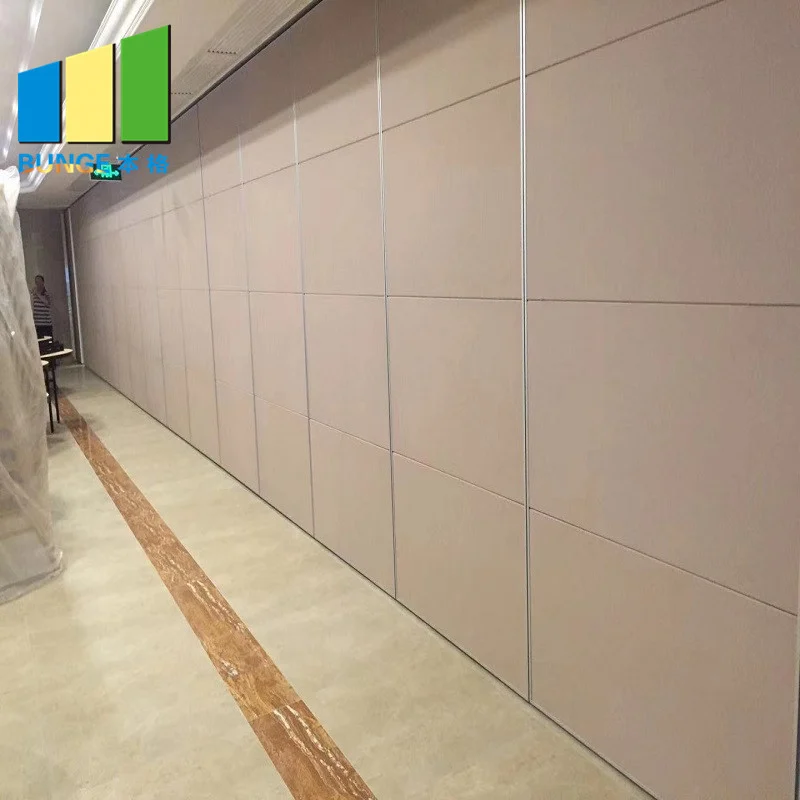
Movable partition panels are individually movable, suspended from a top track, cross the opening without a floor track and park at a planned stacking position. Straight, turning and stacking routes are reviewed from the layout. These maintained facts give reviewers concrete scope items to check in the clarification log.
Typical closure points include confirming that the overhead route is continuous and supported as required by the project, that the parking position is coordinated with the layout, and that finish selections such as laminate, melamine, fabric, leather, glass or other approved surfaces are clearly attributed. Pass-door requirements and project documentation can be discussed with the supplier, but the reviewer should confirm that the answer is recorded and attributed rather than left in conversation.
The clarification log should show who confirmed the requirement and where it is stated.
Decision Checklist Before Award
- Every logged question has a final answer or an explicit conditional status.
- Each final answer has a named owner and a date.
- Answers are reflected in the current tender document revision.
- No contradictory answers remain on the same scope item.
- Conditional answers state the condition and the responsible party.
- Residual risks are recorded for post-award follow-up.
- Project-specific support, acoustic and dimensional requirements are confirmed by the responsible disciplines.
Frequently Asked Questions
What is movable partition wall tender clarification log closure verification?
It is the process of confirming that every bidder question on a movable partition package has a final, attributed answer that is reflected in the tender documents before award.

Does closure verification guarantee the answer is correct?
No. It confirms that an answer exists, is attributed and is traceable. Technical correctness and commercial suitability require separate review by the responsible disciplines.
How should conditional answers be treated?
They should be recorded as conditionally closed, with the condition stated and the party responsible for closing it identified. They should not be treated as fully closed.
Can verbal clarifications count as closure evidence?
Only if they are written down, attributed and reflected in the tender documents. Otherwise they remain open items.
What movable partition scope items commonly need clarification?
Overhead route continuity, parking position, finish selection, pass-door requirements and interface coordination with adjacent trades are common examples. Each should be confirmed against the project layout and documentation.
Where can reviewers find supporting product context?
Review the movable wall product page and the resources section for maintained product context, then confirm project-specific requirements directly.
Conclusion and Next Step
Closure verification is a control activity, not a formality. By freezing the question set, matching answers, attributing ownership, checking document alignment and recording residual risk, procurement reviewers can prevent unresolved scope ambiguity from carrying into contract. The framework above is deliberately bounded: it confirms process completeness, not technical performance.
The exact overhead route and support arrangement must be confirmed by the responsible project team from coordinated drawings. To discuss documentation and pass-door requirements for a movable partition package, contact the EBUNGE team.