
Quick answer: movable partition wall tender clarification
Review focus: movable partition wall tender clarification.
A movable partition wall tender clarification response consistency audit is a structured review that compares every answer a bidder has given across the clarification record. The goal is not to score the lowest price or the longest warranty. It is to detect contradictions that would otherwise surface after award, when drawings are fixed and site coordination has already begun. This framework helps overseas contractors, architects, interior designers, owners and renovation teams read clarification records as a single evidence set rather than a collection of isolated replies.
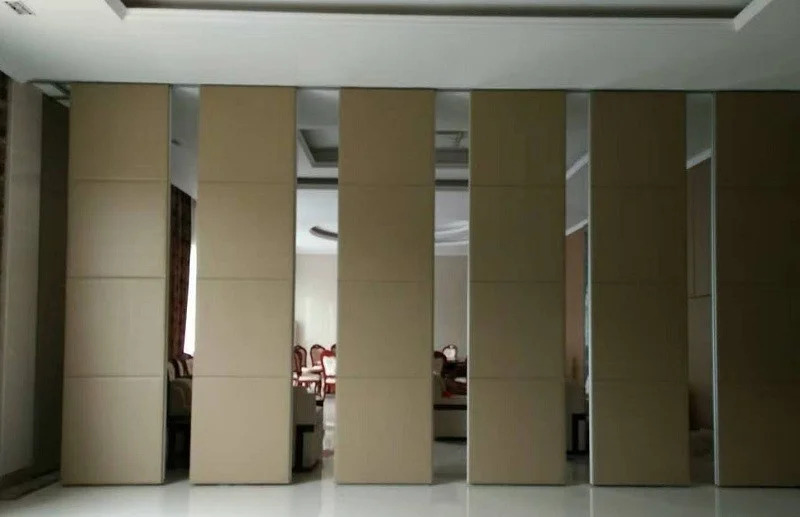
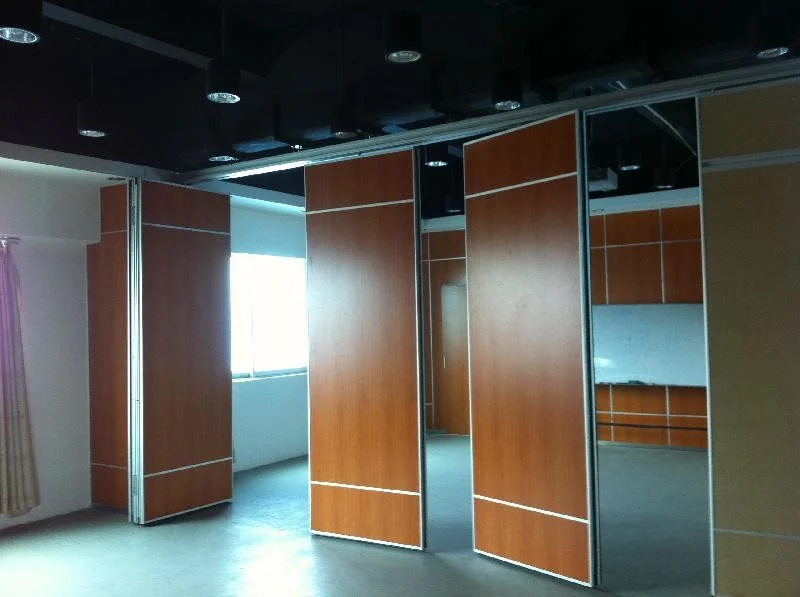
Movable partitions are top-hung systems: panels are individually movable, suspended from a top track, cross the opening without a floor track and park at a planned stacking position. Straight, turning and stacking routes are reviewed from the layout. That physical logic gives reviewers a reliable way to test whether a bidder’s answers describe the same system throughout the record.
Why Clarification Records Drift Out of Alignment
Project review term: movable partition wall tender clarification.
Clarification records grow in layers. A bidder answers a technical query, then a commercial query, then a finishing query. Different specialists may draft each reply. Over several rounds, small wording differences accumulate. A route described as ‘straight’ in one answer may become ‘straight with a turn’ in another. A finish listed as laminate in the schedule may appear as fabric in a later response.
None of these gaps is necessarily dishonest. They are coordination failures. The audit exists to expose them while the bidder can still correct the record, and before the project treats any statement as confirmed.
What the audit is not
It is not a performance test, a certification review or a substitute for project-specific engineering. The suitability of each route and parking arrangement depends on the approved layout, circulation, ceiling interfaces and operating sequence. Those require separate, project-specific evidence and review.
A Six-Step Review Process
Coordination scope: movable partition wall tender clarification.
- Assemble the full record. Collect every clarification response, addendum, drawing mark-up and finish schedule into one indexed file. Number each answer so later references are unambiguous.
- Extract the route statements. List every description of panel movement: straight runs, turning points, stacking positions and parking locations. Compare them against the tender layout.
- Extract the finish statements. Record every finish named for each elevation. Confirmed options include laminate, melamine, fabric, leather, glass and other approved surfaces. Flag any elevation with two different finishes.
- Extract the interface statements. Note how the bidder describes the top track, the opening, adjacent structure and any pass-door requirement. Pass-door requirements and project documentation can be discussed with the supplier.
- Cross-check against the specification. Compare each extracted statement with the original specification clause it claims to answer.
- Issue a consolidated clarification. Send contradictions back as one numbered list, asking the bidder to confirm a single position for each item.
Contradiction Patterns Reviewers Should Flag
Checklist focus: movable partition wall tender clarification.
Most inconsistencies fall into a small number of patterns. Recognising them speeds up the audit and makes the follow-up questions sharper.
| Pattern | What it looks like | Reviewer action |
|---|---|---|
| Route mismatch | One answer describes a straight run; another implies a turn or a different stacking position. | Ask for a single route description tied to the layout drawing. |
| Finish drift | The same elevation is named with two different approved surfaces. | Request a finish schedule that matches the specification. |
| Scope overlap | Two answers both claim to cover the same interface, or neither does. | Ask the bidder to state the boundary explicitly. |
| Assumption creep | A later answer introduces a condition not present in the original query. | Ask whether the condition is a requirement or an assumption. |
| Silent substitution | A term changes without explanation between rounds. | Request a written reason for the change. |
Evidence Boundaries for Acoustic and Sealing Language

Review focus: movable partition wall tender clarification.
Clarification records often contain acoustic language. Reviewers should treat it carefully. A bidder’s statement that a system is ‘acoustic’ or ‘sound-rated’ does not, by itself, confirm any project-specific value.
Seals and acoustic concepts can be explained generically, but the actual performance of a configured partition depends on the full assembly, the opening, the surrounding structure and the project-specific design. The audit should therefore record what the bidder claims, mark it as unverified, and route it to the appropriate technical review. Do not accept a clarification answer as a substitute for project-specific acoustic documentation.
Questions that keep the record honest
- Does the answer describe the same route as the layout drawing?
- Does the finish named here match the finish schedule?
- Is this statement a confirmed fact, a design assumption or a placeholder?
- Which project-specific document would verify this claim?
- Has the bidder confirmed the support and dimensional requirements for this configuration?
Coordinating the Audit Across Project Teams
Project review term: movable partition wall tender clarification.
Architects and interior designers check route and finish statements against the layout. Contractors check interface and access statements against site conditions. Owners and renovation teams confirm that the intended room use still matches the brief.
Distributors and construction teams can then receive a single clarified position rather than several conflicting ones. This reduces the risk of a bidder pricing one system and delivering another. It also gives the project a clean baseline for later submittals.
Documentation to request with the audit
Ask bidders to provide project documentation that supports their clarification answers, including layout-based route descriptions, finish schedules and interface notes. Where a pass-door requirement exists, confirm it in writing. Where a stacking position is proposed, confirm it against the coordinated layout.
Recording Findings Without Overclaiming
An audit report should separate three categories: confirmed statements, unresolved contradictions and items requiring project-specific evidence. Avoid converting a bidder’s wording into a performance promise. Avoid inferring hidden engineering from a drawing or photograph.
Where a statement cannot be verified from the record, the correct output is a clarification request, not a conclusion.
Frequently Asked Questions
What is a movable partition wall tender clarification response consistency audit?
It is a structured comparison of every answer a bidder has given across the clarification record, used to detect contradictions in route, finish, interface and scope statements before award.
Does the audit confirm acoustic performance?
No. It records what a bidder claims and flags it for project-specific review.
Which finish options can appear in the record?
Confirmed options include laminate, melamine, fabric, leather, glass and other approved surfaces. The audit checks that each elevation is described consistently against the finish schedule.
How should route contradictions be resolved?
Ask the bidder to confirm one route description tied to the layout drawing, covering straight runs, turning points and the planned stacking position.
Can pass-door requirements be included?
Yes. Pass-door requirements and project documentation can be discussed with the supplier and should be confirmed in writing as part of the clarified record.
What should the final audit output contain?
Confirmed statements, unresolved contradictions and items requiring project-specific evidence, each with a clear follow-up question and the document needed to verify it.
Conclusion and Next Steps
A consistency audit turns a scattered clarification record into a single, reviewable position. It protects the project from contradictions that would otherwise become change orders, delays or disputes. It also gives bidders a fair chance to correct the record before award.
Confirm project-specific support, acoustic and dimensional requirements with the relevant specialists before treating any clarification answer as final. For product context, review the movable wall systems page and the project resources library. To discuss pass-door requirements, documentation or a specific tender package, contact EBUNGE.