
Quick answer: bid clarification register
Review focus: bid clarification register.
A movable partition tender bid clarification register award process only works when every answer can be traced back to a drawing, a specification clause or a written confirmation. For overseas contractors, architects, interior designers, owners and renovation teams, the register is not a formality. It is the record that protects the project from assumptions about movement routes, finishes, parking and acoustic intent. This guide explains how to build and maintain that register so it survives evaluation, award and the first site meeting.
Why the Register Must Be Evidence-Bound
Project review term: bid clarification register.
A clarification register collects questions, answers and supporting references. In a movable partition package, the risk is that a simple answer becomes an implied promise. A supplier may describe a top-hung panel that moves without a continuous floor track, and a reader may then assume any route is possible. The register should prevent that leap by tying each answer to a reviewed layout.
Use the register to separate confirmed product facts from project-specific requirements. Confirmed facts include that panels are individually movable, suspended from a top track, cross the opening without a floor track and park at a planned stacking position. The exact overhead route and support arrangement must be confirmed by the responsible project team from coordinated drawings.
Set Up the Register Before Tender Questions Arrive
Coordination scope: bid clarification register.
Create the register as soon as the tender package is issued. Waiting until evaluation means answers arrive without a consistent structure. Agree on columns that match how your team will review the bid, and keep one live version controlled by a named coordinator.
Core columns to agree
- Clarification ID and date raised.
- Drawing or specification reference.
- Question in plain language.
- Answer received and its evidence source.
- Status: open, answered, confirmed or closed.
- Owner responsible for the next action.
Keep the language neutral. Avoid asking whether a system is good or bad. Ask what the proposed layout shows, what the finish schedule states and what must be confirmed before award.
Route and Parking Questions That Belong in the Register
Checklist focus: bid clarification register.
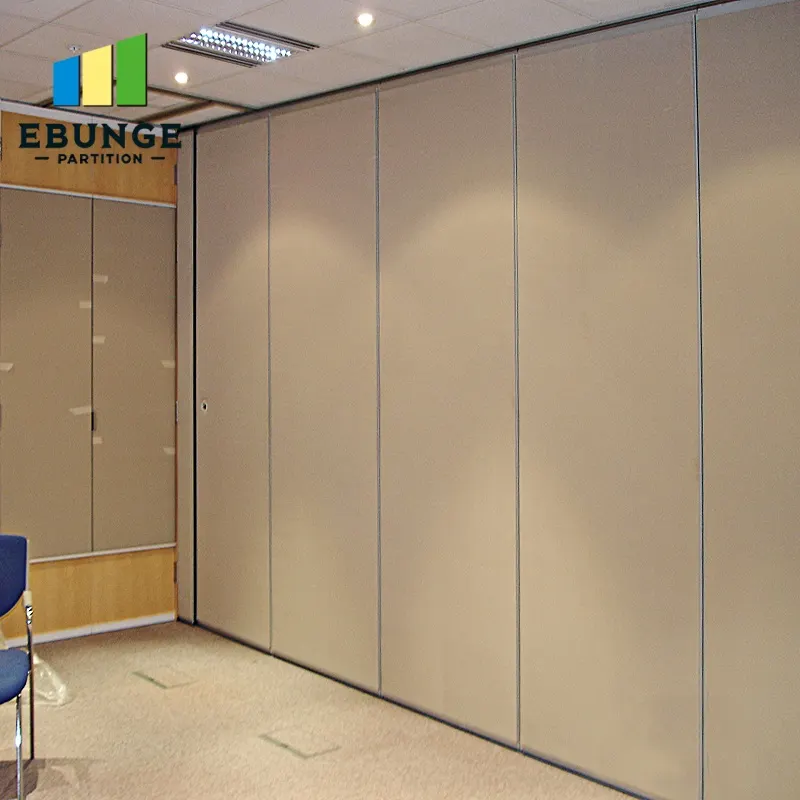
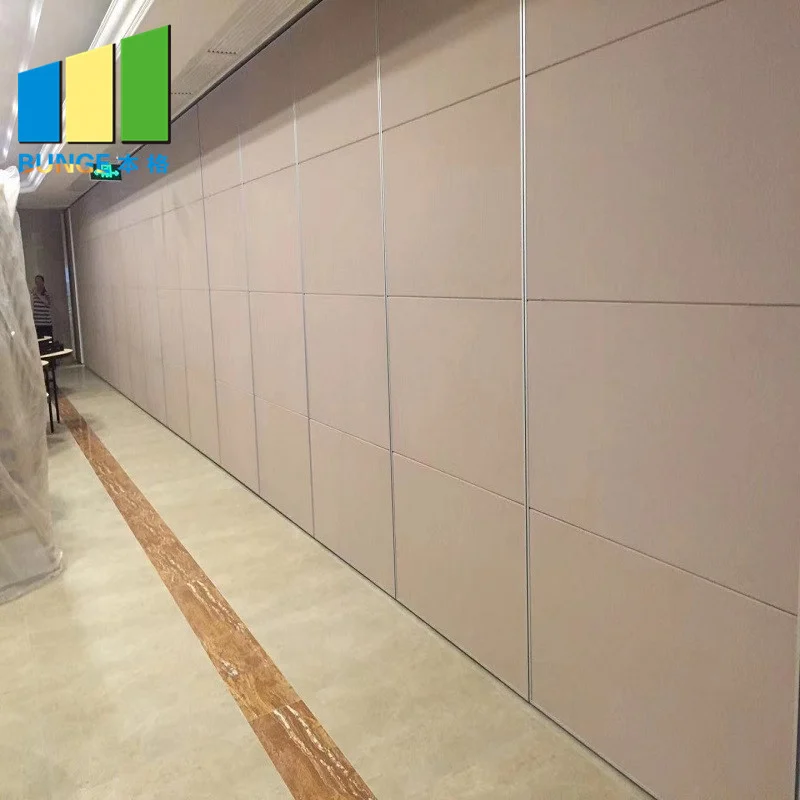
Straight, turning and stacking routes should be reviewed from the layout. The register should record whether each proposed route has a continuous connected overhead path and where panels are intended to park. The exact route, junction arrangement, continuous overhead path and parking position must be confirmed from the coordinated project drawings.
Parking style is customized to the layout and project requirements. Compact stacking may be possible when the coordinated design permits it, but the register should not treat compact stacking as automatic. Ask for the stacking position to be shown on the reviewed drawing and note any dimensional constraint that still needs confirmation.
Questions to log for every route
- Which opening does this route serve?
- Where does the overhead route begin and end?
- Where do panels park when the opening is clear?
- Does the layout show any turning condition?
- What project-specific support review is still outstanding?
Finish, Pass-Door and Documentation Clarifications
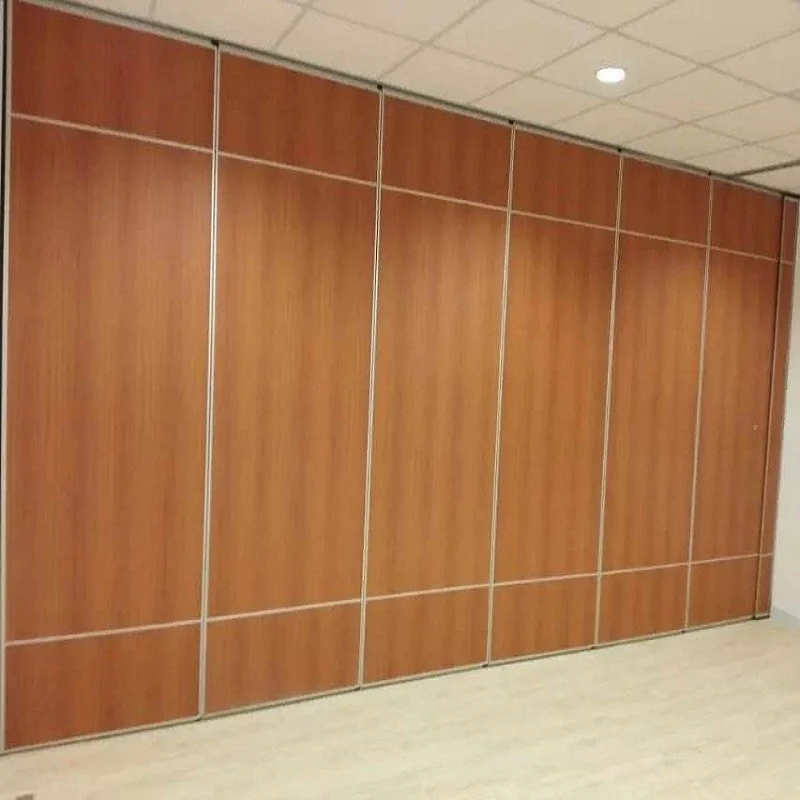
Confirmed finish options include laminate, melamine, fabric, leather, glass and other approved surfaces. The register should record the selected finish by reference to the finish schedule, not by a generic description. The suitability of each route and parking arrangement depends on the approved layout, circulation, ceiling interfaces and operating sequence.
Pass-door requirements and project documentation can be discussed. If a pass door is required, log the opening size, location and swing or slide intent as a project-specific item. Do not let a pass-door question drift into an unconfirmed claim about the surrounding panel.
Evidence note
Every register answer should point to a drawing, a specification clause or a written confirmation. If the evidence is not available, mark the item open rather than closing it with an assumption.
Acoustic Language: Keep It Conceptual
The register should record the acoustic intent stated in the project documents and note that acoustic requirements must be confirmed for the specific project.
Instead, ask what the project specification requires, what evidence is available and what remains to be confirmed before award.
Run the Clarification Cycle Without Losing Control
A register survives award when it is reviewed on a fixed cycle. Set a short window for bidders to respond, then review answers together rather than accepting them one by one. This prevents inconsistent assumptions from entering the evaluation.
Weekly review routine
- Close items that have clear evidence.
- Return vague answers with a specific request.
- Flag any answer that implies an unconfirmed route, support or acoustic outcome.
- Update the drawing reference when a layout changes.
- Confirm that the same question is not answered differently across bidders.
Keep the register visible to the evaluation team. A clarification that lives only in an email thread will not survive award.
Close-Out and Award Handover
Before award, convert the register into a handover record. Each closed item should show the final answer, the evidence source and the date. Open items should be listed with an owner and a required action. This list becomes part of the project documentation and reduces the chance of a post-award dispute.
Confirm project-specific support, acoustic and dimensional requirements before any final commitment. The register is a coordination tool, not a substitute for engineering review. For product context, see the movable walls range and the project resources.
Frequently Asked Questions
What is a bid clarification register in a movable partition tender?
It is a controlled record of questions, answers and evidence references raised during tender. It helps the evaluation team separate confirmed product facts from project-specific requirements that still need review.
Should the register include route and parking questions?
Yes. Straight, turning and stacking routes should be reviewed from the layout, and the intended parking position should be recorded. Any route that is not shown on a reviewed drawing should remain open.
Can finish selections be confirmed through the register?
Finish options include laminate, melamine, fabric, leather, glass and other approved surfaces. The register should reference the finish schedule and note that cleaning compatibility and other project-specific requirements still need confirmation.
How should acoustic questions be handled?
Acoustic requirements must be confirmed for the specific project.
When should the register be closed?
Close items only when the answer has a clear evidence source. Before award, convert the register into a handover record with open items, owners and required actions.
Does the register replace project-specific engineering review?
No. It supports coordination.
Conclusion and Next Step
A movable partition tender bid clarification register award process is strongest when it stays evidence-bound. Keep the register structured, review it on a fixed cycle and refuse to close items without a drawing, specification clause or written confirmation. This approach helps contractors, architects, designers, owners and renovation teams avoid assumptions that do not survive award.
To discuss pass-door requirements, project documentation or a specific layout, contact the EBUNGE team and confirm the project-specific support, acoustic and dimensional requirements before finalizing your tender.