
Quick answer: tender addendum impact review
Review focus: tender addendum impact review.
A movable partition tender addendum impact review is the structured check that happens between receiving an addendum and submitting your bid. It compares what changed against what your price, programme and coordination plan already assume. For overseas contractors, architects, interior designers, owners and renovation teams, the goal is not to re-price everything. It is to find the addendum items that genuinely touch the partition scope, then confirm them against drawings and project-specific requirements before the bid goes out.
Why Addenda Create Partition Bid Risk
Project review term: tender addendum impact review.
Addenda often arrive late, sometimes only days before submission. They may adjust room layouts, ceiling zones, finish schedules or interface responsibilities. Each change can ripple into the movable partition package even when the addendum does not mention partitions directly.
Risk grows when teams treat an addendum as a simple document swap. The exact route, junction arrangement, continuous overhead path and parking position must be confirmed from the coordinated project drawings. None of those should be priced from assumption. They should be traced back to the current drawing set and confirmed with the project team.
Step-by-Step Addendum Impact Review Process
Coordination scope: tender addendum impact review.
- Log the addendum. Record the number, date, issuer and the exact clauses, drawings or schedules it changes.
- Map affected partition scope. Mark every item that touches openings, routes, parking, finishes, pass-doors or interfaces.
- Compare against the bid baseline. Identify what your submission already assumed and where the addendum creates a gap.
- Check the movement path. Confirm straight, turning and stacking routes still work on the revised layout.
- Review support and ceiling conditions. Flag any area where the overhead route or support arrangement needs project-specific confirmation.
- Confirm finish and pass-door implications. Note any change to approved surfaces or access requirements.
- Issue clarification questions. Send focused queries rather than broad assumptions.
- Record exclusions and qualifications. State clearly what remains subject to confirmation.
What to Check on the Revised Drawings
Drawings are the primary evidence for a partition bid. The suitability of each route and parking arrangement depends on the approved layout, circulation, ceiling interfaces and operating sequence. Use the revised set to verify geometry and interfaces, and treat everything else as requiring separate confirmation.
Route and parking checks
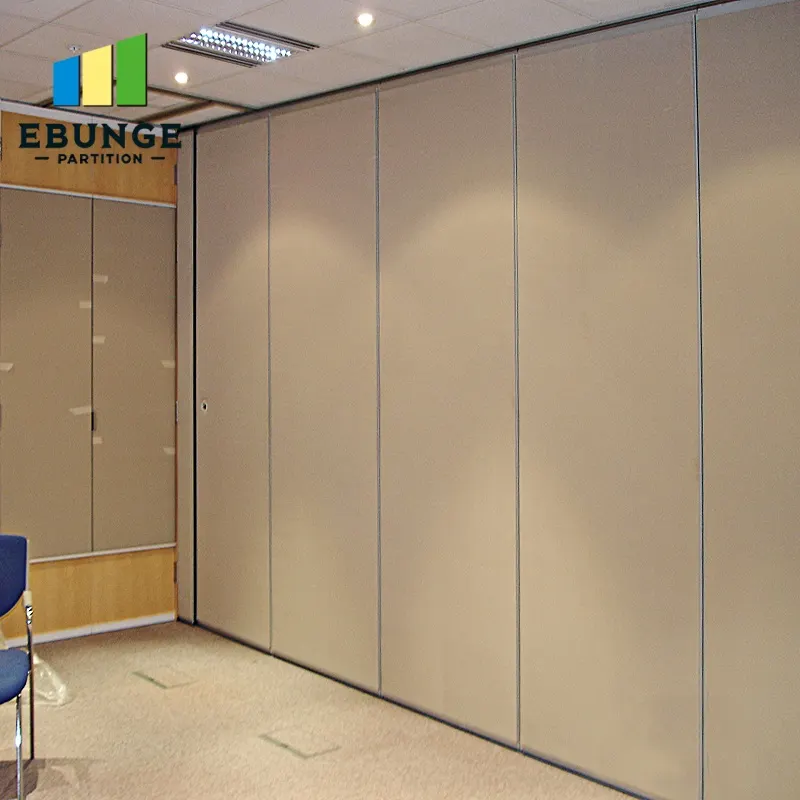
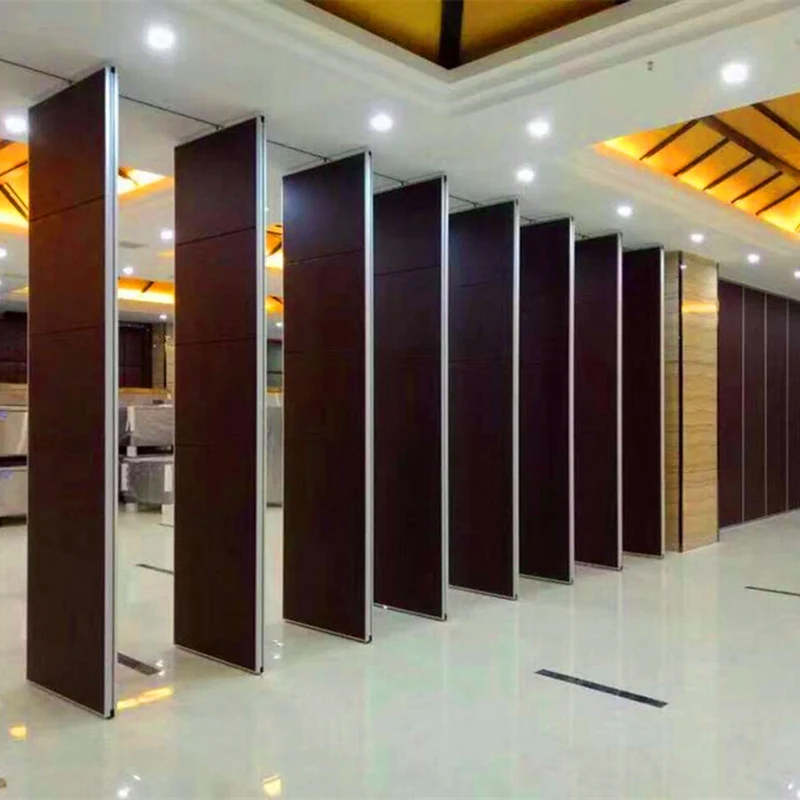
EBUNGE movable partition panels are individually movable, suspended from a top track, cross the opening without a floor track and park at a planned stacking position. Confirm that the addendum has not broken the continuous connected overhead route.
Finish and pass-door checks
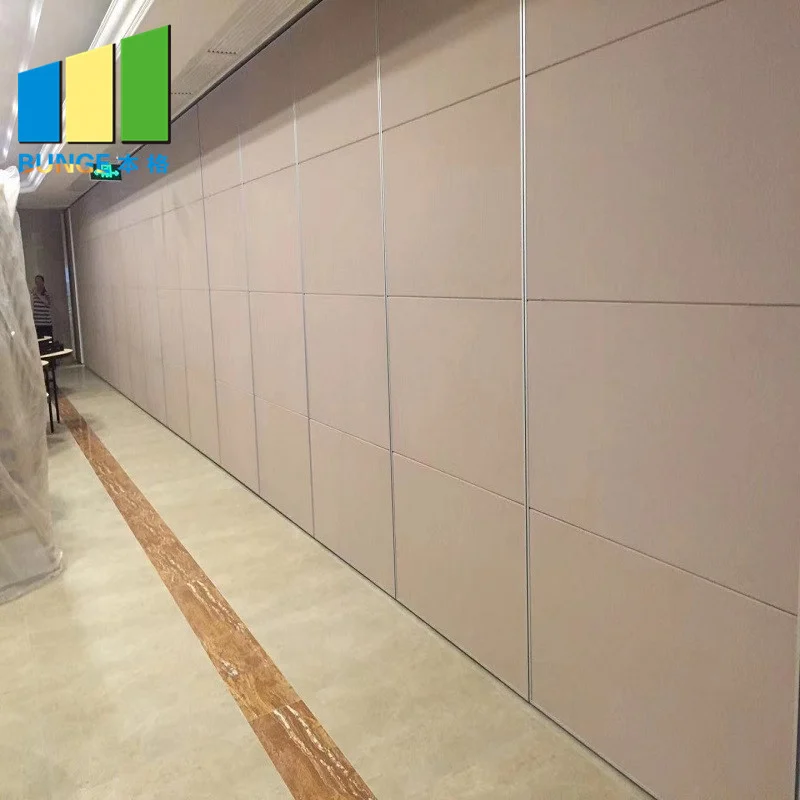
Confirmed finish options include laminate, melamine, fabric, leather, glass and other approved surfaces. If the addendum changes the finish schedule, check whether the new direction is within that approved range. Pass-door requirements and project documentation can be discussed with the supplier, but the final configuration still depends on the project layout.
Evidence Boundaries for Acoustic and Performance Statements
Acoustic ratings such as STC or Rw are single-number descriptors used in project specifications. They are not a direct count of decibels and should not be reduced to one. Actual performance depends on the complete assembly, the supporting structure and the installed condition, so it must be confirmed for each project.
Visible references can support layout discussion but do not verify hidden construction or performance. If the addendum introduces a performance requirement, mark it as needing matching evidence rather than carrying a previous assumption forward.
Coordination Between Procurement, Design and Site Teams
Design teams should confirm intent; site teams should confirm existing conditions; procurement should confirm what the bid actually includes.
Keep a short written trail. A clarification email that states the question, the drawing reference and the required confirmation is more useful than a verbal note. It also protects the bid from silent scope creep.
Quick Decision Checklist Before Submission
- Is every addendum item logged with a date and source?
- Has the partition scope been re-checked against the latest layout?
- Are straight, turning and stacking routes still continuous?
- Has the parking position been confirmed on the revised plan?
- Are finish changes within the approved surface options?
- Are pass-door and access requirements still clear?
- Have acoustic and support requirements been flagged for project-specific confirmation?
- Are exclusions and qualifications written into the bid?
Common Mistakes in Addendum Reviews
One common mistake is assuming the addendum only affects other trades. Another is reusing a previous acoustic assumption without checking whether the assembly or support condition changed. A third is leaving the stacking position unresolved because it looks minor on paper.
Each of these can create a gap between what is bid and what is required. The review does not need to solve every detail before submission. It needs to identify what is confirmed, what is excluded and what still requires project-specific support, acoustic and dimensional confirmation.
FAQ
What is a movable partition tender addendum impact review?
It is a structured comparison between the latest addendum and your partition bid assumptions. It checks scope, routes, parking, finishes, pass-doors and interfaces, then records what still needs confirmation.
When should the review happen?
As soon as an addendum is issued and before bid submission. If time is short, prioritise items that change geometry, support conditions or access requirements.
Does every addendum change the partition price?
No. Many addenda have no partition impact. The review separates genuine scope changes from items that can be noted and carried forward without re-pricing.
Can acoustic performance be confirmed from the addendum drawings?
No. Drawings show geometry and interfaces, not measured performance.
What should be included in a clarification question?
State the addendum reference, the affected drawing or room, the specific partition item and the confirmation you need. Keep it short and traceable.
How should unresolved items be handled in the bid?
List them as qualifications or exclusions with a clear note that support, acoustic and dimensional requirements remain subject to project-specific confirmation.
Conclusion and Next Step
A disciplined movable partition tender addendum impact review protects the bid from silent scope changes. Log the addendum, trace it through the drawings, confirm routes and parking, and state clearly what remains open. Review the maintained product context at movable walls, browse further planning guidance in our resources, and contact EBUNGE to discuss pass-door requirements and project documentation for your specific tender.