
Quick answer: movable partition stacking pocket siting ambulant route continuity audit
Review focus: movable partition stacking pocket siting ambulant route continuity audit.
A movable partition stacking pocket siting ambulant route continuity audit is a drawing-based review that checks whether parked panels remain clear of the primary walking path in every subdivision state. For contractors, architects, interior designers and owners, the audit connects three confirmed product facts: panels are individually movable, they are suspended from a top track and cross the opening without a floor track, and they park at a planned stacking position. Because the panels travel on an overhead route, the audit focuses on the relationship between the stacking pocket, the opening and the ambulant route rather than on floor hardware.
Why the Audit Matters Before Procurement
Project review term: movable partition stacking pocket siting ambulant route continuity audit.
Flexible rooms change shape. A layout that works when the partition is closed may fail when panels are parked, because the stored panels occupy a footprint. If that footprint overlaps the primary path, users may be forced to detour, pass through a working area or wait. The audit makes this visible on paper before installation.
The review is not a performance test. The suitability of each route and parking arrangement depends on the approved layout, circulation, ceiling interfaces and operating sequence. It is a coordination tool that helps the project team ask the right questions and route them to the right specialist. Confirm project-specific support, acoustic and dimensional requirements with qualified professionals.
Confirmed Product Facts That Shape the Audit
Coordination scope: movable partition stacking pocket siting ambulant route continuity audit.
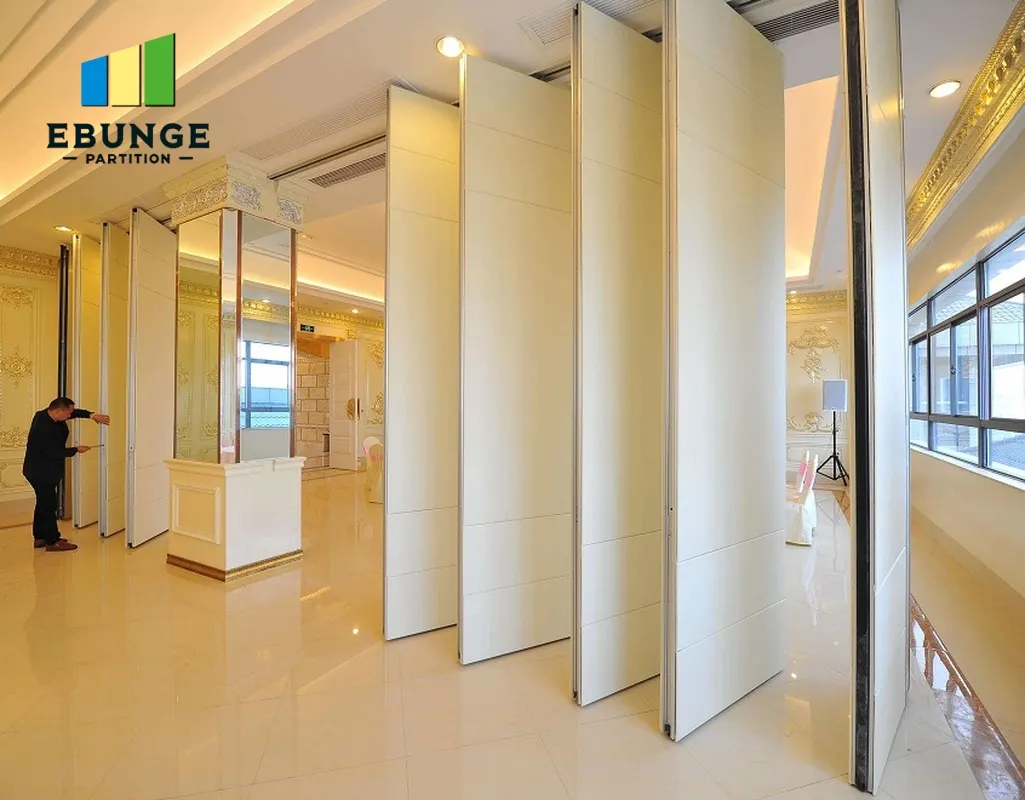
EBUNGE movable wall panels are individually movable and suspended from a top track. They cross the opening without a floor track, so the partition line itself does not create a continuous floor obstruction. Panels park at a planned stacking position. Straight, turning and stacking routes are reviewed from the layout, which means the audit must follow the same logic.
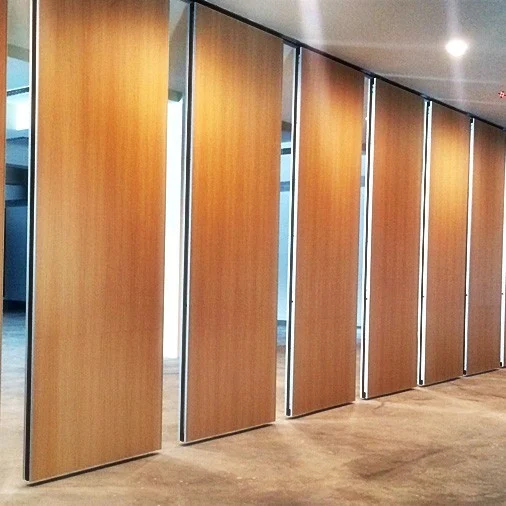
Finish options include laminate, melamine, fabric, leather, glass and other approved surfaces. Pass-door requirements and project documentation can be discussed with the project team. These facts define what can be reviewed; they do not replace project-specific engineering.
Stacking Pocket Siting: What to Check on Drawings
Checklist focus: movable partition stacking pocket siting ambulant route continuity audit.
Start with the parked condition. Mark the stacking pocket footprint on the floor plan and compare it with the primary path. The pocket should sit where panels can gather without narrowing the route below the project’s required clear width. If the pocket projects into a corridor, lobby or teaching area, the audit should flag it for review.
Next, check the approach. Panels move along a continuous connected overhead route. The exact route, junction arrangement, continuous overhead path and parking position must be confirmed from the coordinated project drawings. The audit should trace the route from the closed position to the parked position and confirm that the layout shows a continuous supported route.
Evidence note
This article uses maintained EBUNGE product facts and generic accessibility concepts. It does not contain measured acoustic values, structural calculations, fire ratings, durability results or application reference data. Any project-specific claim requires matching evidence and review by the responsible design professional.
Ambulant Route Continuity Through Each Subdivision State
A subdivision state is any arrangement the room can take: fully open, fully closed, or partially divided. The audit should list each state and mark the primary path.
Route continuity is not only about width. It also concerns direction changes, visibility at corners and the ability to move through the space without entering a storage zone. The audit should note where a route narrows, turns or shares space with panel movement.
Numbered audit process
- Collect the latest architectural floor plans, reflected ceiling plans and partition layout drawings.
- List every subdivision state the room is expected to support.
- Mark the primary ambulant route in each state.
- Overlay the stacking pocket footprint and the panel movement route.
- Flag any overlap between parked panels and the primary route.
- Confirm pass-door and documentation requirements with the project team.
Coordination With Accessibility and Circulation Review
Accessibility and Circulation Review coordination brings the partition layout together with door swings, corridor widths, turning circles and emergency egress paths. The partition audit should not be done in isolation. A stacking pocket that works for the room may still conflict with a corridor or a refuge area.
Use the same drawing set across disciplines. If the partition layout changes, the audit should be repeated. A revision that moves the pocket by even a small distance can change the route continuity result.
Decision Checklist for Project Teams
- Is the stacking pocket shown on the floor plan in its parked condition?
- Does the parked panel footprint stay clear of the primary path in every subdivision state?
- Is the movement route continuous and supported along its full length?
- Are turning routes and approach routes shown, not assumed?
- Have pass-door requirements been discussed and documented?
- Have acoustic and support requirements been referred to the responsible specialists?
- Is the finish selection recorded without implying unverified performance?
Evidence Boundaries and Specification Language
A movable partition stacking pocket siting ambulant route continuity audit specification should describe what is being verified and what remains open.
Visible references can support layout discussion but do not verify hidden construction or performance. Instead, state the confirmation boundary: the item is to be confirmed against project-specific support, acoustic and dimensional requirements.
Frequently Asked Questions
What is a stacking pocket siting and ambulant route continuity audit?
It is a drawing review that checks whether parked movable partition panels remain clear of the primary walking path in every subdivision state. It also checks that the panel movement route is continuous and supported.
Does a movable partition need a floor track for the audit?
EBUNGE movable wall panels are suspended from a top track and cross the opening without a floor track. The audit therefore focuses on the overhead route, the stacking pocket and the clear floor path.
Can the audit confirm acoustic performance?
No. The audit is a circulation and siting review.
Which finish options can be considered?
Confirmed finish options include laminate, melamine, fabric, leather, glass and other approved surfaces.
When should the audit be repeated?
Repeat it whenever the partition layout, stacking pocket location, subdivision states or primary route changes. A small plan revision can affect route continuity.
What should be confirmed with EBUNGE?
Project-specific support, acoustic and dimensional requirements, pass-door requirements and project documentation can be discussed. Use the contact page to start that review.
Conclusion and Next Steps
A movable partition stacking pocket siting ambulant route continuity audit helps project teams verify that parked panels do not interrupt the primary path in any subdivision state. It uses confirmed product facts, visible drawing evidence and clear confirmation boundaries. It does not replace specialist review.
Review the movable walls product page and the resources page for maintained context, then bring your latest drawings to the project team. Confirm project-specific support, acoustic and dimensional requirements before specification.
Contact EBUNGE to discuss pass-door requirements, project documentation and the stacking pocket siting review for your layout.