
Quick answer: stacking pocket door swing
Review focus: stacking pocket door swing.
Movable partition stacking pocket door swing conflict is a drawing-stage coordination issue, not a product selection shortcut. When panels are individually movable, suspended from a top track and cross the opening without a floor track, the layout must still resolve where panels park, how pass doors operate and how people move through the subdivided space. This framework helps overseas project teams review those interactions before construction documents are fixed.
The suitability of each route and parking arrangement depends on the approved layout, circulation, ceiling interfaces and operating sequence. It is to expose conflicts early, assign them to the right reviewer and confirm project-specific support, acoustic and dimensional requirements with the responsible parties.
Why Stacking and Door Swing Zones Deserve Early Review
Project review term: stacking pocket door swing.
A movable wall is not only a line on a plan. It is a route: panels travel from the closed position to a planned stacking position. Straight, turning and stacking routes are reviewed from the layout. If a stacking pocket is placed where an ambulant route narrows, or if a pass door swings into a corridor, the conflict may only appear when the room is subdivided.
Early review matters because stacking pockets, door swings and circulation paths compete for the same floor area. The review should identify which elements are fixed, which are adjustable and which require project-specific confirmation.
What the maintained product facts allow us to say
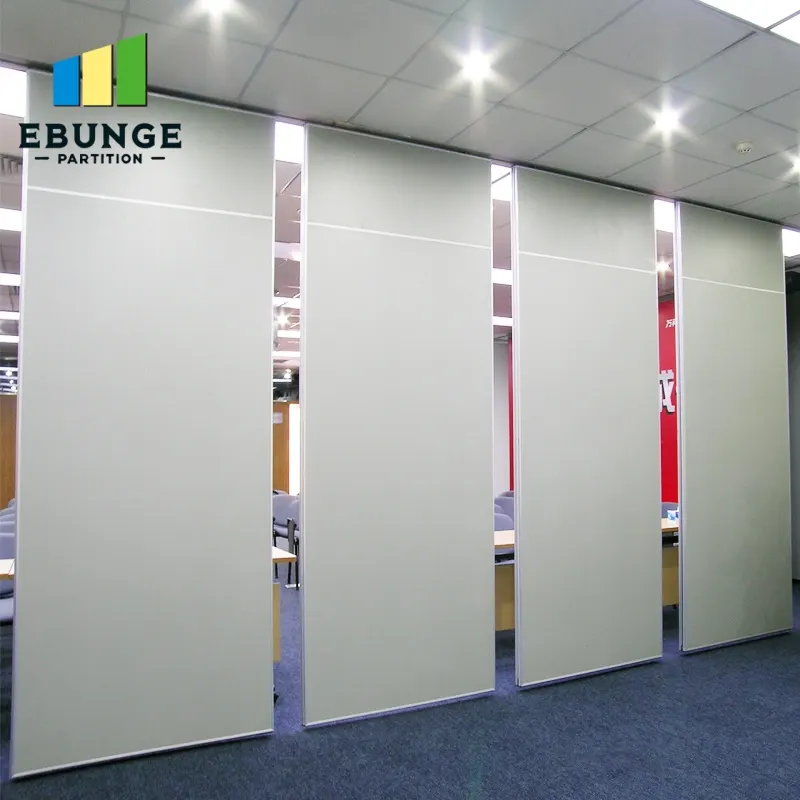
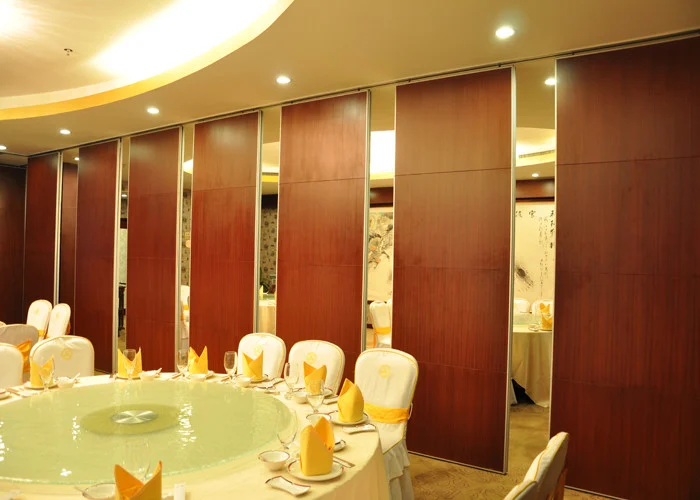
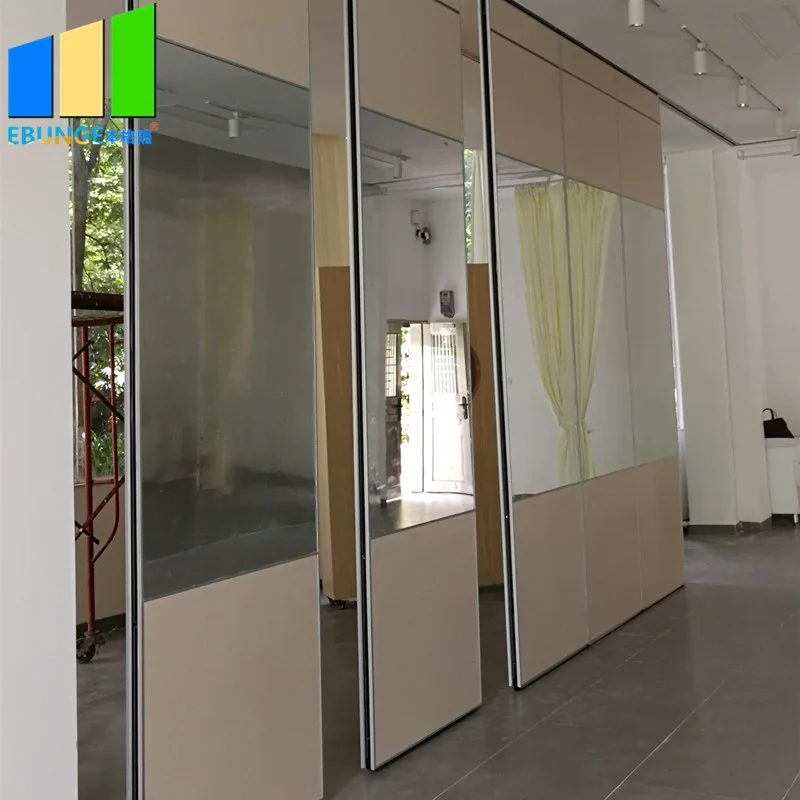
EBUNGE movable wall panels are individually movable, top-hung and cross the opening without a continuous floor track along the partition line. Parking style is customized to the customer layout and project requirements, and compact stacking may be possible when the coordinated design permits it. Finish options include laminate, melamine, fabric, leather, glass and other approved surfaces. Pass-door requirements and project documentation can be discussed.
What must not be assumed
Visible references can support layout discussion but do not verify hidden construction or performance. Any project-specific claim requires matching evidence and confirmation.
A Conflict Mapping Framework for Project Teams
Coordination scope: stacking pocket door swing.
Use a repeatable sequence so the review is not driven by opinion. The steps below keep the discussion tied to drawings, routes and confirmed requirements.
- Mark the closed partition line. Show where panels meet when the room is divided.
- Mark the open and stacking positions. Identify the planned parking location and the route panels take to reach it.
- Overlay ambulant circulation routes. Show how people are expected to move through the subdivided and combined space.
- Locate pass doors and swing arcs. Check whether a door swing enters a route, a stacking zone or an adjacent activity area.
- Flag overlaps. Record every point where a stacking pocket, door swing or movement route competes for the same space.
- Assign confirmation owners. Note who must confirm support, acoustic and dimensional requirements.
- Reissue the drawing. Update the layout and repeat the review until conflicts are resolved or formally accepted.
Decision checklist before drawings are fixed
- Is the stacking position shown on the same drawing as the circulation route?
- Does the pass door swing clear the ambulant route in both subdivided and combined states?
- Is the overhead route continuous and connected for every proposed panel movement?
- Has the project team confirmed support requirements with the responsible structural reviewer?
- Are acoustic and dimensional requirements documented rather than assumed?
- Are finish selections recorded without treating them as performance evidence?
Stacking Pocket Geometry and Ambulant Route Overlap
Checklist focus: stacking pocket door swing.
A stacking pocket is a planned parking position, not a leftover gap. Its geometry depends on the coordinated design, panel quantity and the route panels follow. When the pocket sits beside a primary route, the review should test whether the route remains usable during operation and after the room is subdivided.
Ambulant circulation is not the same as emergency egress, and this framework does not replace code review. It simply helps teams see where a stacking pocket, a door swing or a movement path may reduce the clear route that was intended.
Questions that expose hidden conflicts
- Does the panel route cross a doorway that must remain usable?
- Does the stacking pocket block a sightline, a service point or a fixed seat?
- Does the pass door swing conflict with furniture layout in either room state?
- Is there a turning route for panels that has not been drawn?
Pass Door Swing and Circulation Coordination
Review focus: stacking pocket door swing.
Pass doors are often the point where stacking and circulation meet. A door that swings into a route can create a conflict even when the partition line itself is clear. The review should show the door in its open and closed positions and compare those positions with the ambulant route.
Because pass-door requirements can be discussed with the supplier, the project team should bring the proposed door location, swing direction and adjacent route to that conversation. The outcome still depends on project-specific confirmation.
Coordination roles
| Review area | Typical coordinator | Confirmation needed |
|---|---|---|
| Stacking pocket location | Architect or interior designer | Layout and dimensional fit |
| Overhead route and support | Structural or project engineer | Project-specific support review |
| Ambulant route | Accessibility or code consultant | Local requirement review |
| Pass door swing | Design team and supplier | Door requirement discussion |
| Acoustic intent | Acoustic consultant | Project-specific acoustic requirement |
Evidence Boundaries for Specification Language
Specification text should separate maintained product facts from project-specific requirements.
Comparative, absolute and causal statements need corresponding evidence. If evidence is not available, state the confirmation boundary instead of implying a result.
Evidence note
This article provides planning guidance only. It does not confirm accessibility compliance, acoustic performance, structural capacity, fire performance, durability or commercial outcomes. Confirm project-specific support, acoustic and dimensional requirements with the responsible parties before finalizing drawings.
Documentation and Review Workflow
Good documentation makes the conflict map usable across disciplines. Keep the partition line, stacking position, panel route, door swing and ambulant route on the same coordinated drawing set. Record assumptions and open items so they are not lost between revisions.
Project documentation can be discussed with the supplier, but the final review remains a project responsibility. The workflow should show who reviews, who confirms and when the drawing is considered coordinated.
Review sequence
- Issue the current layout with all partition states.
- Resolve overlaps or record them as accepted project decisions.
- Confirm support, acoustic and dimensional requirements.
- Reissue the coordinated drawing for final review.
Frequently Asked Questions
What is movable partition stacking pocket door swing conflict?
It is a planning conflict where a stacking pocket, a pass door swing or a panel movement route competes with an ambulant circulation route in a subdivided space.
Do movable partitions need a floor track?
EBUNGE movable wall panels are top-hung and cross the opening without a continuous floor track along the partition line. Every proposed movement path still requires a continuous connected overhead route and project-specific support review.
Can stacking position be customized?
Parking style is customized to the customer layout and project requirements, and compact stacking may be possible when the coordinated design permits it. The final position must be confirmed for the project.
How should pass doors be coordinated?
Show the pass door in open and closed positions against the ambulant route. Pass-door requirements and project documentation can be discussed, but the final configuration requires project-specific confirmation.
Does this review confirm acoustic performance?
No. Acoustic requirements must be confirmed for the specific project with matching evidence.
What should be confirmed before drawings are fixed?
Confirm project-specific support, acoustic and dimensional requirements, and record who is responsible for each confirmation. Do not infer performance from finishes, photographs or generic examples.
Conclusion and Next Step
Mapping movable partition stacking pocket door swing conflict is a discipline of drawing review. Keep the stacking position, panel route, pass door swing and ambulant route visible on the same coordinated set, and separate maintained product facts from project-specific requirements.
For product context, review the movable walls range and the planning resources. To discuss pass-door requirements and project documentation, contact the EBUNGE team with your layout and open questions.