
Quick answer: movable partition stacking pocket depth
Review focus: movable partition stacking pocket depth.
The movable partition stacking pocket depth ambulant route turning envelope is a coordination problem, not a product selection problem. A top-hung movable wall crosses an opening without a floor track, travels along a continuous overhead route, and parks at a planned stacking position. The pocket that receives the parked panels and the clear floor area people use to approach, turn and pass are two different spatial claims on the same plan. When they are reviewed separately, the conflict usually appears late, after finishes and door positions are fixed.
Why Pocket Depth and Turning Envelope Must Be Reviewed Together
Project review term: movable partition stacking pocket depth.
Pocket depth describes the space reserved for panels when the opening is clear. The ambulant route turning envelope describes the floor area a person needs to change direction, approach a door, or pass a parked stack. Visible references can support layout discussion but do not verify hidden construction or performance.
EBUNGE movable partition panels are individually movable and suspended from a top track. They cross the opening without a floor track and park at a planned stacking position. Straight, turning and stacking routes are reviewed from the layout. That means the pocket is not an isolated cabinet; it is the end point of a movement path that must remain connected overhead.
What the Maintained Product Facts Allow Us to Say
Coordination scope: movable partition stacking pocket depth.
Confirmed finish options include laminate, melamine, fabric, leather, glass and other approved surfaces. Pass-door requirements and project documentation can be discussed. The exact route, junction arrangement, continuous overhead path and parking position must be confirmed from the coordinated project drawings.
The suitability of each route and parking arrangement depends on the approved layout, circulation, ceiling interfaces and operating sequence. Those values depend on the panel system, the support condition, the route geometry and the applicable local accessibility standard. Treat any figure you see elsewhere as project-specific until it is confirmed for your drawing.
A Drawing Review Sequence for Project Teams
Checklist focus: movable partition stacking pocket depth.
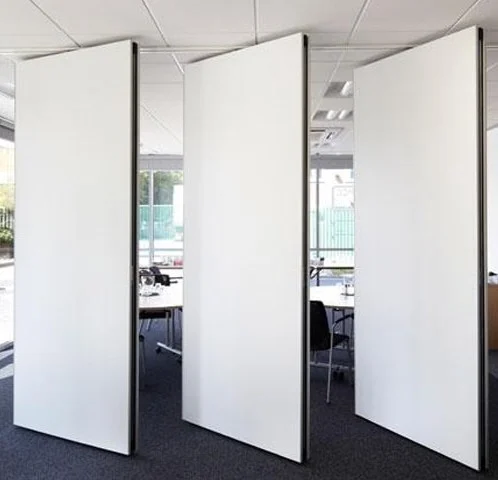
- Mark the clear opening. Show the full width the partition must clear when open, including any pass-door position.
- Trace the overhead route. Draw the straight, turning and stacking path from the closed position to the parked position. Confirm the route is continuous and supported.
- Reserve the pocket. Show the stacking pocket depth as a reserved zone, not as leftover space behind a finish.
- Overlay the ambulant route. Place the turning envelope on the same plan and check for overlap with the pocket zone.
- Check adjacent elements. Review door swings, casework, signage, sprinklers and ceiling features that intrude into either zone.
- Record open questions. List every dimension that still needs project-specific confirmation before procurement.
Evidence Boundaries That Prevent Late Redesign
Review focus: movable partition stacking pocket depth.
Do not derive hidden performance from a finish sample, a photograph or a schematic. Comparative and absolute statements require matching evidence; otherwise state the confirmation boundary.
Evidence note: the maintained facts confirm top-hung movement, clear floor crossing, customized parking and finish options. They do not confirm pocket depth, turning radius, support points, acoustic values or compliance with any named standard. Those items require project-specific review.
When a supplier or reviewer offers a number, ask which drawing, which standard and which support condition it belongs to. If the answer is generic, keep the item open.
Coordinating Pocket Depth with the Turning Envelope
Project review term: movable partition stacking pocket depth.
Where conflicts usually appear
Each location can be checked on a single overlay drawing before finishes are ordered.
What to confirm with the wall specialist
Confirm the parking style, the route geometry and the support condition for the overhead track. Parking style is customized to the layout and project requirements and may support compact stacking when the coordinated design permits it. Compact stacking is a design outcome, not a default assumption.
What to confirm with the accessibility reviewer
Confirm the applicable local standard, the required clear width, and whether the turning envelope may overlap the pocket zone when the partition is open or closed. These are project-specific determinations.
Comparison: Two Review Approaches
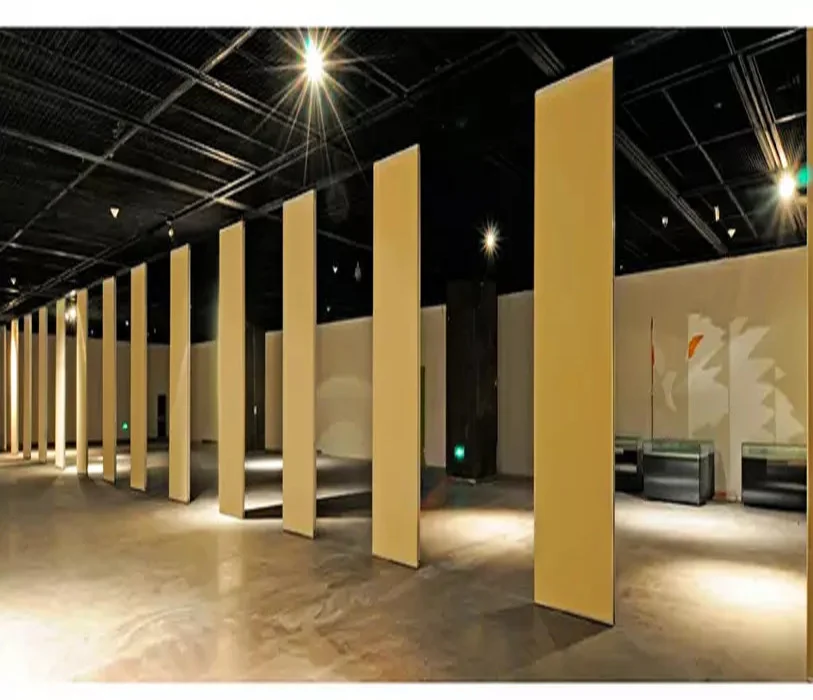
| Review point | Separate review | Coordinated review |
|---|---|---|
| Pocket depth | Checked after partition layout | Reserved on the same plan as the route |
| Turning envelope | Checked by accessibility reviewer alone | Overlaid with the stacking zone |
| Overhead route | Assumed continuous | Traced and confirmed as connected |
| Open items | Resolved during installation | Listed before procurement |
Decision Checklist Before You Issue Drawings
- Is the clear opening dimensioned, including any pass-door?
- Is the overhead route drawn as a continuous connected path?
- Is the stacking pocket depth shown as a reserved zone?
- Is the ambulant route turning envelope overlaid on the same plan?
- Are door swings, casework and ceiling elements checked for intrusion?
- Are all unconfirmed dimensions listed as open items?
- Has the project-specific support, acoustic and dimensional requirement been confirmed in writing?
Frequently Asked Questions
Does a movable partition need a floor track?
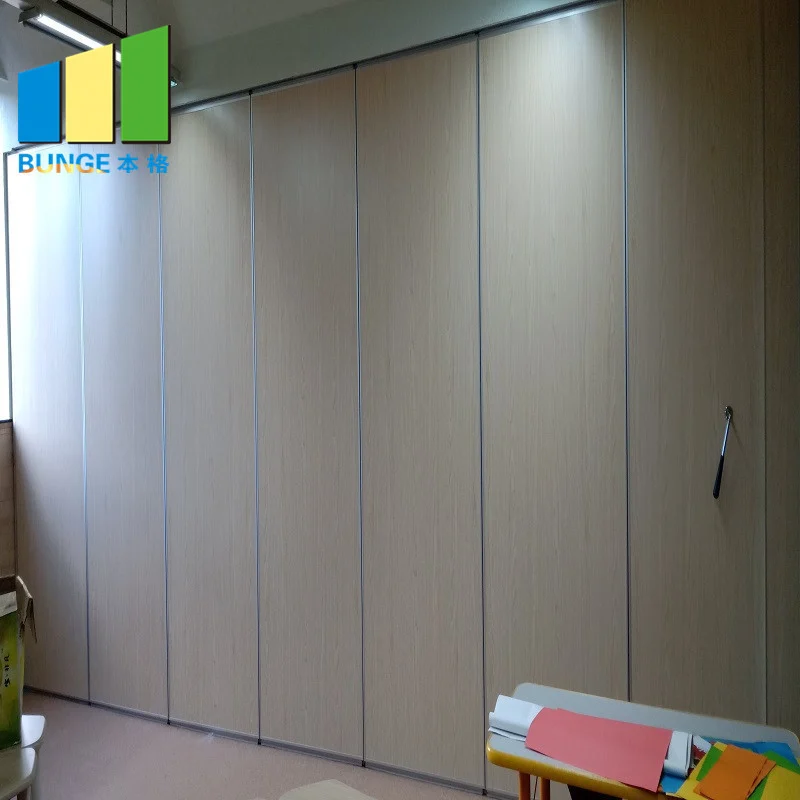
No. EBUNGE movable partition panels are top-hung and move without a continuous floor running track or floor hardware along the partition line. The overhead route must still be continuous and supported.
Can the stacking pocket depth be reduced to gain floor area?
Pocket depth is a project-specific outcome of the panel system, parking style and route geometry. It should be confirmed against the layout rather than assumed from a generic figure.
Can the turning envelope overlap the pocket zone?
That depends on the applicable local accessibility standard and the project layout. Confirm with the accessibility reviewer before fixing the pocket position.
Which finishes are confirmed?
Confirmed finish options include laminate, melamine, fabric, leather, glass and other approved surfaces.
What does STC or Rw mean here?
Provide the current layout, opening dimensions, ceiling information, intended room use, and relevant project drawings for review. The exact overhead route and support arrangement must be confirmed by the responsible project team from coordinated drawings.
What should be confirmed before procurement?
Confirm project-specific support, acoustic and dimensional requirements, pass-door needs and the documentation set. Review the movable wall product context and the project resources before issuing drawings.
Conclusion and Next Step
Coordinating stacking pocket depth with the ambulant route turning envelope is a drawing discipline. Trace the overhead route, reserve the pocket, overlay the turning envelope, and keep every unconfirmed dimension visible as an open item. This approach protects the layout from late redesign without relying on unsupported performance claims.
To discuss pass-door requirements, project documentation or a specific layout, contact the EBUNGE team with your drawings and the confirmation items you need resolved.