
Quick answer: movable partition renovation temporary separation
Review focus: movable partition renovation temporary separation.
When a renovation proceeds while parts of a building stay occupied, the project team needs a single record of which zones still have separation and which do not. A movable partition renovation temporary separation coverage handover register gives that record a fixed structure: stage, zone, separation status, evidence, and the person who accepted the handover. It does not replace drawings or acoustic design; it makes the sequence visible so temporary screen deployment and permanent partition work can be coordinated without guessing.
This article sets out how to build and maintain that register for top-hung movable partition systems, where panels are individually movable, suspended from a top track, cross the opening without a floor track, and park at a planned stacking position. Straight, turning and stacking routes should be reviewed from the layout. Confirm project-specific support, acoustic and dimensional requirements with the responsible design team before relying on any stage assumption.
Why a Coverage Register Belongs in Renovation Phasing
Project review term: movable partition renovation temporary separation.
Phasing decisions are usually recorded in programmes and minutes, but separation coverage is often left implicit. When a temporary screen is removed, or when a permanent partition is not yet operational, the acoustic condition of an occupied zone changes. A register turns that change into a dated line item rather than a verbal understanding.
The register is a coordination tool, not a performance certificate. It records what separation arrangement is in place at each transition and who confirmed it. Any acoustic expectation for a zone must come from the project’s own design documentation, not from the register itself.
What the Register Is Not
The suitability of each route and parking arrangement depends on the approved layout, circulation, ceiling interfaces and operating sequence. It does not certify that a zone meets a target rating.
Core Fields for Each Stage Transition
Coordination scope: movable partition renovation temporary separation.
A workable register is short enough to update weekly and specific enough to be auditable. The following fields cover the decisions that typically change between stages.
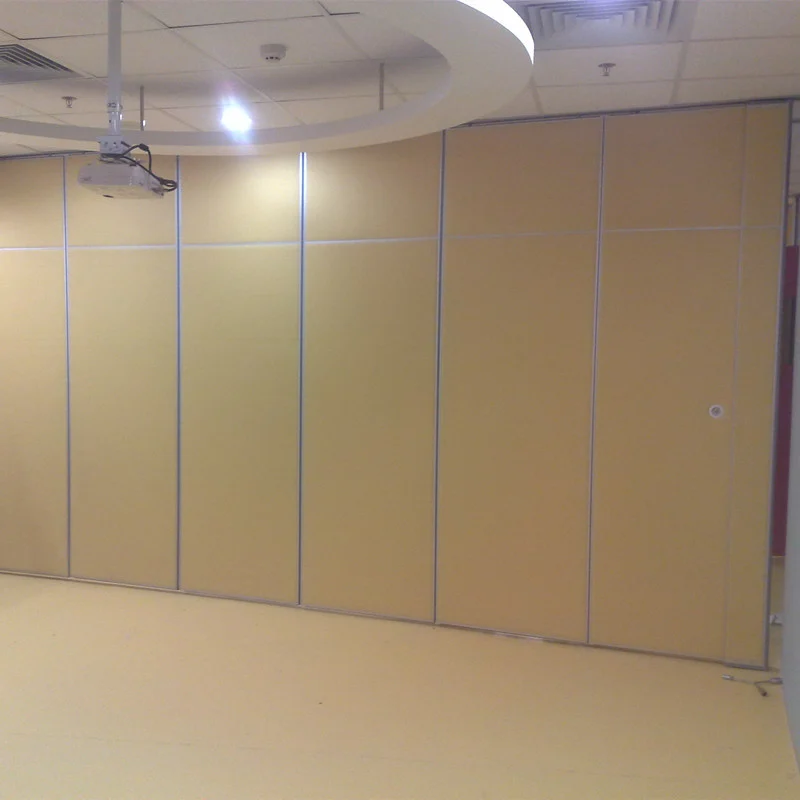
| Field | Purpose | Evidence to attach |
|---|---|---|
| Stage reference | Links the line to the approved programme | Programme extract or phase drawing |
| Occupied zone | Identifies the area relying on separation | Marked-up layout |
| Separation arrangement | States whether a movable partition, temporary screen or no separation applies | Layout showing track route and parking position |
| Route review status | Confirms straight, turning and stacking routes were checked | Reviewed drawing or route sketch |
| Handover action | Records acceptance or rejection at the transition | Signed handover note |
| Open item | Captures anything requiring project-specific confirmation | RFI or meeting action |
Keep one register per building or per tenancy, with a clear revision date. If two teams maintain separate copies, the stage transition will eventually be recorded twice and differently.
Building the Register Before Work Starts
Checklist focus: movable partition renovation temporary separation.
The register should exist before the first panel moves. Start from the phasing plan and list every occupied zone that depends on separation during each stage. Then mark, for each zone, whether separation is provided by a permanent movable partition, by a temporary arrangement, or by nothing at that moment.
The exact route, junction arrangement, continuous overhead path and parking position must be confirmed from the coordinated project drawings.
Numbered Process for the First Issue
- Extract the approved phase sequence and list stage transitions.
- Overlay occupied zones on the layout and identify separation dependencies.
- Mark each movable partition line, its route and its parking position.
- Record the separation arrangement expected at each transition.
- List open items requiring project-specific confirmation.
- Issue the register for review by the design and site teams.
- Set the update frequency and the person responsible.

Managing Temporary Separation During Occupied Stages
Review focus: movable partition renovation temporary separation.
Temporary separation is a planning decision, not a product claim. Where a permanent partition is not yet available, the team may use a temporary arrangement to maintain a visual or physical boundary.
Finish choices for movable partitions include laminate, melamine, fabric, leather, glass and other approved surfaces.
Handover at Each Transition
At every stage transition, walk the affected zones and confirm the register line by line. Record acceptance, rejection or deferral. Where a pass-door is required for circulation, confirm the requirement with the project team and document it against the relevant partition line. Project documentation can be discussed with the supplier where it supports this coordination.
Evidence Boundaries and Common Errors
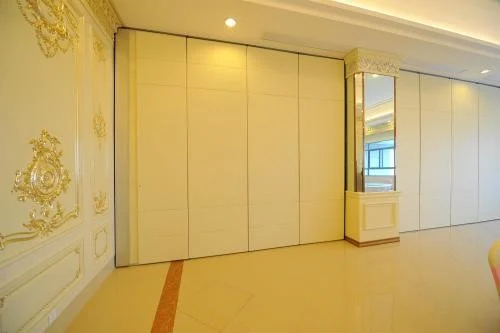
The most common error is inferring performance from appearance. Visible references can support layout discussion but do not verify hidden construction or performance. Comparative or absolute statements need matching evidence; otherwise the register should state the exact confirmation boundary.
Evidence note: the register records arrangements and decisions. Confirm project-specific support, acoustic and dimensional requirements with the responsible design team.
Each of these can be prevented by a short checklist review before the register is reissued.
Review Cadence and Change Control
Review the register at the same cadence as the site programme, and immediately after any change to the phase sequence or partition layout. A revised layout can change routes, parking positions and separation dependencies, so the register must be reissued rather than annotated informally.
Where a zone’s separation arrangement changes, record the reason, the date and the approving party.
Frequently Asked Questions
What is a movable partition renovation temporary separation coverage handover register?
It is a stage-by-stage record of which occupied zones retain separation as renovation phases advance, including the arrangement in place, the evidence reviewed and the handover acceptance at each transition.
Does the register confirm acoustic performance?
No. It records arrangements and decisions. Acoustic expectations must come from the project’s own design documentation and any project-specific confirmation obtained for that configuration.
How are movable partition routes recorded?
Panels are top-hung and cross the opening without a floor track, but every movement path needs a continuous connected overhead route and project-specific support review.
Can temporary screens be used while zones remain occupied?
They can be considered as a planning measure, but the register should state what the arrangement is and when it will change.
When should the register be updated?
At every stage transition and after any change to the phase sequence or partition layout. Reissue it formally rather than annotating an old copy.
What information should be confirmed with the supplier?
Support conditions, route feasibility, parking position, finish options, pass-door requirements and project documentation. Confirm project-specific support, acoustic and dimensional requirements before finalising any stage assumption.
Conclusion
A coverage register keeps renovation phasing honest. It shows which occupied zones still have separation, what arrangement provides it, and who accepted the handover at each transition. Used alongside reviewed layouts and project-specific confirmation, it reduces the risk of an unrecorded gap between stages.
To discuss movable partition layout, route review, finish options or project documentation for your renovation phasing, contact the EBUNGE team. You can also review the movable wall systems and browse the planning resources before preparing your register.