
Quick answer: movable partition renovation staged track zone release acoustic boundary reinstatement
Review focus: movable partition renovation staged track zone release acoustic boundary reinstatement.
Movable partition renovation staged track zone release acoustic boundary reinstatement is a sequencing problem before it is a construction problem. In occupied buildings, the partition line often separates areas that must remain usable while work proceeds nearby. The practical question is not whether panels can move, but when a track zone can be released, how the opening is closed again, and what evidence supports each step. This guide sets out a planning sequence for overseas project teams, with drawing-review checkpoints and clear evidence boundaries.
Why Phasing Changes the Partition Planning Brief
Project review term: movable partition renovation staged track zone release acoustic boundary reinstatement.
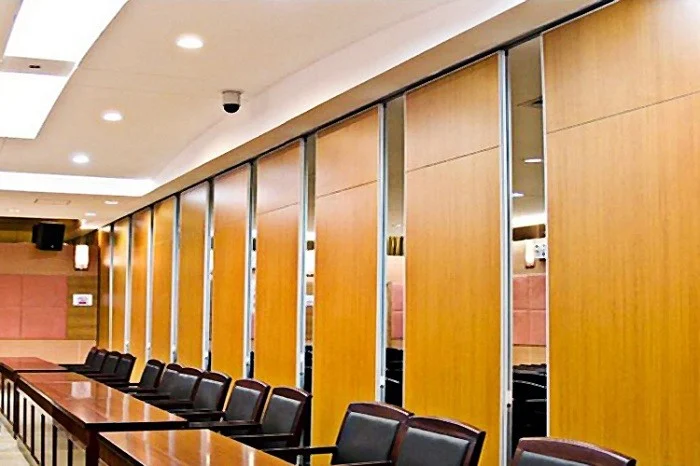
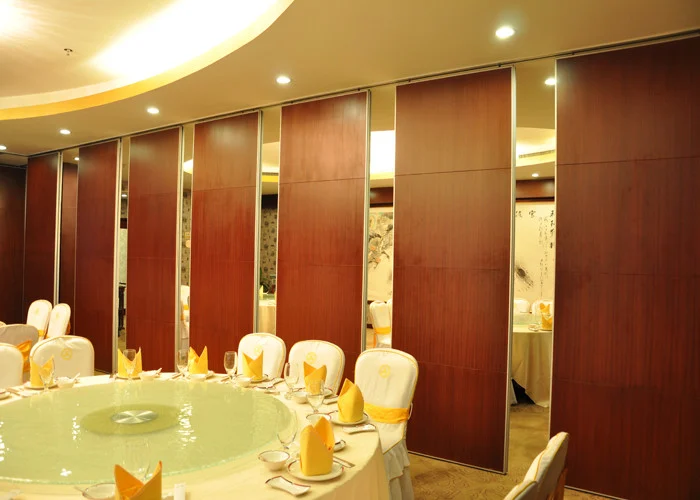
A single-stage installation assumes one continuous work area. Phased renovation splits that area into zones that may be occupied, partially occupied, or temporarily closed. The partition system must be considered as part of the phasing logic, not as a late finishing item. Because EBUNGE movable partition panels are individually movable and suspended from a top track, they cross the opening without a floor track and park at a planned stacking position. That behavior shapes how a zone can be released and reinstated.
Straight, turning and stacking routes are reviewed from the layout. In a phased project, those routes may change between stages. A route that works in Stage 1 may conflict with temporary hoarding, stored materials, or a revised ceiling zone in Stage 2. The planning team should map each stage against the same route drawing rather than assuming the original layout remains valid.
What the drawing review should establish
- The overhead route for each stage, including straight runs, turns and the parking position.
- Which zones are released, which remain occupied, and where the acoustic boundary must be reinstated.
- Any temporary conditions that could interrupt a continuous connected overhead route.
- The point at which project-specific support, acoustic and dimensional requirements are confirmed.
Staged Track Zone Release: A Numbered Sequence
Coordination scope: movable partition renovation staged track zone release acoustic boundary reinstatement.
Track zone release means the planned moment when a section of the partition route is taken out of service so adjacent work can proceed. It is a coordination event, not a product setting. The sequence below keeps the release tied to visible evidence and drawing review.
- Confirm the stage boundary. Identify the exact opening or partition line that will be released and the areas that must remain separable.
- Verify the parking position. Check that the planned stacking position is reachable from the released zone and does not block an occupied route.
- Review the overhead route. The exact route, junction arrangement, continuous overhead path and parking position must be confirmed from the coordinated project drawings.
- Record the reinstatement target. State which acoustic boundary must be restored before the next phase begins.
- Issue the release instruction. Tie it to the approved drawing and the project-specific confirmation of support and dimensions.
- Inspect before reinstatement. Check the opening, the route and the parking area against the drawing before panels are returned.

Evidence note
Do not infer support capacity, acoustic performance or dimensional fit from a finish sample, photograph or previous project. Those items require project-specific confirmation against the current layout and structure.
Progressive Acoustic Boundary Reinstatement
Checklist focus: movable partition renovation staged track zone release acoustic boundary reinstatement.
Acoustic boundary reinstatement is the process of returning the partition line to its intended separating condition after a release. In phased work, this is progressive: each stage restores a boundary before the next stage disturbs another. The planning value is in the sequence, not in a single performance number.
The suitability of each route and parking arrangement depends on the approved layout, circulation, ceiling interfaces and operating sequence. For that reason, this guide does not assign performance values. Project teams should confirm acoustic requirements with the responsible acoustic specialist and verify them against the actual construction.
Visible references can support layout discussion but do not verify hidden construction or performance. In a phased project, temporary conditions may interrupt that boundary. The reinstatement plan should identify which interfaces are restored at each stage and who confirms them.
Reinstatement checklist
- Is the opening fully closed by the intended panel arrangement?
- Are the interfaces between panels, track and adjacent construction reviewed against the drawing?
- Has the acoustic specialist confirmed the stage requirement?
- Are temporary works removed before the boundary is treated as reinstated?
- Is the next release scheduled only after reinstatement is inspected?
Coordinating Finishes, Pass Doors and Documentation
Review focus: movable partition renovation staged track zone release acoustic boundary reinstatement.
Confirmed finish options include laminate, melamine, fabric, leather, glass and other approved surfaces. In a phased renovation, finish decisions may be split across stages, so the specification should state which finish applies to which zone and when it is installed.
Pass-door requirements and project documentation can be discussed with the EBUNGE team. A pass door changes the opening sequence and may affect how a zone is released and reinstated. The project documentation should record the approved arrangement, the stage in which it is installed, and the inspection point before the boundary is considered complete.
Compact comparison: release versus reinstatement
| Planning item | Track zone release | Acoustic boundary reinstatement |
|---|---|---|
| Primary question | Can this route be taken out of service? | Is the separating boundary restored? |
| Drawing focus | Route, parking, stage boundary | Opening closure, interfaces, stage requirement |
| Evidence needed | Approved layout and support review | Project-specific acoustic confirmation |
| Handover point | Release instruction issued | Inspection completed before next release |
Common Planning Gaps in Occupied Buildings
Project review term: movable partition renovation staged track zone release acoustic boundary reinstatement.
Most phasing problems appear before installation. One common gap is treating the parking position as a fixed assumption rather than a coordinated design item. Parking style is customized to the customer layout and project requirements and may support compact stacking when the coordinated design permits it. If the layout changes between stages, the parking position should be rechecked.
Another gap is assuming that a visible opening can be crossed without a continuous connected overhead route. Every proposed movement path requires a continuous connected overhead route and project-specific support review. This is a hard planning boundary, not a preference.
A third gap is documentation drift. When stage drawings, finish schedules and pass-door details are updated separately, the reinstatement plan can fall out of step. A single controlled drawing set for each stage reduces that risk.
FAQ: Phased Partition Planning
Coordination scope: movable partition renovation staged track zone release acoustic boundary reinstatement.
What does staged track zone release mean in a renovation?
It means a planned stage in which a section of the partition route is taken out of service so adjacent work can proceed, with the release tied to an approved drawing and a confirmed parking position.
Can movable partitions be used while part of the building remains occupied?
They can be considered where flexible division or reconfiguration is required, but the phasing plan must confirm routes, parking and reinstatement for each stage. Occupied-area conditions require project-specific review.
How is acoustic boundary reinstatement confirmed?
Confirm it against the project-specific acoustic requirement and the actual construction.
Do the panels need a floor track during phased work?
EBUNGE movable partition panels are top-hung and cross the opening without a floor track. The overhead route must remain continuous and connected for every proposed movement path.
Which finishes can be specified for phased zones?
Confirmed options include laminate, melamine, fabric, leather, glass and other approved surfaces.
When should pass doors be coordinated?
Pass-door requirements can be discussed early, because they change the opening sequence and may affect release and reinstatement. Record the approved arrangement in the project documentation.
Conclusion: Sequence First, Evidence Always
Phased renovation succeeds when track zone release and acoustic boundary reinstatement are planned as a sequence, not as separate trades. Map each stage against the layout, keep the overhead route continuous, confirm parking, and reinstate the boundary before the next release. Confirm project-specific support, acoustic and dimensional requirements with the responsible specialists, and keep one controlled drawing set per stage.
To discuss pass-door requirements, finishes, documentation or a phased layout review, contact the EBUNGE team. You can also review the movable wall product range and the planning resources before your next coordination meeting.