
Quick answer: circulation impact assessment
Review focus: circulation impact assessment.
Facility planners often treat accessibility as a one-time approval milestone. In flexible venues, however, every reconfiguration can change how people move through the building. A movable partition reconfiguration circulation impact assessment turns that recurring change into a repeatable planning routine rather than a last-minute check. This guide sets out a structured method for reviewing circulation each time panels are repositioned, using maintained product facts and project-specific drawings as the evidence base.
Why Reconfiguration Changes Circulation
Project review term: circulation impact assessment.
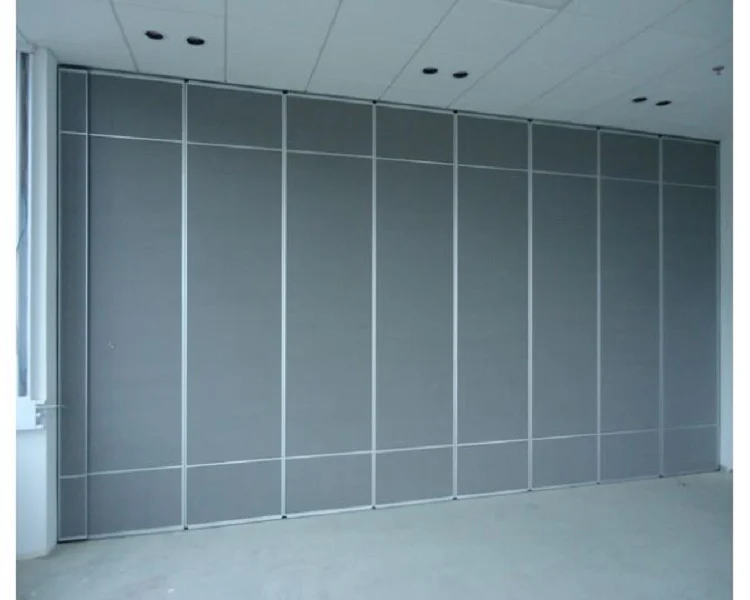
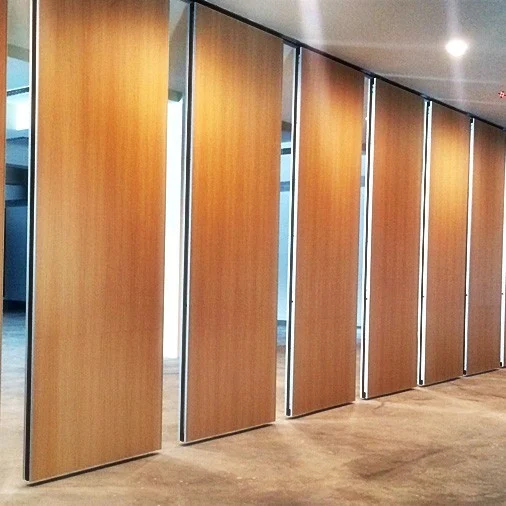
EBUNGE movable wall panels are individually movable, suspended from a top track, and cross the opening without a floor track. They park at a planned stacking position. Because panels travel along a continuous overhead route, the position of the opening and the parking location both affect adjacent corridors, doorways and waiting areas.
A layout that works well in one configuration may create a pinch point in another. The assessment therefore reviews each planned configuration, not just the default open or closed state. Straight, turning and stacking routes should be reviewed from the layout so that the movement path is understood before installation planning advances.
Core Inputs for the Assessment
Coordination scope: circulation impact assessment.
Before any circulation review, gather the project information that defines the space. Missing inputs are the most common reason assessments stall or produce unreliable conclusions.
- Current and proposed floor plans showing all intended configurations.
- Locations of exits, corridors, stairs, lifts and accessible routes.
- Planned stacking positions and the routes panels follow to reach them.
- Door and pass-door requirements, including any accessible pass-door needs.
- Furniture, fixed equipment and service zones that may obstruct movement.
- Local accessibility regulations and project-specific compliance criteria.
These inputs allow the team to trace how each configuration alters the usable circulation network. Where information is incomplete, record it as an open item rather than assuming a default condition.
A Step-by-Step Reconfiguration Review Process
The following sequence can be repeated for every configuration cycle. It keeps the review consistent across phases and handovers.
- Define each configuration and label it clearly on the layout.
- Trace the primary circulation routes for each configuration.
- Identify where routes narrow, merge or cross the partition line.
- Check the panel travel path from the opening to the stacking position.
- Review pass-door and accessible route requirements for each configuration.
- Record conflicts, open questions and required project-specific confirmations.
- Re-run the review whenever the layout or stacking position changes.
This process does not replace a formal accessibility audit. It provides a consistent internal check so that circulation impacts are visible early, when they can still be coordinated with the wider design team.
Evidence Boundaries and What Not to Infer
An assessment is only as reliable as the evidence behind it. Visible references can support layout discussion but do not verify hidden construction or performance. Those require matching project-specific evidence.
Do not derive hidden acoustic, structural, durability or commercial performance from a visible shape, finish or drawing. Confirm project-specific support, acoustic and dimensional requirements with the responsible parties.
The suitability of each route and parking arrangement depends on the approved layout, circulation, ceiling interfaces and operating sequence. Where acoustic separation matters, the project team should confirm the required rating and the evidence that supports it.
Coordination Across Design and Construction Teams
Circulation impacts rarely sit with one discipline. Architects, interior designers, contractors and facility owners each hold part of the picture. Early coordination prevents a configuration that looks acceptable on paper from creating an awkward route in practice.
Roles and Handover Points
Architects typically own the layout and accessibility strategy. Contractors confirm buildability and installation sequencing. Owners and facility teams confirm how the space will actually be used day to day. The assessment should be reviewed at each design stage and again before handover.
Documentation to Carry Forward
Keep a configuration register, marked-up circulation plans and a list of open confirmations. This record supports future renovations and helps new team members understand why certain routes were chosen.
Common Planning Pitfalls
Several recurring issues weaken circulation reviews. Recognising them early saves rework.
- Reviewing only the fully open or fully closed state.
- Forgetting the panel travel path to the stacking position.
- Assuming a pass-door location without confirming it against accessible route needs.
- Treating a finish sample as evidence of performance.
- Leaving dimensional or support questions unresolved until installation.
Each pitfall can be addressed by returning to the layout and the project-specific requirements. The goal is not to eliminate flexibility but to plan it deliberately.
FAQ: Reconfiguration and Circulation Reviews
What is a movable partition reconfiguration circulation impact assessment?
It is a structured review of how each planned partition configuration changes circulation routes, access points and panel movement paths. It is repeated whenever the layout or stacking position changes.

Does every reconfiguration need a new review?
Any change to the opening, stacking position or surrounding layout can alter circulation. Panel handling and the operating sequence must be confirmed for the selected layout and project conditions.
Can movable partitions be used without a floor track?
EBUNGE movable wall panels are top-hung and move without a continuous floor running track or floor hardware along the partition line. The exact route, junction arrangement, continuous overhead path and parking position must be confirmed from the coordinated project drawings.
How are acoustic requirements handled in the review?
Acoustic separation is a project-specific requirement. Confirm the required rating and supporting evidence for each project.
What finish options are available?
Confirmed finish options include laminate, melamine, fabric, leather, glass and other approved surfaces.
When should the assessment start?
It should begin as soon as configurations and stacking positions are first sketched, and continue through design, construction and handover.
Conclusion and Next Steps
A movable partition reconfiguration circulation impact assessment gives facility planners a repeatable way to check accessibility and circulation across every configuration cycle. By defining inputs, following a consistent process and respecting evidence boundaries, teams can coordinate flexible spaces with greater confidence.
To discuss pass-door requirements, project documentation or configuration planning for your project, contact the EBUNGE team. You can also review movable wall products and browse planning resources for further guidance. Confirm project-specific support, acoustic and dimensional requirements before finalising any layout.