
Quick answer: movable partition phased commissioning handover
Review focus: movable partition phased commissioning handover.
In occupied buildings, a movable partition phased commissioning handover is rarely a single event. It is a sequence of checks that follows the renovation phasing already agreed by the project team. Because EBUNGE movable wall panels are individually movable, suspended from a top track, cross the opening without a floor track, and park at a planned stacking position, the handover logic must follow the same physical routes the panels will use. This article sets out a coordination framework for contractors, architects, interior designers, owners and renovation teams. It does not replace project-specific support, acoustic or dimensional confirmation.
Why Phased Handover Suits Occupied Renovation
Project review term: movable partition phased commissioning handover.
Occupied buildings rarely allow a full shutdown. Work proceeds zone by zone, and each zone may need to function before the next is complete. A phased handover approach lets the project team verify what is visible and agreed at each stage instead of waiting for a single final inspection.
For movable partitions, the visible elements are limited: panel faces, the top track, the parking area and the movement route. The suitability of each route and parking arrangement depends on the approved layout, circulation, ceiling interfaces and operating sequence. Treating handover as a progressive process helps separate what can be seen from what still requires evidence.
Route Review Before Any Commissioning Step
Coordination scope: movable partition phased commissioning handover.
Straight, turning and stacking routes should be reviewed from the layout before commissioning begins. The exact route, junction arrangement, continuous overhead path and parking position must be confirmed from the coordinated project drawings.
What the route review should capture
- The opening the panels cross and the direction of travel.
- Any turning point where the route changes direction.
- The planned stacking position and how panels gather there.
- Adjacent finishes, services or structure that the route passes.
- Whether the route remains clear once the building is occupied.
This review is a coordination exercise, not a performance calculation.
A Phased Commissioning Sequence for Project Teams
Checklist focus: movable partition phased commissioning handover.
The sequence below is a planning aid. It should be adapted to the actual renovation phases and to the responsibilities agreed in the project documentation.
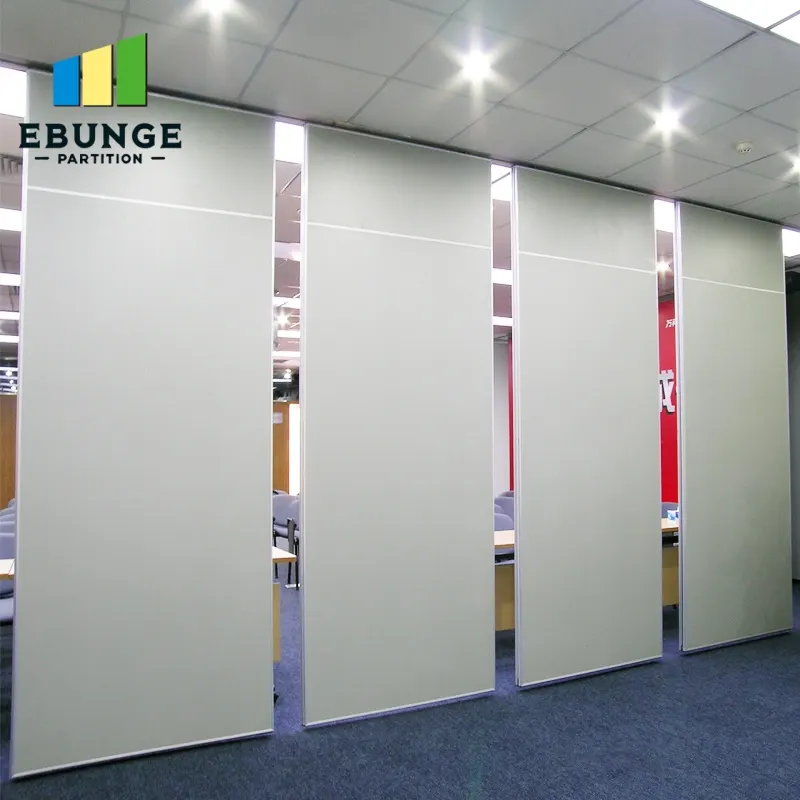
- Confirm the phase boundaries. Identify which rooms or zones will be handed over first and which remain under construction.
- Check the overhead route. Verify that the continuous connected route matches the reviewed layout for each phase.
- Review parking. Confirm the planned stacking position is reachable and does not conflict with other trades.
- Inspect visible finishes. Compare installed faces against the approved finish schedule.
- Record open items. List anything that cannot be verified at that stage and assign it to a later phase.
- Repeat per phase. Carry forward unresolved items rather than closing them prematurely.
Each step produces evidence that can be photographed, measured or noted. None of these steps should be used to infer hidden performance.
Progressive Handover and Evidence Boundaries
Review focus: movable partition phased commissioning handover.
Progressive handover means partial acceptance of defined scope. It is useful in occupied buildings because it allows early zones to be used while later zones are still being completed. The boundary is what can be evidenced at that moment.
Visible evidence versus project-specific confirmation
| Item | Can be checked visually | Requires project-specific confirmation |
|---|---|---|
| Panel finish type | Yes, against approved schedule | Cleaning compatibility and durability |
| Top track route | Yes, continuity and alignment | Support and load review |
| Parking position | Yes, location and access | Stacking arrangement and clearances |
| Acoustic behaviour | No | Yes, via project documentation |
| Pass-door provision | Yes, if included | Requirement and documentation |
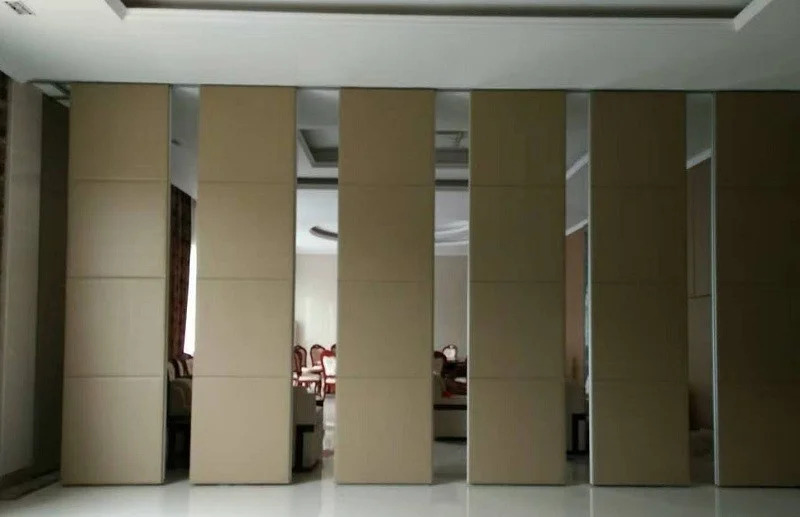
Confirm acoustic requirements with the project team.
Finish Options and Phase-by-Phase Inspection
Confirmed finish options include laminate, melamine, fabric, leather, glass and other approved surfaces. During phased handover, each installed panel face can be compared with the approved finish schedule for that zone.
Those questions belong to the project specification and should be answered with matching documentation. If a finish is changed mid-project, the change should be recorded and reflected in the handover notes for the affected phase.
Coordination with Other Trades in Occupied Buildings
Movable partitions interact with ceilings, lighting, fire services and floor finishes. In an occupied building, these interactions change as phases progress. A route that is clear in phase one may be obstructed in phase three if later trades install equipment nearby.
Practical coordination checks
- Confirm that the overhead route remains continuous after adjacent works.
- Check that the parking area is not used for temporary storage.
- Verify that pass-door requirements are documented if a pass door is part of the design.
- Record any deviation from the reviewed layout for the next phase.
These checks keep the phased handover grounded in what is visible and agreed, rather than in assumptions about performance.
Documentation to Carry Through Each Phase
Project documentation can be discussed with the EBUNGE team and should travel with the handover. Useful items include the reviewed layout showing straight, turning and stacking routes, the approved finish schedule, and a record of open items from previous phases.
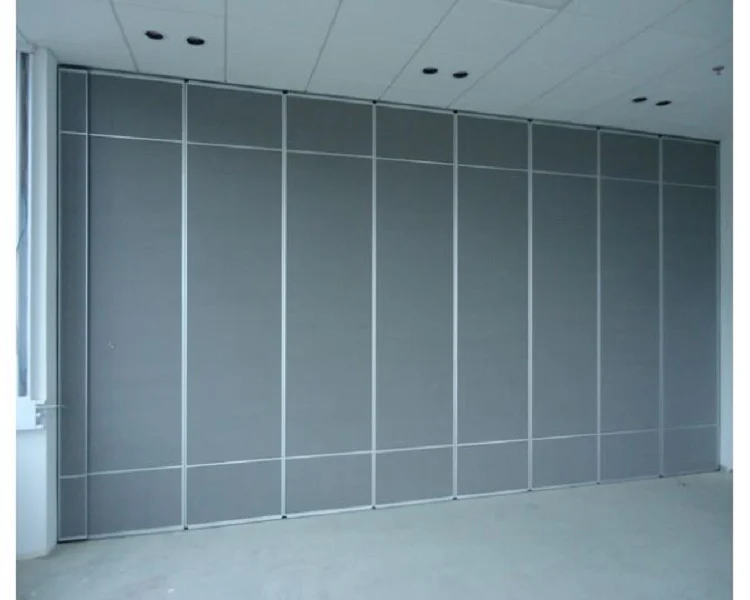
Documentation does not replace site verification, and site verification does not replace documentation. The two work together. Where a requirement cannot be confirmed from either source, it should remain open until the responsible party provides the missing evidence.
Frequently Asked Questions
What does movable partition phased commissioning handover mean in practice?
It means checking and accepting defined parts of the movable partition scope as renovation phases complete, rather than waiting for a single final inspection. Each phase carries forward any item that cannot yet be verified.
Can panels move across an untracked gap?
No. Every proposed movement path requires a continuous connected overhead route and project-specific support review. Straight, turning and stacking routes should be reviewed from the layout.
Do movable partitions need a floor track?
EBUNGE movable wall panels are top-hung and cross the opening without a floor track. Parking style is customized to the layout and project requirements, and may support compact stacking when the coordinated design permits it.
Which finish options can be specified?
Confirmed options include laminate, melamine, fabric, leather, glass and other approved surfaces. Finish selection should be recorded in the approved schedule and checked during each phase.
How should acoustic requirements be handled?
Acoustic requirements are project-specific. Confirm acoustic requirements with the project team and the relevant documentation.
When should the project team contact EBUNGE?
Early coordination is useful. Pass-door requirements and project documentation can be discussed before phasing is fixed, so that route review and handover planning align with the construction sequence.
Conclusion and Next Step
A phased commissioning and progressive handover framework helps occupied buildings keep moving. It keeps attention on visible evidence, reviewed routes and open items, while leaving performance and engineering conclusions to project-specific confirmation.
To discuss your layout, phasing and documentation, contact the EBUNGE team. You can also review the movable wall product range and browse project resources before your next coordination meeting.