
When budgeting for a community center project, the movable partition cost is often one of the most misunderstood line items. Contractors frequently receive quotes that vary widely for what seems like the same operable wall system, leaving them unsure how to compare bids or plan contingencies. The truth is that the finishes applied to your movable partition wall—whether laminate, vinyl, tackable fabric, or custom paint—play a decisive role in the final price, but they are only one part of a complex pricing structure. This article breaks down the real factors that influence movable partition finishes cost for community centers, helping you ask the right questions and prepare a quotation-ready inquiry.
Direct answer: The movable partition cost for a community center is driven by the type and quality of finishes, the size and configuration of the opening, the acoustic performance required, and the complexity of installation—especially when using a top-hung track system without a floor rail. To get an accurate quote, you must provide the opening size, architectural drawings, acoustic target, finish preference, and project location.
Movable Partition Cost: Why Finish Selection Has an Outsize Impact on Your Budget
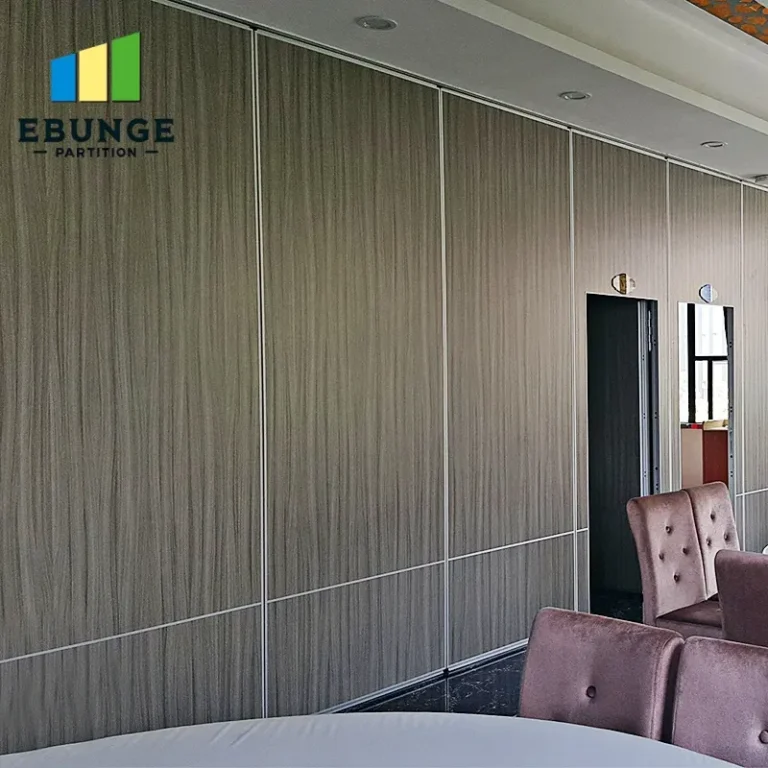
Finishes are not just aesthetic choices; they affect manufacturing time, material costs, and durability. A standard vinyl laminate is far less expensive than a custom tackable fabric that must be wrapped and seamed by hand. For a community center, where walls will see constant use by children, teens, and community groups, choosing a finish that balances cost with longevity is critical. Remember that the movable partition finishes supplier you choose will have different capabilities and pricing structures, so it’s wise to compare like-for-like specifications.
Need help turning the movable partition cost requirements into a practical project layout?
Key Cost Drivers in Movable Partition Systems
Beyond finishes, several technical elements determine the overall price of your operable wall system. Understanding these will help you evaluate quotes and avoid surprises.
Opening Size and Configuration
The larger the opening, the more panels, track, and hardware you need. Irregular shapes—like curved or angled walls—require custom fabrication, which increases cost. Always measure the exact width and height of the opening, including any obstructions like columns or ceiling height variations.
Acoustic Performance Requirements
Community centers often need to divide spaces for simultaneous activities. If you need a high Sound Transmission Class (STC) rating, your movable partition wall will require thicker panels, additional seals, and more robust hardware. These features add cost but are essential for noise control. Be sure to specify your acoustic target in your inquiry.
Top-Hung Track vs. Floor Rail
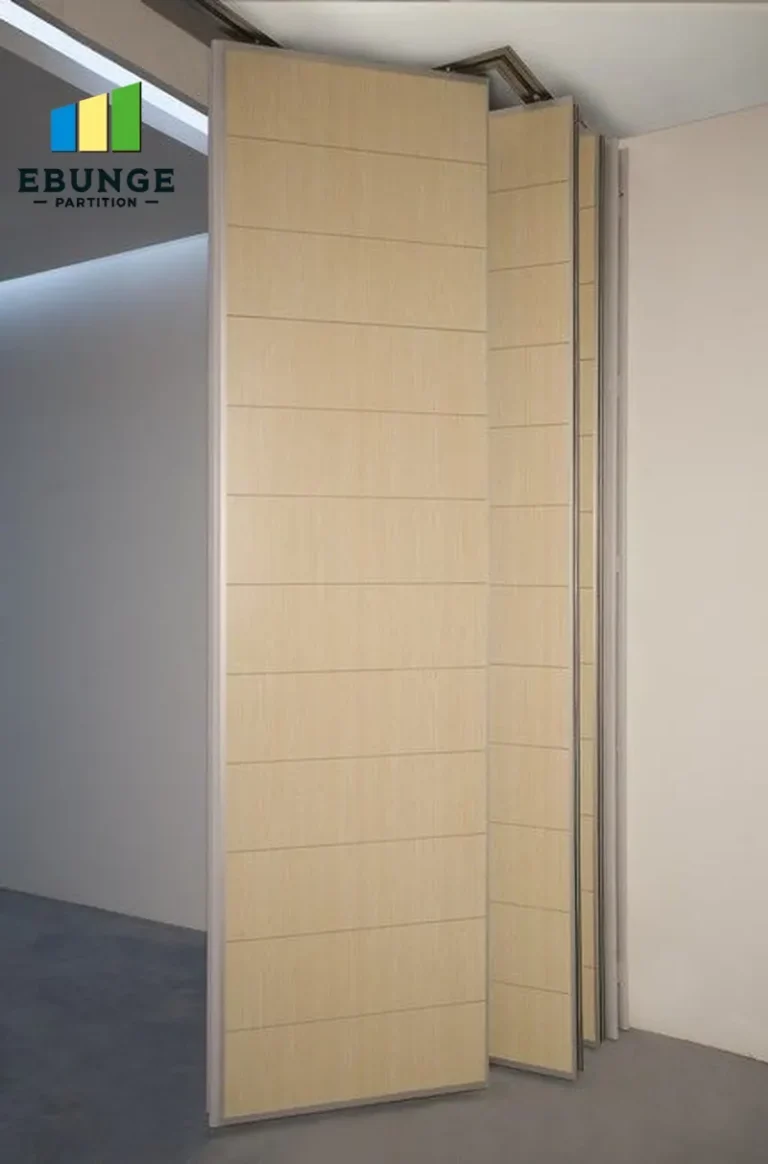
Our EBUNGE system uses a top-hung track without a floor rail, which simplifies installation and reduces the risk of trip hazards. This design also affects cost: it requires a structurally sound ceiling to support the weight of the panels, which may involve additional engineering or reinforcement. However, it eliminates the need for floor track installation, which can be a cost-saving factor.
Finish Options: Balancing Aesthetics, Durability, and Price
Your choice of finish affects not only the initial cost but also the total cost of ownership. Here are common options for community centers:
- Vinyl laminates: Economical, easy to clean, and available in many colors. They are durable but may not be as acoustically absorbent as fabric.
- Fabric finishes: Offer better acoustic absorption and a warmer look. Tackable fabric is ideal for community spaces where people want to pin notices. However, fabric is more expensive and requires careful maintenance.
- Custom paint or wood veneer: Provide a high-end aesthetic but are the most costly and may require more maintenance.
- Magnetic surfaces: Increasingly popular for community centers, these allow for interactive displays but add to the cost.
When requesting quotes, ask for a breakdown of finish costs separately from the base system. This transparency helps you compare suppliers fairly.
Installation Complexity and Its Effect on Total Cost
Installation is not just about labor; it involves site conditions, coordination with other trades, and the complexity of the top-hung track system. If your ceiling is not level or lacks adequate support, additional framing or structural steel may be needed. Also, consider the logistics of delivering large panels to the site, especially if the building is in a dense urban area. These factors can significantly increase the movable partition cost.
Lead Time and Warranty: Hidden Factors in Quotations
Custom finishes and large orders often require longer lead times. If you have a tight schedule, you may need to pay a premium for expedited manufacturing. Additionally, warranty coverage varies by supplier. A longer warranty on finishes can save you money in the long run, but it may come with a higher upfront price. Always ask about warranty terms for both the system and the finishes.
Share the opening, drawings, finish direction, and privacy target for a project-specific review.
Compliance with Building Codes and Accessibility
Community centers must comply with local building codes, including accessibility standards. For movable partition walls, this may mean ensuring that the wall operates with minimal force, that there are no trip hazards (which our top-hung system naturally avoids), and that the wall does not obstruct egress. These compliance requirements can influence design choices and, consequently, cost. Your supplier should be familiar with the codes in your area.
How to Get a Quotation-Ready Inquiry
To receive accurate and comparable quotes, you must provide detailed information. Here is a checklist to prepare before contacting suppliers:
- Exact opening dimensions (width, height, depth).
- Architectural drawings (PDF or CAD) showing the wall location and adjacent structures.
- Acoustic target (STC rating).
- Finish preference (type, color, texture).
- Number of panels and stacking configuration.
- Ceiling type and height.
- Project location (for shipping and installation logistics).
- Timeline and any special requirements (e.g., lead time).
Providing this information upfront reduces back-and-forth and ensures that the quotes you receive are apples-to-apples.
Comparing Quotes: A Practical Table
Use the following table to compare proposals from different suppliers:
| Criteria | Supplier A | Supplier B | Supplier C |
|---|---|---|---|
| Base system cost | |||
| Finish cost | |||
| Acoustic rating included? | |||
| Top-hung track system? | |||
| Installation cost | |||
| Lead time | |||
| Warranty (years) | |||
| Compliance with codes |
Frequently Asked Questions
What is the typical cost range for movable partition finishes?
Costs vary widely based on finish type and quality. Vinyl laminates are generally the most affordable, while custom fabric or wood veneer are at the higher end. For an accurate estimate, request a quote with detailed specifications.
How does the acoustic rating affect the price?
Higher STC ratings require more insulation, thicker panels, and additional seals, all of which increase material and manufacturing costs. Specify your target rating to get precise pricing.
Is a top-hung track system more expensive than a floor rail?
Not necessarily. While the top-hung track may require additional structural support, it eliminates the cost of floor track installation and reduces labor time. Our EBUNGE system is designed to be cost-effective in the long run.
Can I choose any finish, or are there limitations?
Most suppliers offer a range of standard finishes, but custom colors or materials may require special orders and longer lead times. Always confirm availability with your supplier.
What should I include in my inquiry to get a fast quote?
Provide the opening size, drawings, acoustic target, finish preference, and project location. This information allows the supplier to prepare a detailed and accurate quotation quickly.
Conclusion: Prepare Your Inquiry to Control Costs
The movable partition cost for your community center project depends on a combination of factors, with finishes being a significant but controllable element. By understanding how finishes, system design, installation complexity, and lead times influence price, you can make informed decisions and avoid budget overruns. When you are ready to request a quote, ensure you provide comprehensive project details—including opening size, drawings, acoustic target, finish preference, and location—to receive accurate pricing. For more insights on movable partition walls, explore our blog or review our movable partition cost category. To discuss your specific project, contact us today.
Send the opening size and drawings to discuss a differentiated movable partition cost solution.