
When planning a training center, the acoustic room divider cost is often the first question buyers ask, but the real challenge lies in understanding what drives the final quotation. As a building material distributor, you need to move beyond sticker prices and evaluate the total cost of ownership, including installation, maintenance, and long-term performance. This guide breaks down the key factors that influence movable partition cost, helping you prepare accurate budgets and ask the right questions before requesting a quote.
In short, the acoustic room divider cost for a training center depends on five main variables: the size and configuration of the operable wall system, the acoustic rating required, the finish and customization level, the type of track system (top-hung vs. floor-supported), and the supplier’s scope of supply (including installation, warranty, and after-sales support). To get an accurate quotation, you must provide your opening size, architectural drawings, acoustic target, finish preference, and project location.
Movable Partition Cost: Why Training Centers Have Unique Partition Requirements
Training centers are not typical office spaces. They host a variety of activities—from lectures and group discussions to hands-on workshops and presentations. This means the acoustic partition solutions must be flexible, durable, and capable of providing different levels of sound isolation depending on the activity. Unlike a permanent wall, a movable partition wall must be easy to operate, store, and maintain, while still delivering consistent acoustic performance. These requirements directly influence the movable partition cost, as higher flexibility and acoustic performance typically require more sophisticated engineering and materials.
Moreover, training centers often have existing infrastructure like HVAC, lighting, and sprinkler systems that may need to be integrated with the operable wall system. Compatibility with these systems can affect both the installation complexity and the overall cost. A thorough site assessment is essential to avoid unexpected expenses.
Need help turning the movable partition cost requirements into a practical project layout?
Key Cost Drivers for Acoustic Room Dividers
Understanding the cost drivers helps you compare quotes from different acoustic room divider suppliers and make informed decisions. Here are the primary factors that influence the price:
1. Size and Configuration
The total area of the partition, the number of panels, and the stacking space required directly impact material and labor costs. Larger openings or complex configurations (e.g., curved or angled walls) increase the cost per square meter. Be precise about your opening dimensions, as even small deviations can change the quotation.
2. Acoustic Rating (STC or Rw)
The acoustic performance is measured by Sound Transmission Class (STC) or Weighted Sound Reduction Index (Rw). Higher ratings require thicker panels, additional insulation, and better seals, all of which raise the acoustic room divider cost. For training centers, a rating of STC 40-45 is common for general use, but if you need to isolate simultaneous sessions, you may need STC 50 or higher. Always clarify the exact rating and ask for test reports.
3. Finish and Customization
Standard finishes like white laminate are cost-effective, but custom colors, wood veneers, or acoustic fabric wraps add to the price. Additionally, features like integrated whiteboards, projection screens, or glass panels increase costs. Decide on the finish early to avoid changes later.
4. Track System: Top-Hung vs. Floor-Supported
A top-hung track system, which requires no floor rail, is often preferred for training centers because it allows for a clean, uninterrupted floor surface. However, it requires adequate structural support in the ceiling. Floor-supported systems are easier to install but may have a lower ceiling load requirement. The choice affects both the product cost and installation complexity.
5. Supplier Scope and Services
Some suppliers offer only the panels, while others provide complete project coordination, including installation, finishing, and after-sales support. The latter reduces your administrative burden but increases the initial cost. However, it can lower total cost of ownership by ensuring proper installation and maintenance.
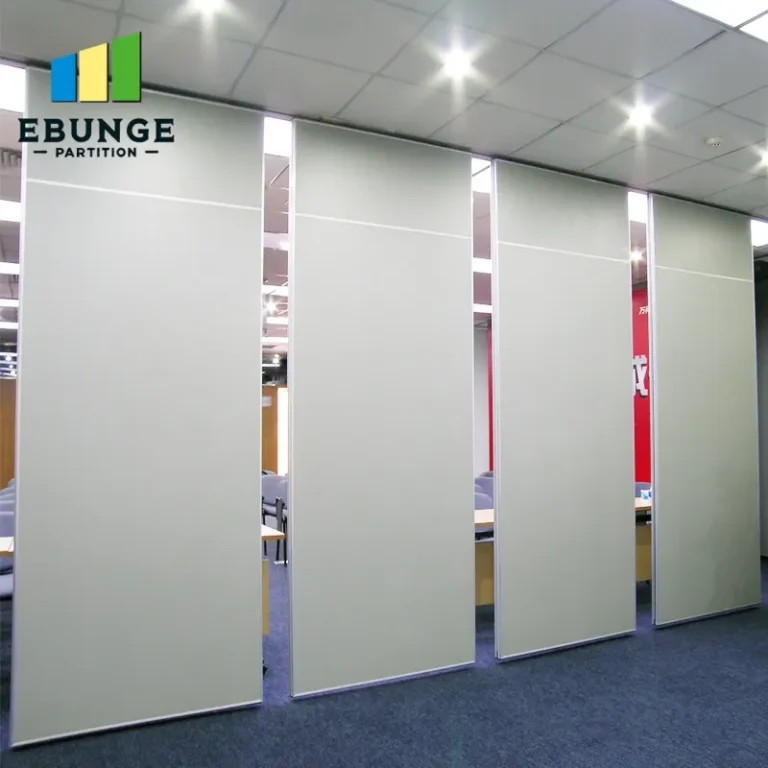
Understanding the Quotation Process: What to Prepare
To receive an accurate and competitive quotation from an acoustic room divider supplier, you need to provide specific information. This not only speeds up the process but also ensures that the quote reflects your actual needs. Here’s a checklist:
- Opening size: Width, height, and depth of each opening (in millimeters).
- Architectural drawings: Floor plans, ceiling details, and wall sections.
- Acoustic target: Desired STC or Rw rating, and whether you need to meet specific building codes.
- Finish preference: Color, material, and any special features (e.g., tackable surface).
- Project location: Site address, floor number, and access conditions for delivery and installation.
- Infrastructure details: Existing ceiling type, floor covering, and any obstructions (e.g., sprinklers, ductwork).
- Operational requirements: Frequency of use, number of panels, and stacking space.
By providing these details, you enable the supplier to offer a more precise quote, reducing the risk of change orders later.
Comparing Quotes: What to Look For
When you receive multiple quotes for your movable partition wall project, it’s essential to compare them on an “apples-to-apples” basis. Here’s a comparison table to help you evaluate:
| Criteria | Quote A | Quote B | Quote C |
|---|---|---|---|
| Base price per m² | |||
| Acoustic rating (STC/Rw) | |||
| Finish options included | |||
| Track system type | |||
| Installation included? | |||
| Lead time (weeks) | |||
| Warranty period (years) | |||
| Maintenance requirements | |||
| Delivery terms |
Pay attention to what’s included in the base price. Some suppliers may exclude seals, hardware, or shipping, which can significantly inflate the final cost.
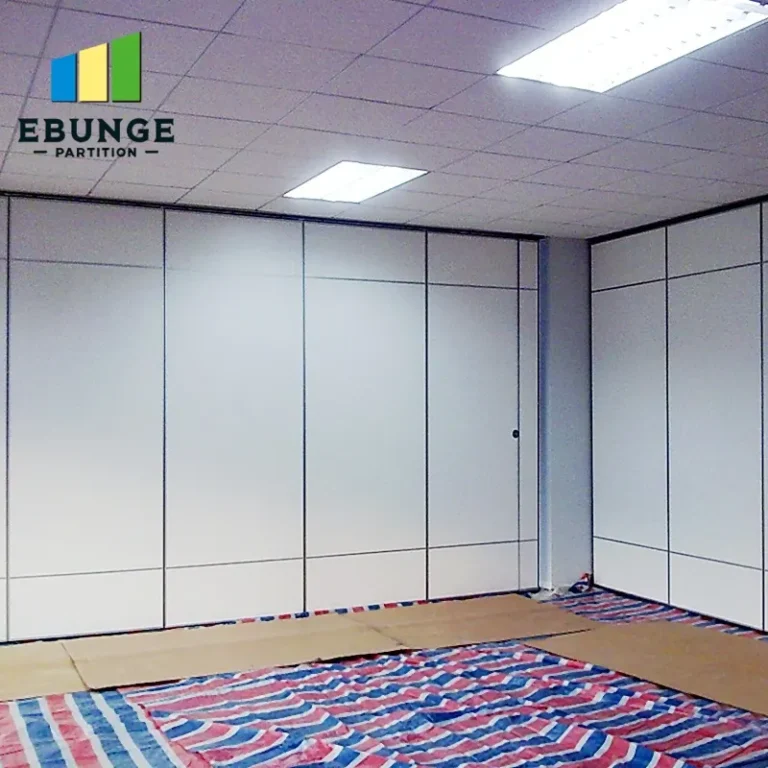
Total Cost of Ownership: Beyond the Initial Quote
The movable partition cost is not just the purchase price. Consider the long-term expenses associated with operating and maintaining the wall system. These include:
- Maintenance: Regular inspection and lubrication of tracks, replacement of seals, and cleaning of panels. Top-hung systems generally have lower maintenance than floor-supported ones.
- Energy efficiency: A well-sealed partition can reduce heating and cooling costs by allowing you to zone off unused areas.
- Durability: High-quality materials and construction reduce the need for repairs and extend the lifespan.
- Insurance and warranty: Ensure the warranty covers parts and labor, and understand any exclusions.
Ask your supplier for maintenance guidelines and recommended service intervals. This will help you budget for ongoing costs.
Compatibility with Existing Infrastructure
Before installing an operable wall system, you must verify that your training center’s infrastructure can support it. For a top-hung track system, the ceiling must be structurally capable of carrying the weight of the panels. This may require additional steel reinforcement, which adds to the cost. Similarly, the floor must be level, and there should be no obstructions in the stacking area.
If you have a suspended ceiling, you’ll need to integrate the track with the ceiling grid, which may involve additional framing. Fire sprinklers and HVAC diffusers must be relocated if they interfere with the partition’s path. These factors are often overlooked but can significantly impact the overall budget.
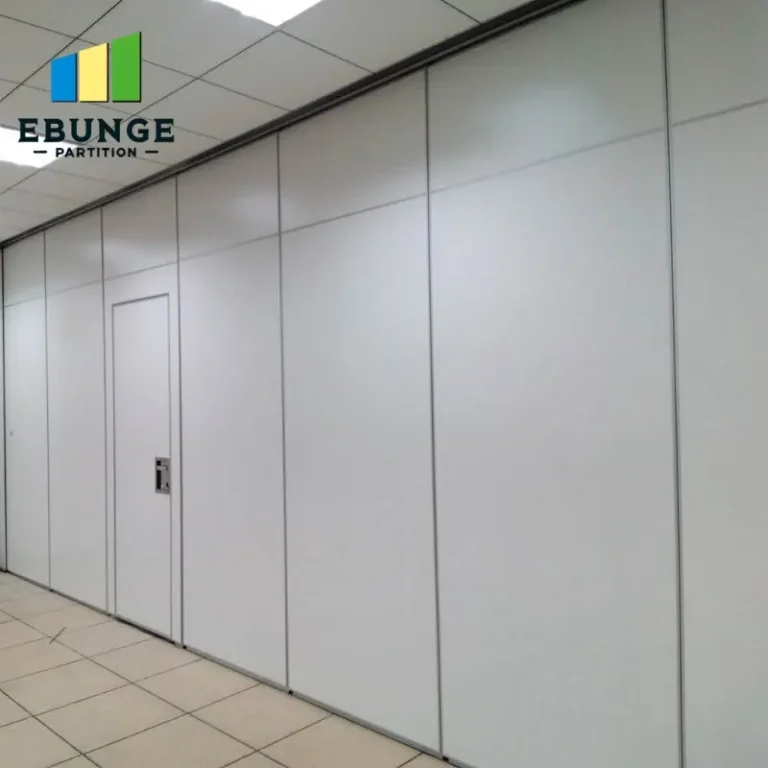
Share the opening, drawings, finish direction, and privacy target for a project-specific review.
Warranty and Supplier Reliability
When choosing an acoustic room divider supplier, reliability is paramount. A reputable supplier will offer a comprehensive warranty and stand behind their product. Look for a warranty that covers:
- Materials: Defects in panels, seals, and hardware.
- Workmanship: Installation errors and issues.
- Acoustic performance: Guarantee that the partition meets the specified STC rating.
Also, check the supplier’s track record. Ask for references from similar training center projects and verify their claims. A supplier that provides detailed drawings, installation guidance, and after-sales support is more likely to deliver a successful project.
Acoustic Accuracy: How to Verify Performance
One of the biggest concerns for buyers is whether the partition will actually achieve the promised acoustic rating. To ensure accuracy, request test reports from accredited laboratories. These reports should specify the test method (e.g., ASTM E90 or ISO 10140) and the exact configuration tested.
Be aware that field performance may differ from lab tests due to flanking paths, such as sound passing through ceiling plenums or wall junctions. Discuss these risks with your supplier and consider hiring an acoustic consultant to verify the installation meets your requirements.
Inquiry Conversion: How to Get the Right Quote
To maximize the accuracy of your quotation and avoid delays, follow these steps when contacting suppliers:
- Prepare a detailed inquiry: Include all the information mentioned earlier.
- Ask for a breakdown: Request a line-item quote that shows the cost of panels, track, seals, installation, and other components.
- Clarify terms: Understand payment terms, delivery schedule, and warranty conditions.
- Request samples: If possible, get finish samples and test reports to evaluate quality.
By being thorough, you’ll receive more accurate quotes and be able to compare them effectively.
Frequently Asked Questions
What is the typical lead time for a movable partition wall?
Lead times vary based on the complexity of the project and the supplier’s production schedule. Typically, it ranges from 4 to 8 weeks after approval of final drawings. Custom finishes or large orders may take longer. Always confirm the lead time in writing.
Can I install a top-hung track system on an existing ceiling?
Yes, but the ceiling must be structurally sound. A structural engineer may need to assess the load-bearing capacity. If the ceiling is not suitable, alternative mounting options or reinforcement may be required, which adds to the cost.
What is the difference between STC and Rw?
STC (Sound Transmission Class) is an American standard, while Rw (Weighted Sound Reduction Index) is European. Both measure sound insulation, but they use different calculation methods. For most applications, they are similar, but it’s essential to compare like-for-like. Your supplier can help you convert between them.
How do I maintain an acoustic room divider?
Regular maintenance includes cleaning the panels, lubricating the track, and checking the seals for wear. Most manufacturers provide a maintenance schedule. Following it will ensure long-term performance and reduce the risk of costly repairs.
Are there any hidden costs I should be aware of?
Potential hidden costs include shipping, taxes, installation accessories (e.g., bolts, brackets), and site preparation (e.g., leveling the floor). Ask your supplier for a comprehensive quote that includes all fees, and clarify what is not included.
Conclusion
Understanding the acoustic room divider cost for training center projects requires a holistic view of the project requirements, supplier capabilities, and long-term operational factors. By focusing on the key cost drivers, preparing a detailed inquiry, and comparing quotes on a like-for-like basis, you can make a confident investment. Remember, the cheapest quote may not be the most cost-effective in the long run. Prioritize reliability, acoustic accuracy, and warranty coverage to ensure your operable wall system performs as expected for years to come.
For more insights on movable partition costs, explore our Movable Partition Cost category or read our blog articles on related topics. If you’re ready to discuss your project, contact us for a detailed consultation.
For this buyer review, movable partition cost should be checked against the confirmed opening, drawings, operating plan, and project specification.
Send the opening size and drawings to discuss a differentiated movable partition cost solution.