
Quick project answer
Review focus: circulation spine capacity ledger.
When a movable partition system is used to subdivide a hall, the shared circulation spine often becomes the most contested strip of floor area. A movable partition circulation spine capacity ledger ambulant route width approach gives the project team a single place to record how each subdivision state draws on that spine. The ledger is not a compliance certificate. It is a coordination instrument that keeps route width visible while layouts, parking positions and pass-door needs are still being reviewed.
This article sets out a planning method for overseas contractors, architects, interior designers, owners and renovation teams. It stays within confirmed product facts: panels are individually movable, suspended from a top track, cross the opening without a floor track, and park at a planned stacking position. Straight, turning and stacking routes are reviewed from the layout. Finish options include laminate, melamine, fabric, leather, glass and other approved surfaces. Pass-door requirements and project documentation can be discussed. The exact route, junction arrangement, continuous overhead path and parking position must be confirmed from the coordinated project drawings.
Why a Capacity Ledger Belongs in the Circulation Review
Project review term: circulation spine capacity ledger.
A circulation spine is the continuous ambulant route that serves rooms, lobbies, lifts or exits. When movable partitions are introduced, the spine may be asked to serve several subdivision states on the same day. Each state can change where people walk, where furniture sits and where panels rest when the opening is clear.
A ledger records those changes as entries rather than assumptions. The suitability of each route and parking arrangement depends on the approved layout, circulation, ceiling interfaces and operating sequence. It shows the project team where width is being consumed, which configuration consumes it, and which drawing or confirmation is still missing. That visible trail is useful during design reviews, contractor coordination and handover discussions.
What the ledger is not
It does not replace the project’s accessibility consultant, fire engineer or local authority review. It simply keeps the relationship between subdivision states and the shared route in one readable table.
Confirmed Product Behaviour That Shapes the Ledger
Coordination scope: circulation spine capacity ledger.
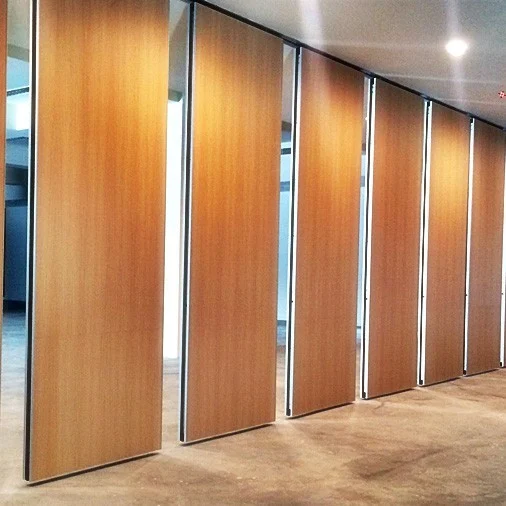
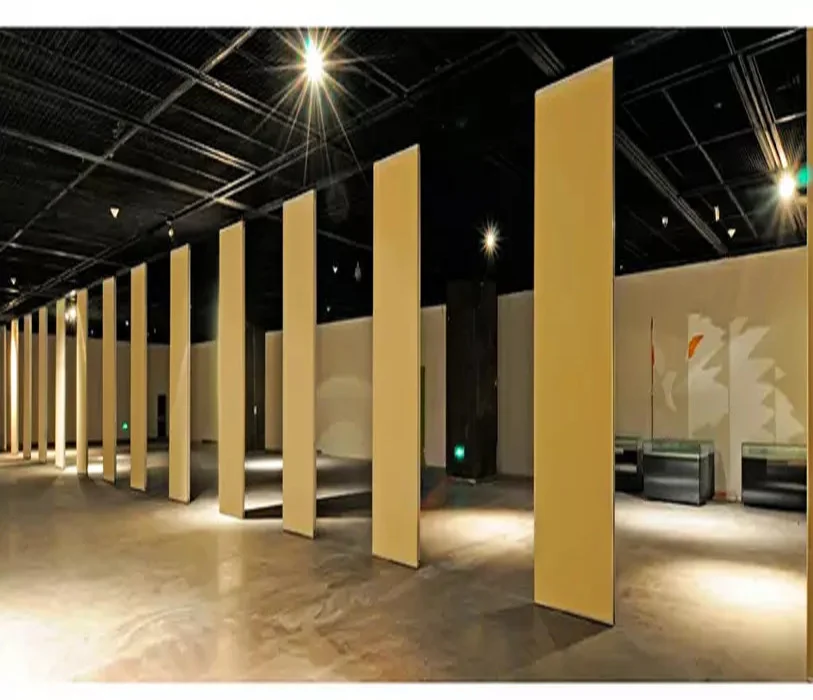
EBUNGE movable partition panels are individually movable and top-hung. They travel on a top track and cross the opening without a floor track, so the finished floor along the partition line remains clear of running hardware. Panels park at a planned stacking position. The parking style is customized to the customer layout and project requirements, and compact stacking may be possible when the coordinated design permits it.
These facts matter to circulation because the route is affected in two places: along the opening when panels are closed, and at the stacking position when panels are parked. A ledger should therefore have a column for the closed state and a column for the parked state, even if the project team later refines the format.
Evidence note: the ledger records planned geometry and coordination status. It does not certify accessibility, fire safety, structural capacity or acoustic performance. Those outcomes require project-specific evidence and review.
Building the Ledger: A Numbered Process
Checklist focus: circulation spine capacity ledger.
- Name each subdivision state. Give every configuration a short label, such as full open, one room plus corridor, two rooms, or event mode. Avoid vague labels that hide which panels move.
- Draw the spine once. Mark the shared ambulant route on the layout and keep the same baseline for every state so entries can be compared.
- Record the closed-state route. Note where the partition line crosses or borders the spine and how the route passes the closed opening.
- Record the parked-state route. Note the planned stacking position and the route that remains beside or around it.
- Note pass-door requirements. If a pass door is needed in a closed state, record it as a requirement to be discussed and confirmed, not as a fixed product feature.
- Flag missing information. Use a status column for drawing references, support review, acoustic review and dimensional confirmation.
- Review the ledger at each design change. Update entries when the layout, parking position or subdivision sequence changes.
Tracking Route Width Consumption per Subdivision State
Review focus: circulation spine capacity ledger.
The most practical ledger format is a compact table. It does not need measured performance values. It needs consistent categories so the team can see which state consumes the spine and which state leaves it clear.
| Ledger field | What to record | Evidence status |
|---|---|---|
| Subdivision state | Short label for the configuration | Planning entry |
| Panels in motion | Which panels travel and in what sequence | Layout review |
| Closed-state route | How the spine passes the closed partition line | Drawing reference |
| Parked-state route | How the spine passes the planned stacking position | Drawing reference |
| Pass-door need | Whether a pass door is required for the state | To be discussed |
| Support review | Status of overhead route and support coordination | Project-specific |
| Acoustic review | Status of project acoustic requirements | Project-specific |
| Dimensional confirmation | Status of opening, parking and route dimensions | Project-specific |

If acoustic separation matters, it must be confirmed for the specific project, assembly and route.
Coordination Points for Contractors and Designers
The ledger becomes useful when it is shared early. Architects and interior designers can check that the spine remains legible in each state. Owners can see which subdivision states depend on a pass door or a particular parking arrangement.
Because panels are top-hung and cross the opening without a floor track, the floor along the partition line stays clear. That does not remove the need to review the overhead route.
Questions to resolve before the ledger is frozen
- Which subdivision states are actually expected in daily use, and which are occasional?
- Where is the planned stacking position, and does it sit inside or beside the spine?
- Does any state require a pass door, and has that requirement been documented for discussion?
- Has the overhead route been reviewed as a continuous connected path?
- Are finish selections recorded only as finish options, without inferring cleaning, structural or acoustic performance?
- Which entries still need project-specific support, acoustic or dimensional confirmation?
Evidence Boundaries and Documentation
A ledger can easily drift into unsupported claims. Keep the following boundaries visible. Do not treat a route sketch as an accessibility approval. Do not infer hidden performance from a visible shape, photograph or drawing.
Project documentation can be discussed with EBUNGE, including layout information, parking intentions and pass-door requirements. The purpose is to support coordination, not to replace local review. Where a statement would be comparative, absolute or causal, it needs matching evidence or it should be rewritten as a confirmation boundary.
FAQ: Circulation Spine Capacity Ledger Planning
What is a movable partition circulation spine capacity ledger?
It is a planning table that records how each subdivision state uses the shared ambulant route. It tracks closed-state and parked-state conditions, pass-door needs and the status of project-specific reviews.
Does the ledger prove accessibility compliance?
No. It is a coordination record.
Why record both closed and parked states?
Because the route can be affected in two places. The closed partition line changes how people pass the opening, while the planned stacking position changes how people pass the parked panels.
Can a pass door be included in a subdivision state?
Pass-door requirements can be discussed and documented. Whether a pass door suits a particular state depends on the layout, the opening and project-specific confirmation.
How should acoustic ratings appear in the ledger?
They should not be assigned by the ledger. Any acoustic requirement must be confirmed for the specific project and assembly.
What should be confirmed before construction?
Confirm project-specific support, acoustic and dimensional requirements. Also confirm the continuous connected overhead route, the planned parking position and any pass-door documentation.
Conclusion: Keep the Spine Visible in Every State
A circulation spine capacity ledger helps project teams see how successive movable partition subdivision states draw on shared ambulant route width. It keeps coordination honest while the design is still open.
To discuss layout information, parking intentions, finish options or pass-door requirements for your project, contact EBUNGE. You can also review the movable wall product context and the planning resources before your next circulation review.