
Quick answer: movable partition circulation route redundancy alternative ambulant path
Review focus: movable partition circulation route redundancy alternative ambulant path.
When a movable partition circulation route redundancy alternative ambulant path is not reviewed state by state, a room can appear compliant in its open position and fail circulation logic once panels are parked. This framework helps facility planners and design reviewers test every subdivision state against a second route assumption, using only drawing evidence and confirmed product facts.
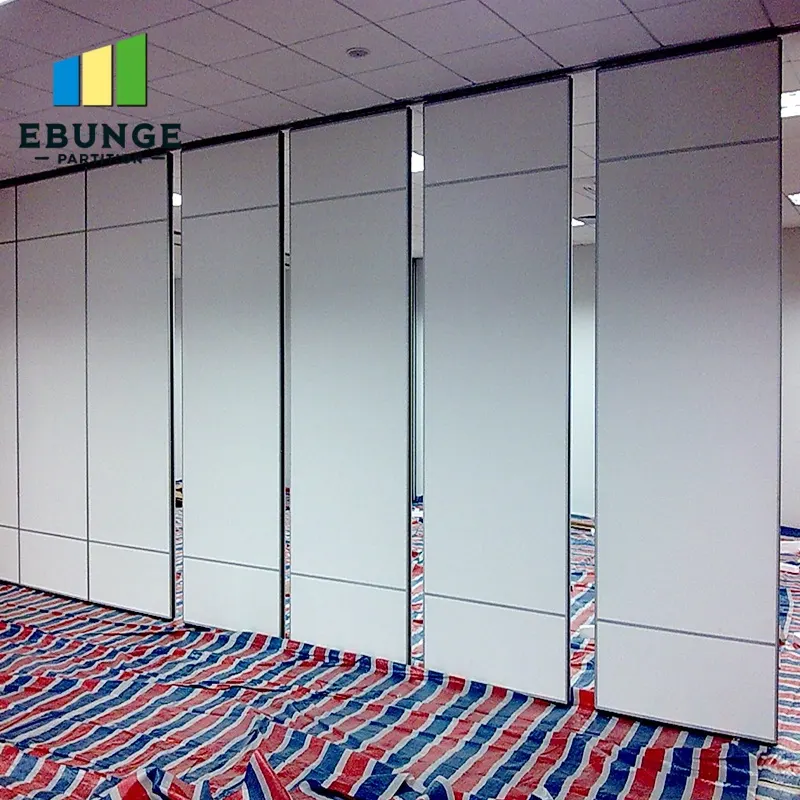
EBUNGE movable partition panels are individually movable, suspended from a top track, cross the opening without a floor track, and park at a planned stacking position. Straight, turning and stacking routes are reviewed from the layout. That layout review is the correct place to test route redundancy, because the panel path and the occupant path interact at the same plan coordinates.
Why Route Redundancy Is a State-by-State Question
Project review term: movable partition circulation route redundancy alternative ambulant path.
A single operable wall can produce several distinct plan conditions: fully open, partially closed, fully closed, and parked. Each condition changes where people can walk, where furniture can sit, and where a second route may remain available. Reviewing only the closed state misses the parked state, and reviewing only the open state misses the subdivision state that the wall was installed to create.
Redundancy means that if the primary ambulant path is obstructed, another path remains usable without passing through the partition line or the stacking zone. This is a planning concept, not a compliance statement. Confirm project-specific support, acoustic and dimensional requirements with the responsible design team before treating any route as final.
What Counts as Evidence in This Review
Use dimensioned floor plans, reflected ceiling plans, door and hardware schedules, furniture layouts, and the partition layout drawing that shows the top track route and parking position. Do not infer route width, clearance, or occupant capacity from a photograph, a finish sample, or a marketing image. If a drawing does not show the parked panel footprint, the route check is incomplete.
Six-Step Verification Framework for Each Subdivision State
Coordination scope: movable partition circulation route redundancy alternative ambulant path.
- List every state. Name each operable configuration, including open, closed, partially closed, and parked, plus any pass-door position.
- Mark the primary route. Draw the intended main ambulant path on each state plan and note where it crosses the partition line.
- Identify the obstruction scenario. For each state, ask what happens if the primary route is blocked by furniture, a queue, or an open panel.
- Trace the alternative route. Confirm a second path exists that does not pass through the partition line or the stacking zone.
- Check the stacking zone. Verify the parked panel footprint does not consume the only remaining route.
- Record open questions. Note every dimension, support condition, or acoustic requirement that needs project-specific confirmation.
Decision Checklist Before Sign-Off
- Does every state plan show the partition line and the parked panel footprint?
- Does at least one ambulant route remain clear in each state?
- Is the alternative route independent of the primary route, not a widened version of it?
- Are pass-door positions shown in both open and closed states?
- Are turning and stacking routes reviewed from the layout, not assumed?
- Are support, acoustic and dimensional requirements flagged for project-specific confirmation?
How Parking Position Affects the Alternative Path
Checklist focus: movable partition circulation route redundancy alternative ambulant path.
Parking style is customized to the customer layout and project requirements and may support compact stacking when the coordinated design permits it. A compact stack can preserve more floor area, but the review must still confirm that the stack itself does not sit in the alternative route. The parked position is part of the circulation plan, not a storage detail.
Because panels are top-hung and move without a continuous floor running track, the floor beneath the partition line can remain clear in the open state. That does not automatically create redundancy. The alternative path must be continuous, connected to the same occupied space, and independent of the panel movement route.
Turning and Stacking Route Review
Straight, turning and stacking routes are reviewed from the layout. The exact route, junction arrangement, continuous overhead path and parking position must be confirmed from the coordinated project drawings. Mark these routes on the plan and compare them with the ambulant path. Where the two overlap, the review should flag the conflict rather than assume it resolves itself.
Evidence Boundaries and What Not to Infer
Review focus: movable partition circulation route redundancy alternative ambulant path.
This framework does not certify code compliance, does not measure route width, and does not predict occupant behavior. It is a structured drawing review. Comparative, absolute and causal statements about circulation require corresponding project evidence; otherwise they should be removed or restated as a confirmation item.
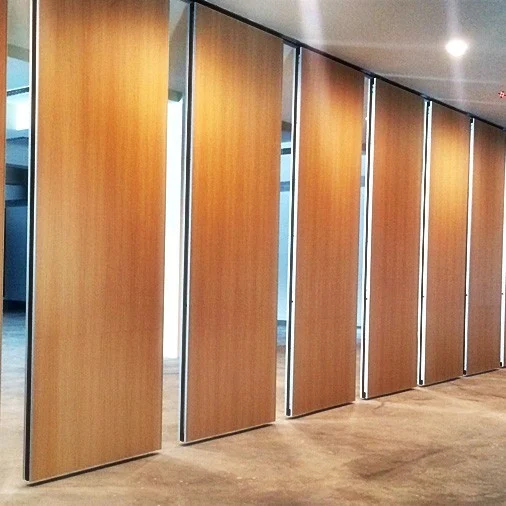
Visible references can support layout discussion but do not verify hidden construction or performance. The suitability of each route and parking arrangement depends on the approved layout, circulation, ceiling interfaces and operating sequence. Confirm project-specific acoustic requirements separately.
Coordination Notes for Project Teams
Finish options such as laminate, melamine, fabric, leather, glass and other approved surfaces affect appearance and maintenance discussions, but they do not by themselves establish route performance. Keep finish selection and circulation review as separate decisions.
Documentation to Request from the Partition Supplier
Project review term: movable partition circulation route redundancy alternative ambulant path.
Ask for the layout drawing showing the top track route, the parking position, and any turning geometry. Ask how pass-door requirements are represented in each state. Project documentation can be discussed directly with the supplier so that open items are recorded before construction.
For a broader set of planning references, see the EBUNGE resources page. For product context, review the movable walls product page. When the drawing set is ready, contact the EBUNGE team to discuss project documentation and pass-door requirements.
Frequently Asked Questions
Coordination scope: movable partition circulation route redundancy alternative ambulant path.
What is movable partition circulation route redundancy?
It is the planning condition in which a second ambulant route remains available when the primary route is obstructed, in every operable wall state. It is verified from drawings, not assumed from the open state alone.
Does a floor-track-free partition automatically preserve an alternative path?
No. A clear floor along the partition line does not create a second route. The alternative path must be continuous, independent of the primary route, and clear of the parked panel footprint.
Which drawing states should be reviewed?
Review open, closed, partially closed, and parked states, plus any pass-door position. Each state can change where people walk and where the stacking zone sits.
Can this review confirm code compliance?
No. This is a structured drawing review framework. Code compliance, route width, and occupant requirements must be confirmed by the responsible design and authority teams for the specific project.
What information should be requested from the supplier?
Request the layout drawing showing the top track route, parking position, turning geometry, and pass-door representation. The exact overhead route and support arrangement must be confirmed by the responsible project team from coordinated drawings.
How do finish options affect the circulation review?
Finish options such as laminate, melamine, fabric, leather, glass and other approved surfaces are appearance and specification choices. They do not establish route redundancy, so keep finish selection separate from the circulation check.
Conclusion: Review Every State, Confirm Every Assumption
Route redundancy is only meaningful when it is tested against each subdivision state and each parked position. Use the six-step framework, keep the evidence boundaries visible, and record every dimension, support and acoustic item that needs project-specific confirmation. This approach gives planners and reviewers a defensible method without asserting outcomes the drawings do not support.
To discuss your layout, pass-door requirements, and project documentation, contact EBUNGE and share the current drawing set for review.