
Quick answer: movable partition changeover window calendar
Review focus: movable partition changeover window calendar.
A movable partition changeover window calendar is the operational schedule that tells a multi-room venue when each room can be released, reconfigured and returned to service. The suitability of each route and parking arrangement depends on the approved layout, circulation, ceiling interfaces and operating sequence. It is a planning instrument that connects room bookings, panel movement routes and shared resources so that reconfiguration demand is leveled rather than concentrated. This article sets out a framework for building that calendar using confirmed EBUNGE product facts and clearly marked evidence boundaries.
Why a Changeover Window Calendar Matters in Multi-Room Venues
Project review term: movable partition changeover window calendar.
In venues with several combinable rooms, the same panels, routes and staff attention are often needed in more than one place. Without a calendar, releases collide, rooms sit idle while waiting, and the operations team absorbs avoidable pressure. A calendar converts booking patterns into a sequence of release windows, each tied to a defined route and a defined return-to-service point.
The calendar is a coordination layer, not an engineering document. It should reference the approved layout drawings and the confirmed movement routes rather than restating them. Where the layout shows straight, turning or stacking routes, the calendar records which route applies to each changeover and when that route is available.
Confirmed Product Facts That Shape the Calendar
Coordination scope: movable partition changeover window calendar.
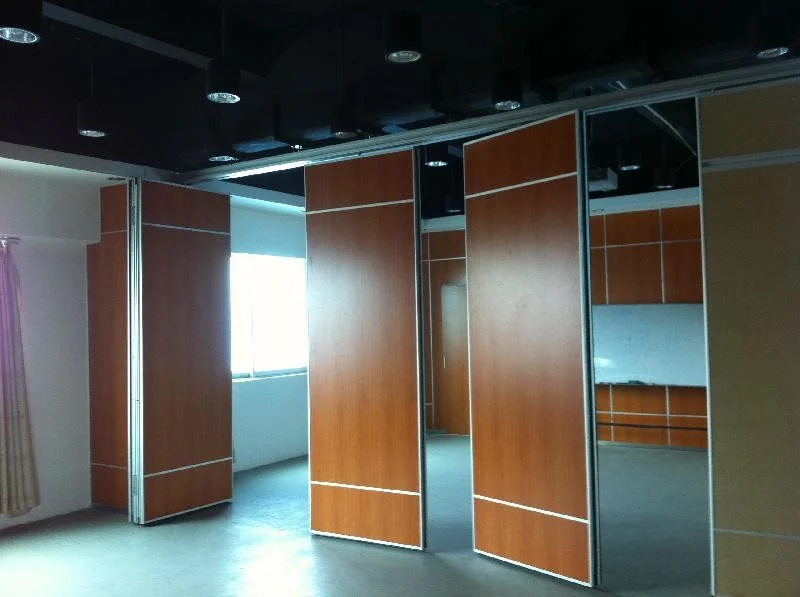
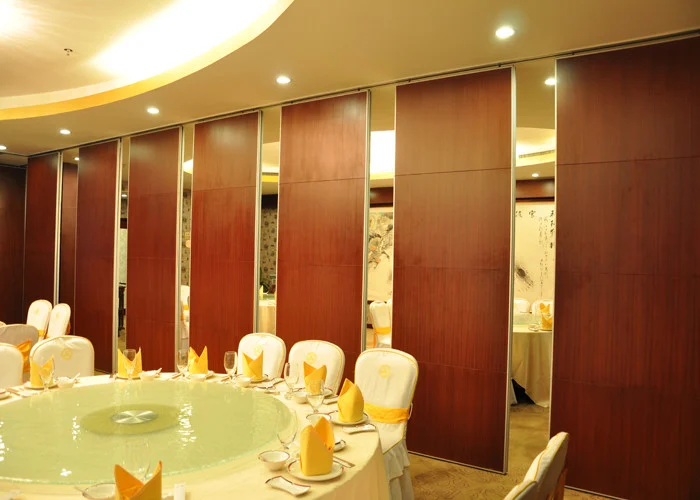
EBUNGE movable wall panels are individually movable and suspended from a top track. They cross the opening without a floor track, and they park at a planned stacking position. These facts matter operationally because they determine what a changeover window actually contains: panels move along a continuous connected overhead route, and they must have somewhere planned to park.
Finish options include laminate, melamine, fabric, leather, glass and other approved surfaces. Pass-door requirements and project documentation can be discussed with the project team, and any such requirement should be recorded as a coordination item rather than assumed.
Building the Calendar: A Numbered Process
Checklist focus: movable partition changeover window calendar.

- Map the room-release pattern. List each room, its typical booking pattern and the combinations it must support. Identify which releases are fixed and which can flex.
- Trace the movement routes. For each combination, confirm the straight, turning and stacking routes shown on the layout. Note where routes overlap between rooms.
- Define the window. Panel handling and the operating sequence must be confirmed for the selected layout and project conditions.
- Sequence the releases. Order changeovers so that shared routes and shared stacking positions are used one at a time rather than simultaneously.
- Level the demand. Spread reconfiguration across the day or week so that no single window carries more changeovers than the venue can coordinate.
- Publish and review. Issue the calendar to operations, bookings and the project team, then review it against actual release patterns.
Room Release Sequencing Across a Multi-Room Venue
Sequencing is the part of the calendar that most affects daily operations. A simple rule is to release rooms in the order that keeps shared routes free. The exact route, junction arrangement, continuous overhead path and parking position must be confirmed from the coordinated project drawings.
Stacking positions deserve the same discipline. Because panels park at a planned stacking position, that position is a finite operational resource. The calendar should show which room’s panels occupy which stacking position and when that position is expected to be cleared.
A Compact Sequencing Comparison
| Sequencing approach | Operational effect | Planning caution |
|---|---|---|
| Room-by-room release | One room changes at a time | May extend total changeover time across the day |
| Route-grouped release | Rooms sharing a route change together | Requires confirmed route availability |
| Stacking-led release | Changeovers follow parking position availability | Depends on the coordinated stacking design |
Leveling Demand Against Shared Resources
Leveling means matching the number of changeovers in a window to what the venue can coordinate, not to an assumed output rate. The calendar should treat shared routes, shared stacking positions and the operations team’s attention as the constraints. Where demand exceeds those constraints, the answer is to move a release, not to compress a window.
This is also where the calendar connects to the wider project. If the layout review shows that a proposed combination cannot be served by a continuous connected overhead route, that combination should be flagged for project-specific support review before it enters the calendar.
Evidence Boundaries and Documentation
Evidence note: the calendar may describe routes, windows and sequences. It must not infer acoustic, fire, durability, load, maintenance or commercial performance from a drawing, finish or photograph. STC and Rw are rating concepts used in project documentation; they are not a direct count of decibels and should be confirmed for the specific project.
Project documentation should record the approved layout, the confirmed routes, the parking strategy and any pass-door requirement. Where a statement depends on project-specific support, acoustic or dimensional confirmation, the calendar should point to that confirmation rather than restate it as fact.
Common Planning Pitfalls to Avoid
- Treating the calendar as a substitute for layout and support review.
- Assuming a stacking position is available because it appears on a drawing.
- Using finish selection as evidence of acoustic or cleaning performance.
- Publishing a calendar without a review step against actual release patterns.
Each pitfall is avoidable when the calendar stays within confirmed facts and routes every open question to the project team. For related planning resources, see the EBUNGE resources page and the movable walls product page.
Frequently Asked Questions
What is a movable partition changeover window calendar?
It is an operational schedule that defines when each room in a multi-room venue can be released, reconfigured and returned to service, using confirmed movement routes and parking positions.
Does the calendar require a floor track?
No. EBUNGE movable wall panels are top-hung and cross the opening without a floor track. The calendar should reflect the continuous connected overhead route shown on the approved layout.
Can the calendar promise acoustic performance?
No. The calendar is a planning instrument.
How should shared stacking positions be handled?
Treat each planned stacking position as a finite resource. The calendar should show which panels occupy it and when it is expected to be cleared, based on the coordinated design.
What project information is needed before publishing the calendar?
Approved layout drawings, confirmed straight, turning and stacking routes, parking strategy, pass-door requirements if any, and the room-release pattern. Project-specific support, acoustic and dimensional requirements should be confirmed with the project team.
How often should the calendar be reviewed?
Review it against actual release patterns at a regular interval set by the venue, and update it whenever bookings, layouts or routes change.
Conclusion and Next Step
A movable partition changeover window calendar turns flexible-room demand into a workable sequence. Build it from confirmed product facts, keep it inside clear evidence boundaries, and route every project-specific question to the people who can confirm it. To discuss pass-door requirements, project documentation or layout review for your venue, contact the EBUNGE team.