
Quick answer: movable partition changeover time standards
Review focus: movable partition changeover time standards.
Movable partition changeover time standards give facility and operations managers a repeatable way to plan room reconfiguration. Rather than relying on guesswork, a standard breaks a changeover into observable tasks and assigns a planning duration to each. This article sets out a framework for building internal movable partition changeover time standards, covering task breakdown, duration estimation and staffing implications. It does not assert measured performance; every duration must be confirmed against your own layout, panel quantities and site conditions.
Why Changeover Time Standards Matter in Facility Operations Planning
Project review term: movable partition changeover time standards.
Flexible rooms are only flexible if operations can reset them reliably. A changeover standard supports scheduling, labor planning and room-booking accuracy. It also helps teams communicate realistic expectations to internal clients.
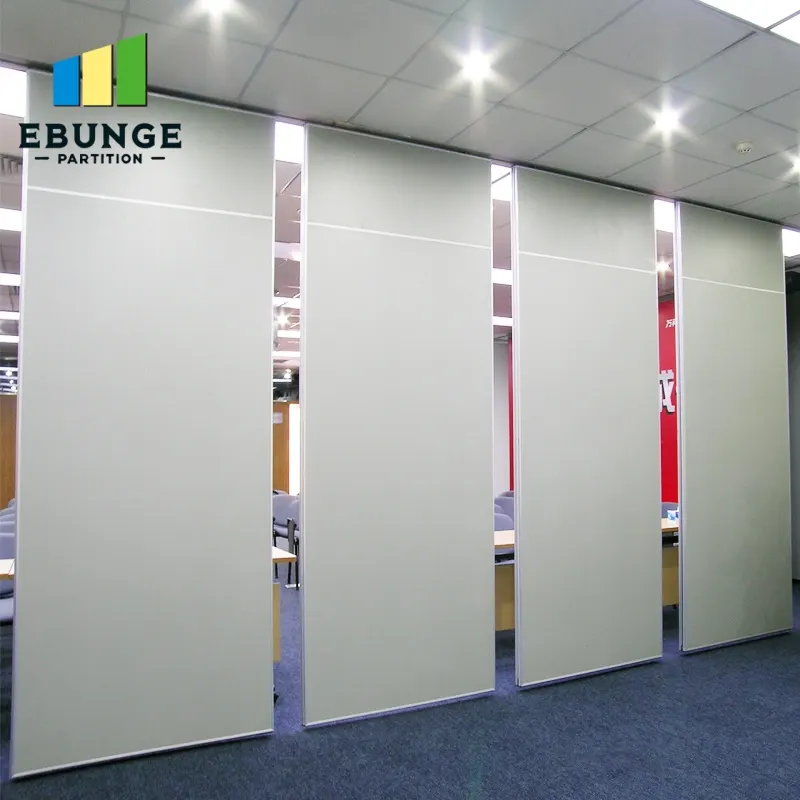
Because EBUNGE movable partition panels are individually movable and suspended from a top track, they cross the opening without a floor track and park at a planned stacking position. That configuration shapes the task sequence but does not by itself determine duration. Straight, turning and stacking routes are reviewed from the layout, and each route can affect how a changeover is organized.
Task Breakdown: The Foundation of a Changeover Standard
Coordination scope: movable partition changeover time standards.
A useful standard starts with a task list that any trained observer can follow. The list should describe what happens, not how long it takes. Duration is added later, once the route and layout are understood.
Core task categories
- Pre-changeover check: confirm the room is clear, the route is unobstructed and the stacking position is available.
- Panel movement: move individual panels along the reviewed route toward the opening or stacking position.
- Route negotiation: handle straight, turning and stacking sections as defined by the layout.
- Parking: position panels at the planned stacking location.
- Post-changeover check: confirm the room is ready for its next use.
This breakdown stays deliberately generic. Those details belong to project-specific documentation and should be confirmed with the supplier.
Duration Estimation Without Inventing Measured Performance
Checklist focus: movable partition changeover time standards.
Duration estimation is where standards often go wrong. A framework can structure estimates, but it cannot replace site-specific confirmation. Treat every duration as a planning placeholder until your own team validates it.
A four-step estimation approach
- Define the route: confirm the straight, turning and stacking paths from the layout.
- Count the movement tasks: identify how many panel movements the route requires.
- Assign a planning duration per task: use your own historical observations or a supervised trial.
- Add contingency: include time for checks, route adjustments and unexpected obstructions.
The suitability of each route and parking arrangement depends on the approved layout, circulation, ceiling interfaces and operating sequence.
Staffing Implications and Coordination
Staffing follows from the task list and the route, not from a fixed rule. A changeover that involves a simple straight route may require a different staffing pattern than one with turning and stacking sections. The layout review should identify where coordination between team members is needed.
Facility Operations Planning coordination should also cover who authorizes a changeover, who inspects the room afterward and how issues are reported. These roles can be documented without asserting a specific number of operators, because that number depends on the project.
Decision Checklist for Building Your Internal Standard
Evidence note: This checklist is a planning aid. Confirm project-specific support, acoustic and dimensional requirements before finalizing any standard.
- Has the layout been reviewed for straight, turning and stacking routes?
- Is the overhead route continuous and connected for every proposed movement path?
- Are pass-door requirements documented where needed?
- Are finish options such as laminate, melamine, fabric, leather or glass recorded for the project?
- Is there a defined stacking position that does not obstruct other operations?
- Are roles for authorization, inspection and issue reporting assigned?
- Is the standard reviewed after the first supervised changeovers?
Common Pitfalls When Setting Changeover Standards
One pitfall is treating a supplier’s general description as a measured duration. Visible references can support layout discussion but do not verify hidden construction or performance. Those inferences require matching evidence.
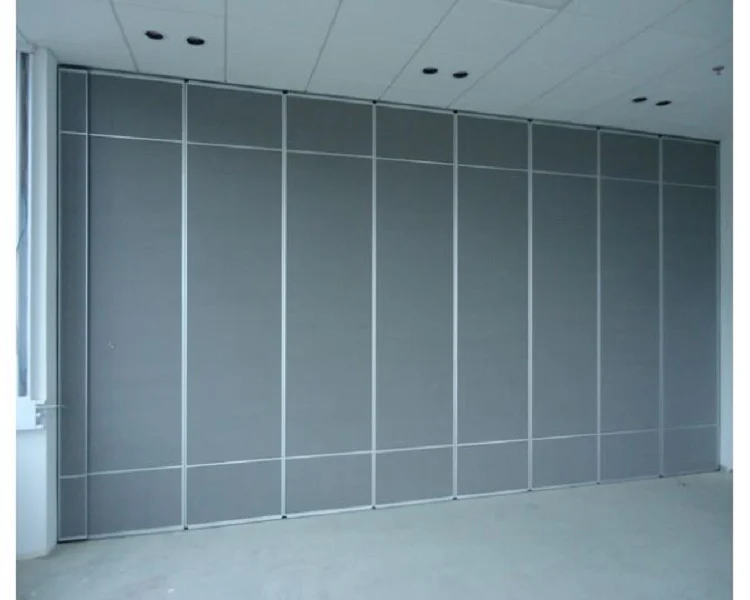
A third pitfall is ignoring the stacking route. Panels park at a planned stacking position, and that position must be coordinated with the room’s other uses. If the stacking area conflicts with furniture, services or circulation, the changeover plan will not hold.
Documentation and Project-Specific Confirmation
Good documentation makes a standard auditable. Record the layout version, the reviewed routes, the finish selections and the pass-door requirements. Note which items are confirmed and which remain open.
For product context, see the movable walls product page. For broader planning material, visit the resources page. When your team is ready to discuss pass-door requirements and project documentation, contact EBUNGE.

Frequently Asked Questions
What is a movable partition changeover time standard?
It is an internal planning document that breaks a room reconfiguration into tasks and assigns planning durations. It is not a measured performance guarantee and should be validated on site.
Can I use supplier descriptions as measured durations?
No. General product descriptions explain how panels move, not how long a changeover takes. Durations must be confirmed against your layout, panel quantities and site conditions.
Do movable partitions need a floor track for changeovers?
EBUNGE movable partition panels are top-hung and cross the opening without a floor track. Straight, turning and stacking routes are reviewed from the layout, and every proposed movement path requires a continuous connected overhead route and project-specific support review.
How should acoustic ratings be used in changeover planning?
Confirm acoustic requirements separately.
What finish options can be recorded in the standard?
Confirmed finish options include laminate, melamine, fabric, leather, glass and other approved surfaces. Record the selected finish for the project, but do not infer cleaning compatibility or performance from a finish name alone.
When should the standard be reviewed?
Review it after the first supervised changeovers and whenever the layout, stacking position or room use changes. Keep the review evidence-based and document any open items.
Conclusion: Build Standards You Can Defend
A changeover standard is only useful if it reflects the actual layout and route. Start with a clear task breakdown, estimate durations as planning placeholders, and confirm every project-specific requirement before publishing the standard.
To discuss pass-door requirements, project documentation and layout review for your facility, contact EBUNGE.