
Quick answer: movable partition changeover throughput reserve
Review focus: movable partition changeover throughput reserve.
When a multi-room venue books events back to back, the risk is not only whether the movable partition changeover throughput reserve margin is large enough on paper. The risk is whether the operations team can release each room on time when bookings arrive in clusters or when the crew available for a changeover is reduced. This article sets out a planning method for deciding how much spare reconfiguration capacity to hold back, using only confirmed product facts and clearly stated evidence limits.
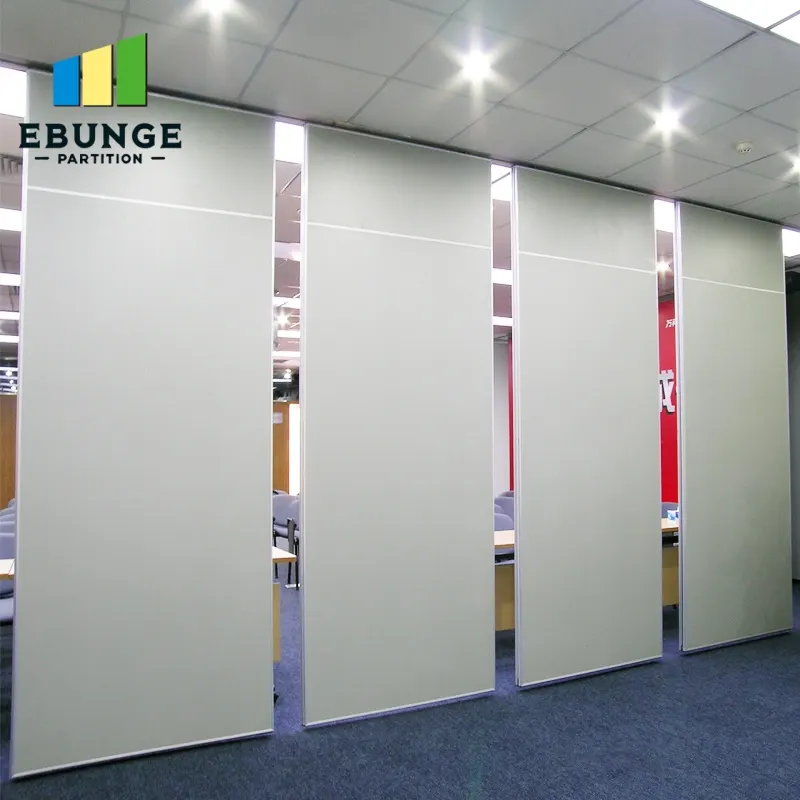
EBUNGE movable wall panels are individually movable, suspended from a top track, cross the opening without a floor track, and park at a planned stacking position. Straight, turning and stacking routes are reviewed from the layout. That is the physical basis for any throughput planning. It does not, by itself, tell you how fast a given venue can turn a room around.
Why a Reserve Margin Belongs in Facility Operations Planning
Project review term: movable partition changeover throughput reserve.
A reserve margin is the share of changeover capacity you deliberately leave unallocated. It is not idle capacity in a negative sense. The exact overhead route and support arrangement must be confirmed by the responsible project team from coordinated drawings.
Without a reserve, every room release depends on the previous changeover finishing exactly as planned. One delay can cascade into the next booking. With a reserve, the operations team has somewhere to move the pressure instead of passing it to the next client.
What the reserve margin is not
It is not a promise of a specific number of changeovers per hour, and it is not a substitute for reviewing the layout. It is a planning decision that must be confirmed against project-specific support, acoustic and dimensional requirements.
Start With the Confirmed Movement Facts
Coordination scope: movable partition changeover throughput reserve.
Any throughput model must begin with how panels actually move. EBUNGE panels are top-hung and travel without a continuous floor running track or floor hardware along the partition line. Parking style is customized to the customer layout and project requirements and may support compact stacking when the coordinated design permits it.
Because every proposed movement path requires a continuous connected overhead route and project-specific support review, the reserve margin cannot be calculated from room count alone. The route from open position to stacking position is part of the changeover time.
Route types to review from the layout
- Straight routes where panels travel directly to a stacking position.
- The exact route, junction arrangement, continuous overhead path and parking position must be confirmed from the coordinated project drawings.
- Stacking routes where panels park at a planned position.
Each route type can affect how a changeover is sequenced. Confirm the actual route with the project drawings before treating any changeover duration as fixed.
A Reserve Margin Method You Can Apply to Booking Demand
Checklist focus: movable partition changeover throughput reserve.
The method below is a planning framework, not a measured performance claim. It helps a venue decide how much spare reconfiguration capacity to hold back when demand is uncertain.
- Map the changeover sequence for each room pair. Identify which panels move, where they park, and which routes they follow.
- Define the release window. State the time between the end of one booking and the start of the next, including any cleaning or setup that is not partition work.
- List the changeover tasks that depend on the partition. Keep this list separate from tasks that can proceed in parallel.
- Identify the binding constraint. The constraint may be a route, a stacking position, or the availability of the team that handles the panels.
- Set a reserve share. Decide what percentage of changeover capacity you will not allocate to confirmed bookings.
- Test the reserve against a surge scenario. Ask what happens if two rooms need changeover at the same time.
- Review the reserve after each operating period. Adjust it as booking patterns and layout use become clearer.
Panel handling and the operating sequence must be confirmed for the selected layout and project conditions.
Evidence Boundaries for Throughput Planning
Review focus: movable partition changeover throughput reserve.
Throughput planning often drifts into claims that cannot be supported. The table below separates what can be discussed from what requires project-specific confirmation.
| Planning item | Status | What to confirm |
|---|---|---|
| Panel movement principle | Confirmed product fact | Top-hung, no floor track along the partition line |
| Parking arrangement | Customized to layout | Stacking position and route from drawings |
| Changeover duration | Project-specific | Sequence, route and operating conditions |
| Acoustic performance | Project-specific | Acoustic requirements and documentation |
| Reserve margin percentage | Planning decision | Booking pattern and venue policy |
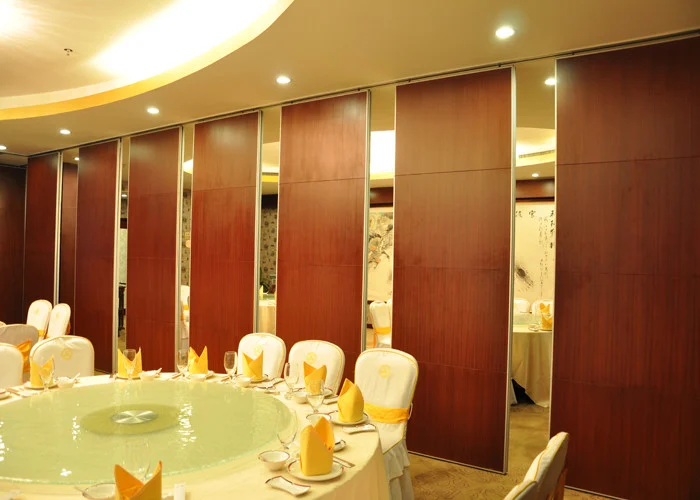
The suitability of each route and parking arrangement depends on the approved layout, circulation, ceiling interfaces and operating sequence. Visible references can support layout discussion but do not verify hidden construction or performance.
Coordinating the Reserve With Booking and Crew Planning
A reserve margin only works if booking and operations teams share the same view of capacity. If the booking team sells the reserve, it disappears. If operations treats the reserve as unused time, it may be filled with non-partition tasks that then compete with a surge.
Questions to align across teams
- Who has authority to release reserve capacity?
- What triggers a surge response?
- Which rooms share a stacking position or route?
- How is a missed release window recorded and reviewed?
These questions are operational, not product claims. They help the venue use the confirmed movement facts without inventing performance.
Specification and Documentation Checks
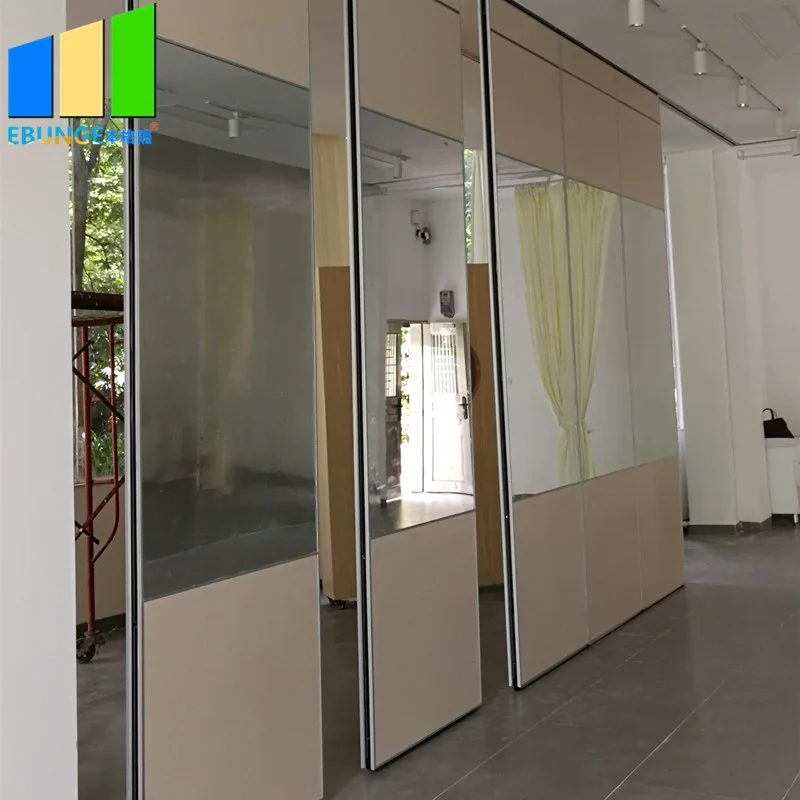
For a movable partition specification, the reserve margin should be documented alongside the layout. Pass-door requirements and project documentation can be discussed with the supplier. The resources page provides general planning context, but project-specific support, acoustic and dimensional requirements still need confirmation.
If a statement is comparative or absolute, it needs matching evidence or it should be removed.
Frequently Asked Questions
What is a movable partition changeover throughput reserve margin?
It is the share of changeover capacity a venue deliberately leaves unallocated so that booking surges or crew shortages do not cascade into missed room release windows.
Can the reserve margin be calculated from room count alone?
No. The route from open position to stacking position, the parking arrangement and the changeover sequence all affect how capacity is used. Review the layout before setting a reserve.
Do EBUNGE panels need a floor track for changeover?
No. EBUNGE movable wall panels are top-hung and cross the opening without a floor track. Every proposed movement path still requires a continuous connected overhead route and project-specific support review.
Does a larger reserve margin guarantee on-time room release?
No. A reserve margin is a planning buffer, not a guarantee. It must be combined with realistic release windows, route review and coordination between booking and operations teams.
How should acoustic requirements be handled in throughput planning?
Acoustic requirements are project-specific. Confirm acoustic documentation for the actual configuration.
When should the reserve margin be reviewed?
Review it after each operating period and whenever booking patterns, room use or layout routes change. The right reserve is a moving planning decision, not a fixed rule.
Conclusion and Next Step
A movable partition changeover throughput reserve margin helps a multi-room venue protect its release windows when demand is uncertain. Start with the confirmed movement facts, review the routes from the layout, and keep performance claims inside their evidence boundaries. Then decide how much spare reconfiguration capacity to hold back.
To discuss pass-door requirements, project documentation and layout-specific planning, contact the EBUNGE team and confirm the project-specific support, acoustic and dimensional requirements before finalizing the reserve.