
Quick answer: movable partition changeover throughput assumption register
Review focus: movable partition changeover throughput assumption register.
A movable partition changeover throughput assumption register is a controlled document that records the conditions each operating plan was built around. Panel handling and the operating sequence must be confirmed for the selected layout and project conditions. Instead, it makes visible which room release conditions, crew availability assumptions and layout constraints were used when a facility team planned how a flexible room would be returned to its next configuration. For overseas contractors, architects, interior designers, owners and renovation teams, the register turns informal scheduling beliefs into reviewable statements that can be checked against project drawings and confirmed requirements.
The register is useful because movable wall panels are individually movable, suspended from a top track, cross the opening without a floor track, and park at a planned stacking position. Those maintained facts describe movement, not throughput. Any operating plan that assumes a room can be released by a certain point, or that a crew will be available at a certain time, is an assumption that should be written down and reviewed rather than treated as a guaranteed outcome.
Why a Changeover Throughput Assumption Register Matters in Facility Operations Planning
Project review term: movable partition changeover throughput assumption register.
Facility Operations Planning coordination often fails at the boundary between design intent and daily use. A drawing may show a straight, turning or stacking route, but the operating plan may assume that the room becomes available as soon as an event ends. The register separates what is known from what is assumed. It gives owners, contractors and designers a shared place to record the conditions behind each changeover plan.
The register also protects project teams from unsupported conclusions. A finish sample does not prove cleaning compatibility. The suitability of each route and parking arrangement depends on the approved layout, circulation, ceiling interfaces and operating sequence. A room schedule does not prove that a crew can complete a changeover within a given window. Each of those statements requires project-specific confirmation.
What the register is not
It is not a performance certificate, a test report, a price schedule or a service-level agreement. It is a planning and coordination tool that documents assumptions so they can be challenged before they become operational expectations.
Core Assumption Categories to Document
Coordination scope: movable partition changeover throughput assumption register.
A practical register groups assumptions into categories that project teams can review separately. The categories below are generic planning prompts, not product claims.
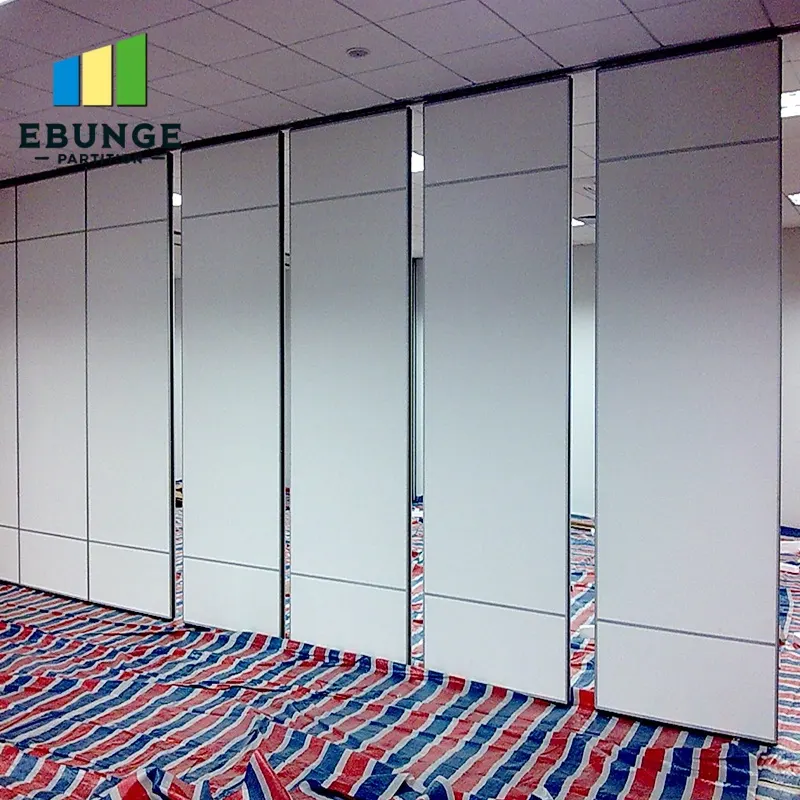
| Assumption category | Example entry | Confirmation boundary |
|---|---|---|
| Room release condition | Room is considered released when furniture is cleared from the opening line | Confirm with owner and operations team |
| Crew availability | Crew is assumed available at the start of the changeover window | Confirm with facility scheduling |
| Route condition | Straight, turning and stacking routes are reviewed from the layout | Confirm continuous connected overhead route and support review |
| Parking position | Panels park at a planned stacking position | Confirm stacking location and clearance with project drawings |
| Finish and surface | Laminate, melamine, fabric, leather, glass or other approved surface | Confirm cleaning and use requirements separately |
Each row should name the person or role responsible for confirming the assumption. A register without owners becomes a list of wishes.
How to Build the Register Step by Step
Checklist focus: movable partition changeover throughput assumption register.
The following numbered process keeps the register evidence-bounded and reviewable.
- List every room or zone that will use movable partitions and note its intended configurations.
- For each configuration, record the room release condition that must be met before changeover begins.
- Record the crew availability assumption, including the time window and any dependency on other trades or events.
- Review the straight, turning and stacking routes from the layout and note any point that requires project-specific support review.
- Record the planned stacking position and any clearance or access condition that affects it.
- Note the approved finish option and any separate confirmation needed for cleaning, use or handling.
- Identify pass-door requirements and project documentation that should be discussed with the supplier.
- Assign a reviewer and a review date to every assumption, then update the register when project conditions change.
Room Release Conditions and Crew Availability Assumptions
Review focus: movable partition changeover throughput assumption register.
Room release is often the least examined assumption. A room may be considered released when the previous event ends, when cleaning is complete, when furniture is moved, or when a responsible person confirms it. The register should state which definition applies. If the definition changes, the operating plan built on it may no longer be valid.
Crew availability is equally important. The register should record whether the plan assumes a crew is available at the start of the window, whether the crew has other duties, and whether the plan depends on a single person. These are scheduling assumptions, not product capabilities. They should be confirmed with the facility team rather than inferred from a drawing.
Evidence note
Every entry in the register should be traceable to a project drawing, a written requirement or a named confirmation. If an assumption cannot be traced, mark it as unconfirmed and do not use it as the basis for an operating plan.
Route, Stacking and Finish Assumptions
Movement routes should be reviewed from the layout. The exact route, junction arrangement, continuous overhead path and parking position must be confirmed from the coordinated project drawings. Parking style is customized to the customer layout and project requirements and may support compact stacking when the coordinated design permits it.
Finish assumptions should also be recorded. Confirmed finish options include laminate, melamine, fabric, leather, glass and other approved surfaces. Those items require separate project-specific confirmation.
Acoustic and Dimensional Assumptions: What to Record Without Overclaiming
The register should record that acoustic requirements are project-specific and must be confirmed against the relevant documentation.
Dimensional assumptions should be recorded in the same way. Opening width, height, stacking space and route clearances are project-specific. The register should note where dimensions come from and who confirmed them. It should not present a generic dimension as a product guarantee.
Review, Handover and Change Control

A register is only useful if it is reviewed. Set a review rhythm that matches the project stage. During design, review assumptions against drawings. During construction, review them against confirmed conditions. Before handover, review them with the operations team that will use the rooms.
Change control matters because small changes can invalidate an operating plan. If a room release definition changes, a crew schedule changes, or a route is altered, the affected assumptions should be updated and the plan rechecked. The register should show the date and reason for each change.
Frequently Asked Questions
What is a movable partition changeover throughput assumption register?
It is a planning document that records the room release conditions, crew availability assumptions and layout constraints behind each operating plan for a flexible room. It is not a performance guarantee.
Does the register predict how long a changeover will take?
No. It documents the assumptions an operating plan was built around. Actual timing depends on project-specific conditions that must be confirmed separately.
Which product facts can be relied on in the register?
Movable wall panels are individually movable, suspended from a top track, cross the opening without a floor track, and park at a planned stacking position. Straight, turning and stacking routes are reviewed from the layout.
Can the register include acoustic requirements?
It can record that acoustic requirements are project-specific and must be confirmed.
What finish options can be recorded?
Confirmed finish options include laminate, melamine, fabric, leather, glass and other approved surfaces. Cleaning and use requirements still need separate confirmation.
How should pass-door requirements be handled?
Pass-door requirements and project documentation can be discussed with the supplier. They should be recorded as project-specific items rather than assumed from a generic layout.
Conclusion and Next Steps
A movable partition changeover throughput assumption register helps project teams make their operating plans reviewable. Used well, it reduces the risk of treating a planning assumption as a guaranteed outcome.
To discuss your project, review the movable wall product range, explore planning resources, or contact the team with your layout and operating requirements.