
Quick answer: movable partition changeover skill mix
Review focus: movable partition changeover skill mix.
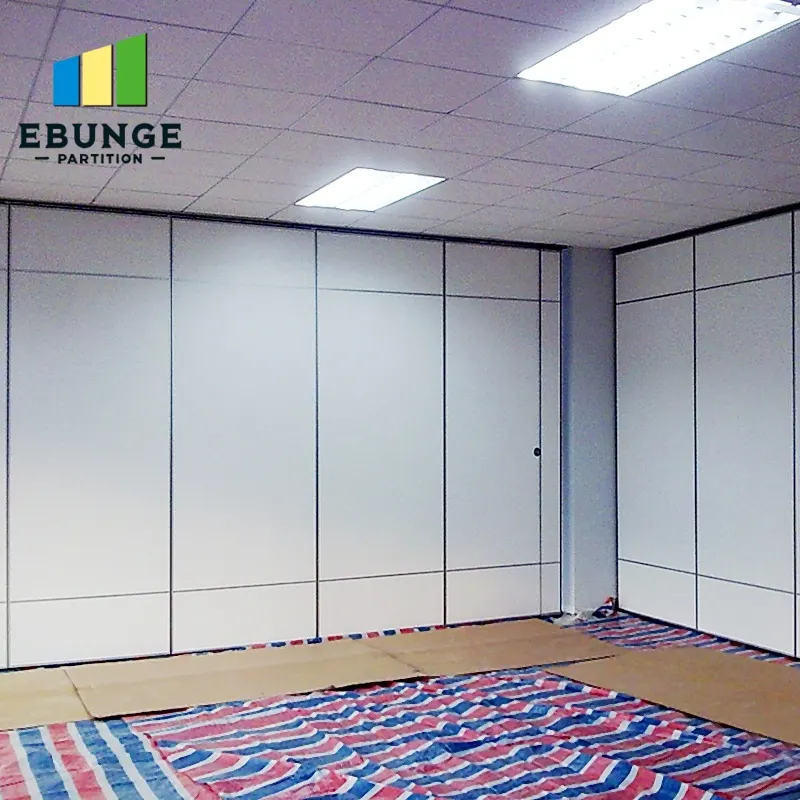
The exact route, junction arrangement, continuous overhead path and parking position must be confirmed from the coordinated project drawings. Because EBUNGE movable wall panels are individually movable, suspended from a top track and cross the opening without a floor track, changeover planning is mostly about route awareness, panel handling and parking discipline. This guide offers an evidence-bounded framework for multi-room venues. Named venues are examples only; movable partitions can be considered wherever flexible spatial division, combination or reconfiguration is required.
Why Changeover Planning Starts With the Layout
Project review term: movable partition changeover skill mix.
Every changeover follows a physical route. Straight, turning and stacking routes are reviewed from the layout, and each proposed movement path needs a continuous connected overhead route with project-specific support review. A route that looks simple on a floor plan may involve a turn, a tight stacking position or a shared circulation zone.
Before assigning people to tasks, confirm the drawing set that shows the opening, the parking position and the path between them. If the layout changes, the skill mix may change too. This is why the matrix should be treated as a living operations document rather than a one-time roster.
Building the Changeover Skill Mix Matrix
Coordination scope: movable partition changeover skill mix.
The matrix maps changeover tasks to the competencies they require. It does not certify individuals, and it does not replace site induction. Instead, it gives supervisors a shared language for coverage gaps.
Task categories to map
- Route check: confirming the intended path is clear and matches the reviewed layout.
- Panel movement: moving individual panels along the top track to the planned stacking position.
- Parking discipline: returning panels to the coordinated stacking area without blocking circulation.
- Finish awareness: handling approved surfaces such as laminate, melamine, fabric, leather or glass with appropriate care.
- Documentation: recording issues, drawing changes or pass-door requirements for follow-up.
For each category, note who is trained, who is developing and who should not perform the task without supervision. Keep the matrix visible to the operations team and review it after layout changes or new room configurations.
Cross-Trained Operator Coverage Framework
Checklist focus: movable partition changeover skill mix.
Cross-training reduces dependence on one person, but it must be planned rather than assumed. A coverage framework identifies how many trained people are available per shift, which rooms they can support and what happens when the primary operator is absent.
Coverage questions for supervisors
- Which rooms share the same route and stacking pattern?
- Which changeovers can be handled by a single trained operator, and which require a second person for safety or coordination?
- Who can verify that the route is clear before movement begins?
- Who updates the matrix when a new panel finish or pass-door requirement is introduced?
- How are temporary staff or contractors briefed before they participate?
These questions do not produce a fixed headcount. They produce a coverage plan that can be confirmed against the actual venue, shift pattern and project documentation.
Evidence Boundaries for Changeover Claims
Review focus: movable partition changeover skill mix.
Panel handling and the operating sequence must be confirmed for the selected layout and project conditions. Those claims require matching evidence. Visible references can support layout discussion but do not verify hidden construction or performance.
Evidence note: STC and Rw are rating concepts used to describe acoustic performance in different contexts. They should not be reduced to a direct count of decibels, and project-specific acoustic requirements must be confirmed separately.
Seals and acoustic concepts can be explained generically, but the actual performance of a configured partition depends on the project-specific assembly, the opening and the surrounding construction. Confirm acoustic and dimensional requirements with the project team before making operational promises.
Coordination With Contractors, Architects and Owners
The suitability of each route and parking arrangement depends on the approved layout, circulation, ceiling interfaces and operating sequence. Contractors can confirm the installed route and parking position. Architects and interior designers can clarify finish intent and pass-door requirements. Owners can confirm which rooms are expected to change most often.
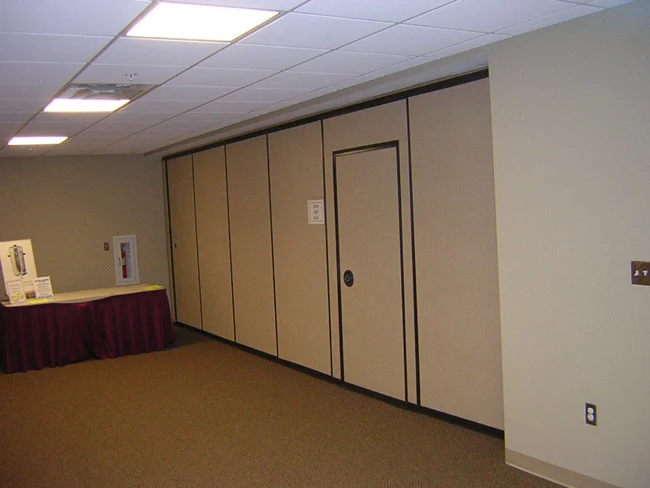
Use the matrix to record what each party has confirmed. Where information is missing, mark it as open rather than filling the gap with assumptions. This keeps the operations plan aligned with the reviewed drawings and the maintained product facts.
Changeover Readiness Checklist
- Reviewed layout showing straight, turning and stacking routes.
- Confirmed continuous connected overhead route for every proposed movement path.
- Planned stacking position that does not obstruct circulation.
- Approved finish list for the panels in use.
- Named trained and developing operators for each shift.
- Process for recording route, finish or pass-door issues.
- Contact point for project-specific support, acoustic and dimensional questions.
This checklist is a planning aid. It does not replace project-specific review, and it does not confirm performance, cost or schedule outcomes.
Documentation and Handover for Multi-Room Venues
Multi-room venues often change configuration between events. A simple handover pack can include the reviewed layout, the current matrix, the approved finish list and a log for issues. Pass-door requirements and project documentation can be discussed with the supplier so that the operations team knows what to confirm.
Keep the pack version-controlled. When a room is reconfigured permanently, update the route review and the matrix together. This prevents outdated assumptions from being carried into the next event.
Frequently Asked Questions
What is a movable partition changeover skill mix matrix?
It is a planning tool that maps changeover tasks to the competencies they require, helping supervisors identify trained and developing operators for each room and shift.
Does every changeover need the same number of people?
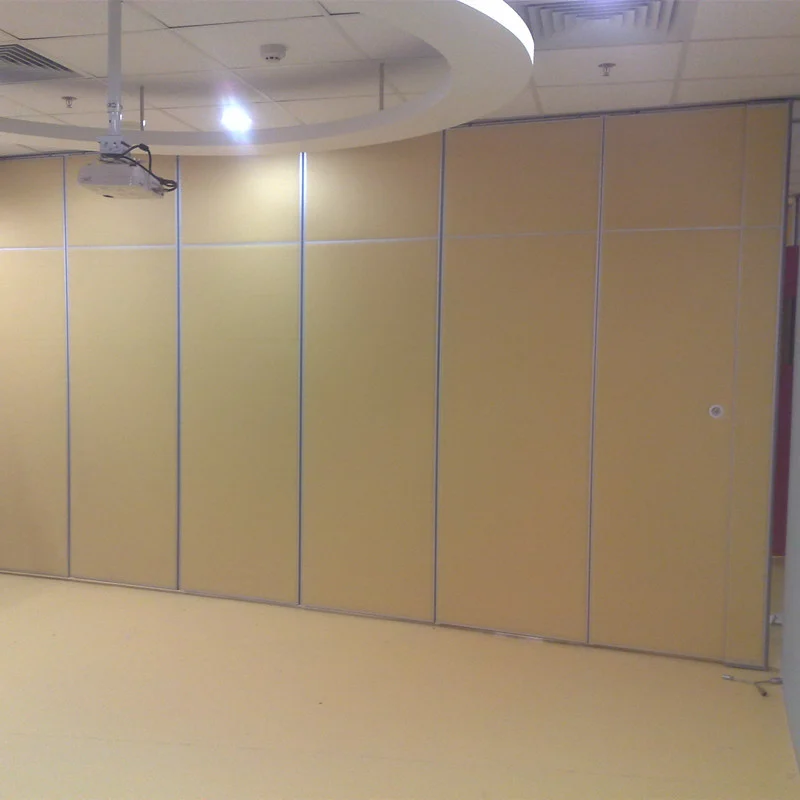
No. The appropriate coverage depends on the route, the stacking position, the panel finish and the venue’s operating rules. Confirm the requirement for each project rather than applying a fixed number.
Can the matrix guarantee acoustic performance?
No. The matrix is an operations document.
How often should the matrix be reviewed?
Review it after layout changes, new room configurations, finish changes or staffing changes. A regular review cycle helps keep the plan aligned with the reviewed drawings.
What should be confirmed before panels are moved?
Confirm that the intended path follows a continuous connected overhead route, that the stacking position is clear and that the operators have been briefed on the reviewed layout.
Where can project teams get support?
Review the movable wall product context and the planning resources, then contact the team to discuss project-specific support, acoustic and dimensional requirements.
Conclusion
A movable partition changeover skill mix matrix turns a complex operations question into a structured conversation. Start with the layout, map tasks to competencies, plan cross-trained coverage and record what still needs project-specific confirmation. This approach keeps multi-room venues flexible without relying on unsupported performance claims.
To discuss your venue’s routes, finishes, pass-door requirements and documentation, contact EBUNGE and confirm the details against your project drawings.