
Quick answer: changeover runbook dependency map
Review focus: changeover runbook dependency map.
A movable partition changeover runbook dependency map is the sequencing logic that connects room release, cleaning, and reset tasks into one repeatable flow. For facility teams, the value is not a single instruction sheet but a visible chain of dependencies: what must finish before the next task can start, who confirms it, and which project-specific conditions must be checked before the room is handed back. This article sets out an evidence-bounded framework for planning that chain around top-hung movable wall panels. The suitability of each route and parking arrangement depends on the approved layout, circulation, ceiling interfaces and operating sequence.
Why a Dependency Map Beats a Simple Task List
Project review term: changeover runbook dependency map.
A task list tells staff what to do. A dependency map tells them what must be true before each task begins. In flexible venues, the difference matters because room release, cleaning, and reset are not independent. Cleaning cannot start until the partition route is clear. Reset cannot finish until panels are parked and the opening is confirmed. If any link is assumed rather than verified, the next task starts on a false premise.
The map should show four dependency types: physical (space is clear), informational (drawing or layout is confirmed), operational (responsible person has signed off), and project-specific (support, acoustic, and dimensional requirements are checked). Only the first two are visible on site. The last two require documentation and coordination.
Core Product Facts That Shape the Runbook
Coordination scope: changeover runbook dependency map.
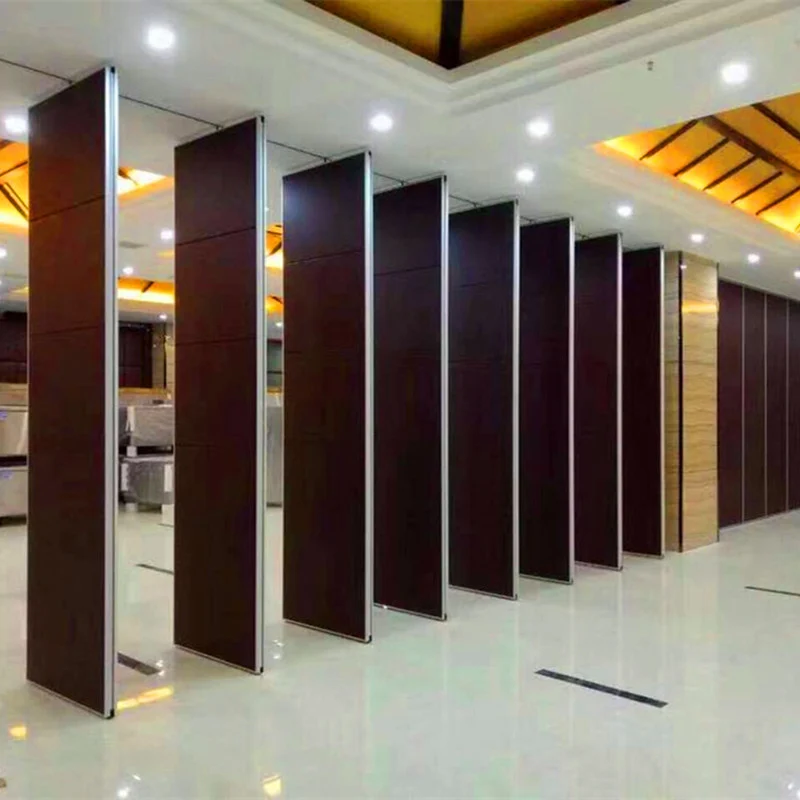
EBUNGE movable wall panels are individually movable and suspended from a top track. They cross the opening without a floor track, and they park at a planned stacking position. Straight, turning, and stacking routes are reviewed from the layout. These facts define the runbook’s physical boundaries: every movement path needs a continuous connected overhead route, and every parking position must be planned rather than improvised.
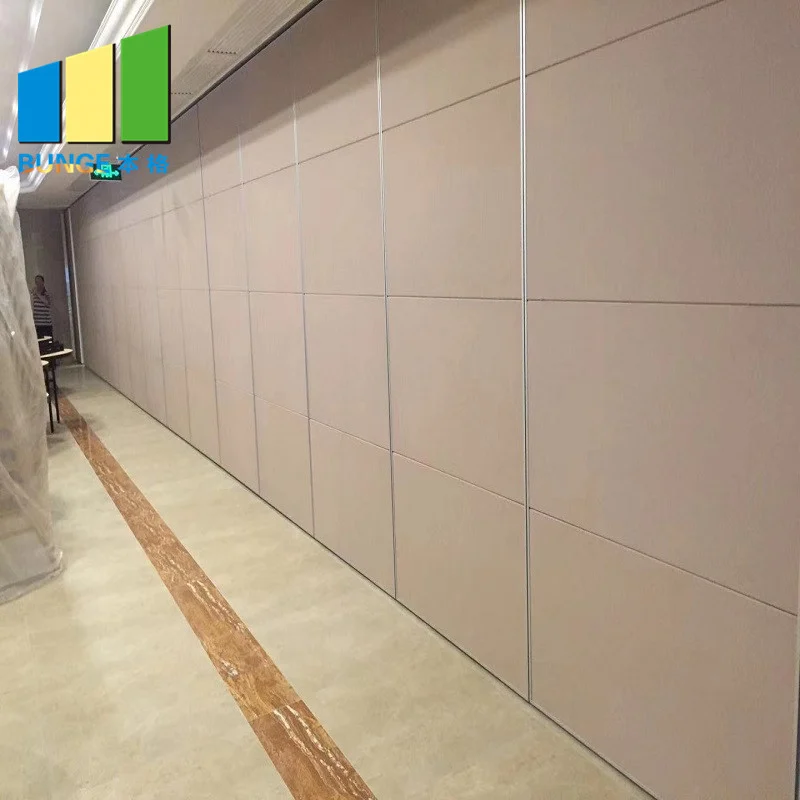
Confirmed finish options include laminate, melamine, fabric, leather, glass, and other approved surfaces. Pass-door requirements and project documentation can be discussed with the project team. Cleaning steps should be written against the approved finish and the project’s own maintenance guidance, not against a generic assumption.
The Changeover Dependency Map: Five Stages
Checklist focus: changeover runbook dependency map.
Use this numbered sequence as a planning skeleton. Adapt the names to your venue, but keep the dependency logic intact.
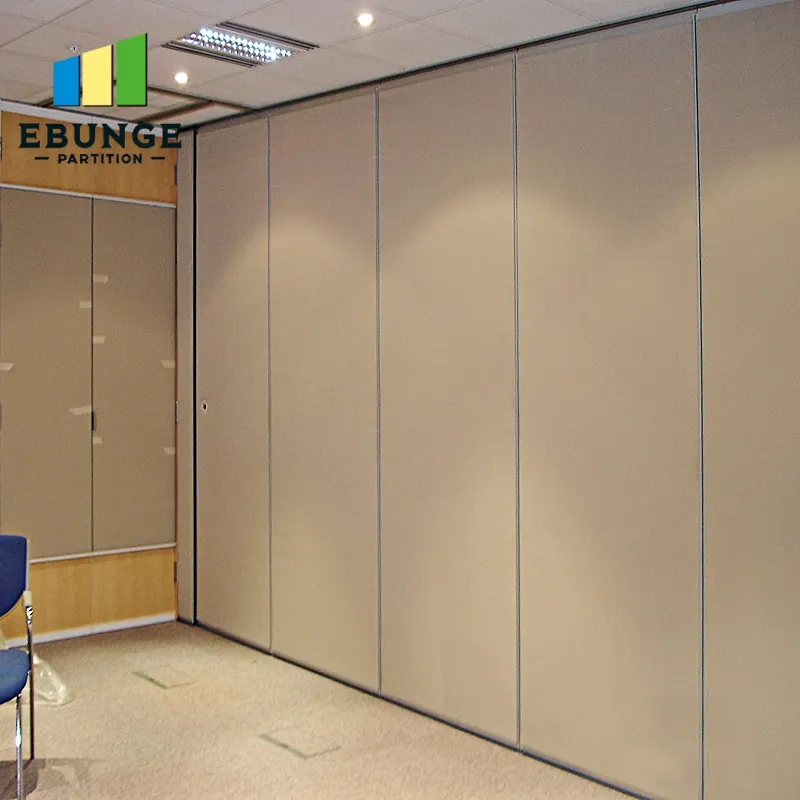
- Pre-changeover confirmation. Confirm the room layout, the required opening, the parking position, and any pass-door needs against the current project drawings.
- Room release. Verify that the space is clear, that the overhead route is unobstructed, and that the responsible person has released the room for partition movement.
- Panel movement and parking. Move panels individually along the reviewed route to the planned stacking position. The exact route, junction arrangement, continuous overhead path and parking position must be confirmed from the coordinated project drawings.
- Cleaning. Clean only after panels are parked and the opening is stable. Follow the approved finish guidance and the project’s maintenance instructions.
- Reset and handback. Reset furniture and services, confirm the room configuration, and record any deviation from the planned sequence for the next changeover.
Sequencing Room Release, Cleaning, and Reset
Review focus: changeover runbook dependency map.
Room release is a gate, not a formality
Room release should be treated as a gate. It confirms that the previous use has ended, that loose items are removed, and that the partition route is clear. If release is verbal only, the cleaning team may arrive before the route is safe, or the reset team may begin before parking is complete.
Cleaning depends on parking, not on the clock
Cleaning is often scheduled by time. In a dependency map, it is scheduled by state: cleaning starts when panels are parked and the opening is confirmed. This prevents staff from cleaning a floor area that is still part of the movement route.
Reset closes the loop
Reset should include a short verification step: is the room in the intended configuration, are pass-doors as required, and is the parking position recorded? This record becomes the starting condition for the next changeover.
Decision Checklist for Facility Teams
- Is the current layout drawing the one being used on site?
- Has the overhead route been reviewed for continuity and support?
- Is the parking position planned and marked?
- Are finish-specific cleaning instructions available?
- Is there a named person for room release and handback?
- Are acoustic and dimensional requirements confirmed for this project?
- Is there a simple way to record deviations from the runbook?
Evidence Boundaries: What the Runbook Must Not Assume
A runbook is an operational document, not an engineering certificate. Visible references can support layout discussion but do not verify hidden construction or performance. Comparative or absolute claims require matching evidence. Where evidence is not available, the runbook should state the exact project-specific confirmation boundary instead of filling the gap with an assumption.
Evidence note: STC and Rw are rating concepts used to describe acoustic performance. They are not a direct count of decibels, and a single number should not be treated as a promise of site performance. Confirm acoustic requirements for each project with the responsible acoustic and engineering team.
Compact Comparison: Task List vs Dependency Map
| Planning element | Simple task list | Dependency map |
|---|---|---|
| Room release | Listed as a task | Defined as a gate with a named owner |
| Cleaning | Scheduled by time | Scheduled by parking and opening state |
| Reset | Ends when furniture is placed | Ends with verification and a record |
| Project-specific checks | Often implicit | Explicitly listed and confirmed |
Coordinating with Contractors, Designers, and Owners
Contractors can confirm the movement route and parking position. Designers can confirm finish intent and pass-door requirements. Owners can confirm room-release authority and handback expectations. Distributors and construction teams can help align documentation with the installed configuration.
For product context, see the movable walls product page. For broader planning references, see the resources page. When the runbook depends on project-specific support, acoustic, or dimensional confirmation, raise it early with the project team through the contact page.
FAQ: Changeover Runbook Planning
What is a movable partition changeover runbook dependency map?
It is a sequencing document that shows how room release, cleaning, and reset tasks depend on each other, including the physical, informational, operational, and project-specific conditions that must be confirmed before each task starts.
Can the runbook be written before the partition layout is finalized?
A draft can be prepared, but the movement route, parking position, and opening requirements should be reviewed against the current layout. Straight, turning, and stacking routes are reviewed from the layout, so late changes can affect the sequence.
How should cleaning be sequenced around movable panels?
Cleaning should follow parking and opening confirmation. The cleaning method should match the approved finish and the project’s maintenance guidance. Do not assume a generic finish example proves cleaning compatibility.
Does the runbook need to include acoustic information?
Acoustic requirements should be confirmed for each project.
Who should own the room release and handback steps?
Ownership depends on the venue’s operating model. The important point is that a named person confirms release and handback, and that deviations are recorded for the next changeover.
What should be confirmed with EBUNGE before finalizing the runbook?
Confirm project-specific support, acoustic, and dimensional requirements, along with pass-door needs and project documentation. These items should be discussed with the project team rather than assumed from a generic example.
Conclusion: Build the Map, Then Rehearse It
A changeover runbook dependency map turns a set of tasks into a coordinated sequence. Start with the confirmed product facts: top-hung panels, no floor track along the partition line, planned parking, and layout-reviewed routes. Then add the operational gates that only your venue can define. Rehearse the sequence once, record what actually happened, and refine the map before the next changeover.
To discuss project-specific support, acoustic, and dimensional requirements, or to review pass-door and documentation needs, contact the EBUNGE team.