
Quick answer: changeover policy exception register
Review focus: changeover policy exception register.
When a booking overruns and the next group is already waiting, the pressure to release a room falls on whoever is standing nearest the partition. Without a written record, that decision becomes a verbal approval that nobody can audit. A movable partition changeover policy exception register gives venue operators and facility teams a controlled way to log, classify and resolve these moments. It does not replace the standard changeover policy; it records where the policy was tested and how the exception was handled. This article sets out a practical register structure for overseas B2B teams, bound to maintained product facts and project-specific drawing review.
Why a Changeover Exception Register Matters for Movable Partition Walls
Project review term: changeover policy exception register.
Movable partition panels are individually movable, suspended from a top track, cross the opening without a floor track and park at a planned stacking position. That movement path is reviewed from the layout, including straight, turning and stacking routes. When a room release is disputed, the physical route and the scheduling route are both under pressure.
A register separates two questions that often get merged in the corridor: was the room actually available, and was the partition configuration actually ready? The first is a booking question. The second is a facility question. Recording them separately prevents a late overrun from being blamed on the partition system, and prevents a partition issue from being hidden inside a scheduling dispute.
What the Register Should Capture Before Any Dispute
Coordination scope: changeover policy exception register.
The register is only useful if it is filled in before the argument, not after. Each entry should identify the room, the booking reference, the planned changeover window and the person who authorized the exception. The suitability of each route and parking arrangement depends on the approved layout, circulation, ceiling interfaces and operating sequence.
Core fields for every exception entry
- Date, time and room identifier.
- Booking reference and original changeover window.
- Exception type: late overrun, early release request, contested release or configuration delay.
- Partition route affected: straight, turning or stacking position.
- Person requesting the exception and person approving it.
- Action taken and time the room was handed over.
- Follow-up owner and review date.
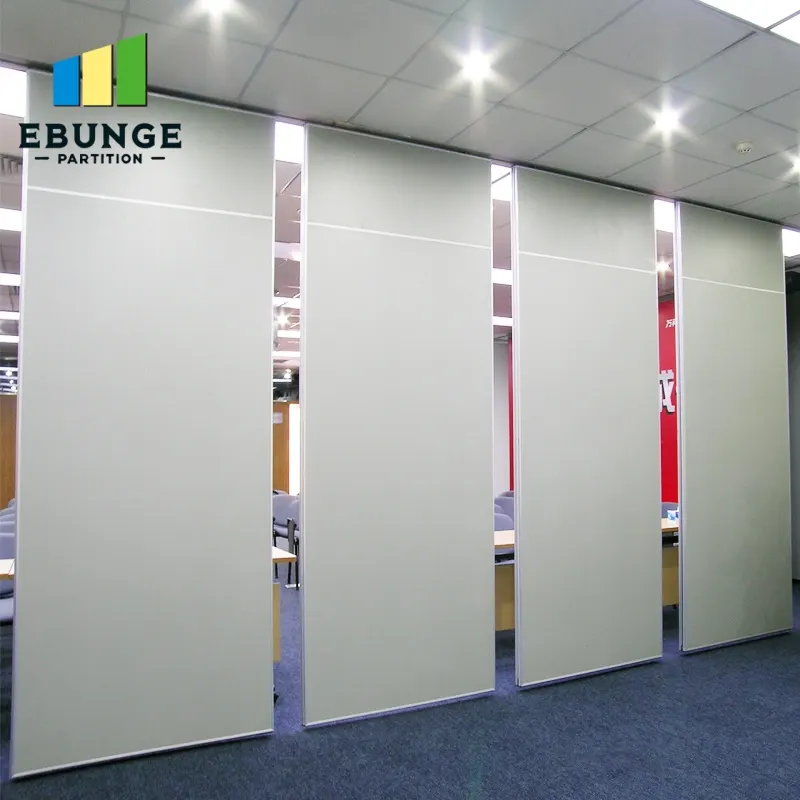
These fields are deliberately administrative. Visible references can support layout discussion but do not verify hidden construction or performance. They simply create a traceable record that can be reviewed against the layout drawings and the agreed changeover policy.
Classifying Late Booking Overruns and Room Release Disputes
Checklist focus: changeover policy exception register.
Not every overrun is the same. A late booking overrun may be caused by the previous group, by a facility delay, or by a genuine misunderstanding about when the room was released. Classifying the exception helps the venue decide whether the standard policy needs adjustment or whether the event was a one-off.
Three practical exception classes
- Operational overrun: the previous booking runs past its window and the partition changeover is delayed.
- Release dispute: two parties claim the same room at the same time, and the release record is unclear.
- Configuration exception: the requested layout requires a route or stacking position that was not part of the original plan.
Each class should have a named owner. Operational overruns usually sit with the venue operations team. Release disputes often need a booking or sales owner. Configuration exceptions should be reviewed with the project team because the movement path and parking position are coordinated from the layout.
Evidence Boundaries When Reviewing an Exception
Review focus: changeover policy exception register.
An exception register is not a performance report. The exact route, junction arrangement, continuous overhead path and parking position must be confirmed from the coordinated project drawings.
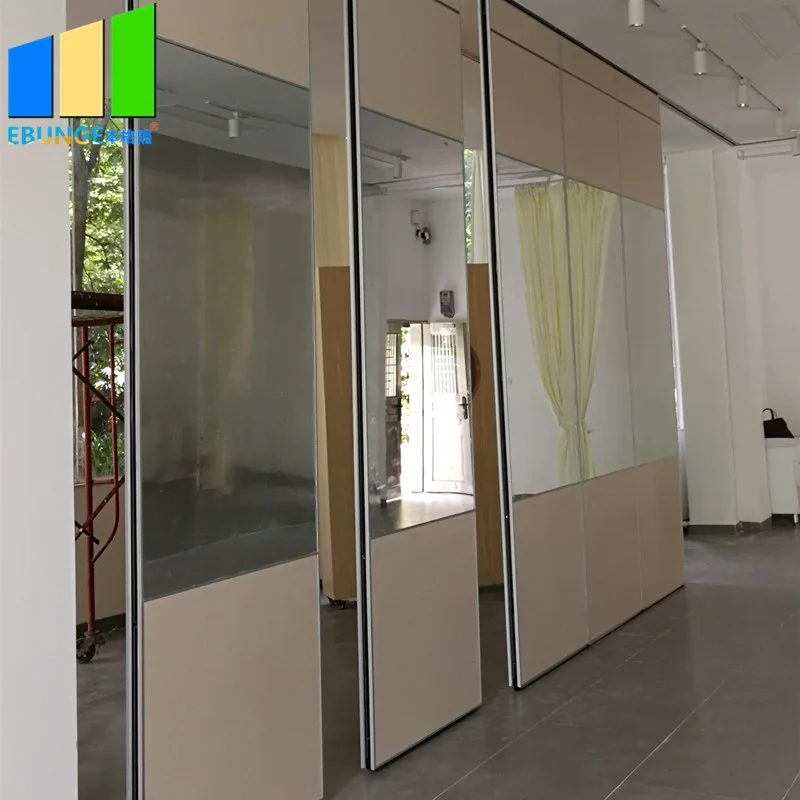
Evidence note: finish options such as laminate, melamine, fabric, leather and glass are confirmed as available surfaces. They are not evidence of acoustic, fire, durability or maintenance performance. Those requirements need their own project-specific confirmation.
When an exception involves a change to the partition route, the review should return to the layout drawings. Straight, turning and stacking routes are reviewed from the layout, and any proposed change needs the same review. Pass-door requirements and project documentation can be discussed with the supplier, but they should not be assumed from a generic example.
A Step-by-Step Resolution Process for Facility Teams
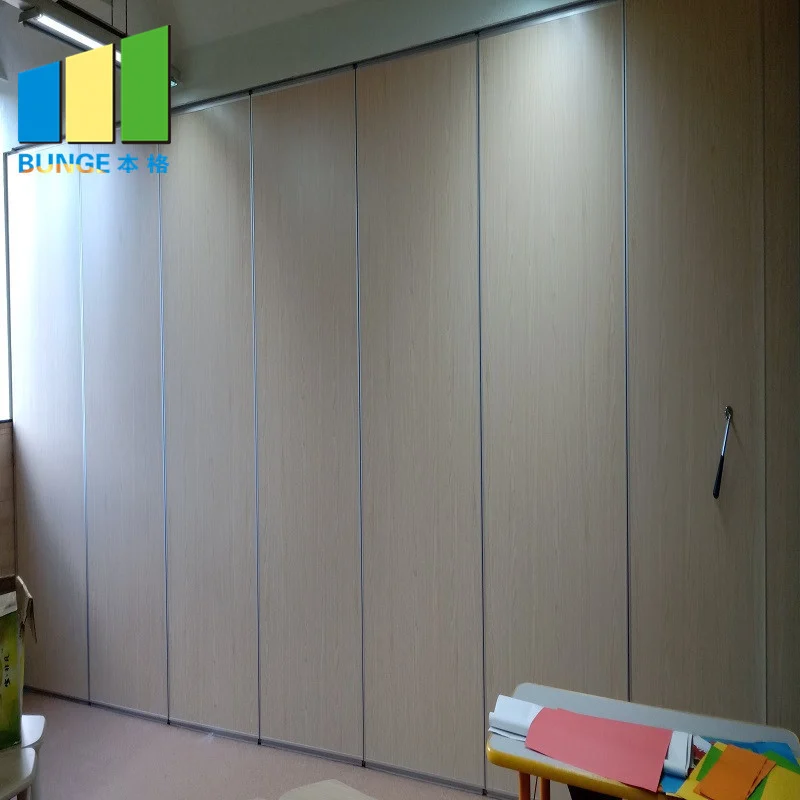
A consistent process reduces the chance that a disputed release becomes a verbal argument. The steps below are administrative and can be adapted to hotels, conference centres, schools, offices and other flexible-space venues.
- Log the exception immediately, using the core fields above.
- Confirm the actual room status against the booking record.
- Identify the exception class and assign an owner.
- Check whether the partition configuration matches the planned route and stacking position.
- Record the decision, including any temporary arrangement.
- Set a review date and close the entry only when the follow-up is complete.
If the exception reveals a recurring pattern, the venue should review the standard changeover policy rather than relying on repeated exceptions. The register is a signal, not a substitute for planning.
Coordinating the Register With Project Documentation
For new-build or renovation projects, the exception register should connect to the project documentation set. The layout review, the agreed parking position and the pass-door requirements all belong in the same coordination file. This is especially important when the venue expects frequent reconfiguration between rooms of different sizes.
Project teams should confirm support, acoustic and dimensional requirements for each opening. The register can record that confirmation, but it cannot replace it.
Frequently Asked Questions
What is a movable partition changeover policy exception register?
It is a controlled log for recording situations where the standard changeover policy could not be followed, such as a late booking overrun or a contested room release. It captures the facts, the decision and the follow-up owner.
Does the register require acoustic test data?
No. The register is administrative. Acoustic requirements are project-specific and should be confirmed separately.
Can the register be used for any venue type?
Yes, the structure can be adapted to hotels, schools, offices, conference centres and other flexible-space venues. The named venue types are examples and do not limit other suitable applications.
How should a configuration exception be handled?
Return to the layout drawings and review the straight, turning and stacking routes. Any change to the movement path or parking position should be coordinated with the project team before it is approved.
Who should approve an exception?
Approval should sit with a named role, not an ad hoc verbal agreement. The register should record who requested the exception and who approved it, so the decision can be reviewed later.
Does the register replace the standard changeover policy?
No. It records exceptions to the policy. If exceptions become frequent, the policy itself should be reviewed rather than relying on repeated approvals.
Conclusion and Next Steps
A movable partition changeover policy exception register gives venue teams a factual, auditable way to handle late overruns and release disputes. It keeps scheduling decisions separate from partition configuration decisions, and it points back to the layout review whenever a route or stacking position is questioned. Confirm project-specific support, acoustic and dimensional requirements before making commitments, and use the register to record what was decided and why.
To discuss pass-door requirements, project documentation or finish options such as laminate, melamine, fabric, leather and glass, contact the EBUNGE team. You can also review the movable wall product range and browse the resources library for further planning guidance.