
Quick project answer
Review focus: changeover labor availability forecast.
A movable partition changeover labor availability forecast is the bridge between a room booking calendar and the people who actually reset the space. When a ballroom must split into three meeting rooms by 08:00, or a training floor must return to a single hall by 17:30, the constraint is rarely the wall itself. It is whether trained staff are on site, briefed, and free at the right moment. This framework helps facility operations teams plan shift coverage against forecast room demand without overstaffing or missing release windows.
The approach stays deliberately evidence-bounded. It uses only maintained product facts, visible layout information, and project-specific drawing review. It does not assume hidden performance, engineering outcomes, or commercial results.
Why Changeover Labor Planning Starts With the Layout
Project review term: changeover labor availability forecast.
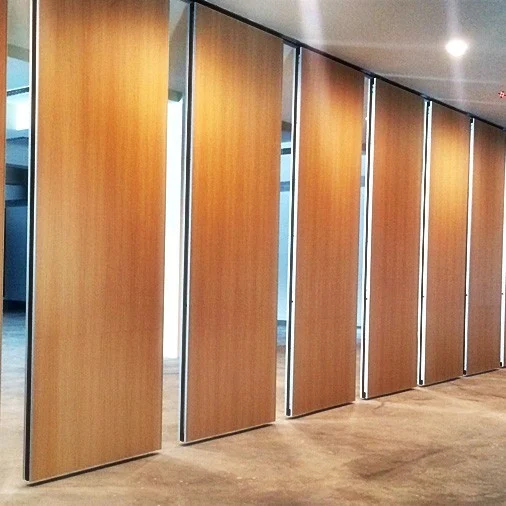
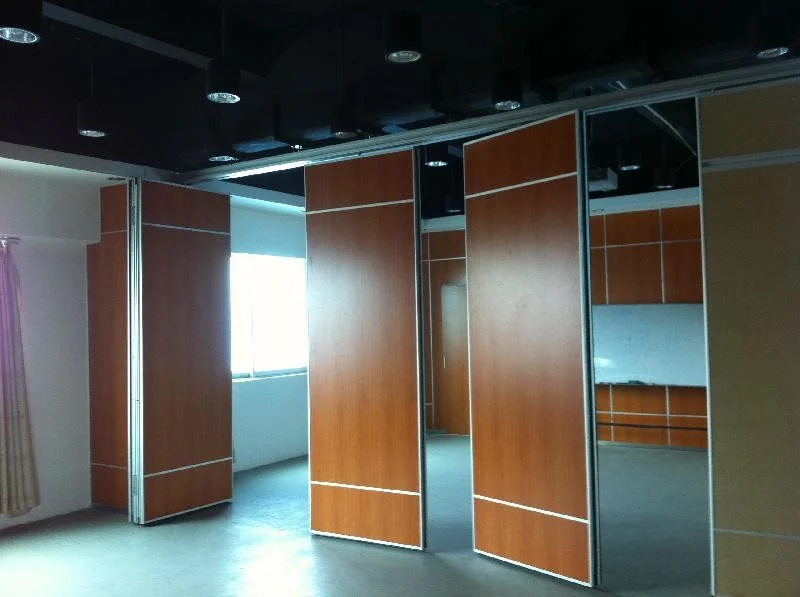
EBUNGE movable wall panels are individually movable, suspended from a top track, cross the opening without a floor track, and park at a planned stacking position. That single sentence already tells an operations planner where labor time is spent: moving panels along a continuous overhead route, then parking them at the coordinated stacking location.
Straight, turning and stacking routes are reviewed from the layout. A route with a turn or a longer travel distance changes the sequence a crew follows, even when the panel count is identical. Before forecasting hours, confirm the route drawing and the parking position with the project team.
What the layout review should confirm
- The continuous connected overhead route for every proposed movement path.
- The planned stacking position and how it relates to adjacent rooms or corridors.
- Whether pass-door requirements affect the changeover sequence.
- Which finish option is specified, since handling care may differ by surface.
Building the Demand Forecast Before the Labor Forecast
Coordination scope: changeover labor availability forecast.
Labor availability cannot be planned in isolation. Start with forecast room demand: how many times per day, week, or event cycle the space is expected to change configuration. Then map each changeover to a release window, meaning the latest acceptable time the room must be ready.
Two numbers matter most: changeover frequency and release-window tightness. A room that changes twice a week with generous windows needs a different coverage pattern than a room that changes twice a day with back-to-back bookings.
Demand inputs to collect
- Booked configurations per day and per week.
- Release windows for each configuration.
- Peak periods such as conference seasons or exam weeks.
- Known blackout periods when the room cannot be reset.
A Step-by-Step Changeover Labor Availability Forecast
Checklist focus: changeover labor availability forecast.
Use this sequence to convert demand into a coverage plan. It is a planning method, not a performance guarantee.
- List every configuration change expected in the forecast period.
- Assign each change a release window and a preferred reset time.
- Review the movement route and parking position for each change.
- Identify which changes can be grouped into one visit.
- Estimate the labor window each change requires, then confirm with the project team.
- Compare required windows against available shift coverage.
- Flag gaps where demand exceeds coverage and adjust bookings or shifts.
Evidence note
Changeover timing depends on the specific layout, route, panel count, finish, and site conditions. Confirm project-specific support, acoustic and dimensional requirements with the project team before publishing any labor standard.
Shift Coverage Models for Flexible Spaces
Once the forecast exists, choose a coverage model that matches demand shape. Three common patterns appear in facility operations planning.
| Model | Best suited to | Planning caution |
|---|---|---|
| Fixed shift | Predictable daily changeovers | May idle during low-demand periods |
| On-call coverage | Irregular event-driven demand | Response time must be verified locally |
| Hybrid | Mixed weekday and event peaks | Requires clear handover rules |

No model removes the need to confirm route, support, and dimensional details. Coverage planning and technical review run in parallel.
Coordinating With Contractors, Designers and Owners
Changeover labor planning touches several parties. Contractors need to know how the installed layout supports the intended movement routes. Architects and interior designers need to confirm that stacking positions do not conflict with adjacent functions. Owners need a realistic view of how often the space will be reset.
Use the movable wall product page as a shared reference for maintained product facts, and the resources section for general planning context. Where pass-door requirements or project documentation are involved, raise them early so the operations plan and the technical plan stay aligned.
Coordination checklist
- Confirm the layout drawing shows straight, turning and stacking routes.
- Confirm the parking position is reachable and does not block other functions.
- Confirm finish selection with the design team.
- Confirm who is responsible for each changeover window.
- Confirm the escalation path when a release window is at risk.
Common Forecasting Mistakes to Avoid
Most planning failures come from treating changeover as a fixed duration rather than a variable tied to layout and demand. Another frequent mistake is assuming that acoustic separation can be summarized as a single number. The suitability of each route and parking arrangement depends on the approved layout, circulation, ceiling interfaces and operating sequence.
A third mistake is planning coverage without reviewing the movement route. If a proposed path is not a continuous connected overhead route, the plan needs revision before labor assumptions are made.
Frequently Asked Questions
What is a movable partition changeover labor availability forecast?
It is a planning document that compares forecast room demand and release windows against the staff coverage available to reset movable partition configurations.
Does the forecast require measured changeover times?
It should use project-specific information confirmed with the project team. Generic or assumed times should not be published as standards.
How does the layout affect changeover planning?
Straight, turning and stacking routes are reviewed from the layout. Route length, turns, and parking position all influence how a changeover is sequenced.
Can one coverage model fit every facility?
No. Fixed, on-call, and hybrid models suit different demand shapes. The right choice depends on booking patterns and local staffing arrangements.
What should be confirmed before finalizing the plan?
Confirm project-specific support, acoustic and dimensional requirements, plus pass-door needs and project documentation, with the project team.
Does a movable partition guarantee soundproofing?
No.
Conclusion and Next Steps
Review the movement routes, agree the release windows, and match coverage to demand rather than to habit. Then revisit the forecast as bookings change.
To discuss pass-door requirements, project documentation, or layout-specific planning, contact the EBUNGE team and share your drawings for review.