
Quick answer: changeover exception handling
Review focus: changeover exception handling.
Movable partition changeover exception handling is the discipline of deciding, in advance, what counts as a failed or delayed room reset, who records it, and who is authorised to escalate it. For contractors, architects, interior designers, owners and renovation teams, the framework matters because a flexible room is only as useful as the operations routine behind it. This article sets out a planning structure that stays inside confirmed product facts and project-specific drawing review.
Why Changeover Exceptions Need a Defined Framework
Project review term: changeover exception handling.
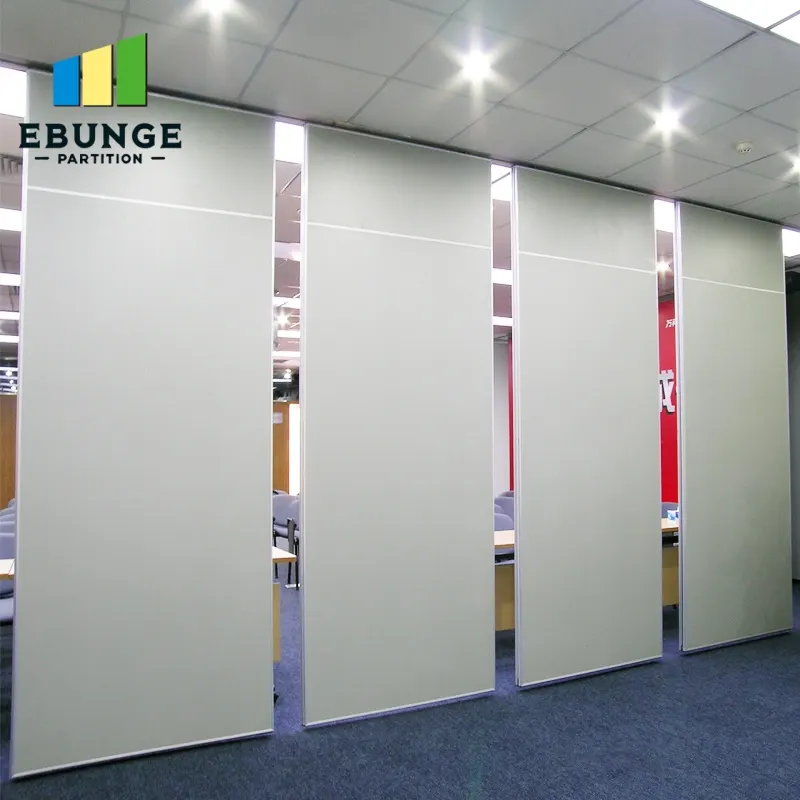
EBUNGE movable wall panels are individually movable, suspended from a top track, cross the opening without a floor track, and park at a planned stacking position. Those confirmed characteristics shape the operating routine: panels travel along a continuous connected overhead route, and the parking position is part of the coordinated layout rather than an improvised corner.
When a room cannot be reset to the required configuration on schedule, the cause may sit in the layout, the route, the stacking position, the sequence agreed with the venue team, or the way the requirement was communicated. A framework separates these possibilities instead of treating every delay as a product fault.
Defining What Counts as a Changeover Exception
Coordination scope: changeover exception handling.
An exception should be a specific, observable condition, not a general complaint. Define categories that your team can verify on site without inferring hidden performance.
- Route obstruction: the straight, turning or stacking route reviewed from the layout is blocked by furniture, equipment or stored items.
- Parking conflict: the planned stacking position is occupied or cannot be reached along the coordinated route.
- Configuration mismatch: the panel arrangement does not match the room configuration recorded in the project documentation.
- Sequence delay: the changeover starts late because the previous activity overran, not because the wall itself failed.
- Documentation gap: the required configuration, pass-door arrangement or route is unclear to the person performing the reset.
Each category should have an owner. A route obstruction is usually an operations matter; a configuration mismatch may need the project documentation reviewed with the supplier or designer.
A Numbered Process for Logging Exceptions
Checklist focus: changeover exception handling.
- Capture the time and location. Record the room, the intended configuration and the moment the reset was expected to be complete.
- Describe the observed condition. State what is visible: a blocked route, an occupied parking position, a panel that does not match the drawing.
- Attach the reference. Link the entry to the relevant layout drawing, route review or configuration note.
- Assign a severity. Use your own agreed scale based on operational impact, not on assumed product performance.
- Route to the responsible party. Send the entry to the person who can resolve that category.
- Close with a verified reset. Confirm the room reached the required configuration before closing the log.
Keep the log simple enough that staff will actually use it. The suitability of each route and parking arrangement depends on the approved layout, circulation, ceiling interfaces and operating sequence.
Escalation Tiers and Decision Ownership
Review focus: changeover exception handling.
Escalation should be tiered so that routine issues are solved locally and only genuine blockers rise. The tiers below are a planning template; adapt them to your site’s management structure.
| Tier | Typical trigger | Decision owner |
|---|---|---|
| Level 1 | Route obstruction or occupied parking position | Facility operations supervisor |
| Level 2 | Repeated configuration mismatch or unclear documentation | Project coordinator with designer or supplier |
| Level 3 | Route or support condition that needs drawing review | Contractor, architect or structural reviewer |

Level 3 is deliberately narrow. It exists for conditions that cannot be resolved by clearing a route or restating a configuration, and that require the coordinated layout to be reviewed again.
Evidence Boundaries for Exception Records
Project review term: changeover exception handling.
An exception log records observed conditions and agreed actions. It does not establish acoustic performance, structural capacity, durability or compliance unless matching project evidence exists.
This boundary matters when teams write incident notes. A photograph of a parked panel shows a visible arrangement; it does not demonstrate how the wall will perform acoustically in a given room.
Similarly, do not infer support points, loads or route feasibility from a drawing alone. Every proposed movement path requires a continuous connected overhead route and project-specific support review.
Coordinating Exceptions With Project Documentation
Useful items include the agreed room configurations, the straight, turning and stacking routes reviewed from the layout, the planned parking positions, and any pass-door requirements.
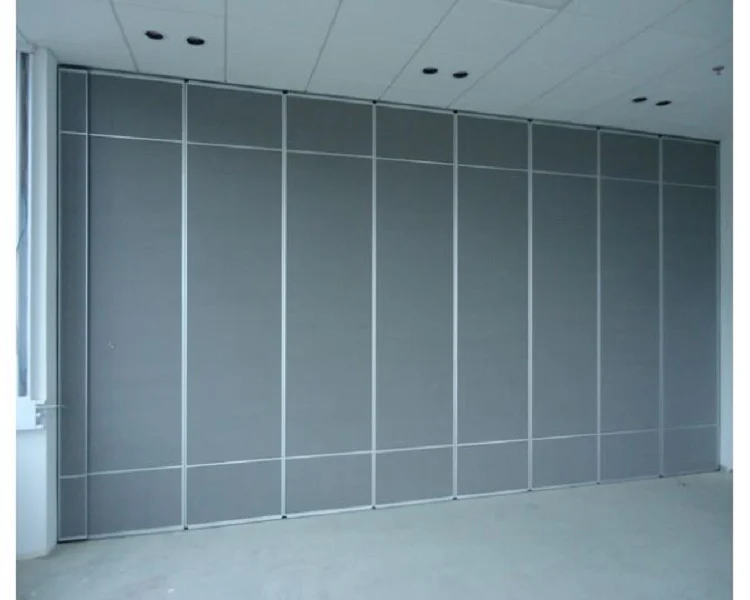
Finish choices also belong in the record. Confirmed finish options include laminate, melamine, fabric, leather, glass and other approved surfaces. Recording the finish helps the operations team identify the correct panel set without treating a finish as evidence of cleaning compatibility or acoustic behaviour.
For broader planning resources, see the EBUNGE resources page, and review the movable wall product context before finalising a specification.
Reviewing the Framework After Handover
A framework is only useful if it is reviewed. After the first few months of operation, examine which exception categories recur, which escalation tiers are used, and whether the documentation matches how the rooms are actually used.
Adjust the categories and owners to reflect real patterns. If a route is repeatedly obstructed, the answer may be a storage or furniture plan rather than a wall change. If configuration mismatches recur, the answer may be clearer labelling or a simplified configuration sheet.
Frequently Asked Questions
What is a movable partition changeover exception?
It is a recorded condition in which the movable partition wall cannot be reset to the required room configuration on schedule. The record should describe the observed condition, the intended configuration and the responsible party.
Who should own the exception log?
Ownership should be agreed before handover.
Does an exception log prove acoustic performance?
No. The log records operational conditions and actions.
How should route problems be escalated?
Start with the operations supervisor for obstructions and parking conflicts.
Can pass-door requirements be included in the framework?
Yes. Pass-door requirements and project documentation can be discussed with the supplier so that the agreed configuration is recorded clearly for operations.
How often should the framework be reviewed?
Review it after the initial operating period and whenever room usage changes. The review should focus on recurring categories, escalation use and documentation clarity.
Conclusion and Next Step
A changeover exception framework turns an unpredictable room reset into a managed process. Define the categories, log the observed conditions, escalate by tier, and keep every claim inside the evidence you actually hold. Confirm project-specific support, acoustic and dimensional requirements before finalising any specification.
To discuss pass-door requirements, project documentation or a coordinated layout review, contact the EBUNGE team.