
Quick answer: movable partition changeover crew travel path stacking pocket contention
Review focus: movable partition changeover crew travel path stacking pocket contention.
Movable partition changeover crew travel path stacking pocket contention is a facility operations problem before it is a product problem. When several rooms reconfigure at the same time, crews, carts and panels compete for the same corridors and the same parking positions. The panels themselves are individually movable, suspended from a top track, cross the opening without a floor track and park at a planned stacking position. That operating model is simple in one room and complex across a floor plate. This article offers a sequencing framework that keeps transport routes and stacking pocket access from colliding, while staying inside confirmed product facts and project-specific drawing review.
Why Changeover Sequencing Belongs in Facility Operations Planning
Project review term: movable partition changeover crew travel path stacking pocket contention.
Most venue teams plan the finished room, not the transition between rooms. A ballroom split into three salons, a training floor reset between sessions, or an exhibition hall re-divided overnight all depend on the same shared resources: the overhead route, the corridor width and the parking pocket. If two crews need the same pocket at the same time, the schedule fails even when the partition system performs exactly as designed.
Sequencing is therefore a planning discipline. It asks who moves first, which route stays clear, and which pocket is released before the next move begins. Panel handling and the operating sequence must be confirmed for the selected layout and project conditions. It requires the layout drawing, the confirmed parking style and a realistic view of concurrent activity.
Map the Three Route Types Before Any Changeover
Coordination scope: movable partition changeover crew travel path stacking pocket contention.
Every movable partition operation uses three route types, and each must be reviewed from the layout rather than assumed. The straight route follows the opening line. The exact route, junction arrangement, continuous overhead path and parking position must be confirmed from the coordinated project drawings. The suitability of each route and parking arrangement depends on the approved layout, circulation, ceiling interfaces and operating sequence.
Straight and turning routes
These are the points where a crew’s sightline and the panel’s path must both be checked. Mark them on the drawing and confirm support conditions with the project team.
Stacking routes and pocket approach
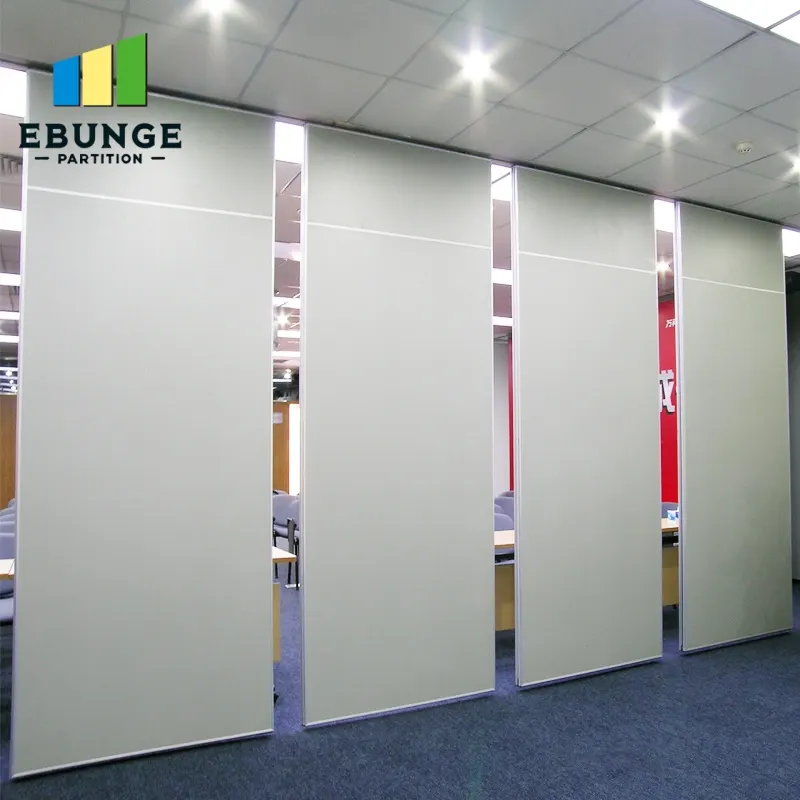
The stacking route ends at the parking position. Parking style is customized to the customer layout and project requirements, and compact stacking may be possible when the coordinated design permits it.
A Numbered Sequencing Framework for Concurrent Reconfigurations
Checklist focus: movable partition changeover crew travel path stacking pocket contention.
- List every concurrent move. Record each room, its target configuration and the pocket it will use. Two rooms sharing one pocket is the first contention signal.
- Assign a route class to each move. Straight, turning or stacking. Moves that share a turning point or a corridor segment are candidates for staggering.
- Identify shared resources. Corridors, lift lobbies, door openings and pocket approaches. These are the points where crews meet.
- Set a release order. Decide which move must finish before another begins, based on pocket availability rather than room priority alone.
- Build a buffer between dependent moves. The buffer protects the schedule when a route takes longer than expected.
- Confirm the plan against the layout drawing. Verify that each route is continuous and supported, and that each pocket is reachable in the planned direction.
- Review with the project team. Support, acoustic and dimensional requirements are project-specific and should be confirmed before the sequence is fixed.
Stacking Pocket Contention: The Hidden Bottleneck
Review focus: movable partition changeover crew travel path stacking pocket contention.
Pocket contention is rarely about the pocket itself. It is about access. A pocket that opens onto a main circulation route may be usable at one time of day and blocked at another. A pocket shared by two adjacent rooms may be technically reachable from both but practically available to only one crew at a time.
Planners should treat each pocket as a single-occupancy resource during a changeover window. That framing turns a vague scheduling risk into a clear constraint that can be drawn, discussed and resolved before the event day.
Decision Checklist for Facility Planners
Project review term: movable partition changeover crew travel path stacking pocket contention.
- Are all concurrent moves listed with their target rooms and pockets?
- Is each route classified as straight, turning or stacking?
- Are shared corridors, turning points and pocket approaches marked on the plan?
- Is every proposed movement path on a continuous connected overhead route?
- Is the parking style confirmed against the customer layout and project requirements?
- Is there a release order and a buffer between dependent moves?
- Have support, acoustic and dimensional requirements been confirmed with the project team?
Evidence Boundaries: What a Drawing Can and Cannot Tell You
Coordination scope: movable partition changeover crew travel path stacking pocket contention.
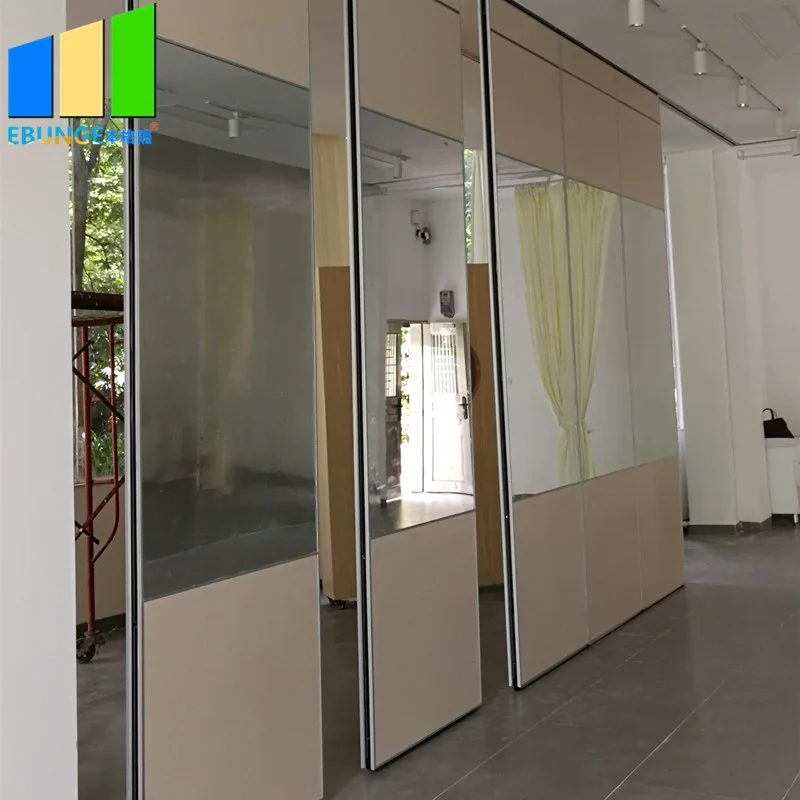
A layout drawing shows geometry. Visible references can support layout discussion but do not verify hidden construction or performance. Finish options such as laminate, melamine, fabric, leather and glass describe surfaces, not performance.
Evidence note: confirm project-specific support, acoustic and dimensional requirements before finalizing any changeover sequence. Pass-door requirements and project documentation can be discussed with the EBUNGE team.
Coordinating Across Trades and Event Schedules
Changeover sequencing sits between the venue’s event calendar and the building’s technical constraints. Event managers care about turnaround windows. Facility teams care about corridor availability. Contractors and architects care about how the partition integrates with the ceiling and surrounding construction. A single sequencing document can align all three if it stays factual.
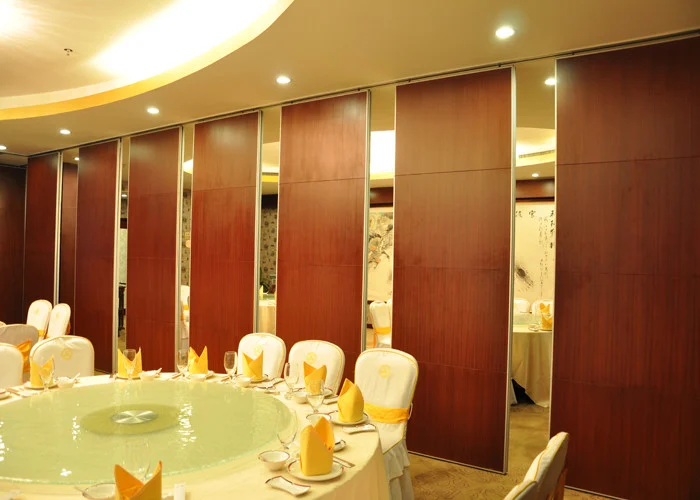
Keep the document free of assumed performance. State what is confirmed, what is pending and what must be verified on site. This is also where movable wall systems can be reviewed against the layout, and where planning resources help teams frame the right questions before procurement.
FAQ: Changeover Crew Travel Path and Stacking Pocket Planning
What is stacking pocket contention in a multi-room venue?
It is the situation where two or more concurrent reconfigurations need the same parking position or its approach at the same time. The pocket becomes a single-occupancy resource during the changeover window.
Do movable partitions need a floor track for crew movement?
No. EBUNGE movable partition panels are top-hung and move without a continuous floor running track or floor hardware along the partition line. The movement path still requires a continuous connected overhead route.
How do we decide which room reconfigures first?
Base the order on pocket availability and shared route use, not only on room priority. A move that releases a pocket can unlock the next move.
Can two rooms share one stacking pocket?
It may be possible in some layouts, but it should be reviewed as a scheduling constraint. Confirm the parking style and approach with the project team.
What information should be ready before sequencing?
The layout drawing, the list of concurrent moves, the target configurations, the confirmed parking style and any pass-door requirements. Support, acoustic and dimensional requirements should be confirmed project by project.
Does a finish choice affect changeover planning?
Finish options such as laminate, melamine, fabric, leather and glass are surface selections.
Conclusion: Sequence the Move, Not Just the Room
Facility operations planning for movable partitions succeeds when the changeover is designed as carefully as the finished space. Map straight, turning and stacking routes. Treat each pocket as a single-occupancy resource. Build release orders and buffers. Confirm every route against a continuous connected overhead path and verify support, acoustic and dimensional requirements with the project team.
To discuss pass-door requirements, project documentation or a specific layout, contact EBUNGE and share your drawings for review.