
Quick answer: ambulant route reinstatement verification
Review focus: ambulant route reinstatement verification.
Movable partition changeover ambulant route reinstatement verification is the discipline of confirming, after every reconfiguration, that the walking route people use has been returned to a planned, reviewed condition. For facility teams, the question is not only whether panels moved; it is whether the route they left behind still matches the layout intent, the parking position and the access assumptions recorded for the space.
This article sets out an evidence-bounded framework. It uses maintained EBUNGE product facts, visible drawing evidence and project-specific confirmation boundaries. The suitability of each route and parking arrangement depends on the approved layout, circulation, ceiling interfaces and operating sequence.
Why Changeover Time Is a Circulation Risk Window
Project review term: ambulant route reinstatement verification.
Movable wall panels are individually movable, suspended from a top track, cross the opening without a floor track, and park at a planned stacking position. That operating model is efficient, but it also means the space changes shape between uses. During changeover, panels, parking zones and temporary routes can overlap with the paths that ambulant users, staff and service teams rely on.
The risk is not a product defect. It is a coordination gap: the route that exists at 09:00 may not be the route that exists at 14:00. A verification framework makes that gap visible and reviewable.
What the framework is not
It is not a substitute for project-specific support, acoustic and dimensional requirements. It is not a claim that any route is universally accessible. It is a repeatable check that the installed condition matches the reviewed layout.
Start With the Reviewed Movement Routes
Coordination scope: ambulant route reinstatement verification.
Straight, turning and stacking routes are reviewed from the layout. That single fact anchors the whole framework: the route is a design decision, not an improvisation on the day. Facility teams should hold the current reviewed layout as the reference document for every changeover.
Before panels move, confirm which route the layout expects: the straight run across the opening, any turning path, and the final stacking position. If the reviewed layout does not show a route, the verification cannot be completed from memory or habit.
Route evidence to keep on file
- The current reviewed layout showing straight, turning and stacking routes.
- The agreed parking position and its relationship to circulation paths.
- Any pass-door requirements recorded for the project.
- Project documentation notes that affect access during changeover.
A Numbered Changeover Verification Process
Checklist focus: ambulant route reinstatement verification.
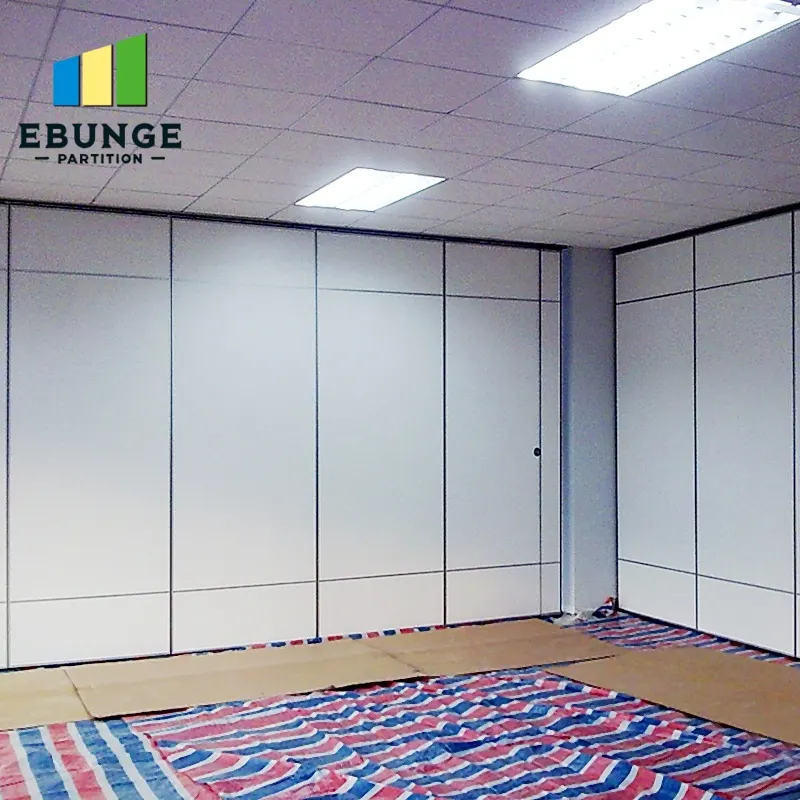
- Confirm the target configuration. Identify which panels move and which opening is being closed or cleared.
- Check the reviewed route. Compare the intended straight, turning and stacking paths against the layout on file.
- Inspect the parking position. Confirm panels are heading to the planned stacking position, not an ad hoc location.
- Walk the ambulant route. After panels are parked, confirm the walking route is reinstated as drawn.
- Record exceptions. Note any deviation, obstruction or unclear route for project-specific review.
- Close the changeover. Return the space to the reviewed condition before the next use.
This process is deliberately simple. Its value is repetition: the same checks, in the same order, every time the space changes.
Evidence Boundaries Facility Teams Should Respect
Review focus: ambulant route reinstatement verification.
Visible evidence has limits. Visible references can support layout discussion but do not verify hidden construction or performance. A finish sample can show colour and texture; it cannot prove cleaning compatibility or durability. The exact route, junction arrangement, continuous overhead path and parking position must be confirmed from the coordinated project drawings.
Evidence note: treat drawings, finishes and photographs as coordination inputs, not as performance certificates. Confirm project-specific support, acoustic and dimensional requirements with the responsible project parties.
This boundary matters because changeover verification often happens under time pressure. Teams may be tempted to infer hidden performance from a visible condition. The framework resists that temptation by separating what can be seen from what must be confirmed.
Where project-specific confirmation is required
Support conditions, acoustic requirements, dimensional clearances and pass-door needs are project-specific. They should be confirmed against the project documentation, not assumed from a generic example or a previous installation.
Coordinating With Finishes, Pass Doors and Documentation
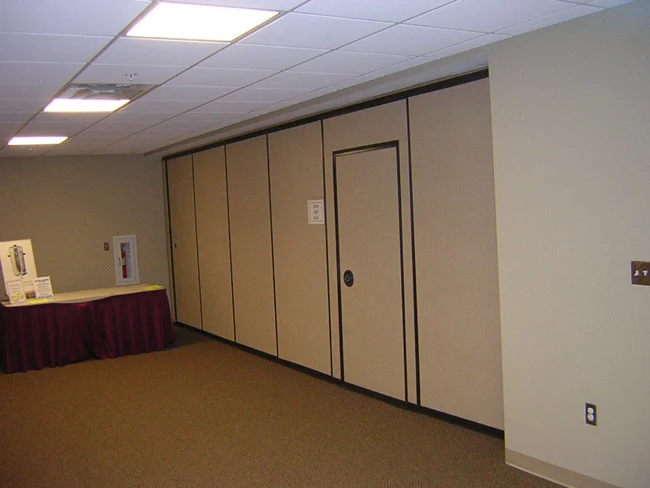
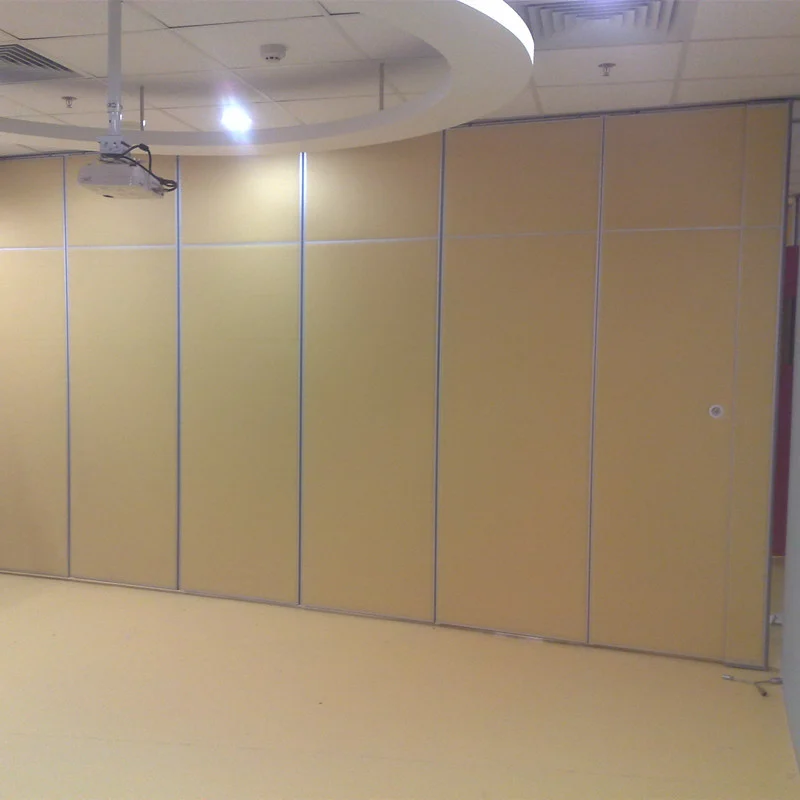
Confirmed finish options include laminate, melamine, fabric, leather, glass and other approved surfaces. Finishes affect the visual and tactile character of the partition, but they do not by themselves determine route suitability. The route review remains a layout and circulation question.
Pass-door requirements and project documentation can be discussed with the supplier. Where a pass door is part of the reviewed layout, its position and swing should be considered in the ambulant route check. Where documentation is incomplete, the verification should pause for clarification rather than proceed on assumption.
Compact comparison: what to check and what to confirm
| Check | Visible evidence | Project-specific confirmation |
|---|---|---|
| Straight route | Layout drawing | Dimensional clearance |
| Turning route | Layout drawing | Local access requirements |
| Stacking position | Planned parking zone | Support and layout coordination |
| Pass door | Documented requirement | Position and project documentation |
| Acoustic intent | Not visible | Project-specific acoustic review |
Acoustic intent should be confirmed through the project-specific review process.
Building a Facility-Side Verification Habit
The strongest framework is one that survives staff changes and busy weeks. Keep the reviewed layout accessible, use the same checklist, and treat exceptions as information rather than failure. Over time, the team builds a record of how the space actually performs during changeover.
It also gives facility teams a shared vocabulary for route reinstatement without overstating what any single observation can prove.
Decision checklist for facility leads
- Is the current reviewed layout available at the point of changeover?
- Are straight, turning and stacking routes clearly identified?
- Is the parking position agreed and marked in the documentation?
- Are pass-door requirements recorded where relevant?
- Is there a simple way to log exceptions for project review?
- Are project-specific support, acoustic and dimensional requirements confirmed?
Frequently Asked Questions
What does movable partition changeover ambulant route reinstatement verification mean?
It means confirming that after panels are moved and parked, the walking route matches the reviewed layout. It is a check of the installed condition against the design intent, not a performance certification.
Do movable partition panels need a floor track for the route to work?
No. EBUNGE movable partition panels are top-hung and move without a continuous floor running track or floor hardware along the partition line. The route review still depends on the project layout and support conditions.
Can the verification confirm acoustic performance?
No.
Which finish options are relevant to route verification?
Confirmed finish options include laminate, melamine, fabric, leather, glass and other approved surfaces. Finishes are a visual and tactile choice; route suitability remains a layout and circulation question.
How should pass doors be handled during changeover?
Pass-door requirements and project documentation can be discussed with the supplier. Where a pass door is part of the reviewed layout, its position should be considered in the ambulant route check.
What should a facility team do when the route does not match the drawing?
Record the exception and pause for project-specific review. Do not infer hidden performance or assume the deviation is acceptable without confirmation from the responsible project parties.
Conclusion and Next Step
A changeover-time ambulant route reinstatement verification framework gives facility teams a repeatable way to compare the installed condition with the reviewed layout. It relies on maintained product facts, visible evidence and clear confirmation boundaries rather than unsupported claims.
To review your project layout, finishes, pass-door requirements and documentation, contact EBUNGE. You can also explore movable walls and the resources section for further planning context. Confirm project-specific support, acoustic and dimensional requirements before finalising any configuration.