
Quick answer: ambulant route continuity
Review focus: ambulant route continuity.
Facility teams inherit a simple question after every event: can people move safely while panels move too? A movable partition changeover ambulant route continuity handover framework answers that question with drawings, not assumptions. EBUNGE movable wall panels are individually movable, suspended from a top track, cross the opening without a floor track, and park at a planned stacking position. Those maintained facts define what can be reviewed. They do not define acoustic results, support capacity or clearance dimensions for a specific building. Every project still needs its own drawing review and confirmation.
Why Changeover Routes Deserve Their Own Handover Review
Project review term: ambulant route continuity.
Most accessibility reviews happen when the room is static. Changeover adds a second condition: panels travel along a route while people may still be walking, waiting or working nearby. The route is not only the opening. It includes the path from the closed position to the parking position, the space around the stack, and the approach to exits and circulation cores.
Because panels are top-hung and cross the opening without a floor track, the floor itself stays clear along the partition line. That is a maintained product fact, not a clearance guarantee. Obstruction clearance depends on the coordinated layout, the parking style and the surrounding furniture or equipment. Treat the changeover route as a designed condition that must be handed over with the same care as the static room layout.
What the Maintained Product Facts Allow You to Review
Coordination scope: ambulant route continuity.
An evidence-bounded review starts with what is known. Straight, turning and stacking routes are reviewed from the layout. Parking style is customized to the customer layout and project requirements and may support compact stacking when the coordinated design permits it. Finish options include laminate, melamine, fabric, leather, glass and other approved surfaces. Pass-door requirements and project documentation can be discussed.
Everything else needs project-specific confirmation. Visible references can support layout discussion but do not verify hidden construction or performance. A visible surface tells you about appearance, not engineering. The exact route, junction arrangement, continuous overhead path and parking position must be confirmed from the coordinated project drawings.
Evidence note: statements that need matching project evidence
Any claim about support, acoustic separation, clearance width, turning radius, stacking footprint or changeover sequence requires project-specific drawings and confirmation. Generic examples in this article describe review steps, not measured outcomes.
A Changeover-Time Route Continuity Checklist for Facility Teams
Checklist focus: ambulant route continuity.
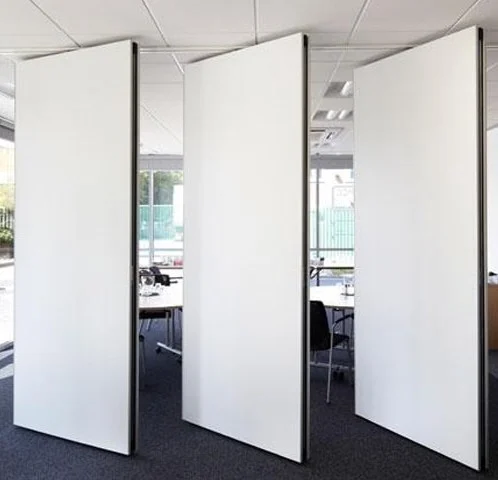
Use this checklist during design coordination and again at handover. It keeps the review tied to visible, checkable items rather than hidden performance.
- Confirm the closed position, the open position and the planned stacking position on the same layout drawing.
- Trace the full movement path from closed to parked, including every turn, and confirm the overhead route is continuous and supported.
- Mark the ambulant route that remains available to building users during changeover, including approaches to exits.
- Identify obstruction clearance zones around the stack, doorways and any fixed equipment.
- Record pass-door requirements and how they interact with the changeover sequence.
- List the finishes selected for each face and confirm they match the approved schedule.
- Note every item that still requires project-specific support, acoustic or dimensional confirmation.
Obstruction Clearance: Static Room Versus Changeover Condition
Review focus: ambulant route continuity.
A room can pass a static accessibility review and still fail a changeover review. The difference is timing. During changeover, the stack occupies space, the movement path is active, and the remaining ambulant route may narrow or shift. Facility teams should review both conditions side by side rather than assuming one covers the other.
| Review item | Static room condition | Changeover condition |
|---|---|---|
| Floor along partition line | Clear when panels are parked or closed | Panels cross the opening without a floor track; confirm the coordinated path |
| Stacking position | Not in use | Occupied; confirm clearance around the stack |
| Ambulant route | Full room width may be available | Confirm the maintained route during panel movement |
| Evidence needed | Layout drawing | Layout plus route, support and dimensional confirmation |
Coordinating the Handover Across Project Disciplines
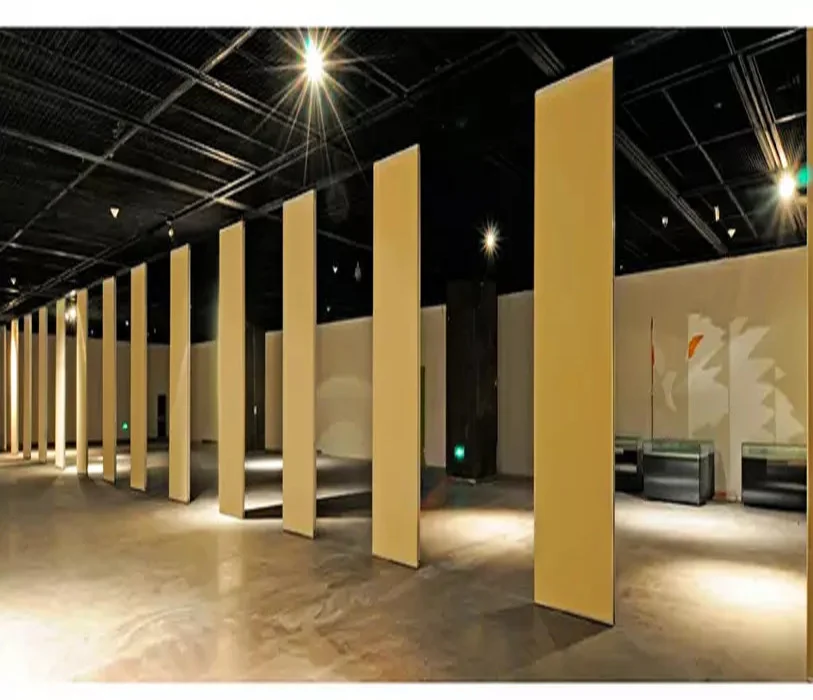
The suitability of each route and parking arrangement depends on the approved layout, circulation, ceiling interfaces and operating sequence. The architect confirms design intent. The contractor confirms site conditions. The facility team confirms how the room will actually be used and changed over. The supplier confirms what the maintained product facts allow and what still needs project-specific review.
Keep the handover record factual. Note the reviewed layout revision, the parking style, the finish schedule and the open items. Do not close an item by inference. If a route depends on a support condition that has not been confirmed, leave it open until the responsible party provides the matching evidence.
Numbered process: from drawing review to handover sign-off
- Collect the current layout, reflected ceiling information and finish schedule.
- Trace straight, turning and stacking routes on the drawing.
- Mark obstruction clearance zones and the ambulant route maintained during changeover.
- List pass-door requirements and any project documentation needed.
- Confirm support, acoustic and dimensional requirements with the responsible parties.
- Walk the built condition and compare it with the reviewed drawing.
- Record open items and assign follow-up before sign-off.
Common Handover Mistakes That Weaken Route Continuity
The most frequent mistake is treating the parking position as a storage detail rather than a circulation decision. Where panels park affects the ambulant route, the obstruction clearance zone and the changeover sequence. Another mistake is assuming that a clear floor along the partition line means the whole route is clear. The floor may be clear while the overhead route, the turning path or the stack approach still needs review.
A third mistake is accepting a finish sample as evidence of performance. Laminate, melamine, fabric, leather, glass and other approved surfaces describe appearance and surface selection. Keep those questions separate and route them to the correct evidence.
Frequently Asked Questions
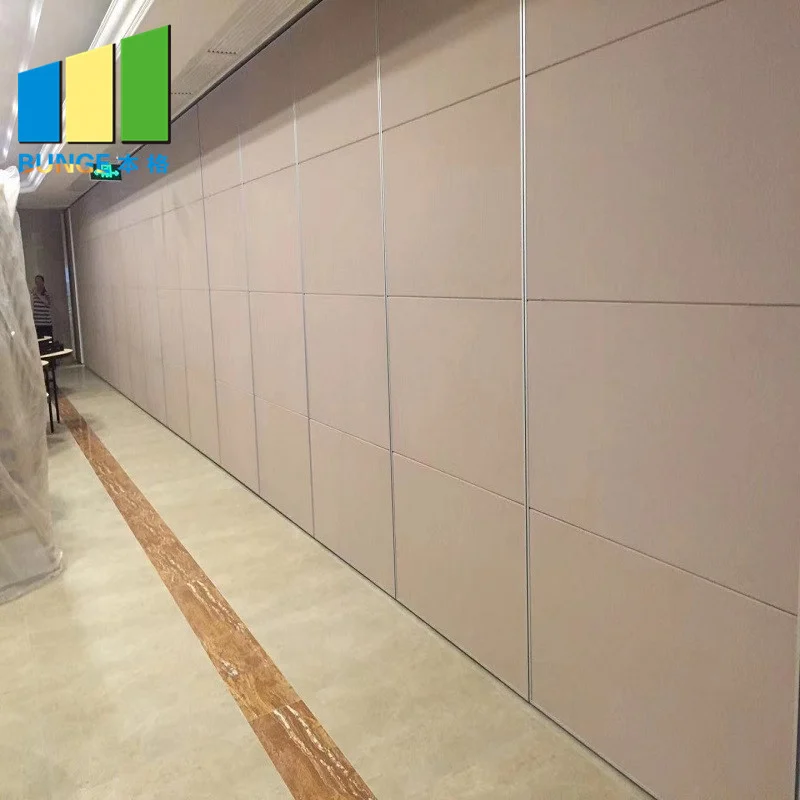
What is movable partition changeover ambulant route continuity handover?
It is the process of reviewing and recording how people can continue to move through a space while movable partition panels travel from their closed position to their parking position. It covers the route, obstruction clearance and the evidence needed for project-specific confirmation.
Do movable partition panels need a floor track for changeover?
EBUNGE movable wall panels are top-hung and cross the opening without a continuous floor running track or floor hardware along the partition line. The proposed movement path still requires a continuous connected overhead route and project-specific support review.
Can I confirm acoustic performance from the finish or the drawing?
No. Do not infer it from a finish sample or a visible shape.
What should be included in the handover record?
Include the reviewed layout revision, the closed, open and parking positions, the traced movement route, obstruction clearance zones, the ambulant route maintained during changeover, the finish schedule, pass-door requirements and a list of open items requiring project-specific confirmation.
Who should attend the route continuity review?
The review benefits from the architect, contractor, facility team and partition supplier working from the same drawing set. Each party confirms its own scope, and unresolved support, acoustic or dimensional questions remain open until matching evidence is provided.
Does a clear floor mean the changeover route is clear?
Not necessarily. A clear floor along the partition line is a maintained product characteristic, but the full route includes turns, the stack approach and the overhead support condition. Confirm the complete path from the layout and the built condition.
Conclusion: Hand Over the Route, Not Just the Panels
A movable partition handover is incomplete if it covers only the closed room. The changeover condition is part of how the space operates, and ambulant route continuity depends on coordinated layout review, obstruction clearance planning and honest evidence boundaries. Use the checklist and process above to keep the review traceable, and confirm support, acoustic and dimensional requirements for each project before sign-off.
Review the movable wall systems and the project resources to prepare your drawing set. When your team is ready to discuss pass-door requirements, parking style or project documentation, contact EBUNGE with your layout and open questions.