
Quick answer: movable partition ceiling service penetration
Review focus: movable partition ceiling service penetration.
Movable partition ceiling service penetration is one of the earliest coordination items that determines whether a flexible room will operate cleanly or become a source of site conflict. The suitability of each route and parking arrangement depends on the approved layout, circulation, ceiling interfaces and operating sequence. This framework helps architects, contractors and facility planners review that zone before drawings are frozen.
Why the Ceiling Zone Deserves Early Attention
Project review term: movable partition ceiling service penetration.
The partition itself is only one part of the interface. Above it, the ceiling may contain lighting, diffusers, sprinkler heads, smoke detectors, speakers, cable trays and access panels. Each of these can conflict with the track route, the stacking area or the clear movement path of the panels.
When these elements are coordinated late, teams often face rework, revised ceiling layouts or awkward compromises. Early review does not remove every challenge, but it gives the project team a shared basis for decisions. Confirm project-specific support, acoustic and dimensional requirements with qualified specialists before finalizing any ceiling interface.
Track Route and Service Penetration Planning
Coordination scope: movable partition ceiling service penetration.
The top track follows a continuous connected overhead route. Straight, turning and stacking routes are reviewed from the layout, so the ceiling plan should show the full path rather than only the opening. Service penetrations should be positioned so they do not interrupt that route or obstruct panel movement.
Questions to Resolve Before Drawing Freeze
- Does the ceiling plan show the complete track route, including turns and the parking position?
- Are ceiling-mounted services located outside the track zone and the panel travel envelope?
- Are access panels positioned where maintenance can reach services without interfering with the partition?
- Has the structural support for the track been reviewed by the responsible engineer?
- Are pass-door requirements and project documentation discussed with the supplier?
These questions are planning prompts, not engineering conclusions. The answers depend on the specific building, ceiling system and project requirements.
Access Panels and Maintenance Reach
Checklist focus: movable partition ceiling service penetration.
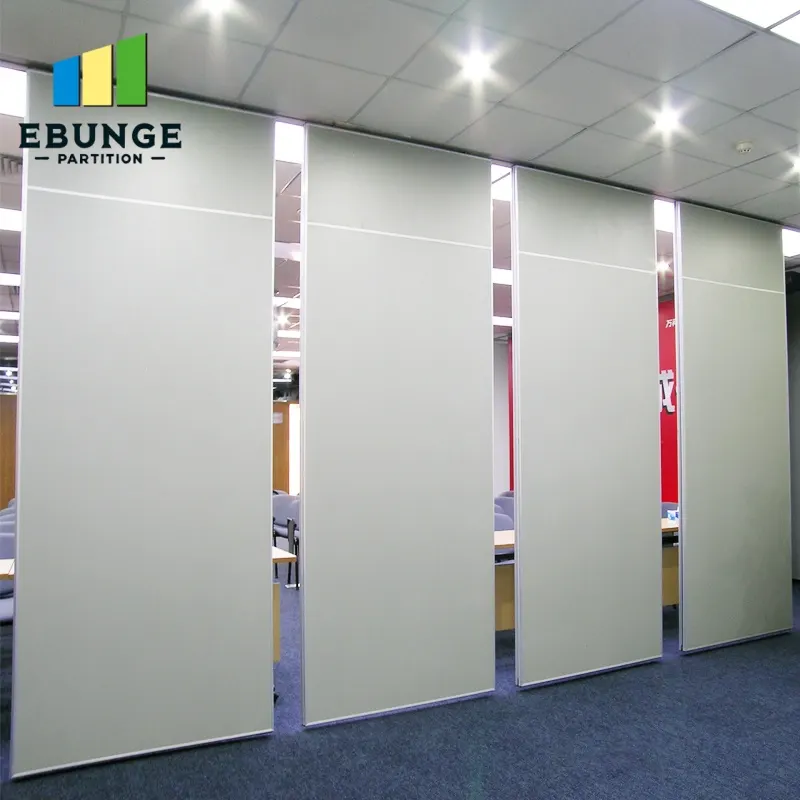
Access panels are often treated as a ceiling detail, but in a movable partition zone they are also a serviceability decision. Visible references can support layout discussion but do not verify hidden construction or performance.
A useful approach is to map each service to its likely maintenance access point, then check whether that access point remains clear when the partition is open, closed or parked. This is a coordination exercise, not a performance claim. The goal is to reduce foreseeable conflicts without inventing dimensions or load assumptions.
Evidence Boundaries for Ceiling Interface Claims
Evidence note: any statement about support, acoustic performance, fire performance or dimensional fit must be confirmed against project-specific documentation. Generic finishes and application examples are not evidence of cleaning compatibility, structural capacity or application reference results.
Coordination Workflow for Project Teams
- The exact route, junction arrangement, continuous overhead path and parking position must be confirmed from the coordinated project drawings.
- Overlay the ceiling services plan and mark every item within the track zone or panel travel envelope.
- Review access panel locations against service maintenance needs and partition movement.
- Discuss pass-door requirements and project documentation with the partition supplier.
- Record agreed interfaces in the coordinated drawing set before installation begins.
This sequence keeps the conversation grounded in drawings and responsibilities. It does not replace specialist review, but it helps teams avoid treating the ceiling as an afterthought.
Finish and Interface Considerations
Confirmed finish options include laminate, melamine, fabric, leather, glass and other approved surfaces.
For projects where the ceiling is exposed or partially exposed, the track and service interface may be more visible. In those cases, early coordination can help the design team decide how the interface should be detailed. The movable wall product range provides the maintained product context for these discussions.
Documentation and Review Checklist
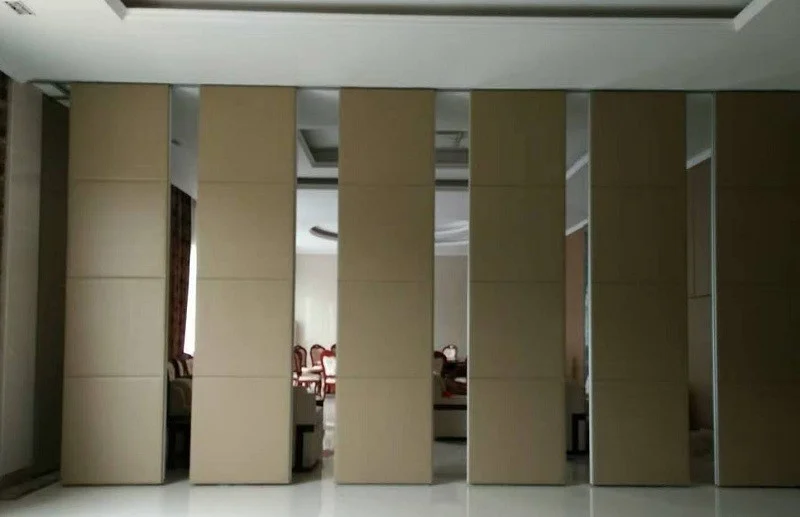
| Item | Planning question | Responsible party |
|---|---|---|
| Track route | Is the full route shown, including turns and parking? | Architect / supplier |
| Service penetrations | Do any services cross the track zone or travel envelope? | MEP / contractor |
| Access panels | Can services be reached without obstructing partition movement? | Facility planner |
| Structural support | Has the support strategy been reviewed? | Structural engineer |
| Pass doors | Are pass-door requirements documented? | Architect / supplier |
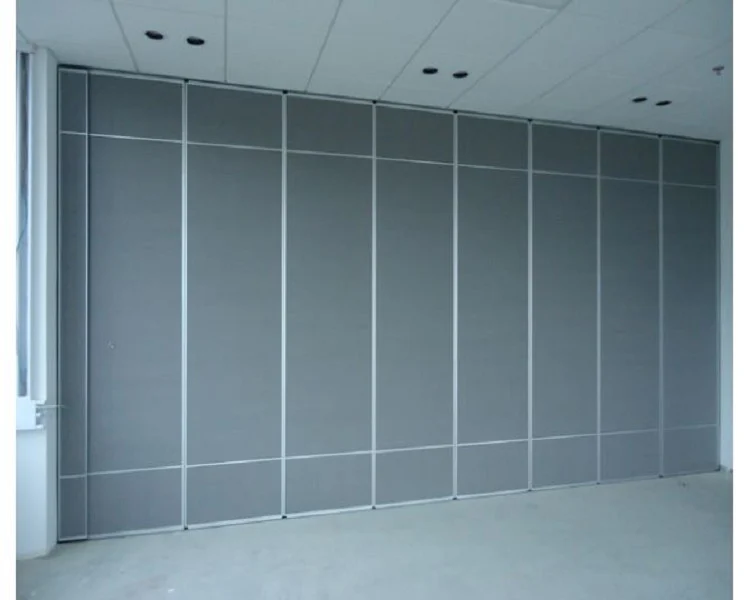
Additional planning resources are available in the EBUNGE resources section. Project teams should confirm all project-specific support, acoustic and dimensional requirements before proceeding.
Frequently Asked Questions
What is movable partition ceiling service penetration?
It refers to the coordination between a movable partition’s overhead track zone and ceiling-mounted services such as lighting, diffusers, detectors or access panels. The goal is to plan routes and penetrations so they do not conflict with panel movement or parking.
Does a movable partition need a floor track?
EBUNGE movable partition panels are top-hung and move without a continuous floor running track or floor hardware along the partition line. The overhead route still requires project-specific support review.
Can ceiling services be relocated after the partition is installed?
Access panels and service positions should be reviewed against the track route and stacking area during design.
How should access panels be positioned near a movable partition?
Access panels should remain reachable when the partition is open, closed or parked. They should not sit inside the track zone or the panel travel envelope unless the project team has confirmed a workable arrangement.
What information should be shared with the partition supplier?
The supplier can then discuss project documentation and confirm what needs further review.
Can acoustic performance be confirmed from a ceiling detail?
No.
Conclusion and Next Steps
Ceiling interface coordination is most effective when it happens before drawings are frozen. By mapping the track route, service penetrations, access panels and support responsibilities early, project teams can reduce foreseeable conflicts and keep the flexible room usable.
Every project has its own support, acoustic and dimensional requirements. Confirm these with qualified specialists and the partition supplier before finalizing the ceiling design. To discuss your project, contact the EBUNGE team.