
Quick project answer
Review focus: clash resolution turnaround.
Movable partition BIM clash resolution turnaround is a coordination workflow, not a single software command. The suitability of each route and parking arrangement depends on the approved layout, circulation, ceiling interfaces and operating sequence. Because EBUNGE panels are top-hung and travel without a continuous floor track, the critical coordination zone sits above the opening and along the parking route. This article sets out a discipline response tracking framework that keeps decisions visible and evidence-bounded.
Why Federated Model Reviews Matter for Movable Partition Walls
Project review term: clash resolution turnaround.
A movable partition is a moving assembly. Its panels are individually movable, suspended from a top track, cross the opening without a floor track and park at a planned stacking position. That movement path is the reason a single-discipline model is not enough.
Federated review combines these models without merging authorship. Each discipline keeps its own file, and the coordination team runs clash detection against an agreed rule set. The goal is not to eliminate every soft clash automatically; it is to surface decisions that need a discipline response. A clash that looks minor in a screenshot may represent a genuine route conflict once the stacking path is considered.
What the model can and cannot prove
A model can show geometry, route continuity and nominated support zones. Treat the model as a coordination instrument, not as a performance certificate.
Building the Clash Resolution Turnaround Workflow
Coordination scope: clash resolution turnaround.
Turnaround is the elapsed coordination cycle from clash detection to a recorded discipline response. A short turnaround depends on clear ownership, not on rushing review. The following sequence keeps the process auditable.
- Agree the federated model set. Confirm which discipline models are current, who owns each file and which coordinate system is shared.
- Define the partition coordination zone. Mark the opening, the overhead track zone and the planned stacking position as a review volume.
- Run clash detection. Group results by discipline pair and by severity so that route conflicts are separated from minor overlaps.
- Assign a response owner. Every clash receives one discipline owner and a required response date.
- Record the response. The owner states whether the clash is resolved, accepted with a design change, or referred for project-specific confirmation.
- Re-run and close. The coordination team re-runs detection and closes only clashes with a recorded response.
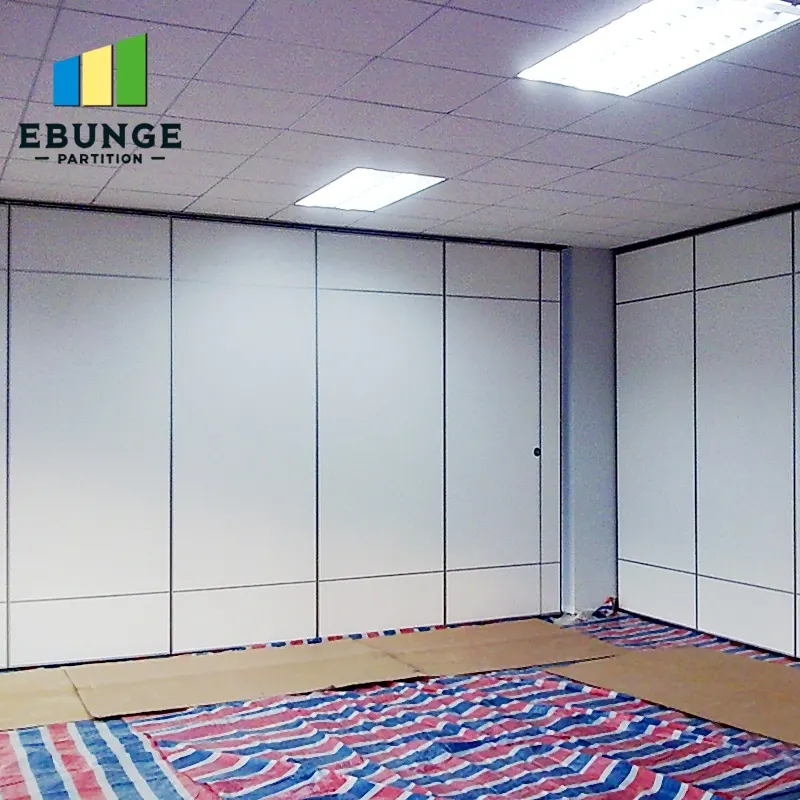
This numbered process is deliberately simple. Its value is the audit trail: each clash has a status, an owner and a date. Without that trail, the same issue reappears in the next model issue.
Discipline Response Tracking: Roles and Evidence
Checklist focus: clash resolution turnaround.
Discipline response tracking is the record of who answered what, and on what basis. It prevents a coordination meeting from becoming a memory exercise. A useful tracker has one row per clash and columns for model reference, discipline pair, response owner, response type, evidence reference and closure date.
| Response type | Meaning | Evidence to attach |
|---|---|---|
| Resolved in model | Geometry changed by the owning discipline | Updated model reference and revision |
| Accepted with condition | Clash remains but is managed by a design condition | Marked-up drawing or written note |
| Referred for confirmation | Requires project-specific support, acoustic or dimensional review | Request to the responsible party |
| Rejected as non-clash | Detected overlap is not a real conflict | Short justification and reviewer name |
Keep the tracker separate from the model. Panel handling and the operating sequence must be confirmed for the selected layout and project conditions. When a discipline updates its model, the tracker should reference the new revision rather than overwrite the earlier response.
Drawing Coordination and the Partition Route
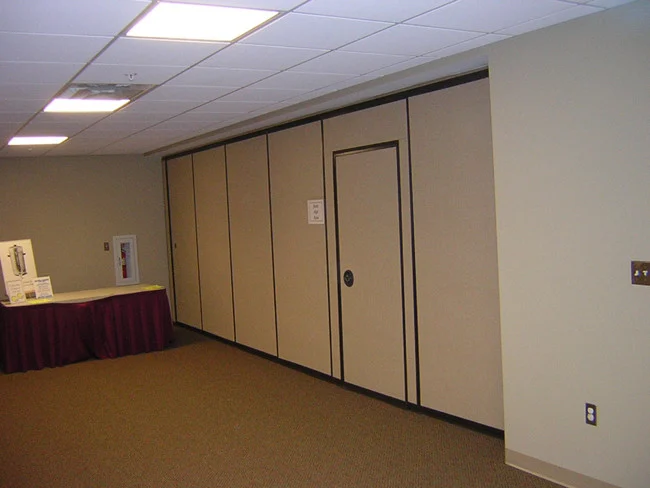
Review focus: clash resolution turnaround.
Drawing coordination translates resolved model geometry into issued documents. For movable partitions, three drawing views are especially useful: a reflected ceiling or overhead view showing the track route, an elevation showing the opening and stacking position, and a plan showing the parking zone. These views should agree with each other and with the federated model.
Straight, turning and stacking routes are reviewed from the layout. A route that turns a corner or changes direction needs the same overhead continuity as a straight run. The coordination team should confirm that the proposed movement path is continuous and supported before the drawing is issued for construction.
Evidence note: what to confirm before sign-off
Confirm project-specific support, acoustic and dimensional requirements with the responsible parties. Do not infer structural capacity, acoustic performance or installation feasibility from a model view, a finish sample or a generic application example. Finish options such as laminate, melamine, fabric, leather and glass are surface selections; they do not by themselves confirm performance or compatibility.
Common Coordination Gaps and How to Reduce Them
Most turnaround delays come from unclear ownership rather than technical complexity. A clash assigned to ‘the team’ is not assigned. A response recorded without a model revision cannot be verified. A stacking position agreed verbally may not appear in any drawing.
- Unclear support zone: the overhead zone is not marked as a coordination volume.
- Split ownership: two disciplines each assume the other will move the service.
- Stale references: the tracker points to an outdated model revision.
- Drawing drift: issued drawings no longer match the resolved model.
- Unconfirmed assumptions: performance or dimensional values are assumed rather than confirmed.
Reducing these gaps is mostly a documentation habit. Name the owner, cite the revision, and state the confirmation boundary in writing.
FAQ: Movable Partition BIM Coordination
What is movable partition BIM clash resolution turnaround?
It is the coordination cycle from detecting a clash in the federated model to recording a discipline response and closing the issue. Turnaround is measured by the completeness of that cycle, not by the number of clashes alone.
Which models should be included in the federated review?
Confirm the current revision of each file before running detection.
Can the model confirm acoustic performance?
No. A model can show geometry and route continuity.
How should stacking positions be coordinated?
Mark the planned stacking position as part of the coordination zone and check it against adjacent services and structure. Parking style is customized to the layout and project requirements, so confirm it with the responsible parties.
What should a discipline response tracker contain?
One row per clash with model reference, discipline pair, response owner, response type, evidence reference and closure date. Keep it separate from the model so decisions remain traceable.
When should drawings be issued?
Issue drawings after the relevant clashes have recorded responses and the overhead route, opening and stacking views agree. Confirm project-specific support, acoustic and dimensional requirements before construction sign-off.
Conclusion and Next Steps
A disciplined federated review, a clear response tracker and consistent drawing coordination will not remove every uncertainty, but they make decisions visible. For movable partition projects, the overhead route and stacking position deserve early attention because the panels are top-hung and move without a floor track. Keep every performance, support and dimensional statement tied to project-specific confirmation.
To discuss pass-door requirements, project documentation or coordination questions for your layout, contact EBUNGE. You can also review the movable wall product range and the resources library before your next coordination meeting.