
Quick answer: movable partition BIM clash resolution track zone responsibility matrix
Review focus: movable partition BIM clash resolution track zone responsibility matrix.
The suitability of each route and parking arrangement depends on the approved layout, circulation, ceiling interfaces and operating sequence. A movable partition BIM clash resolution track zone responsibility matrix gives every project team a single reference for who resolves what, when, and against which coordinated model. This guide explains how to set up federated model coordination so that track zones are reconciled before drawings are issued.
Why Federated Coordination Matters for Movable Partition Walls
Project review term: movable partition BIM clash resolution track zone responsibility matrix.
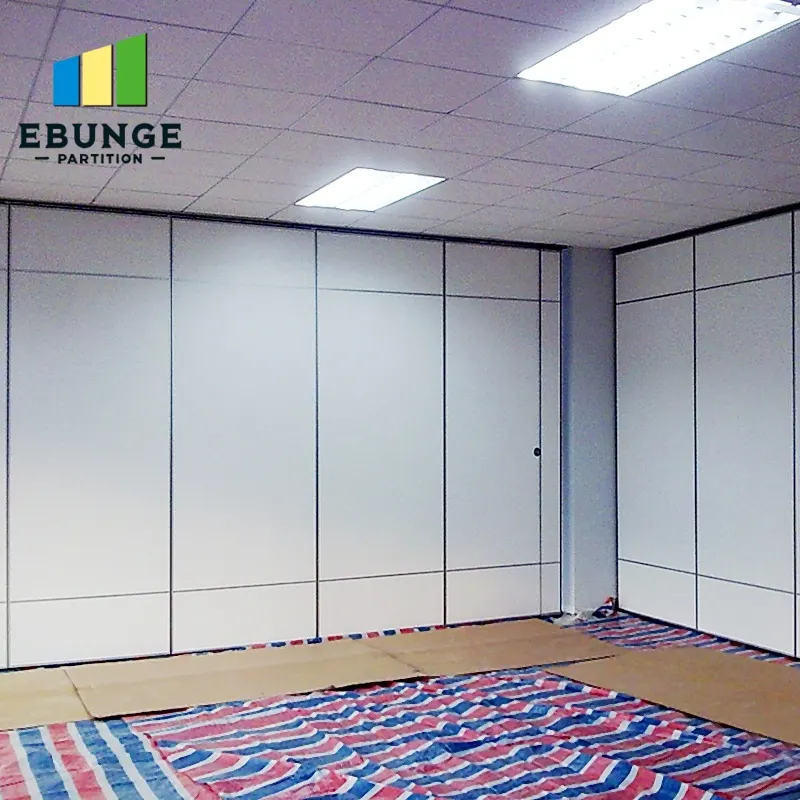
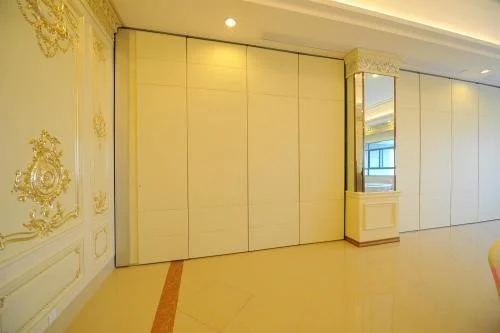
Movable partition panels are individually movable, suspended from a top track, and cross the opening without a floor track. They park at a planned stacking position. That operating logic means the overhead zone is the critical coordination space. Straight, turning, and stacking routes must be reviewed from the layout, because each route depends on a continuous connected overhead path and project-specific support review.
The movable partition track zone sits inside all three. If those models are coordinated only after fabrication drawings are issued, changes become expensive and disruptive.
Defining the Track Zone in the Federated Model
Coordination scope: movable partition BIM clash resolution track zone responsibility matrix.
The track zone is the volume reserved for the top track, its support interface, and the panel parking area. It is not a single line. It has width, depth, and a relationship to the ceiling and structure above.
Track zone boundaries
Define the track zone as a named zone in the federated model. Include the full travel path, turning points, and the stacking position. The zone should be visible in plan and section so that every discipline can check its own elements against it.
Continuous overhead route
Every proposed movement path requires a continuous connected overhead route. A gap in the track zone is a coordination failure, not a field fix. The model should show the route as a connected system from the first panel position to the parking position.
Support interface
The exact overhead route and support arrangement must be confirmed by the responsible project team from coordinated drawings.
Building the Track Zone Responsibility Matrix
Checklist focus: movable partition BIM clash resolution track zone responsibility matrix.
A responsibility matrix assigns ownership for each clash resolution. It should be agreed before the first coordination cycle and updated as the design develops.
| Clash category | Primary owner | Supporting discipline | Resolution output |
|---|---|---|---|
| Track zone vs. structural framing | Structural engineer | Architect, partition specialist | Coordinated support interface and zone clearance |
| Track zone vs. ductwork | MEP engineer | Architect, partition specialist | Rerouted duct or revised track zone |
| Track zone vs. pipework | MEP engineer | Architect, partition specialist | Rerouted pipe or revised track zone |
| Track zone vs. cable trays | MEP engineer | Architect, partition specialist | Rerouted tray or revised track zone |
| Track zone vs. ceiling devices | Architect | MEP engineer, partition specialist | Relocated device or revised ceiling layout |
| Stacking zone vs. room layout | Architect | Partition specialist, owner | Confirmed parking position and clearance |
The matrix should name a person or role for each row, not just a company. It should also state the required resolution date relative to fabrication release.
Running the Clash Resolution Cycle
Review focus: movable partition BIM clash resolution track zone responsibility matrix.
A repeatable cycle keeps coordination moving without endless model exchanges.
- Publish the federated model with the track zone visible to all disciplines.
- Run clash detection against the track zone and the stacking zone.
- Classify each clash using the responsibility matrix.
- Assign the clash to the primary owner with a resolution date.
- Review proposed resolutions in a coordination meeting.
- Update the federated model and re-run clash detection.
- Record resolved clashes in a coordination log.
- Freeze the track zone before fabrication release.
Each cycle should produce a clear output: either the track zone moves, the conflicting element moves, or the design changes. A clash that remains open across two cycles should be escalated.
Coordinating Ceiling Service Routes and Structural Elements
Project review term: movable partition BIM clash resolution track zone responsibility matrix.
Ceiling service routes are often the most congested part of the track zone. Ducts, pipes, and cable trays may run parallel to the partition line or cross it. The coordination goal is to preserve a continuous connected overhead route for the partition while maintaining required service clearances.
If the track zone conflicts with structure, the design team should review the layout, the parking position, and the ceiling strategy together.
Documentation and Evidence Boundaries
Coordination drawings should show the track zone, the continuous overhead route, the stacking position, and the support interface. They should also record the status of each clash and the responsible party.
Finish options such as laminate, melamine, fabric, leather, glass, and other approved surfaces can be discussed for the project. Pass-door requirements and project documentation can also be discussed. These selections do not replace the need for coordinated track zone drawings.
Fabrication Release Checklist
- Track zone defined and visible in the federated model.
- Continuous overhead route confirmed from first panel to parking position.
- Stacking position coordinated with room layout and ceiling services.
- All track zone clashes resolved or formally accepted with a date.
- Responsibility matrix signed off by all primary owners.
- Coordination log updated with resolution evidence.
- Project-specific acoustic, support, and dimensional requirements confirmed.
Use this checklist before issuing drawings for fabrication. If any item is open, the track zone is not ready.
FAQ
What is a track zone responsibility matrix?
It is a project coordination table that assigns ownership for each clash category affecting the movable partition track zone. It names the primary owner, supporting disciplines, and the required resolution output.
When should the track zone be frozen?
The track zone should be frozen before fabrication release.
Can movable partitions cross a gap in the overhead route?
No. Every proposed movement path requires a continuous connected overhead route. A gap in the track zone is a coordination issue that must be resolved in the model before fabrication.
Who owns MEP clashes with the track zone?
The MEP engineer is typically the primary owner for ductwork, pipework, and cable tray clashes, with the architect and partition specialist supporting. The responsibility matrix should confirm this for the specific project.
Does a coordinated model prove acoustic performance?
No.
What finish options can be coordinated in the model?
Laminate, melamine, fabric, leather, glass, and other approved surfaces can be discussed. The model can show finish zones, but the final selection and its coordination should be confirmed for the project.
Conclusion
Federated model coordination for movable partition walls succeeds when the track zone is treated as a shared asset. Define it clearly, assign ownership through a responsibility matrix, run a repeatable clash resolution cycle, and freeze the zone before fabrication release.
The exact route, junction arrangement, continuous overhead path and parking position must be confirmed from the coordinated project drawings. To discuss movable partition coordination for your next project, contact EBUNGE. You can also review movable wall products and browse project resources for further planning guidance.