
When planning a conference room that needs to adapt to different group sizes and uses, movable acoustic wall finish options for conference rooms provide a flexible way to divide space without permanent construction. For distributors and building owners, the challenge is selecting a system that not only looks good but also delivers reliable sound privacy. This guide focuses on the design and finish choices that affect both aesthetics and acoustic performance, helping you prepare for a confident quotation and project execution.
Direct answer: The best movable acoustic wall finish options for conference rooms include fabric-wrapped panels, vinyl-faced surfaces, wood veneer, and glass partitions, each offering different levels of sound absorption and durability. For most conference room applications, a fabric-wrapped finish over a high-density acoustic core provides a balance of sound control and design flexibility, but the final choice depends on your acoustic target, maintenance needs, and visual preference. Always verify acoustic ratings from the manufacturer and test samples in your actual space.
Why Finish Selection Matters for Conference Room Acoustics
The finish on a movable partition wall is not just about appearance; it directly influences how sound behaves in the room. Sound waves can be reflected, absorbed, or transmitted through the partition. The finish material and its mounting method affect the overall sound absorption coefficient, which is a measure of how well the surface absorbs sound. In a conference room, excessive echo can reduce speech intelligibility, while sound leakage can compromise confidentiality.
For example, a smooth vinyl finish reflects more sound, while a fabric-wrapped panel absorbs more. However, the acoustic performance of the entire partition system depends on the core material, the seals around the edges, and the track system. Therefore, when evaluating movable acoustic wall finish options, consider the complete system, not just the surface.
Need help turning the movable acoustic wall finish options requirements into a practical project layout?
Popular Finish Materials and Their Acoustic Implications
Here are common finish materials used on movable acoustic walls, along with their typical acoustic and aesthetic characteristics. Note that specific performance data must be obtained from the manufacturer for your project.
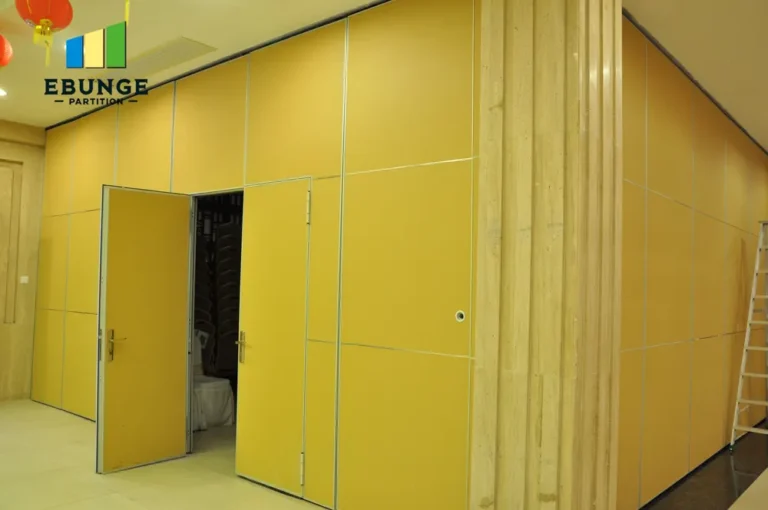
- Fabric-wrapped panels: Available in many colors and textures, these offer good sound absorption and a soft, professional look. They can be tackable, which is useful in conference rooms.
- Vinyl-faced surfaces: Durable and easy to clean, vinyl is often used in high-traffic areas. It reflects more sound, so additional acoustic treatment may be needed.
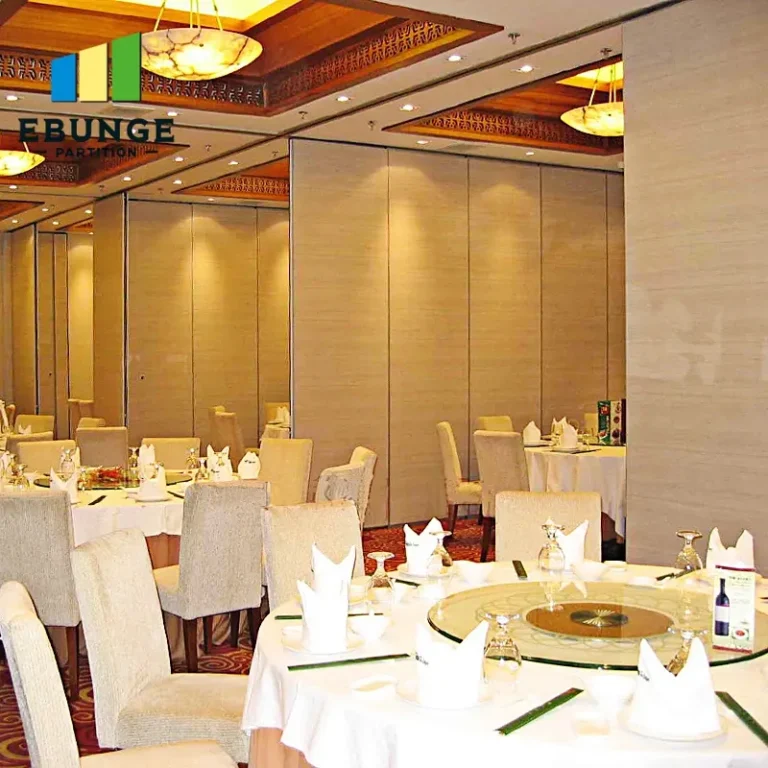
- Wood veneer: Adds warmth and elegance, but wood is reflective. Usually paired with acoustic backing to improve performance.
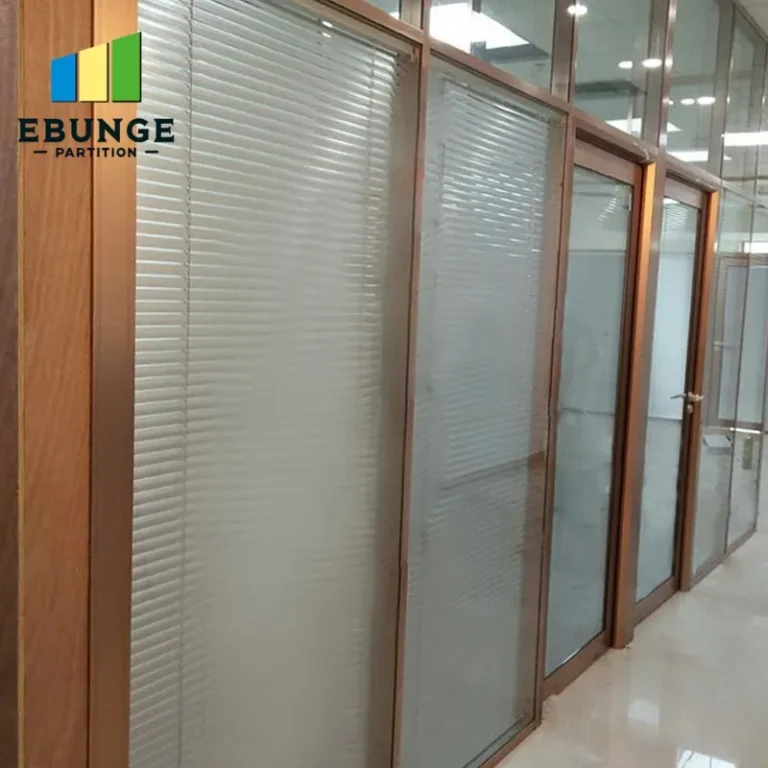
- Glass partitions: Create openness and light, but offer minimal sound absorption. Often used with blinds or films for privacy.
- Acoustic panels: These are specifically designed with sound-absorbing materials, such as perforated wood or PET felt, and can be integrated into the partition.
When choosing, think about the room’s primary use: if it’s for confidential meetings, prioritize sound isolation; if it’s for collaborative sessions, focus on reducing echo.
Acoustic Performance: What to Look for in Ratings
To ensure sound privacy, you need to understand two key metrics: Sound Transmission Class (STC) and Noise Reduction Coefficient (NRC). STC measures how much sound is blocked, while NRC measures how much sound is absorbed. For conference rooms, a minimum STC of 45 is often recommended for speech privacy, but higher values may be required for sensitive discussions.
However, STC ratings are based on laboratory tests and may not reflect real-world performance. Factors like flanking paths (sound traveling around the partition), gaps, and the quality of installation can significantly affect results. Always ask the manufacturer for test data and installation guidelines.
Also, consider the frequency range of human speech. Some partitions may block mid-range frequencies well but fail at lower frequencies. Look for ratings that specify performance across a range, or ask for a detailed acoustic report.
Finish Durability and Maintenance: Balancing Looks and Longevity
In a conference room, the partition finish must withstand regular use, including contact with chairs, carts, and people. Fabric finishes are prone to stains and wear, but many are treated with stain-resistant coatings. Vinyl and wood are more durable but may scratch or dent.
Consider the maintenance routine: can the finish be wiped clean? Is it replaceable? Some systems allow individual panels to be replaced without replacing the entire wall, which can save costs in the long run. Also, think about the lifecycle of the finish: will it look dated in a few years? For a timeless look, neutral colors and patterns are safer.
Customization Capabilities: Aligning with Your Design Vision
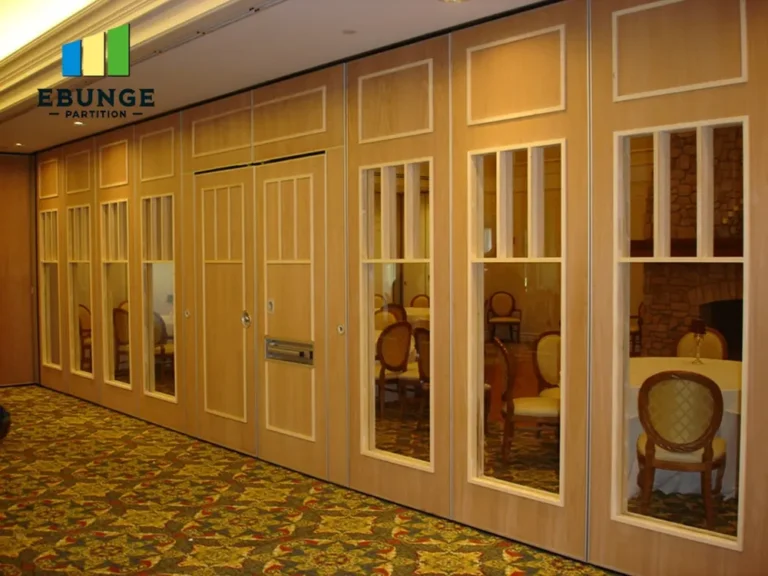
Movable acoustic walls can be customized in dimensions, shape, and finish to match your conference room’s design. For example, you can specify a curved wall, a wall with integrated whiteboard surfaces, or a combination of glass and solid panels. Customization also includes the choice of trim, handles, and stacking configurations.
When planning for customization, provide detailed drawings and specifications to the manufacturer. This includes the opening size, ceiling height, and any obstructions like lighting or HVAC. The more precise your requirements, the more accurate the quotation and the smoother the installation.
Installation Complexity and Project Timeline
The installation of a movable acoustic wall involves several steps: site preparation, track installation, panel hanging, and sealing. The complexity depends on the system design and the condition of your building. For instance, a top-hung track system, which is common for EBUNGE walls, requires adequate overhead support and may involve modifications to the ceiling structure.
Discuss the installation process with the manufacturer or installer early on. Ask about the estimated timeline, any prerequisites, and who is responsible for what. A clear understanding helps avoid delays and budget overruns. Also, consider whether the installation will disrupt your operations; if so, plan accordingly.
Share the opening, drawings, finish direction, and privacy target for a project-specific review.
Cost Transparency: What to Expect in a Quotation
When requesting a quote for movable acoustic wall finish options, ensure it includes all components: panels, track, seals, hardware, and installation. Some suppliers may quote only the partition panels, leaving out essential accessories. Ask for a breakdown of costs and clarify what is included.
Also, be aware that customization and acoustic performance can increase costs. For example, a higher STC rating may require thicker panels or additional seals. Be clear about your budget and priorities, and ask for alternatives if needed. A transparent quotation will help you compare options fairly.
Warranty and Support: Protecting Your Investment
Like any building product, movable acoustic walls should come with a warranty that covers defects in materials and workmanship. However, warranties vary in duration and coverage. Ask the supplier about the warranty period, what is covered (e.g., moving parts, finishes), and the process for making a claim.
Also, consider the supplier’s after-sales support. Will they provide maintenance guidelines? Are spare parts available? A reliable supplier will be responsive to your needs. Check the manufacturer’s reputation and ask for references from similar projects.
Compliance with Building Codes and Accessibility
Movable partitions must comply with local building codes, including fire safety, accessibility, and egress requirements. For example, the partition may need to have a fire-resistance rating if it separates areas with different fire zones. Also, ensure that the partition does not obstruct emergency exits or create accessible route issues.
Work with a supplier who is familiar with local regulations and can provide documentation of compliance. This is especially important for public buildings. Your supplier should be able to provide test certificates and code reports.
Checklist for Evaluating Movable Acoustic Wall Finish Options
Use this checklist to guide your decision-making process and prepare for discussions with suppliers.
| Aspect | Questions to Ask |
|---|---|
| Acoustic target | What STC and NRC ratings do you need? What frequencies are most important? |
| Finish durability | Is the finish scratch-resistant? Easy to clean? Can panels be replaced individually? |
| Customization | Can the wall be adapted to my dimensions and design? What options are available for integrating technology? |
| Installation | What are the site requirements? How long will installation take? Who is responsible for what? |
| Cost | Does the quote include all components and labor? Are there any additional fees? |
| Warranty | What is covered? How long is the warranty? What is the claim process? |
| Compliance | Does the system meet building codes? Can you provide certificates? |
Final Thoughts: Making an Informed Choice
Selecting movable acoustic wall finish options for conference rooms is a complex decision that affects functionality, aesthetics, and budget. By focusing on acoustic performance, durability, customization, and installation, you can choose a system that meets your needs and provides long-term value. Remember to ask for detailed specifications and test data, and to verify all claims with the manufacturer.
For more inspiration, explore our movable partition design ideas or read our blog for technical insights. If you’re ready to discuss your project, contact us with your opening size, drawings, acoustic target, finish preference, and project location.
Frequently Asked Questions
What is the best finish for a conference room movable wall?
The best finish depends on your priorities. Fabric-wrapped panels offer good sound absorption and a professional look, while vinyl is more durable and easier to clean. Wood veneer adds elegance but reflects sound. Consider your acoustic needs and maintenance preferences.
How do I determine the STC rating I need?
For typical conference rooms, an STC of 45 is often recommended for speech privacy. However, if you have confidential discussions, you may need a higher rating. Consult with an acoustician or your supplier to assess your specific needs.
Can movable acoustic walls be customized to match my interior design?
Yes, most manufacturers offer customization in terms of size, shape, finish, and even integrated features like whiteboards or screens. Provide your designer’s drawings and specifications to get a tailored solution.
How long does installation take?
Installation time varies based on the system complexity and site conditions. A simple straight run might take a few days, while a complex configuration with curves or multiple panels could take longer. Ask your supplier for an estimate.
Are movable acoustic walls expensive?
Costs vary widely depending on the size, finish, acoustic performance, and customization. It’s best to request a detailed quotation from multiple suppliers to compare. Remember to factor in installation and maintenance costs.
In summary, the right movable acoustic wall finish can transform your conference room into a flexible, functional, and aesthetically pleasing space. By carefully evaluating your options and working with a reputable supplier, you can achieve the sound privacy and design you need. For further guidance on movable partition walls, visit our movable partition wall page.
For this buyer review, movable acoustic wall finish options should be checked against the confirmed opening, drawings, operating plan, and project specification.
Send the opening size and drawings to discuss a differentiated movable acoustic wall finish options solution.