
When planning a community center, achieving sound privacy and acoustic performance is often a source of uncertainty. Movable acoustic wall design criteria for community centers go beyond simple space division—they directly affect how well different activities can coexist without disturbing each other. As a hotel owner or facility manager, you need a solution that balances acoustic insulation, durability, ease of operation, and budget. This article helps you understand the key technical requirements, ask the right questions, and prepare for a successful quotation. By the end, you’ll know how to specify a movable acoustic wall that meets your community center’s unique needs.
Direct answer: Movable acoustic wall design criteria for community centers include defining the required sound insulation class (e.g., STC/Rw), determining the wall height and weight, selecting a top-hung track system for easy operation and no floor rail, specifying durable materials for frequent use, ensuring compliance with safety standards, and planning for maintenance access. To get an accurate quote, share your opening size, drawings, acoustic target, finish preference, and project location with a reputable supplier.
Movable Acoustic Wall Design Criteria: Why Community Centers Need Specific Acoustic Wall Criteria
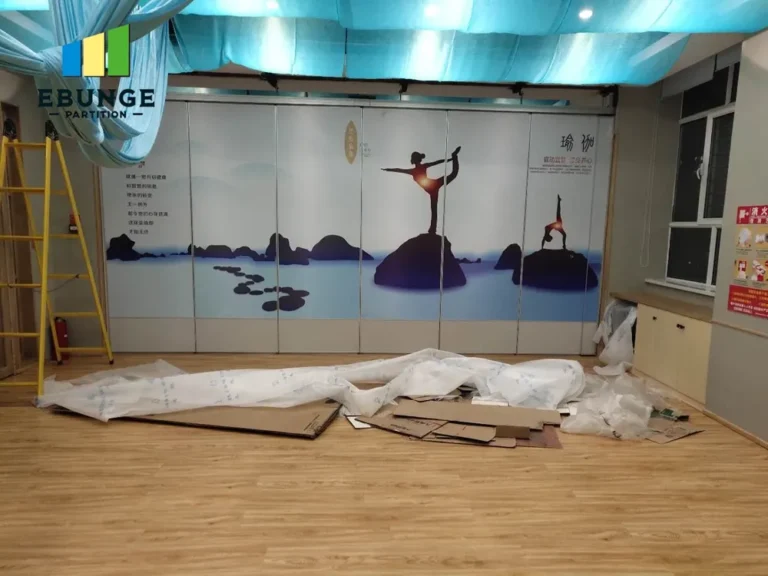
Community centers host diverse activities: meetings, classes, celebrations, and performances. Each has different noise levels and privacy needs. Without proper acoustic separation, sound spills over, causing distractions and dissatisfaction. Movable acoustic wall design criteria for community centers must address these varied uses, ensuring that a yoga class isn’t disrupted by a band rehearsal next door. The right operable wall system can transform a large hall into multiple functional spaces, but only if the acoustic performance is matched to the actual activities.
Unlike permanent walls, movable partitions must seal effectively at the top, bottom, and vertical joints to achieve their rated acoustic performance. This is where design criteria become critical: the track system, panel construction, and sealing mechanisms all contribute to the final sound insulation.
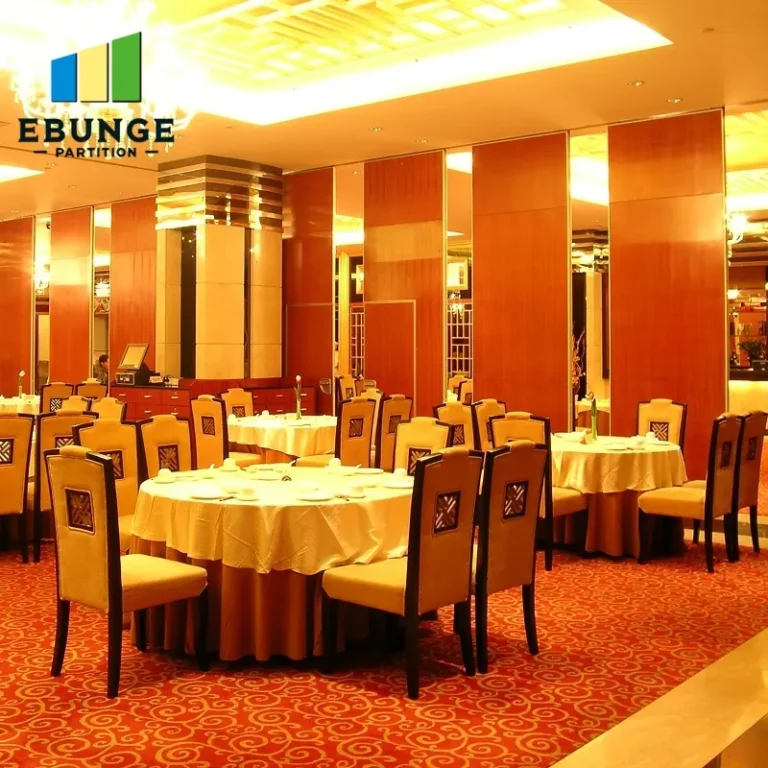
Need help turning the movable acoustic wall design criteria requirements into a practical project layout?
Key Acoustic Performance Metrics for Movable Walls
Understanding acoustic ratings is essential. Two common metrics are Sound Transmission Class (STC) and Weighted Sound Reduction Index (Rw). STC is used in North America, while Rw is common internationally. For community centers, an STC of 45-50 is often sufficient for speech privacy, while music or loud events may require STC 50-55. However, exact requirements depend on your specific activities.
When discussing with suppliers, ask for the wall’s acoustic rating and how it is achieved. A wall’s performance is only as good as its weakest point—seals and gaps can significantly reduce effectiveness. Therefore, design criteria should include perimeter sealing requirements and installation quality.
Remember: acoustic performance is not just about the panel; it’s about the entire system, including the track and seals. Ensure the supplier provides test data from recognized laboratories.
Top-Hung Track System: Why It Matters for Community Centers
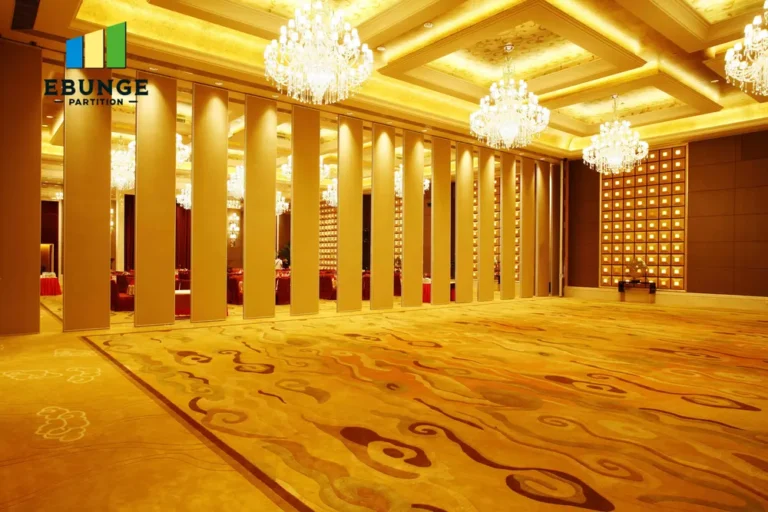
One of the most important design criteria is the track system. A top-hung track system, where the wall is suspended from an overhead track and no floor rail is used, offers several advantages for community centers:
- Easy operation: Panels glide smoothly, even for large walls, reducing physical effort.
- No floor obstruction: A flush floor is easier to clean and safer for foot traffic.
- Flexibility: The wall can be stacked neatly at one end, maximizing usable space.
When specifying a top-hung system, consider the ceiling structure’s load-bearing capacity. The track must be securely anchored to support the wall’s weight. Provide your building’s structural drawings to the supplier to ensure compatibility.
Durability and Maintenance: Built for Frequent Use
Community center walls are used daily, sometimes multiple times a day. Therefore, durability of moving parts and overall construction is non-negotiable. Look for panels with impact-resistant surfaces, robust hinges, and high-quality seals that can withstand wear. The track system should have smooth-rolling trolleys and bearings that require minimal maintenance.
Maintenance requirements should be clearly outlined by the supplier. Ask about the frequency of lubrication, seal replacement, and any other upkeep. A wall that is difficult to maintain will quickly become a headache. Choose a system designed for low maintenance, with accessible components.
In your inquiry, ask for the expected lifespan of moving parts and whether replacements are readily available. This will help you plan for long-term costs.
Safety Standards and Compliance
Safety is paramount in public buildings. Movable acoustic walls must comply with local building codes and safety standards. This includes fire resistance, smoke seals, and emergency egress. For community centers, which may host large groups, ensure the wall system does not compromise exit paths.
Ask suppliers for documentation of compliance, such as fire test certificates. Also, consider the wall’s stability during operation—it should not tip or sway. The design should include locking mechanisms to secure panels in place.
When specifying, mention your project’s location and applicable codes. A reputable supplier will guide you through compliance.
Ease of Operation: Training and User-Friendliness
Even the best acoustic wall is useless if staff find it difficult to operate. Design criteria should include intuitive mechanisms. For example, some systems use a simple crank or handle to expand and seal the wall. Others may have motorized options, which can be beneficial for large walls or frequent use.
Consider who will operate the wall. If volunteers or non-technical staff will be involved, opt for a system with minimal steps and clear instructions. The supplier should provide training and user manuals. Also, consider the time required to set up or store the wall—quick transitions save time and reduce labor costs.
Share the opening, drawings, finish direction, and privacy target for a project-specific review.
Cost-Effectiveness and Budget Planning
Cost is always a factor. Movable acoustic walls vary in price based on size, acoustic rating, materials, and automation. To get a realistic budget, define your requirements clearly. The design criteria should include the number of panels, height, width, and acoustic target.
Remember that the cheapest option may not be the most cost-effective in the long run. Consider maintenance, durability, and energy efficiency. A higher-quality wall might last longer and require less repair, saving money over time.
When requesting quotes, provide detailed specifications to receive accurate pricing. This will also help you compare offers fairly.
After-Sales Support and Delivery Timelines
Reliable after-sales support is crucial. Ask about warranty terms, availability of spare parts, and response times for service calls. A supplier that offers ongoing support will help you maintain the wall’s performance.
Delivery timelines are also important, especially if you have a construction schedule. In your inquiry, ask for estimated lead times and any factors that might affect them. Plan accordingly to avoid delays.
For more information on movable partition walls, you can explore our movable partition wall solutions or read our blog posts for insights.
How to Prepare for Your Quotation Request
To get an accurate and timely quotation, be prepared to share the following with the supplier:
- Opening size (width, height, and number of panels)
- Architectural drawings or floor plans
- Acoustic target (STC/Rw rating)
- Finish preference (e.g., paint, laminate, fabric)
- Project location (for compliance and logistics)
This information allows the supplier to design a system that meets your needs and avoids costly revisions. The more details you provide, the more accurate the quote.
Practical Checklist for Movable Acoustic Wall Selection
| Criterion | Details to Confirm |
|---|---|
| Acoustic rating | STC/Rw value, test data |
| Track system | Top-hung, no floor rail, load capacity |
| Durability | Panel material, hardware quality |
| Maintenance | Required frequency, spare parts availability |
| Safety compliance | Fire rating, smoke seals, emergency egress |
| Ease of operation | Manual or motorized, training provided |
| Cost | Initial price, long-term maintenance costs |
| After-sales support | Warranty, service response time |
Conclusion: Moving Forward with Confidence
Choosing the right movable acoustic wall for your community center involves careful consideration of acoustic performance, durability, safety, and cost. By applying these movable acoustic wall design criteria, you can make informed decisions and communicate effectively with suppliers. Remember to gather all necessary details before requesting a quote, and don’t hesitate to ask for expert guidance.
For further reading, explore our movable partition applications or contact us for personalized assistance. We are committed to helping you achieve the perfect acoustic solution.
Frequently Asked Questions
What STC rating do I need for a community center?
The required STC rating depends on the activities. For general speech privacy, STC 45-50 is often sufficient. If you have music or loud events, consider STC 50-55. Consult with your supplier to determine the best rating for your specific use.
Can a movable acoustic wall be installed without a floor rail?
Yes, many movable acoustic walls use a top-hung track system, which eliminates the need for a floor rail. This provides a flush floor, easier cleaning, and safer foot traffic. Ensure your ceiling structure can support the wall’s weight.
How do I maintain a movable acoustic wall?
Maintenance typically involves periodic lubrication of moving parts, checking seals for wear, and cleaning surfaces. Your supplier should provide a maintenance schedule and instructions. Regular maintenance extends the wall’s lifespan.
What information do I need to provide for a quotation?
To get an accurate quote, provide the opening size (width, height, number of panels), architectural drawings, acoustic target (STC/Rw), finish preference, and project location. This helps the supplier design a suitable system.
Are movable acoustic walls compliant with safety standards?
Reputable suppliers ensure their products comply with relevant safety standards, including fire resistance and emergency egress. Always ask for documentation and verify that the wall meets your local building codes.
For this buyer review, movable acoustic wall design criteria should be checked against the confirmed opening, drawings, operating plan, and project specification.
Send the opening size and drawings to discuss a differentiated movable acoustic wall design criteria solution.