
When planning a school hall, the budget for a movable acoustic wall is rarely a single line item. As an interior designer, you need to move beyond the sticker price and understand the full set of movable acoustic wall cost factors for school halls. These factors include the opening size, the acoustic performance target, the track configuration, the finish, and the logistics of getting the wall to your site. The goal is to prepare a quotation-ready inquiry that gives you accurate numbers and avoids costly surprises during installation.
Direct answer: The cost of a movable acoustic wall for a school hall is determined by several interdependent factors: the size of the opening, the required acoustic rating (e.g., STC/Rw), the type of track system (top-hung vs. floor-mounted), the panel configuration, the finish and customization, the installation complexity, and the shipping/import costs for export projects. To get a reliable quotation, you must provide detailed drawings, opening dimensions, acoustic targets, finish preferences, and the project location. A top-hung track system, which avoids a floor rail, is often preferred for school halls to maintain a flat floor and ease of use, but it may affect structural requirements and cost.
Movable Acoustic Wall Cost Factors: 1. Understanding the Core Cost Drivers
Before you request a quote, it’s essential to know what drives the cost. The primary movable acoustic wall cost factors for school halls include:
- Opening size and configuration: Larger openings require more panels, heavier structural support, and more complex engineering.
- Acoustic performance: Higher STC/Rw ratings demand thicker panels, better seals, and more precise manufacturing, increasing cost.
- Track system: Top-hung tracks (without floor rail) are often preferred in schools for safety and accessibility, but they require a robust overhead structure to support the weight.
- Panel construction: The materials (steel, aluminum, wood, glass) and the number of layers affect both acoustic performance and price.
- Finishes and customization: Custom colors, wood veneers, tackable surfaces, or whiteboard panels add to the cost.
- Installation complexity: Site conditions, such as uneven floors or existing ceiling structures, can increase labor time.
- Logistics: For export projects, shipping, import duties, and lead times are significant cost factors.

Need help turning the movable acoustic wall cost factors requirements into a practical project layout?
2. The Role of Acoustic Performance in Pricing
Acoustic performance is often the most significant cost driver. A movable acoustic wall for a school hall must meet specific acoustic targets to ensure speech privacy and noise control. The higher the STC/Rw rating, the more complex the panel design, with additional layers of mass, damping, and sealing systems. For example, a wall with an STC of 40 will be less expensive than one with an STC of 50. However, the exact cost difference depends on the manufacturer and the specific construction. It’s crucial to define your acoustic target early and include it in your inquiry to get accurate pricing.
3. Top-Hung Track vs. Floor Rail: Cost and Practical Implications
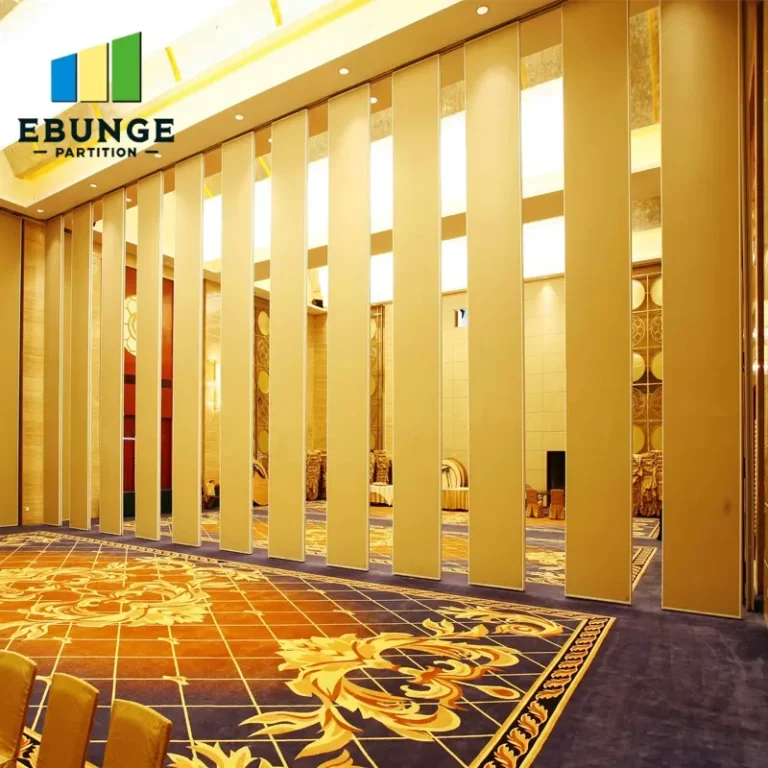
For school halls, a top-hung track system is often preferred because it leaves the floor completely flat, eliminating trip hazards and making the space more accessible. However, this system requires a structural ceiling or beam capable of supporting the wall’s weight. In some cases, reinforcing the ceiling can add to the overall cost. On the other hand, a floor rail system may be less expensive to install but can be a nuisance in a school environment. When requesting a quote, specify your preference and ask about the structural requirements and any associated costs.
4. Customization and Finishes: Balancing Aesthetics and Budget
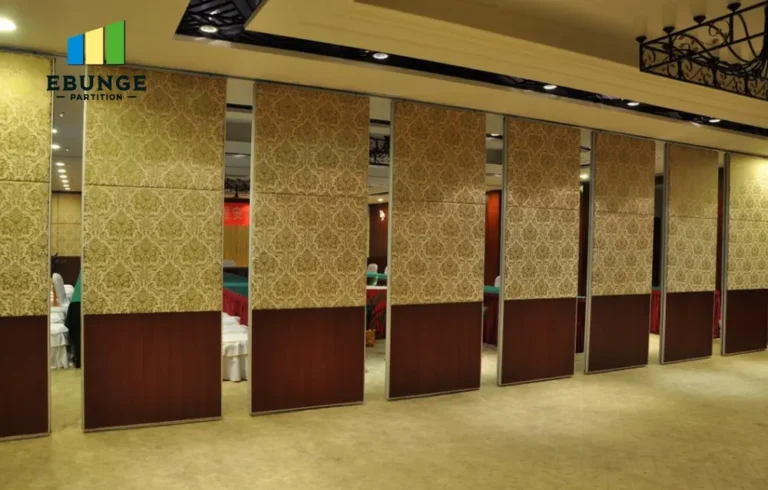
School halls often require durable, low-maintenance finishes that can withstand heavy use. Standard finishes like laminate or painted steel are cost-effective. However, if you need custom colors, wood veneers, or tackable surfaces, the cost will increase. Additionally, if you want to match the wall to existing interior design, factor in the cost of custom finishes. It’s advisable to prioritize which finishes are essential and which can be adjusted to stay within budget.
5. Installation Complexity: What to Expect
Installation is a significant part of the total cost. The complexity depends on the site conditions: the height of the ceiling, the type of floor, the presence of obstructions, and the need for special equipment. A top-hung system typically requires a crane or lift for installation, which adds to the labor cost. Also, if the floor is not level, adjustments may be needed, increasing time and expense. To get an accurate quote, provide detailed drawings and site photos to the supplier.
6. Lifecycle Cost and Durability
When evaluating movable acoustic wall cost factors, don’t just look at the initial investment. Consider the lifecycle cost: maintenance, repairs, and the wall’s lifespan. A cheaper wall may require more frequent repairs or have a shorter lifespan, leading to higher long-term costs. Ask about the warranty and the availability of spare parts. A reputable supplier will offer a warranty that covers the mechanical components and the acoustic seals. However, the exact terms vary, so it’s essential to review the warranty in detail.
Share the opening, drawings, finish direction, and privacy target for a project-specific review.
7. Shipping and Import Duties for Export Projects
If your project is outside the manufacturer’s country, shipping and import duties can be substantial. The cost will depend on the volume and weight of the panels, the shipping method, and the destination country’s customs regulations. To avoid surprises, request a quote that includes shipping and duties, or ask for a breakdown so you can plan. Also, consider lead times, as international shipping can add weeks to the project timeline.
8. How to Prepare a Quotation-Ready Inquiry
To get accurate and comparable quotes, your inquiry should include:
- Detailed drawings (floor plans, elevations, sections) with dimensions of the opening.
- The required acoustic rating (e.g., STC 45) or the specific acoustic performance you need.
- Finish preferences (e.g., laminate color, wood veneer, tackable surface).
- Type of track system (top-hung or floor rail) and any structural constraints.
- Project location and site conditions (e.g., ceiling height, floor type).
- Expected timeline and any special requirements (e.g., fire rating, lead time).
Providing this information upfront will help suppliers give you a precise quote and reduce the back-and-forth.
9. Comparing Quotes: A Checklist
When you receive quotes, use this checklist to compare:
| Item | What to Check |
|---|---|
| Scope of supply | Does the quote include panels, track, seals, and installation? |
| Acoustic performance | Is the STC/Rw rating specified and guaranteed? |
| Track system | Is it top-hung without floor rail? Are structural modifications included? |
| Finishes | Are the specified finishes included? Are there upgrade costs? |
| Installation | Does the quote include labor, equipment, and site preparation? |
| Warranty | What is the warranty period and what does it cover? |
| Shipping and duties | For export, are shipping and import duties itemized? |
10. The Value of Working with a Specialist Supplier
Choosing a supplier with experience in school hall projects can save you time and money. They can offer guidance on the most cost-effective solutions without compromising quality. They also understand the specific requirements of top-hung systems and can assist with drawings and installation guidance. For your project, consider reaching out to a specialist who can provide a tailored quote based on your detailed specifications.
Frequently Asked Questions
What is the typical cost range for a movable acoustic wall for a school hall?
The cost varies widely based on size, acoustic rating, customization, and installation. It’s best to request quotes with detailed specifications to get accurate pricing.
How does the acoustic rating affect the cost?
Higher STC/Rw ratings require more materials and engineering, increasing the cost. Define the required rating to get accurate quotes.
Is a top-hung track system more expensive than a floor rail?
It can be, due to structural requirements, but it offers the benefit of a flat floor. The cost difference depends on the building structure and installation complexity.
What information do I need to provide for a quotation?
Provide detailed drawings, opening size, acoustic target, finish preferences, and project location. This helps suppliers give an accurate quote.
Are there any hidden costs I should be aware of?
Potential hidden costs include structural modifications, shipping and import duties, installation extras, and ongoing maintenance. Ask for a detailed breakdown.
How can I ensure the wall meets acoustic performance standards?
Specify the required STC/Rw rating and ask for test data or certifications from the supplier. Ensure the installation is done correctly to achieve the rated performance.
Conclusion
Understanding the movable acoustic wall cost factors for school halls is essential for making an informed decision. By focusing on the key drivers—acoustic performance, track system, customization, installation, and logistics—you can prepare a comprehensive inquiry that yields accurate quotes. Remember to consider the lifecycle cost and warranty coverage to ensure long-term value. For your next project, reach out to a specialist supplier with detailed drawings and requirements to get a tailored quotation.
For more information on movable partition walls, visit our movable partition wall page. Also, explore our blogs for insights on acoustic solutions. To discuss your project, contact us via our contact page. And for cost-related articles, check our Movable Partition Cost category.
Send the opening size and drawings to discuss a differentiated movable acoustic wall cost factors solution.