
When planning a school hall renovation or new build, understanding movable acoustic wall cost factors for school halls is essential for accurate budgeting. As an architect, you need to move beyond vague estimates and prepare for detailed quotations. This guide focuses on the cost drivers that affect your project, helping you ask the right questions and compare supplier proposals effectively. We’ll explore technical requirements, installation considerations, and long-term value, ensuring you can make an informed decision for your school hall partition wall.
Direct answer: Movable acoustic wall cost factors for school halls are primarily determined by the wall’s size, acoustic performance target, finish selection, and the complexity of the top-hung track system. To get an accurate quotation, you must provide your opening dimensions, drawings, desired acoustic rating (e.g., Rw dB), finish preferences, and project location. Expect costs to vary significantly based on customization and installation requirements. Always request a detailed breakdown from suppliers to compare total cost of ownership.
Movable Acoustic Wall Cost Factors: Why School Halls Present Unique Cost Challenges
School halls are not typical rooms. They host assemblies, sports activities, examinations, and performances, requiring flexibility and robust acoustic separation. The movable acoustic wall must comply with strict safety standards, including fire resistance, impact resistance, and easy operation for staff. These requirements influence the choice of materials, hardware, and engineering, directly impacting the movable acoustic wall cost factors for school halls. Unlike office partitions, school walls may need to withstand higher traffic and occasional rough handling, leading to more durable, and sometimes more expensive, components.
Need help turning the movable acoustic wall cost factors requirements into a practical project layout?
Key Cost Drivers in Movable Acoustic Wall Systems
Several factors contribute to the overall cost of an operable wall system. Understanding these helps you evaluate quotations and avoid unexpected expenses.
Wall Size and Configuration
The total area and the number of panels directly affect material and manufacturing costs. Larger spans require more panels, heavier structural support, and a more robust top-hung track system. Additionally, any curves, angles, or irregular shapes will increase complexity and cost. Always provide precise measurements to suppliers to ensure accurate quotations.
Acoustic Performance Requirements
The acoustic target, often expressed as a sound reduction index (Rw), is a primary cost driver. Higher acoustic ratings demand thicker panels, additional seals, and more sophisticated perimeter sealing systems. For a school hall, you might need an Rw of 45 dB or higher to ensure speech privacy between divided spaces. Be realistic about your needs—over-specifying can unnecessarily inflate costs.
Finish and Aesthetic Options
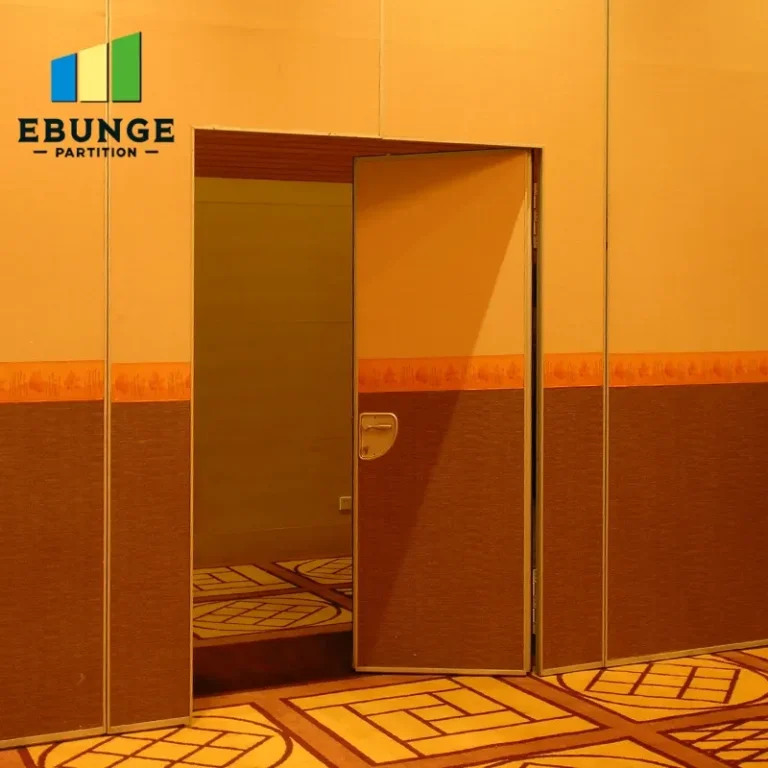
Surface finishes range from basic laminate to veneer, paint, or even tackable surfaces for classroom use. Custom colors or branding can add costs. Additionally, the integration of whiteboards, projection screens, or doors within the wall will affect pricing. Choose finishes that align with the hall’s functionality and durability requirements.
Top-Hung Track System and Structural Support
Our EBUNGE system uses a top-hung track without a floor rail, which offers a clean, unobstructed floor and easier cleaning. However, this requires the ceiling or roof structure to bear the entire wall weight. If your school hall’s structure needs reinforcement to support the track, this can add to installation costs. The complexity of the track layout—straight, curved, or with switches—also influences cost.
Installation Complexity and Its Impact on Budget
Installation is not just a line item; it’s a critical phase that can affect your timeline and budget. The complexity of the installation depends on the site conditions, access, and the need for coordination with other trades. For instance, integrating the wall with existing lighting, HVAC, or fire safety systems requires careful planning. A top-hung system often simplifies floor finishing but may require work at height, which could involve specialized equipment. Always discuss installation details with the supplier to understand what’s included and what’s not.
Total Cost of Ownership: Beyond the Initial Quotation
When comparing movable acoustic wall cost factors for school halls, look beyond the initial purchase price. Consider maintenance, durability, and warranty. A cheaper wall might require more frequent repairs or have a shorter lifespan, leading to higher long-term costs. Ask about the warranty length and what it covers. Also, inquire about the availability of spare parts and the supplier’s service network. A reliable supplier who can provide ongoing support is invaluable, especially in a busy school environment.
Warranty and After-Sales Support
Warranties vary significantly among suppliers. Some offer 5 years, others 10 or more. Ensure you understand what the warranty covers: parts, labor, or both? Does it include acoustic performance guarantees? A clear warranty gives you peace of mind and protects your investment. Additionally, check if the supplier offers maintenance packages or training for school staff to ensure proper operation.
Supplier Reliability and Compliance with School Safety Standards
Choosing a supplier is as important as choosing the wall. Verify that the supplier’s products comply with relevant safety standards, such as fire ratings and impact resistance. Ask for documentation and test reports. Also, consider the supplier’s track record with educational projects. A reliable supplier will provide references and case studies. They should also be transparent about delivery timelines and potential delays. Remember, a school project often has a strict schedule, and late delivery can disrupt the academic year.
Customization Feasibility and Its Effect on Cost
Every school hall has unique dimensions and acoustic needs. Customization is often necessary, but it can increase costs. Whether you need a specific panel height, integrated door, or special finish, these options require additional engineering and manufacturing time. To control costs, prioritize your customization needs. For instance, if a standard panel size works, it may be more cost-effective than a fully custom solution. Discuss your requirements with the supplier to find a balance between functionality and budget.
Share the opening, drawings, finish direction, and privacy target for a project-specific review.
How to Prepare for Quotation Requests
To get accurate and comparable quotations, prepare a detailed request for proposal (RFP). Include the following:
- Exact opening dimensions and floor-to-ceiling height.
- Architectural drawings (DWG or PDF).
- Desired acoustic performance (Rw value).
- Finish preferences (e.g., laminate, veneer, tackable).
- Any special features (doors, whiteboards, etc.).
- Project location and site access details.
- Timeline for installation.
This information allows suppliers to provide accurate pricing and reduces the risk of hidden costs. It also demonstrates that you are a serious buyer, which can lead to more favorable terms.
Comparing Quotations: A Checklist
When comparing quotations, use a standardized checklist to ensure you’re comparing apples to apples. Here’s a practical checklist:
| Criteria | Supplier A | Supplier B |
|---|---|---|
| Panel thickness and construction | ||
| Acoustic rating (Rw) | ||
| Track system type (top-hung, floor rail) | ||
| Finish options included | ||
| Warranty length and coverage | ||
| Installation services included | ||
| Delivery timeline | ||
| After-sales support |
This checklist helps you identify hidden differences and negotiate effectively.
Common Pitfalls to Avoid
Architects often encounter pitfalls when budgeting for movable acoustic walls. One common mistake is underestimating the cost of structural modifications. Another is overlooking the need for perimeter sealing, which is crucial for acoustic performance. Also, be wary of low-ball quotes that omit essential components like seals or hardware. Always ask for a full breakdown of costs, including delivery and installation.
Frequently Asked Questions
What is the typical lead time for a movable acoustic wall?
Lead times vary by supplier and project complexity. Typically, it ranges from 6 to 12 weeks after approval of drawings and specifications. Custom designs may take longer. Always confirm with the supplier and factor in your project schedule.
Can a movable acoustic wall be installed in an existing school hall?
Yes, in most cases. However, you need to assess the structural capacity of the ceiling to support the top-hung track. A site survey by the supplier is essential to determine feasibility and any additional costs.
What acoustic performance can I expect for a school hall?
Acoustic performance depends on the wall system and installation quality. For school halls, an Rw of 40-45 dB is common. Higher performance is possible but will increase costs. Discuss your specific needs with the supplier to find the right balance.
Are there any maintenance requirements for movable acoustic walls?
Regular maintenance is minimal but important. This includes cleaning the track and checking seals for wear. Suppliers may offer service contracts to ensure long-term performance. Ask about recommended maintenance schedules.
How can I ensure the supplier is reliable?
Check references from similar projects, ask for certifications and test reports, and verify their financial stability. A reliable supplier will be transparent and responsive. You can also consult industry associations for recommendations.
Conclusion: Making an Informed Decision
Understanding movable acoustic wall cost factors for school halls is the first step toward a successful project. By focusing on technical requirements, total cost of ownership, and supplier reliability, you can navigate the quotation process with confidence. Remember to gather all necessary information, compare quotations systematically, and prioritize value over mere price. For more insights, explore our blog or view our cost category for related articles. When you’re ready, contact us to discuss your specific project needs. Our team is ready to assist with drawings, specifications, and a detailed quotation tailored to your school hall.
Remember, the right movable acoustic wall is an investment in flexibility and acoustic comfort. Take the time to plan thoroughly, and you’ll achieve a solution that serves your school for years to come.
Send the opening size and drawings to discuss a differentiated movable acoustic wall cost factors solution.