
Selecting a movable partition for a conference center is a significant capital decision. Beyond the visual appeal, the choice between manual and semi-automatic systems affects daily operations, long-term maintenance, and the overall success of your venue. This comparison focuses on quotation readiness and project decision risk, helping you ask the right questions and avoid costly mistakes. We’ll explore the practical differences, acoustic considerations, and operational implications to ensure your investment aligns with your conference center’s needs.
Direct Answer: For most conference centers, semi-automatic movable partitions offer a balanced blend of ease of operation and lower long-term maintenance compared to fully manual systems. However, the right choice depends on your specific opening sizes, acoustic targets, and budget. Manual partitions are cost-effective for small, infrequently used openings, while semi-automatic systems reduce physical strain and speed up room configuration. Always confirm exact specifications, such as panel weight, track load, and acoustic ratings, from project drawings and quotations before committing.
Movable Partition: Understanding the Core Differences: Manual vs. Semi-Automatic
Manual movable partitions are operated entirely by hand. Each panel is lifted, moved along the track, and locked into place using a lever or crank mechanism. They are simple, reliable, and have fewer mechanical components, making them easier to maintain. However, they require physical effort, which can be a drawback for large or heavy panels.
Semi-automatic systems use a motor to assist with the vertical lifting of panels, while horizontal movement and locking are still manual. This reduces the physical effort needed, speeds up operation, and minimizes wear on the floor. They are ideal for larger panels or frequent reconfiguration.
The decision impacts your staff’s daily routine, the speed of room setup, and the risk of mechanical failures. For a conference center with high room turnover, semi-automatic systems often provide a better return on investment.
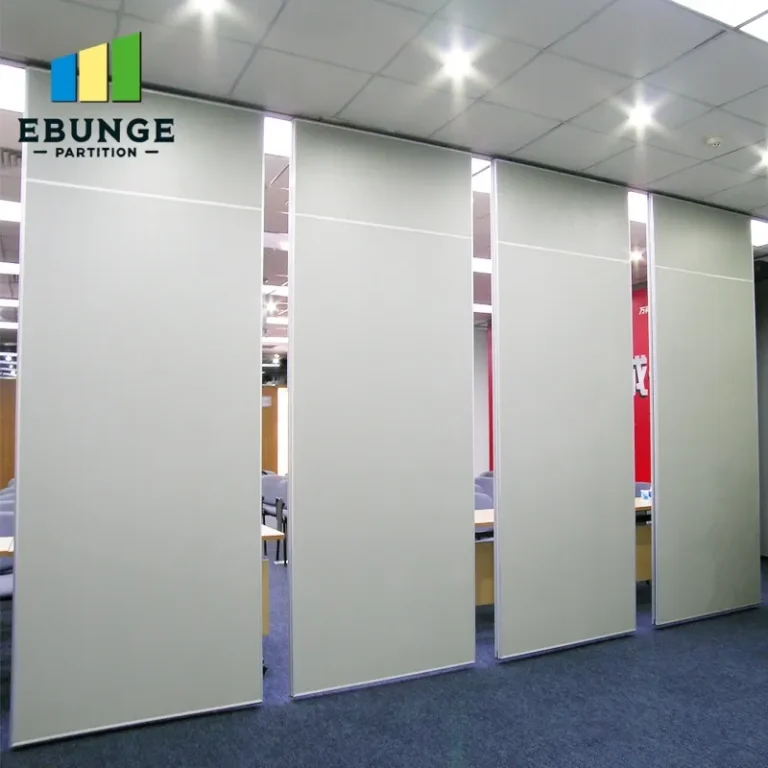
Need help turning the movable partition requirements into a practical project layout?
Quotation Readiness: What to Prepare Before Contacting Suppliers
To get an accurate quotation, you need to provide detailed information. This includes:
- Opening sizes (width, height, and depth) for each partition.
- Acoustic performance target (e.g., STC or Rw rating) based on your room’s intended use.
- Finish preferences: wood veneer, laminate, fabric, or other materials.
- Architectural drawings or floor plans showing the partition locations.
- Any special requirements, such as fire ratings or soundproofing for adjacent rooms.
Suppliers like EBUNGE offer factory-direct support, including drawings and installation guidance. Providing these details upfront reduces the risk of inaccurate quotes and project delays.
Acoustic Performance: Don’t Compromise on Sound Insulation
Acoustic performance is a critical factor for conference centers. A movable partition must meet the sound insulation requirements of your space. Manual and semi-automatic systems can both achieve high acoustic ratings, but the quality of seals—perimeter, vertical, and bottom—is crucial. Semi-automatic systems often have better sealing because the motor ensures consistent pressure, but this is not guaranteed. Always verify acoustic test data from the manufacturer, and ensure the system is installed correctly to avoid sound leaks.
During the quotation phase, ask for the acoustic rating in decibels (dB) and understand that real-world performance depends on installation quality. EBUNGE’s top-hung track system, without a floor rail, helps maintain acoustic integrity by reducing gaps at the floor.
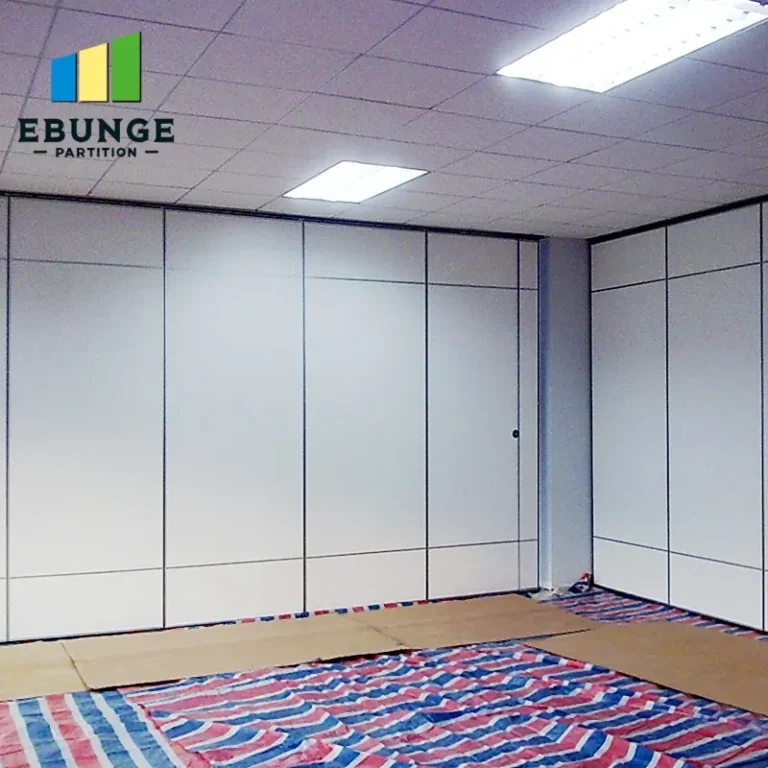
Ease of Operation: Daily Impact on Staff and Efficiency
In a busy conference center, staff may reconfigure rooms multiple times a day. Manual partitions can be tiring and time-consuming, especially for large spans. Semi-automatic systems reduce physical effort and allow one person to operate even large panels. This efficiency translates into faster turnaround times and reduced labor costs.
However, semi-automatic systems have more moving parts, including motors and controls, which may require more frequent maintenance. Your maintenance team should be comfortable with these components, or you should budget for service contracts.
Durability and Maintenance: Long-Term Considerations
Both systems are durable, but the maintenance differs. Manual partitions have fewer mechanical parts, so they are less prone to breakdowns. Regular checks on tracks, hinges, and locking mechanisms are sufficient. Semi-automatic systems need periodic checks on motors, belts, and electrical connections. The initial cost of semi-automatic is higher, but the operational efficiency may offset this over time.
Consider the warranty offered: a longer warranty on semi-automatic components can reduce risk. Always read the fine print and understand what is covered.
Installation Complexity and Project Risk
Installation complexity affects both cost and timeline. Manual partitions are simpler to install, requiring less electrical work. Semi-automatic systems need power supply and control wiring, which increases installation complexity and potential for delays. Ensure your contractor has experience with the chosen system.
Factory-direct support, like that from EBUNGE, can mitigate risks by providing detailed drawings and installation guidance. This is especially valuable for complex projects with multiple partitions.
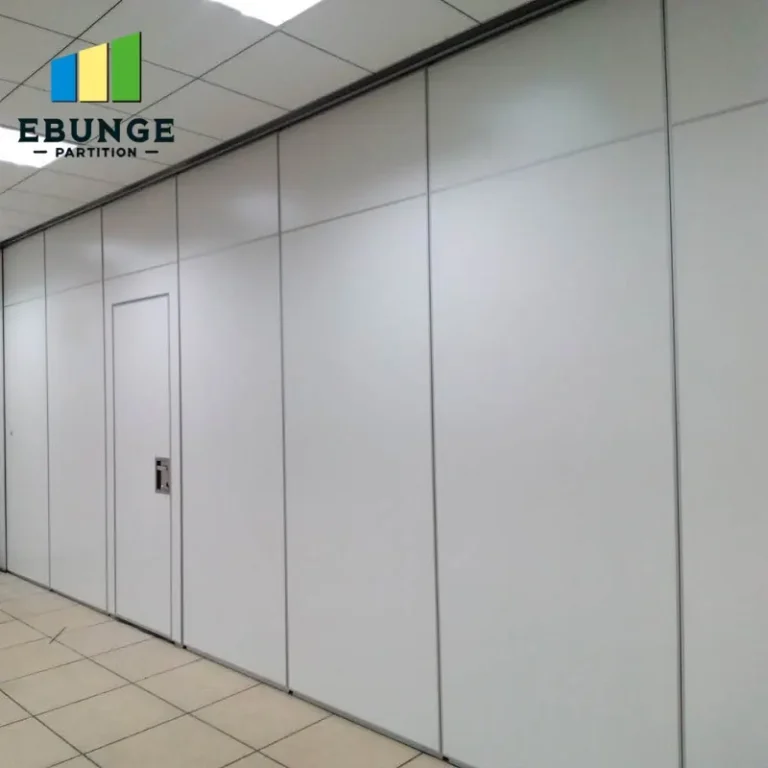
Share the opening, drawings, finish direction, and privacy target for a project-specific review.
Customization and Aesthetics: Matching Your Conference Center’s Brand
Both manual and semi-automatic systems offer a wide range of finishes, from wood veneers to acoustic fabrics. Customization options, such as integrated whiteboards or projection screens, can enhance functionality. The choice of system doesn’t limit your design flexibility, but semi-automatic systems may have additional design considerations for motor housing and controls.
When comparing quotes, ensure that the finish and design options are clearly specified. This avoids unexpected costs later.
Cost-Effectiveness: Beyond the Initial Price
While manual partitions have a lower upfront cost, semi-automatic systems can be more cost-effective in the long run due to reduced labor and faster operation. Analyze your total cost of ownership, including maintenance, energy, and potential downtime. A slightly higher initial investment in a semi-automatic system may pay off if your conference center has high usage.
Don’t forget to factor in the cost of any additional structural support needed for heavier semi-automatic panels.
Decision Risk: How to Mitigate with a Comparison Checklist
To make an informed decision, use this checklist:
| Criteria | Manual | Semi-Automatic |
|---|---|---|
| Initial Cost | Lower | Higher |
| Ease of Operation | Requires physical effort | Motor-assisted lifting |
| Maintenance | Simpler, fewer parts | More components, may need service |
| Acoustic Performance | Good with proper seals | Good with proper seals |
| Installation Complexity | Less complex | Requires electrical work |
| Customization | High | High |
| Warranty | Typically longer | Shorter on motors |
Use this table to compare quotes and prioritize what matters most for your conference center.
Conclusion: Making a Confident Choice
Choosing between manual and semi-automatic movable partitions ultimately depends on your conference center’s operational needs, budget, and long-term maintenance capacity. Semi-automatic systems offer convenience and efficiency, but manual partitions remain a reliable, cost-effective option for smaller spaces. By preparing detailed project information and using a comparison checklist, you reduce decision risk and ensure your investment meets your expectations.
For more insights on movable partition costs and selection, explore our Movable Partition Cost resources, or contact our team for factory-direct support. You can also review our movable partition wall solutions and blog for additional guidance.
Frequently Asked Questions
What is the typical lifespan of a movable partition?
With proper maintenance, both manual and semi-automatic systems can last 20-30 years. Semi-automatic motors may need replacement after 10-15 years, depending on usage.
Are semi-automatic partitions worth the extra cost?
If your conference center frequently reconfigures rooms, the time savings and reduced labor can justify the higher initial cost. For occasional use, manual may be more economical.
Can I upgrade from manual to semi-automatic later?
In some cases, it’s possible to retrofit, but it’s often more cost-effective to decide upfront. Consult with your supplier to assess feasibility.
How do I ensure good acoustic performance?
Specify the required acoustic rating, ensure proper installation, and verify seals are intact. Regular maintenance of seals is crucial.
What information do I need for a quotation?
Provide opening sizes, acoustic targets, finish preferences, and architectural drawings. Factory-direct suppliers like EBUNGE can guide you.
Send the opening size and drawings to discuss a differentiated movable partition solution.