
When you manage a medical or rehabilitation facility, every square foot matters. Your conference center hosts training sessions, family meetings, and administrative briefings, but when it’s not in use, that space often sits idle. A folding partition can transform that area into flexible rooms, but only if it remains reliable over years of daily operation. For buyers like you, the real question isn’t just the initial cost—it’s the total cost of ownership, including maintenance, repairs, and downtime. This guide focuses on what you need to know before requesting a quotation, so you can make a confident decision and avoid costly surprises later.
Direct answer: To ensure your folding partition investment is sound, focus on three maintenance pillars: verify the track and hardware quality, confirm the acoustic seal’s longevity, and establish a clear service plan with the manufacturer. Before any quotation, request detailed drawings, specify your opening size, acoustic target, and finish preferences, and ask about factory-direct support. This approach minimizes risk and ensures your space utilization goals are met without hidden upkeep costs.
Why Maintenance Planning Matters for Your Facility
In healthcare environments, partitions are used more frequently than in typical offices. They endure constant movement, occasional impacts from wheelchairs or gurneys, and strict hygiene requirements. A partition that jams or loses its acoustic seal can disrupt sensitive meetings or compromise patient confidentiality. Planning for maintenance from the start—rather than reacting to failures—reduces downtime and extends the system’s lifespan. For procurement managers, this means evaluating not just the purchase price but the long-term serviceability of the partition wall system.
When you request a quotation, ask for a maintenance schedule and a list of wear-prone components. A reputable supplier should provide this without hesitation. Also, inquire about the availability of replacement parts—especially for custom movable partition walls, where components may be less standardized. Knowing that parts are in stock or can be sourced quickly is crucial for minimizing operational disruption.
Need help turning the folding partition requirements into a practical project layout?
Key Maintenance Areas for Folding Partitions
Let’s break down the critical components that require attention. These are the areas where wear and tear occur, and where your maintenance budget will be spent.
Track and Suspension System
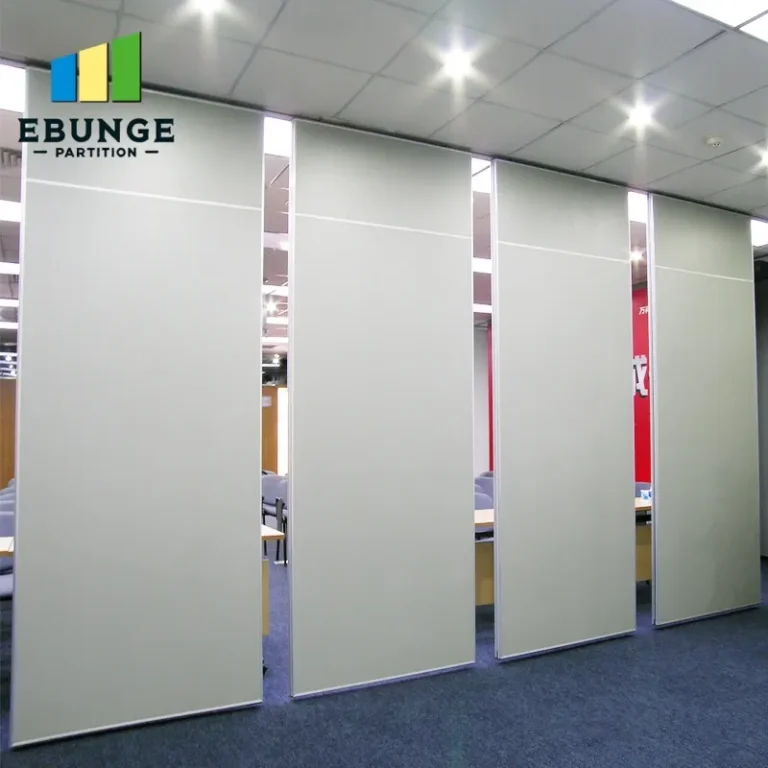
Our EBUNGE partitions use a top-hung track without a floor rail, which simplifies cleaning and reduces trip hazards—an important feature in medical settings. The track and trolleys bear the weight of the panels and endure thousands of cycles. Regular inspection of the track for debris, wear, and alignment is essential. Lubrication of moving parts, as per the manufacturer’s guidelines, prevents squeaking and smooth operation. Ask your supplier for a recommended lubrication schedule and whether they offer preventive maintenance visits.
Panels and Hinges
The panels themselves are generally low-maintenance, but their surfaces can scratch or dent if impacted. In a rehabilitation facility, consider impact-resistant finishes. Hinges and pivot points should be checked for tightness and wear. Over time, hinges may loosen, causing panels to sag. A simple quarterly check can catch these issues early.
Acoustic Seals and Gaskets
The acoustic performance of your partition depends on perimeter seals and panel-to-panel gaskets. These rubber or brush seals degrade with use and exposure to cleaning chemicals. If your acoustic target is critical, such as for confidential medical discussions, you need to replace seals periodically. Ask about the expected lifespan of seals and the cost of replacement kits. Some suppliers offer seal kits that are easy to install, reducing labor costs.
Operation and Safety Mechanisms
Folding partitions include operating handles, locking mechanisms, and possibly motorized drives. These should be tested regularly. In high-traffic facilities, consider a motorized system to reduce manual effort and potential damage from rough handling. However, motorized systems require more specialized maintenance, so factor that into your decision.
Maintenance Costs: What to Expect
While we cannot provide specific prices, you can estimate maintenance costs based on the complexity of your system. Simple manual partitions have lower maintenance needs than motorized ones. Seals and gaskets are consumables—they will need periodic replacement. Trolleys and tracks may last for years with proper care but can require replacement after heavy use. When comparing quotes, ask for a breakdown of maintenance costs over a 5- and 10-year period. This will help you understand the total cost of ownership.
A practical way to budget is to allocate 1-2% of the initial installation cost per year for routine maintenance. This is a rough figure, but it gives you a starting point. For a more accurate estimate, request a maintenance plan from your supplier.
Creating a Maintenance Schedule for Your Facility
Develop a maintenance schedule based on usage frequency. For a conference center used daily, perform monthly visual inspections and quarterly functional tests. For less frequent use, a semi-annual check may suffice. Here’s a sample schedule:
| Frequency | Maintenance Task |
|---|---|
| Monthly | Inspect track for debris and alignment; clean track surface. |
| Quarterly | Test operation, check hinges and seals for wear; lubricate moving parts as per manual. |
| Annually | Professional inspection by supplier; replace worn seals and gaskets; check acoustic performance. |
Assign a responsible person on your facilities team to oversee these tasks. Keep a log of maintenance activities to track issues and identify patterns. This documentation also helps when discussing warranty claims.
Warranty and Support: What to Look For
Warranty coverage varies by manufacturer. Ensure you understand what is covered—parts, labor, or both—and for how long. Typically, moving parts have a shorter warranty than static components. Ask about the warranty on the acoustic seal, as it is a high-wear item. Also, verify the manufacturer’s response time for service calls. In a medical facility, a broken partition can be a security issue, so fast support is critical.
Factory-direct support is a significant advantage. When you buy directly from the manufacturer, you get access to original parts and technicians who know the product intimately. This reduces the risk of incompatible repairs. During the quotation phase, ask for a service level agreement (SLA) that specifies response times and uptime guarantees.
Share the opening, drawings, finish direction, and privacy target for a project-specific review.
Preparing for Your Quotation: A Checklist
To get an accurate quotation and set the stage for a low-maintenance system, prepare the following information:
- Opening size: Exact width and height of the opening, including tolerances.
- Acoustic target: Desired sound insulation (e.g., STC rating) based on your privacy needs.
- Finish preferences: Surface material, color, and any special coatings for hygiene or impact resistance.
- Drawings: Architectural drawings showing the opening, surrounding structure, and any obstructions.
- Usage patterns: How often the partition will be moved, and by whom (staff or patients).
- Maintenance expectations: Your plan for in-house vs. professional maintenance.
Having this information ready ensures the supplier can provide a tailored solution that meets your needs and avoids costly change orders later.
Common Maintenance Pitfalls to Avoid
Even with a good plan, mistakes happen. Here are pitfalls to avoid:
- Ignoring small issues: A minor squeak can indicate a worn bearing. Fix it early to prevent major damage.
- Using wrong cleaning agents: Harsh chemicals can degrade seals and finishes. Use mild soap and water, as recommended by the manufacturer.
- Overloading the partition: Hanging items on the partition can stress the track. Ensure staff know not to use it as a support.
- Neglecting professional inspections: Some tasks require specialized tools and knowledge. Annual professional checks are worth the cost.
Comparing Maintenance Plans: What to Ask Suppliers
When evaluating quotes, compare the maintenance offerings side by side. Use this comparison table to structure your evaluation:
| Criteria | Supplier A | Supplier B |
|---|---|---|
| Warranty period (years) | ? | ? |
| Warranty coverage (parts/labor) | ? | ? |
| Availability of replacement parts | ? | ? |
| Response time for service | ? | ? |
| Preventive maintenance packages | ? | ? |
| Cost of seal replacement kit | ? | ? |
Fill this table with data from each supplier. It will help you make an objective decision.
Conclusion: Make Maintenance Part of Your Purchase Decision
A folding partition is a significant investment that can greatly improve space utilization in your medical facility. By focusing on maintenance from the start, you protect that investment and ensure your conference center remains functional and professional. Remember to request detailed drawings, specify your acoustic and finish requirements, and ask about factory-direct support. For more insights on movable partition costs and options, explore our Movable Partition Cost category. If you have specific questions, our team is ready to assist—contact us for personalized guidance. Also, check our blog for more tips on partition maintenance and selection.
Frequently Asked Questions
How often should I have my folding partition professionally inspected?
We recommend at least once a year for facilities with regular use. For high-traffic medical environments, consider a bi-annual inspection. Your supplier can provide a specific recommendation based on your usage.
Can I replace the acoustic seals myself?
Yes, many seal kits are designed for easy replacement. However, for optimal performance, we suggest having a professional install them, especially if your acoustic target is critical. Your supplier can advise on the best approach.
What is the typical lifespan of a folding partition?
With proper maintenance, a quality partition can last 20-30 years or more. The track and hardware may need replacement after 10-15 years of heavy use, but panels and frames are durable.
Are motorized partitions more expensive to maintain?
Yes, motorized systems have additional components like motors and controls that require specialized maintenance. However, they reduce manual wear and tear and may be worth the extra cost in high-use areas.
Do you offer training for our maintenance staff?
Many manufacturers, including us, provide basic training for in-house teams. This can include proper operation, cleaning, and minor adjustments. Ask about training options when requesting a quotation.
Send the opening size and drawings to discuss a differentiated folding partition solution.