
Quick answer: latecomer aisle head access stacked panels circulation review
Review focus: latecomer aisle head access stacked panels circulation review.
A latecomer aisle head access stacked panels circulation review asks a simple but easily missed question: when movable panels are parked at the head of an aisle, can someone arriving after the room is set still reach a seat without disturbing the arrangement? For contractors, architects, interior designers and owners, the answer is not a product slogan. It is a layout and coordination question that should be tested on the project drawings before the room is used.
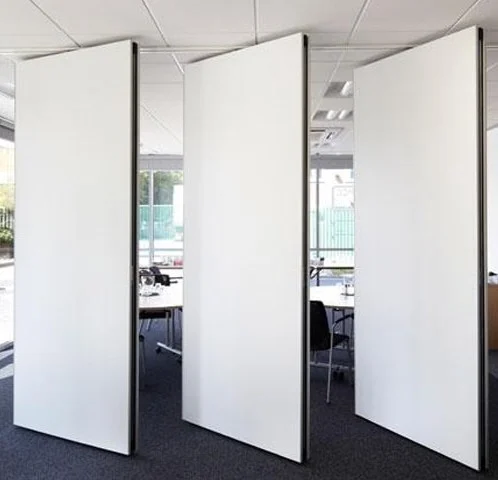
EBUNGE movable wall panels are individually movable, suspended from a top track, cross the opening without a floor track, and park at a planned stacking position. That maintained product context gives the review a starting point, but it does not decide whether a specific aisle remains usable. The project team must confirm support, acoustic and dimensional requirements for the actual room.
Why the Aisle Head Becomes the Critical Point
Project review term: latecomer aisle head access stacked panels circulation review.
In many flexible rooms, the aisle head is where three needs meet: the route people use to reach seats, the route panels use to travel and park, and the route staff use to reset the room. When panels are stacked at that point, the remaining clear route can change from the open-room condition.
A circulation review should therefore look at the stacked condition, not only the open condition. The open room may look generous while the stacked room creates a pinch point near the first row of seats. This is a planning observation, not a claim about any specific installation.
What the review is really checking
The review checks whether the planned stacking position, the aisle geometry and the seating layout can coexist. It also checks whether the movement path for panels is continuous and supported along the overhead route. The exact route, junction arrangement, continuous overhead path and parking position must be confirmed from the coordinated project drawings.
Separate Product Facts from Project Decisions
Coordination scope: latecomer aisle head access stacked panels circulation review.
Maintained product facts describe how the system works: top-hung panels, individual movement, no continuous floor track along the partition line, and parking at a planned stacking position. Project decisions are different. They include the exact stacking location, the aisle width in the stacked condition, the seating count and the route a latecomer would take.
Those project decisions require drawings, dimensions and coordination with the relevant disciplines. They should not be inferred from a photograph, a finish sample or a generic room type.
Evidence note
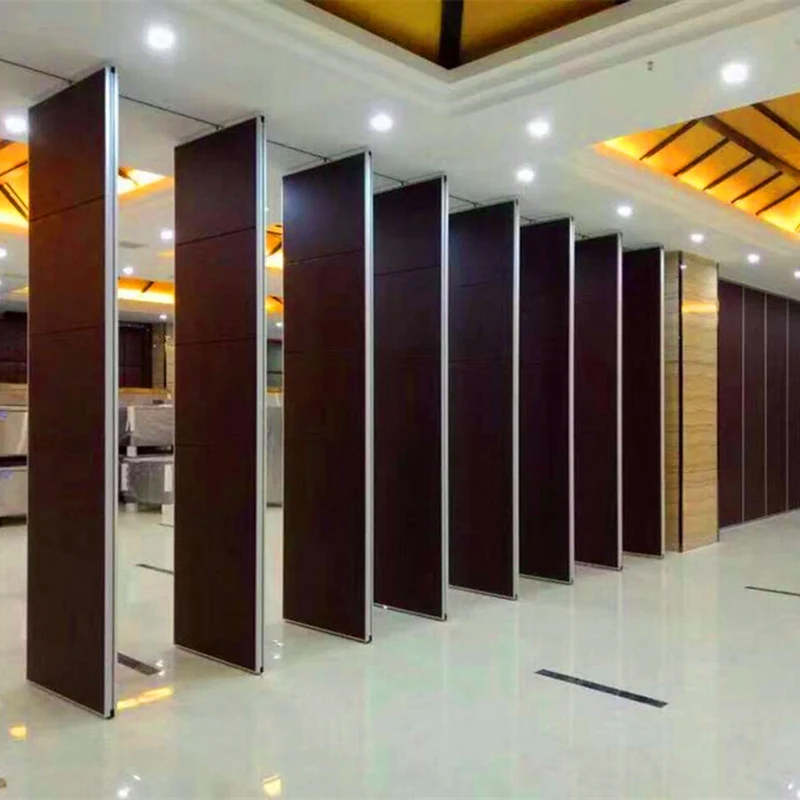
Visible finishes such as laminate, melamine, fabric, leather or glass do not by themselves prove acoustic performance, structural capacity, cleaning compatibility or a application reference outcome. Confirm project-specific requirements separately.
A Circulation Review Sequence for Project Teams
Checklist focus: latecomer aisle head access stacked panels circulation review.
A repeatable sequence helps teams compare options without drifting into unsupported conclusions. The steps below are a coordination framework, not a performance guarantee.
- Mark the planned stacking position on the layout and note which aisle head it affects.
- Draw the stacked condition and identify the remaining route from the entry to the seats.
- Check the panel travel route from the opening to the stacking position, including turning and stacking routes.
- Review pass-door requirements if the layout needs a way through the closed partition.
- Confirm dimensional, support and acoustic requirements with the project team.
- Record open questions in the project documentation before procurement or installation planning advances.
Stacked Panels and Latecomer Movement: What to Compare
Review focus: latecomer aisle head access stacked panels circulation review.
The comparison below is a planning aid. It does not set dimensions or performance values; those must come from project-specific review.
| Condition | What to check | Why it matters |
|---|---|---|
| Open room | Seating layout and main circulation | Shows the baseline route before panels are deployed |
| Panels in use | Closed partition line and pass-door needs | Affects how people move while the room is divided |
| Panels stacked | Aisle head clearance and latecomer route | Reveals whether the parked position blocks the intended path |
| Reset condition | Panel travel and stacking route | Confirms the movement path is planned and supported |
Turning, Stacking and Support Routes
Project review term: latecomer aisle head access stacked panels circulation review.
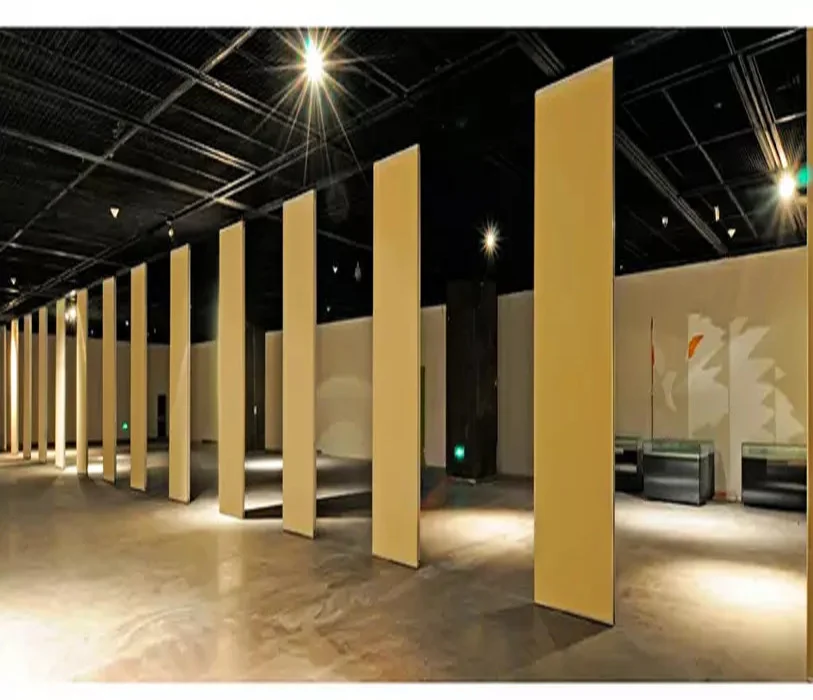
Straight, turning and stacking routes should be reviewed from the layout. A route that looks simple on a floor plan may involve a turn near the aisle head or a stacking position that sits close to seating. The review should show how panels move from the opening to the parking position without assuming an unsupported path.
Support conditions are part of this review. The overhead route must be continuous and connected for the proposed movement, and the project team should confirm the support requirements for the actual structure. The suitability of each route and parking arrangement depends on the approved layout, circulation, ceiling interfaces and operating sequence.
Questions to bring to the drawing review
- Where exactly do panels park, and what is beside that position?
- Does the latecomer route remain legible when panels are stacked?
- Are pass-door requirements relevant to the way the room is used?
- Which dimensions still need confirmation from the project team?
- What documentation is needed before the layout is fixed?
Acoustic and Dimensional Expectations Need Project Confirmation
Acoustic requirements should be confirmed for the project, along with dimensional and support requirements.
Finish options include laminate, melamine, fabric, leather, glass and other approved surfaces.
Documentation and Coordination for the Project Team
Good coordination keeps the circulation review visible. Layout drawings, stacking positions, pass-door requirements and open questions should be recorded so that contractors, designers and owners are working from the same assumptions. The movable wall product page provides maintained product context, while the resources section supports broader project planning.
Where the review raises questions about the specific room, the project team should confirm requirements directly rather than relying on generic examples. The contact page is the appropriate route for project-specific discussion and documentation.
FAQ: Latecomer Access and Stacked Panel Circulation
Can a latecomer always reach a seat when panels are stacked at the aisle head?
No universal answer applies. It depends on the stacking position, aisle geometry, seating layout and the route confirmed for the project. The stacked condition should be reviewed on the drawings.
Do movable panels need a floor track along the partition line?
EBUNGE movable wall panels are top-hung and cross the opening without a floor track. The movement route still requires a continuous connected overhead route and project-specific support review.
Can the stacking position be changed to improve circulation?
Parking style is customized to the customer layout and project requirements. Whether a different position is feasible depends on the layout, support and dimensional review for that project.
Does a finish choice affect acoustic performance?
Finish options include laminate, melamine, fabric, leather, glass and other approved surfaces.
What information should be ready for a circulation review?
Useful inputs include the seating layout, the planned stacking position, the panel travel route, pass-door requirements and any dimensional or support questions. Project documentation can then be discussed with the relevant team.
Can pass doors help with latecomer access?
Pass-door requirements can be discussed as part of the layout. Whether a pass door is appropriate depends on how the room is used and on the project-specific design review.
Conclusion: Review the Stacked Condition, Not Just the Open Room
A latecomer aisle head access stacked panels circulation review is most useful when it tests the room as it will actually be used. The open layout may look comfortable, but the stacked condition is where access questions often appear. By checking the stacking position, the travel route, pass-door needs and the remaining aisle on the project drawings, teams can raise the right questions early.
Confirm support, acoustic and dimensional requirements for each project. Where the layout is uncertain, document the open points and discuss them with the project team before decisions are fixed.
To discuss project-specific requirements, contact EBUNGE with your layout and circulation questions.