
When you are procuring an office movable partition for a government multipurpose room, the buying process is rarely about the product alone. It is about managing risk: risk of acoustic failure, risk of installation delays, risk of non-compliance, and risk of hidden costs that appear after the quotation is signed. As a hotel owner overseeing overseas procurement, you need a purchasing guide that helps you prepare a complete request for quotation (RFQ) and evaluate proposals with confidence. This article focuses on quotation readiness and project decision risk, so you can avoid common pitfalls and secure a partition that meets your acoustic, operational, and budgetary needs.
Direct answer: To improve sound privacy in a government multipurpose room with an office movable partition, the most critical step is to define your acoustic target (such as STC rating), opening size, finish preference, and provide detailed drawings to the manufacturer. Work with a factory-direct supplier that offers custom project coordination and installation guidance. This ensures the partition is designed, manufactured, and installed to meet your specific requirements, reducing project risk and improving long-term performance.
Office Movable Partition: Why Quotation Readiness Reduces Project Risk
In overseas procurement, the quotation is not just a price list; it is the blueprint for your entire project. A vague or incomplete RFQ leads to ambiguous proposals, unexpected costs, and delays. By preparing a detailed specification package before contacting suppliers, you shift the conversation from “what do you have” to “how will you meet our needs.” This approach minimizes the risk of miscommunication and ensures that all bidders are comparing apples to apples.
For a government multipurpose room, the stakes are higher because compliance with acoustic standards and operational requirements is often non-negotiable. A well-prepared RFQ includes not only the partition dimensions but also the acoustic performance target, the type of operation (manual or motorized), the finish material, and the installation conditions. This clarity allows suppliers to provide accurate pricing and timelines, reducing the chance of change orders later.
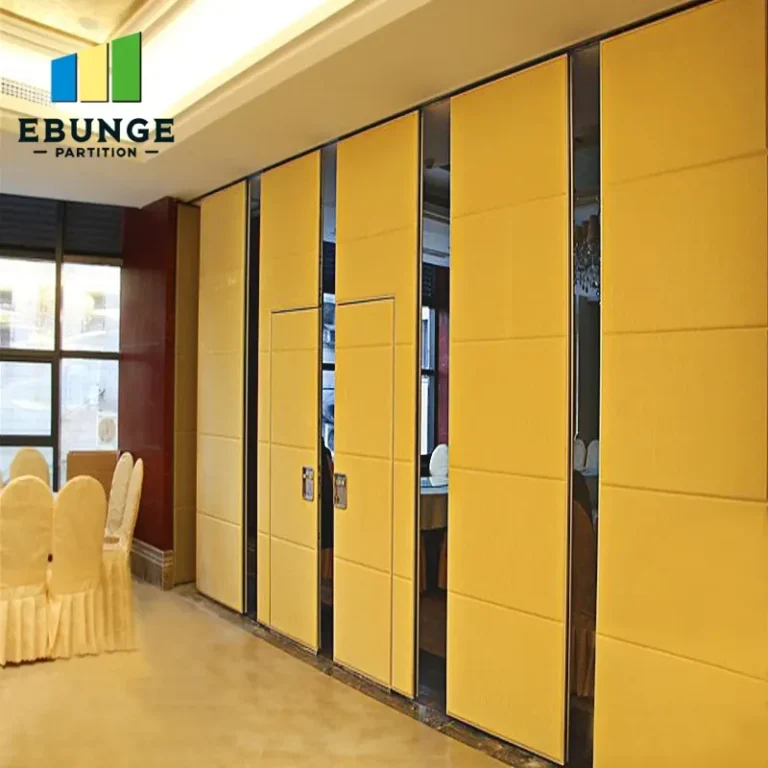
Need help turning the office movable partition requirements into a practical project layout?
Defining Your Acoustic Target: STC and Beyond
The Sound Transmission Class (STC) is the most common metric for evaluating a partition’s ability to block sound. However, STC is not a one-size-fits-all number. The required STC depends on the specific activities in the multipurpose room and the adjacent spaces. For example, a room used for confidential meetings may require an STC of 50 or higher, while a general-purpose room might be satisfied with STC 45. But STC alone does not tell the whole story; flanking paths, such as gaps around the partition, doors, and ceiling plenum, can compromise acoustic performance.
When preparing your RFQ, specify the desired STC rating and ask the supplier to confirm how they achieve it. A reputable manufacturer will provide test data from accredited laboratories, but you should also request details on sealing systems, panel construction, and track design. Remember that the actual on-site performance may differ from laboratory tests due to installation quality and building conditions. Therefore, it is wise to include an on-site acoustic test as part of the contract, if feasible.
Opening Size and Configuration: The First Technical Detail
Before you can request a quotation, you must know the exact opening size of the multipurpose room. This includes the width, height, and depth of the area where the partition will be installed. Also consider the stacking space: where will the partition panels go when they are not in use? The configuration—whether you need a straight run, a curved track, or a system with a pass door—affects both cost and complexity. For a government multipurpose room, you may need to accommodate various events, so flexibility in configuration is often a priority.
Provide these dimensions in your RFQ, along with a floor plan and elevations. If you have architectural drawings, share them. This allows the supplier to design a partition that fits perfectly and to identify any potential obstructions, such as ceiling beams, lighting fixtures, or HVAC ducts. A factory-direct supplier with engineering support can help you optimize the design for both performance and cost.
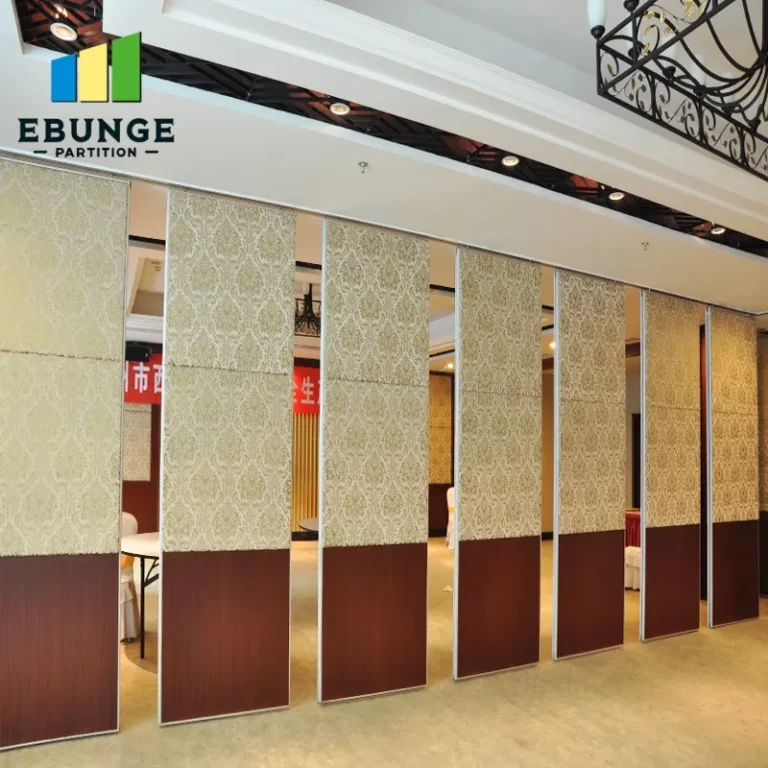
Finish Preference: Balancing Aesthetics and Durability
The finish of your office movable partition affects not only the look of the room but also its maintenance and durability. Common finishes include painted surfaces, laminate, veneer, or fabric-wrapped panels. For a government multipurpose room, you may want a finish that is easy to clean, resistant to scratches and dents, and compliant with fire safety regulations. The finish also impacts the acoustic performance; for instance, fabric panels can absorb sound, but they may require more maintenance.
In your RFQ, specify the desired finish material, color, and texture. If you have samples or a color palette, include them. Also, consider the long-term maintenance: will the finish fade over time? Can it be repaired easily if damaged? A factory-direct supplier can offer a range of finishes and advise you on the best options for your specific application.
Drawings and Documentation: The Backbone of Your RFQ
Detailed drawings are essential for accurate quotation and installation. They should include the partition layout, elevations, sections, and details of the track and seals. If you have a set of architectural drawings, provide them to the supplier. If not, the supplier may need to conduct a site survey, which can add time and cost. To avoid delays, ensure your drawings are up-to-date and reflect the actual site conditions.
In addition to drawings, your RFQ should include a specification sheet that lists all technical requirements, such as acoustic rating, fire rating, operation type, and warranty expectations. This documentation serves as the basis for the contract and helps avoid disputes later. A reputable supplier will review your drawings and provide a detailed proposal that includes shop drawings for your approval before manufacturing.
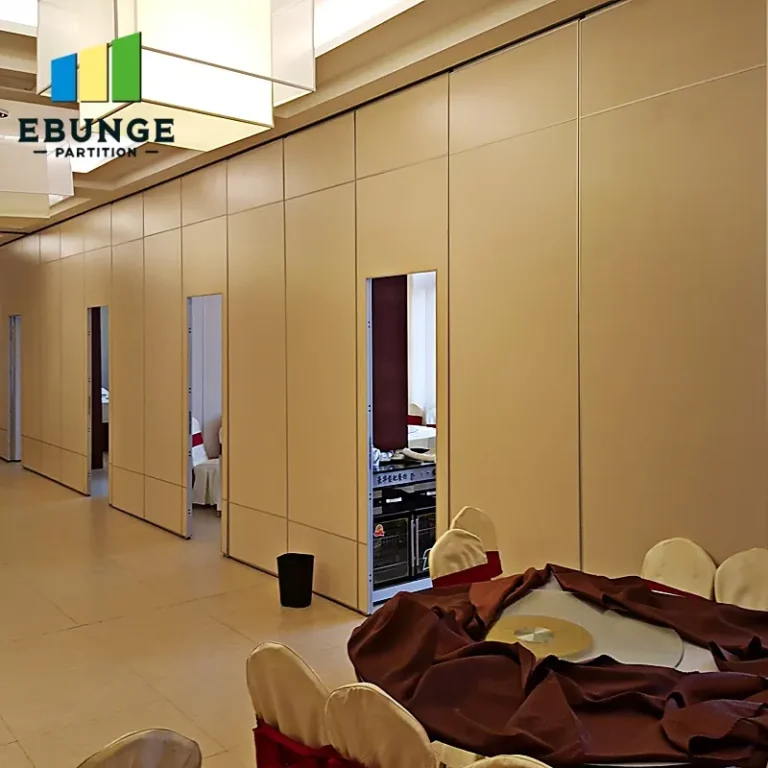
Factory Direct Support: Why It Matters in Overseas Procurement
When you buy directly from the factory, you gain several advantages: cost savings, direct communication, and access to engineering expertise. A factory-direct supplier can customize the partition to your exact specifications, provide accurate drawings, and offer installation guidance. This is particularly valuable for overseas projects, where time zone differences and language barriers can complicate communication. Working directly with the manufacturer reduces the risk of miscommunication and ensures that your requirements are clearly understood.
Moreover, factory-direct support often includes after-sales service, such as spare parts availability and maintenance advice. For a government multipurpose room, where downtime is not an option, having a reliable partner is crucial. When evaluating suppliers, ask about their factory-direct capabilities, lead times, and support structure. A supplier that offers comprehensive support is more likely to deliver a successful project.
Share the opening, drawings, finish direction, and privacy target for a project-specific review.
Evaluating Quotations: What to Look For
Once you receive quotations, compare them not only on price but also on scope and quality. Here is a checklist to help you evaluate proposals:
- Does the quotation include all components: panels, tracks, seals, hardware, and installation?
- Are the acoustic performance and other technical specifications clearly stated?
- What is the delivery timeline, and are there any dependencies?
- What warranty and after-sales support are offered?
- Are there any exclusions or assumptions that could lead to extra costs?
- Does the supplier provide references or case studies relevant to your project?
Use this checklist to identify any gaps or ambiguities in the proposals. If a quotation is vague, ask for clarification. A reliable supplier will be transparent and willing to provide additional details.
Common Pitfalls in Movable Partition Procurement
Even with a well-prepared RFQ, there are common pitfalls that can derail your project. One is underestimating the importance of installation. A partition is only as good as its installation; poor installation can compromise acoustic performance and durability. Ensure that the supplier provides installation guidance or that you hire a qualified installer. Another pitfall is overlooking the need for spare parts. In a government multipurpose room, a broken partition can disrupt operations, so it is wise to stock critical spares.
Additionally, be cautious of quotations that seem too good to be true. Low prices may indicate lower quality materials or hidden costs. Always verify the supplier’s credentials and request references. It is also important to consider the total cost of ownership, including maintenance and energy costs, not just the initial purchase price.
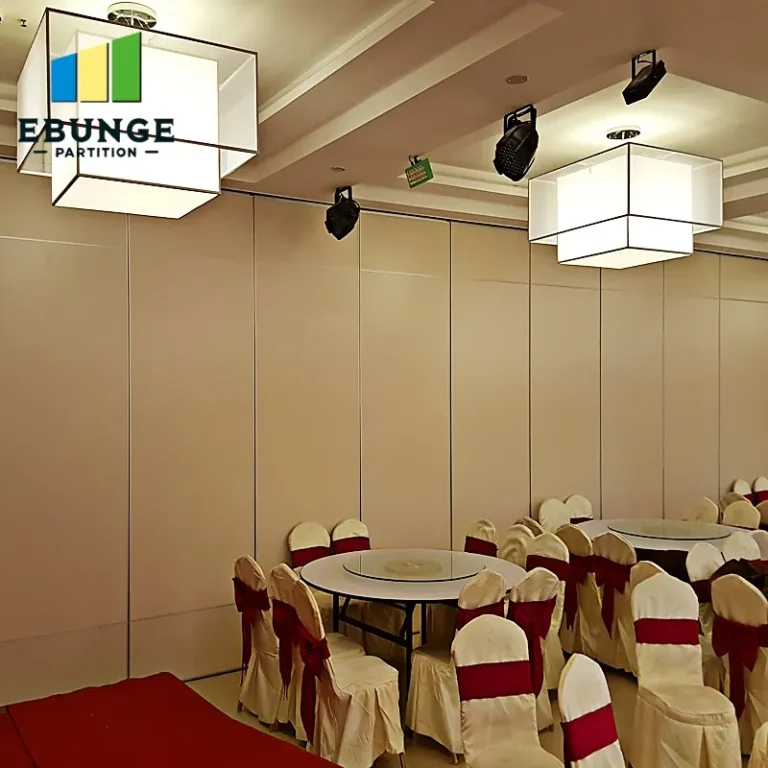
Conclusion: Your Next Steps
Procuring an office movable partition for a government multipurpose room requires careful planning and attention to detail. By preparing a comprehensive RFQ that includes your acoustic target, opening size, finish preference, and drawings, you set the stage for a successful project. Work with a factory-direct supplier that offers custom coordination and installation guidance to minimize risk. Remember to evaluate quotations thoroughly and avoid common pitfalls. With the right approach, you can achieve sound privacy and operational flexibility while staying within budget.
To further refine your procurement strategy, explore our resources on movable partition best practices and cost considerations. If you have specific questions, contact our team for expert advice.
Frequently Asked Questions
What is the typical STC rating for an office movable partition?
STC ratings for movable partitions typically range from 40 to 55, depending on the construction and sealing. For a government multipurpose room, an STC of 50 or higher is often recommended for confidential meetings. However, the actual rating should be confirmed with the manufacturer based on your specific requirements.
How do I determine the opening size for my partition?
Measure the width, height, and depth of the area where the partition will be installed. Also consider stacking space and any obstructions. It is best to use architectural drawings or a professional site survey to ensure accuracy.
Can I customize the finish of the partition?
Yes, most manufacturers offer a variety of finishes, including paint, laminate, veneer, and fabric. Your choice should balance aesthetics, durability, and maintenance requirements. Provide your preferred finish in the RFQ.
What information should I include in my RFQ?
Include your acoustic target, opening dimensions, finish preference, drawings, and any special requirements such as fire rating or operation type. The more detailed your RFQ, the more accurate the quotation.
Why is factory-direct support important?
Factory-direct support ensures direct communication with the manufacturer, which reduces the risk of miscommunication and allows for better customization. It also provides access to engineering expertise and after-sales service, which is crucial for overseas projects.
Quotation Readiness Checklist
| Item | Description | Status |
|---|---|---|
| Acoustic target | Specify STC rating or sound privacy level needed. | ☐ |
| Opening size | Provide width, height, depth, and stacking space. | ☐ |
| Finish preference | Choose material, color, and texture. | ☐ |
| Drawings | Share architectural or layout drawings. | ☐ |
| Special requirements | Note fire rating, operation type, etc. | ☐ |
| Supplier evaluation | Compare quotations using a checklist. | ☐ |
For more insights on movable partition walls, visit our product page.
Send the opening size and drawings to discuss a differentiated office movable partition solution.