
When outfitting a restaurant with private dining rooms, the choice of a restaurant sliding partition supplier can determine whether the space feels seamless or becomes a constant source of maintenance headaches. For buyers managing school-related projects or commercial fit-outs, the challenge is not just finding a product, but securing a partner who understands acoustic requirements, customization constraints, and overseas logistics. This guide walks you through the essential steps to evaluate suppliers, prepare your inquiry, and make a confident decision.
Direct answer: A reliable restaurant sliding partition supplier is one who provides clear technical documentation, supports custom dimensions and finishes, offers guidance on top-hung track systems (no floor rail), communicates honestly about lead times and shipping, and supplies installation drawings that match your project’s specific opening sizes and acoustic targets. Always request a detailed quotation with itemized costs and confirm the supplier’s after-sales support before committing.
Restaurant Sliding Partition Supplier: Why Supplier Reliability Matters More Than the Product Alone
In restaurant environments, partitions are used daily, subject to frequent movement, occasional impacts, and constant cleaning. A movable partition wall that works well in a showroom may fail in a busy dining room if the supplier lacks experience with commercial applications. Reliability translates into consistent quality control, accurate lead times, and responsive communication—especially when you are coordinating with architects, contractors, and overseas shipping schedules.
For buyers managing school projects, there is often an additional layer of accountability. You need a supplier who can provide documentation for safety compliance, such as fire resistance and stability, without making unverified claims. Ask for test reports and certifications, but verify them independently if possible.
Need help turning the restaurant sliding partition supplier requirements into a practical project layout?
Understanding the Technical Core: Top-Hung Track Systems
Most modern operable wall systems for restaurants use a top-hung track system, where the weight of each panel is carried by overhead trolleys, and the floor remains clear of rails or guides. This design is ideal for private rooms because it eliminates trip hazards, simplifies floor cleaning, and allows for flexible space layouts.
When evaluating suppliers, ask specific questions about the track profile, trolley wheel material, and maximum panel weight. A reputable supplier will provide detailed drawings showing track dimensions, fixing points, and clearance requirements. If a supplier cannot explain how the top-hung system handles deflection or uneven ceilings, treat that as a red flag.
Customization: Beyond Standard Sizes
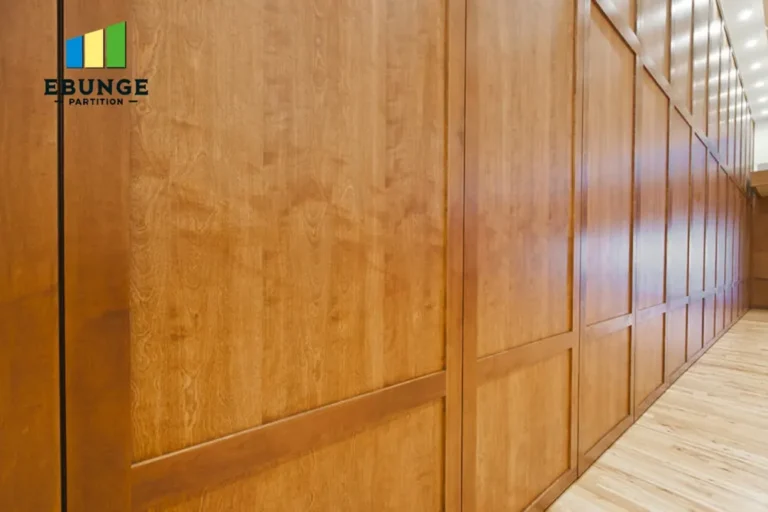
Restaurant private rooms often require custom dimensions—perhaps a ceiling height of 3.2 meters or a width that spans 8 meters with a curve. A supplier that only offers fixed sizes will force you to compromise your design. Look for a restaurant sliding partition supplier that offers custom movable wall fabrication, including bespoke panel widths, heights, and finishes.
Customization also extends to acoustic performance. The acoustic partition solutions you need depend on the ambient noise level, the partition’s location, and the desired privacy. A supplier should ask about your acoustic target (e.g., STC rating) and then recommend a panel construction that meets it—without overpromising. Always verify acoustic claims with third-party test data.
Preparing Your Inquiry: The Key to Accurate Quotations
To get a useful quotation, you must provide the supplier with specific details. A vague inquiry like “I need a partition for a restaurant” will result in a generic response that wastes time. Instead, prepare a technical brief that includes:
- Opening size: width, height, and depth of the opening to be filled.
- Number of panels and stacking space available (where panels park when open).
- Acoustic target: e.g., STC 40 or 45, based on your privacy requirements.
- Finish preference: laminate, veneer, paint, or other materials.
- Operation type: manual or motorized? This affects cost and complexity.
- Project location and site conditions (e.g., uneven floor, ceiling type).
- Delivery timeline and any special logistics needs (e.g., crane access).
Sharing this information upfront signals that you are a serious buyer and enables the supplier to provide a meaningful quotation. It also helps you compare offers on an apples-to-apples basis.
Evaluating Acoustic Performance Claims
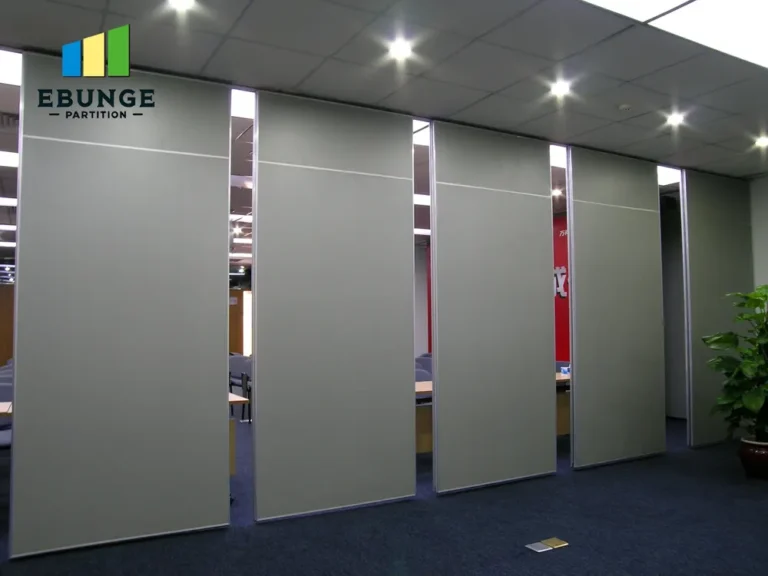
Acoustic insulation is critical in a restaurant private room partition wall. However, many suppliers quote STC ratings without explaining the test conditions. A rating of STC 45 in a laboratory may not translate to the same performance in your installation due to flanking paths, gaps, or poor sealing.
Ask the supplier for the following:
- Test report from a recognized laboratory (e.g., ASTM E90 or ISO 10140).
- Details on perimeter seals: how many compression seals are used, and where.
- Installation requirements that affect acoustic performance, such as ceiling and floor tolerances.
If a supplier cannot provide test reports, ask for a reference project where acoustic performance was measured. Be cautious of suppliers who guarantee a specific STC without site-specific engineering.
Durability and Ease of Operation: The Daily User Experience
A partition that is difficult to slide or that jams after a few months will frustrate staff and guests. Evaluate the quality of the trolley system, the track material (usually aluminum), and the seals. Look for features like ball-bearing wheels, adjustable seals, and a smooth glide mechanism.
Ask about maintenance requirements. A top-hung system should require minimal upkeep—perhaps periodic cleaning of the track and adjustment of seals. A supplier that provides a maintenance manual and clear instructions is preferable.
Also consider the ease of operation for your specific staff. If the partition is heavy, a motorized system might be worth the investment. But motorization adds complexity and cost, so weigh the trade-offs.
Overseas Delivery and Installation Support
If you are sourcing from overseas, logistics are a major concern. Ask the supplier about their export experience, packaging methods, and Incoterms. A reliable supplier will provide a clear shipping schedule and documentation for customs clearance.
Installation is another critical aspect. Some suppliers offer installation guidance via drawings and video calls, while others may send a technician (at extra cost). For a restaurant project, you may have local contractors who can install, but they need precise instructions. Ensure the supplier provides detailed installation drawings and a clear sequence of steps.
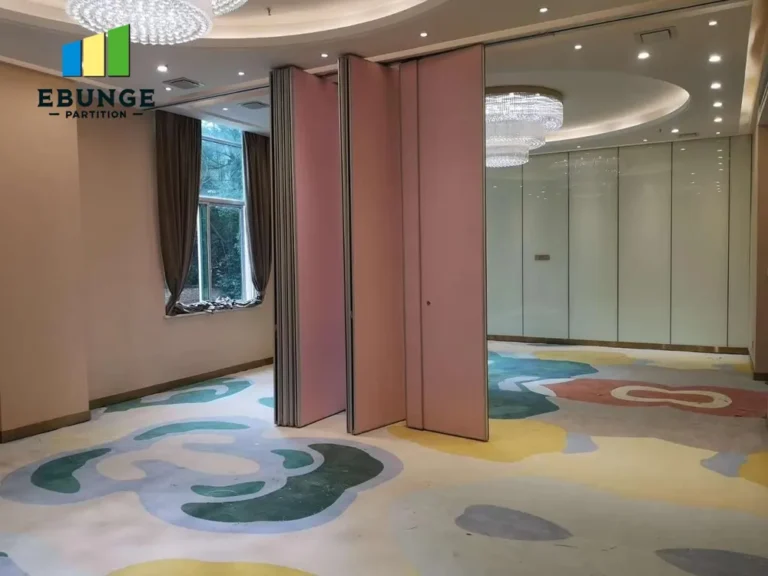
Share the opening, drawings, finish direction, and privacy target for a project-specific review.
Cost-Effectiveness: Not Just the Lowest Price
Cost-effectiveness means getting the right performance and reliability for your budget. A cheaper partition may require more frequent repairs or fail to meet acoustic requirements, leading to costly rework. Compare quotations based on the total cost of ownership: initial price, shipping, installation, maintenance, and lifespan.
Ask for a detailed breakdown of costs, including panels, track, seals, hardware, and any customization fees. This transparency helps you identify where the supplier may be cutting corners.
Safety Standards and Compliance
Restaurant partitions must comply with local building codes, especially regarding fire safety and egress. Ask the supplier about the materials used (e.g., fire-resistant cores) and whether they can provide compliance certificates. In many jurisdictions, you need documentation that the partition meets specific fire ratings.
Also consider structural safety: the partition must withstand impact and not topple. A reputable supplier will design the system to meet relevant standards and provide evidence.
After-Sales Support: What Happens if Something Breaks?
Even the best partitions can have issues, so after-sales support is vital. Ask about warranty terms, replacement parts availability, and response times. A supplier that offers a clear warranty and has a local distributor or service network is preferable.
For overseas buyers, clarify how spare parts will be shipped and whether the supplier offers remote troubleshooting. A good supplier will have a documented process for handling defects.
Practical Checklist for Supplier Evaluation
| Criteria | Questions to Ask | Red Flags |
|---|---|---|
| Track system | What type of track? Is it top-hung? What is the load capacity? | Floor rail required, vague on track specs |
| Acoustic performance | Can you provide test reports? What seals are used? | No test data, guarantees without conditions |
| Customization | Can you build to my dimensions? What finishes are available? | Only standard sizes, limited finish options |
| Delivery | What are your lead times? How do you handle shipping? | Unrealistic timelines, no export experience |
| After-sales | What warranty do you offer? How do you handle defects? | No warranty, no local support |
Conclusion: Making the Right Choice
Choosing a restaurant sliding partition supplier is a strategic decision that impacts your restaurant’s functionality and ambiance. By focusing on technical details, preparing a thorough inquiry, and evaluating suppliers against a clear checklist, you can avoid common pitfalls and secure a partition that meets your needs. Remember to request a detailed quotation, verify all claims, and prioritize communication and after-sales support. With the right supplier, your private dining rooms will offer flexibility, acoustic comfort, and lasting durability.
Frequently Asked Questions
What is a typical lead time for a custom restaurant partition?
Lead times vary based on complexity and supplier capacity. Typically, custom movable partitions take 4-8 weeks from drawing approval to shipment. Always confirm the lead time in writing and factor in shipping time.
Can a top-hung partition be installed on an existing ceiling?
Yes, but the ceiling structure must support the partition’s weight and dynamic loads. A supplier should assess the ceiling and recommend reinforcement if needed. Provide ceiling details in your inquiry.
How do I know if an STC rating is reliable?
Look for ratings from accredited labs like NVLAP or similar. Ask for the test report and verify that the test conditions match your installation (e.g., partition height, perimeter sealing).
What finishes are available for restaurant partitions?
Common finishes include laminate, wood veneer, paint, and metal. Some suppliers offer custom color matching. Discuss your design requirements with the supplier to ensure they can achieve the aesthetic you want.
Do you provide installation drawings?
Most serious suppliers provide detailed installation drawings, including track layout, panel dimensions, and fixing details. This is essential for your contractor. Confirm this before ordering.
For more insights on movable partition walls and operable wall systems, explore our blog or view our movable partition wall solutions. If you are ready to discuss your project, contact our team for personalized guidance.
For this buyer review, restaurant sliding partition supplier should be checked against the confirmed opening, drawings, operating plan, and project specification.
Send the opening size and drawings to discuss a differentiated restaurant sliding partition supplier solution.