
Hotel ballrooms often need to change from one large event space into several smaller rooms for meetings, weddings, banquets, and conferences. Choosing the right movable partition wall is not only about appearance. It also depends on acoustic performance, panel structure, track design, stacking layout, and installation conditions.
A movable partition wall helps divide a hotel ballroom or banquet hall space into flexible rooms while improving sound privacy, daily operation, and project planning efficiency.
For most hotel ballrooms, the best movable partition wall should combine STC 45–55 acoustic performance, a heavy-duty top-hung track system, a suitable stacking layout, durable surface finishes, and professional installation support. The final choice depends on room height, ceiling structure, event type, design style, and budget.
At EBUNGE, we have more than 15 years of experience manufacturing movable partition wall systems for hotels, banquet halls, conference rooms, and commercial projects. This guide explains what hotel owners, contractors, designers, and project buyers should check before choosing a ballroom partition system.
What STC Rating Is Best for Hotel Ballroom Movable Walls?
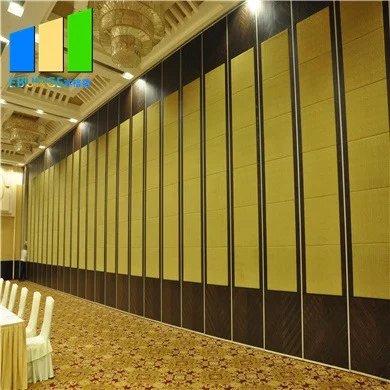
When dividing a hotel ballroom, acoustic privacy is one of the most important factors. For most ballroom projects, we usually recommend movable partition walls with an STC rating between 45 and 55 dB. The exact requirement depends on the room size, event type, music level, and whether two events may run at the same time.
For many hotel ballroom projects, STC 45–55 is a practical range. If the ballroom may host weddings, music events, or simultaneous meetings, STC 50 or above is usually the safer choice. Final acoustic performance also depends on seals, installation quality, ceiling details, floor level, and side wall conditions.
At EBUNGE, we improve acoustic performance through multi-layer panel construction, high-density mineral wool, internal steel reinforcement, and mechanical top and bottom pressure seals. However, STC should not be treated as the only factor. A high-STC panel will not perform well if the track, floor seal, side seal, or ceiling connection is not properly installed.
| Series | Panel Thickness | Max Height | Acoustic Rating | Ideal Application |
|---|---|---|---|---|
| Ultra-High Series | 125mm | Up to 17.0m | STC 50–55 | Convention centers, large halls |
| Series 100 | 100mm | Up to 12.0m | STC 45–53 | Hotel ballrooms, banquet halls |
| Series 85 | 85mm | Up to 6.0m | STC 38–50 | Meeting rooms, function halls |
| Series 65 | 65mm | Up to 3.5m | STC 32–40 | Boardrooms, classrooms |
What Track System Is Suitable for Hotel Ballroom Partitions?
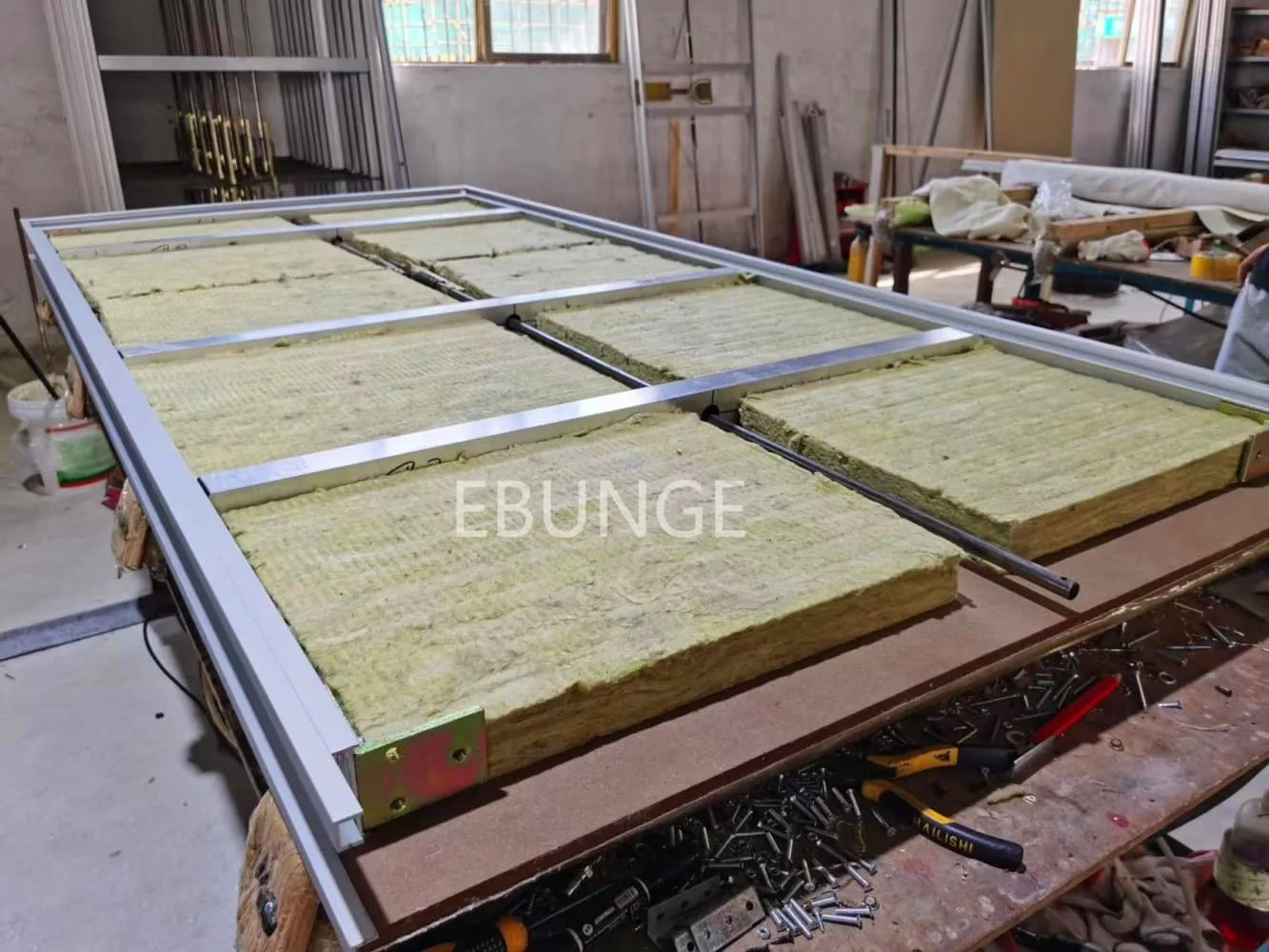
For most hotel ballroom projects, a top-hung system is usually preferred because it keeps the floor clear, avoids floor track maintenance, and allows flexible banquet or conference layouts. It also reduces trip hazards and avoids dust or debris problems that may occur around floor tracks.
The track system is one of the most important parts of a movable partition wall. For hotel ballroom projects, the track must be selected according to panel weight, room height, turning direction, and stacking layout. A properly designed track and roller system helps large panels move smoothly and reduces long-term maintenance problems.
We use high-strength anodized aluminum tracks, selected according to panel height, panel weight, stacking layout, and project requirements. Compared with untreated steel, anodized aluminum offers better corrosion resistance and smooth operation for many interior movable wall projects.
| System Type | Typical Use | Recommended Panel Size | Notes |
|---|---|---|---|
| Type 65 | Small meeting rooms | Low to medium height panels | Suitable for light commercial use |
| Type 85 | Function halls and meeting rooms | Medium-height panels | Balanced cost and performance |
| Type 100 | Hotel ballrooms and banquet halls | Large and heavy panels | Recommended for frequent commercial use |
| Ultra-High System | Large halls and high spaces | Customized high panels | Requires special structural checking |
What Is Inside a High-Performance Acoustic Partition Panel?
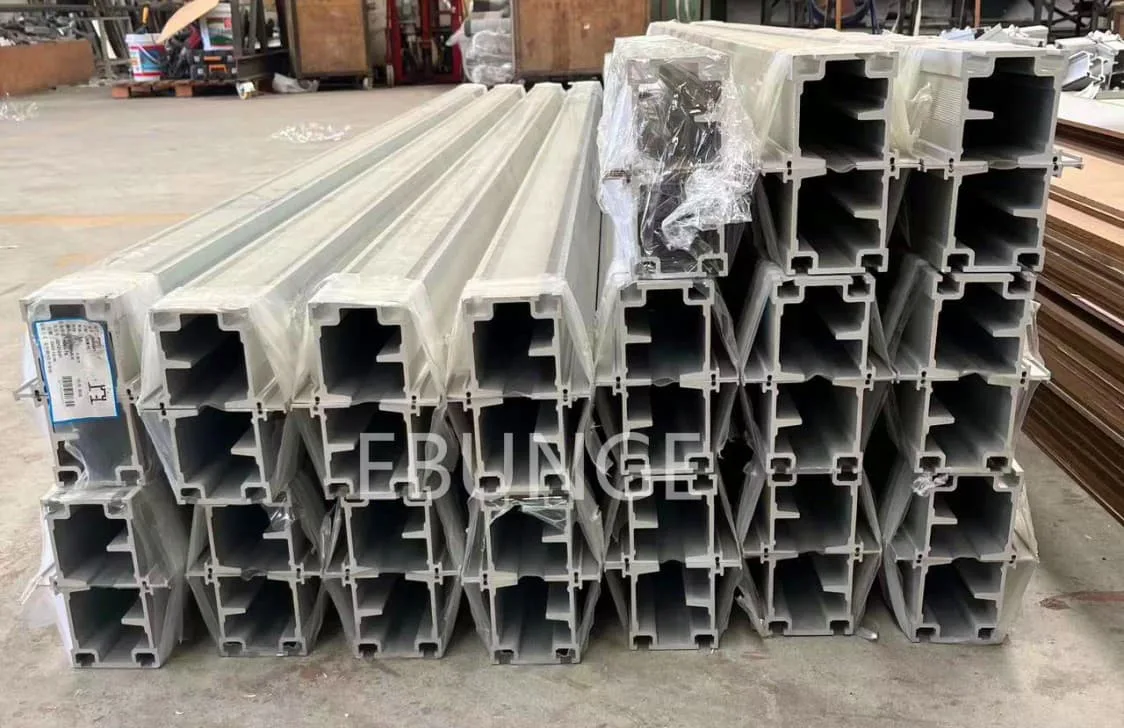
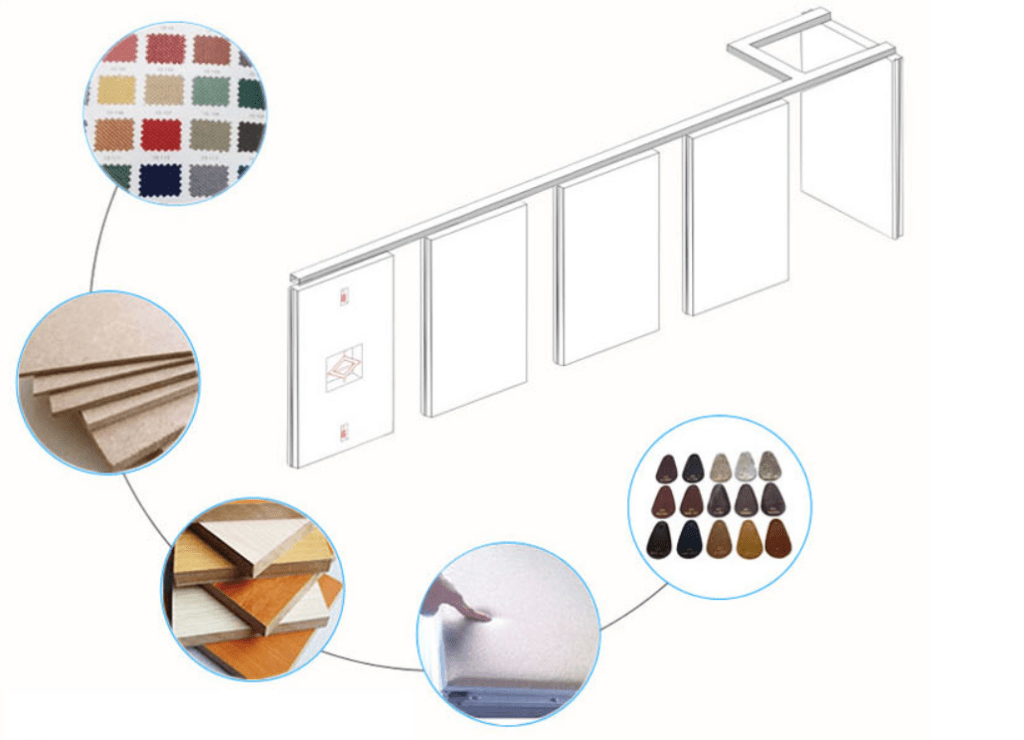
A high-performance acoustic movable partition panel typically includes a high-density mineral wool core, internal steel or aluminum reinforcement, decorative surface boards, and mechanical top and bottom pressure seals. Each layer contributes to sound reduction and long-term structural stability.
At EBUNGE, we improve acoustic performance through multi-layer panel construction. A typical acoustic panel includes high-density rock wool, internal steel reinforcement, decorative surface boards, and mechanical top and bottom pressure seals. These seals are operated by a handle and help reduce sound leakage at the floor and ceiling junctions.
| Finish Type | Appearance | Maintenance | Acoustic Benefit | Best Use |
|---|---|---|---|---|
| Melamine | Modern and clean | Very easy | Standard | Budget hotel and back-of-house areas |
| Fabric | Warm and elegant | Moderate | High | Ballrooms, banquet halls, meeting rooms |
| Leather / PU | Luxury and soft | Easy | Medium | VIP rooms and premium hotel interiors |
| Wood Veneer | Classic and formal | Careful cleaning needed | Low to medium | Luxury hotels and formal halls |
| Acoustic Board | Functional and professional | Easy | Very high | Conference rooms and training rooms |
Which Stacking Layout Works Best for Hotel Ballrooms?
An efficient stacking layout maximizes usable floor space and maintains the ballroom’s visual appeal. The right layout depends on the available wall space, room shape, column positions, and whether a hidden storage pocket is required.
As a manufacturer, we work with architects and contractors to design stacking areas suited to each project. In luxury hotels, storage pockets are usually hidden behind decorative doors, making the partition system nearly hidden from view when fully opened. This helps maintain the visual quality of the ballroom interior.
How Should Hotels Maintain Movable Partition Walls?
A regular maintenance schedule helps extend the service life of movable partition walls and ensures stable acoustic performance. Hotels should follow a simple routine that does not require specialist equipment for most tasks.
- After each event: Wipe panel surfaces with approved cleaning products suitable for the selected finish.
- Monthly: Check whether panels move smoothly and whether the top and bottom seals operate normally.
- Quarterly: Clean visible dust around the track area and stacking pocket.
- Every 6 months: Inspect top seals, bottom seals, side seals, and panel alignment.
- Annually: Ask trained maintenance staff or the supplier to check rollers, suspension parts, and track connections.
FAQ About Hotel Ballroom Movable Partition Walls
What STC rating is recommended for hotel ballroom movable walls?
For many hotel ballroom projects, STC 45–55 is commonly recommended. If the ballroom may host weddings, music events, or simultaneous meetings, STC 50 or above is usually a safer choice. Final performance also depends on installation quality, floor level, side seals, and ceiling details.
Do hotel ballroom movable partitions need a floor track?
Most hotel ballroom movable partition walls use a top-hung system without a floor track. This keeps the floor clear, safer for guests, and easier to use for banquet and event layouts.
How long does installation typically take?
Installation time depends on opening size, panel quantity, track layout, ceiling structure, and site conditions. Small and medium projects may take several days, while large or high ballroom partitions may require a longer installation period.
Can hotel ballroom movable partitions be automated?
Semi-automatic or motorized options can be provided for selected projects. However, manual systems are still widely used in hotel ballrooms because they are stable, cost-effective, and easier to maintain. The best option depends on panel size, budget, and operation frequency.
Are EBUNGE movable partition walls fire-rated?
Fire-rated or fire-resistant surface materials can be selected according to project requirements. If your project has a specific fire standard, please send us the required testing standard so we can check the suitable material and documentation.
What information should I provide before requesting a quotation?
Please provide the opening width, opening height, ceiling or beam structure, required STC rating, surface finish, stacking direction, project location, and drawings or site photos if available.
Can the finish match the hotel interior design?
Yes. Common finishes include fabric, leather, wood veneer, melamine, HPL, acoustic board, and other customized decorative surfaces. The final finish can be selected according to the hotel design style.
What Information Is Needed for a Custom Quotation?
To help our engineers recommend the right movable partition wall system, please send us the following project information:
| Information Needed | What to Provide | Why It Matters |
|---|---|---|
| Opening Size | Width and clear height of the opening | Determines panel quantity, panel width, and track length |
| Ceiling Structure | Concrete slab, steel beam, wood beam, or false ceiling | Confirms whether a top-hung system can be installed safely |
| Required STC Rating | STC 45, STC 50, STC 55, or project requirement | Helps choose panel thickness and acoustic structure |
| Surface Finish | Fabric, leather, veneer, melamine, HPL, or custom finish | Affects appearance, cost, and lead time |
| Stacking Direction | Left, right, both sides, pocket storage, or remote stacking | Determines track layout and parking area |
| Project Location | Country, city, and project address if available | Helps estimate shipping and installation support |
| Drawings or Photos | CAD drawings, floor plan, ceiling plan, or site photos | Allows engineers to check details faster |
Need a Hotel Ballroom Movable Partition Wall Solution?
Send us your opening size, ceiling structure, required STC rating, surface finish, stacking direction, and project location. EBUNGE engineers can help check the panel quantity, track layout, acoustic structure, storage pocket, and quotation.