
When planning a hotel ballroom, the hotel partition wall is not just a space divider; it is a critical investment that affects guest experience, operational flexibility, and long-term maintenance costs. For builders and project managers, the decision involves balancing acoustic performance, fire safety, durability, and budget—all while ensuring minimal disruption to hotel operations. This buying guide focuses on quotation readiness and project decision risk, helping you ask the right questions and avoid costly mistakes.
Direct answer: To choose the right hotel partition wall for your ballroom, you must first define the opening size (width and height), acoustic target (e.g., STC rating), finish preference, and provide detailed drawings to manufacturers. Work with a factory-direct supplier that offers custom movable partition walls, top-hung track systems without floor rails, and comprehensive installation guidance. This approach ensures accurate quotations, compliance with fire safety codes, and a solution tailored to your project’s specific needs.
Hotel Partition Wall: 1. Why the Track System Matters More Than the Panel
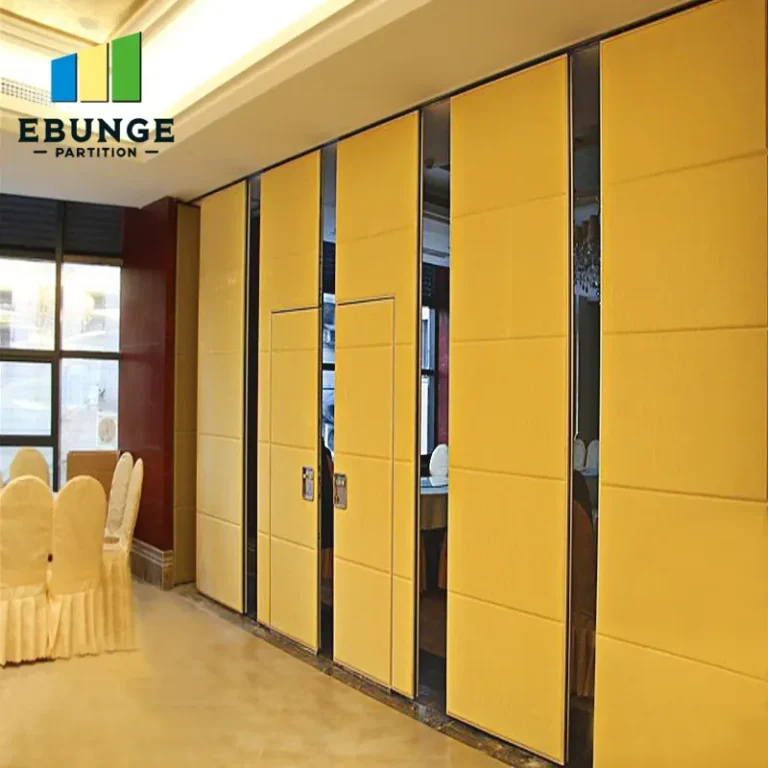
In high movable partition walls (typically over 6 meters in height), the track system is the backbone. A poorly designed track can lead to sagging, difficult operation, and premature wear. For hotel ballrooms, where partitions are frequently moved, the track must be robust and reliable. Top-hung systems, where the weight is supported from above and no floor rail is needed, are preferred because they eliminate trip hazards and allow for seamless flooring. When requesting quotations, specify the track type and ask about its load capacity and durability.
Many builders overlook the importance of the track until it fails. To mitigate risk, ask the manufacturer for detailed specifications on the track profile, material thickness, and the number of hangers per panel. A reputable operable wall manufacturer will provide this information without hesitation.
Need help turning the hotel partition wall requirements into a practical project layout?
2. Acoustic Performance: Setting Realistic Targets
Ballrooms often host events with different acoustic needs—from conferences to weddings. The partition wall must provide adequate sound insulation to prevent disturbance between divided spaces. Acoustic performance is measured by Sound Transmission Class (STC) or Rw ratings. However, the actual performance depends on the entire system, including seals, gaps, and flanking paths. When comparing quotes, ensure that the acoustic target is clearly stated, and ask for test reports from certified labs. Be cautious of manufacturers who promise high STC ratings without supporting documentation.
For a ballroom, a common target is STC 50 or higher, but this may vary based on local building codes and the specific use case. Discuss your requirements with the manufacturer and ask for advice on achieving your target without overspending.
3. Fire Safety Compliance: Non-Negotiable
Fire safety is a critical concern in public buildings. The partition wall must comply with local fire codes, including fire resistance ratings (e.g., 1-hour or 2-hour fire rating). When evaluating products, ask for fire test certificates and ensure they match the exact configuration you intend to install. The track system and seals also play a role in fire containment. A factory-direct supplier can provide guidance on compliance and help you navigate local regulations.
During the quotation process, include fire safety requirements in your specifications. This will help you compare quotes accurately and avoid surprises during inspections.
4. Durability and Warranty: What to Look For
Ballroom partitions are used daily, so durability is paramount. Look for materials that resist scratches, dents, and moisture. The track system should have a corrosion-resistant finish and high-quality bearings. Warranty is another indicator of quality. While we cannot state specific warranty periods, a longer warranty typically reflects the manufacturer’s confidence. Ask for warranty terms in writing and understand what is covered—parts, labor, or both.
Also, consider the availability of replacement parts. In the long run, having easy access to spare parts can save time and money. Inquire about the manufacturer’s policy on spare parts and lead times.
5. Installation Without Disrupting Hotel Operations
Hotels cannot afford long closures. Therefore, the installation process must be planned to minimize disruption. Top-hung systems often require less floor work, but may need ceiling reinforcement. Ask the manufacturer about installation time, whether they provide installation drawings, and if they offer supervision or full installation services. A factory-direct support team can help coordinate with your site team to ensure a smooth process.
During the quotation phase, request a detailed installation plan and timeline. This will help you assess the impact on hotel operations and plan accordingly.
6. Cost Comparison: Beyond the Initial Quote
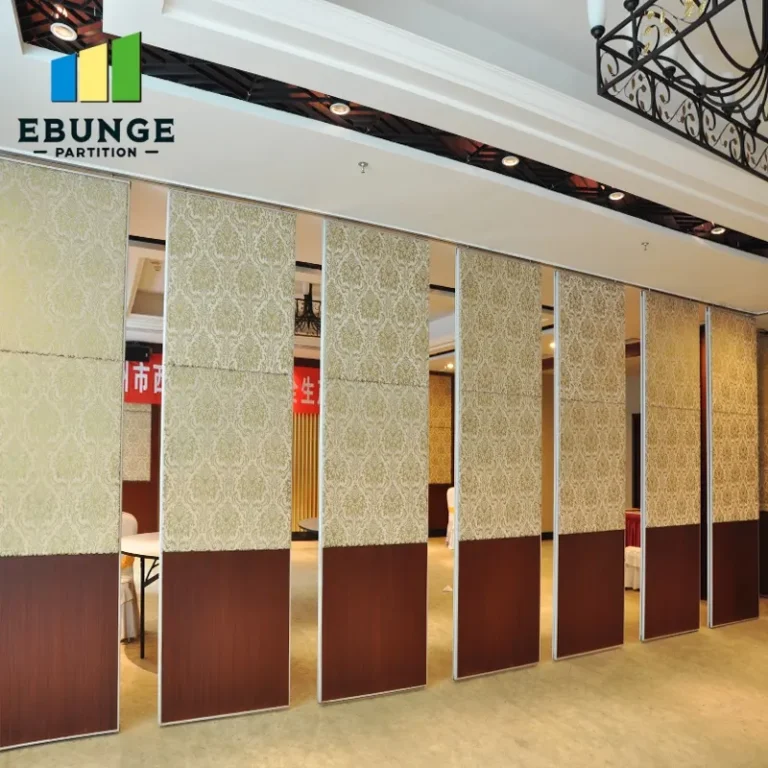
When comparing costs, look beyond the initial price. Consider lifecycle costs, including maintenance, energy efficiency (if the partition affects HVAC), and potential downtime. A cheaper system may require more frequent repairs, leading to higher total cost of ownership. Ask for a breakdown of costs: materials, hardware, engineering, delivery, and installation. This transparency helps in making an informed decision.
Also, be wary of hidden costs such as additional structural reinforcement or custom finishes. Ensure that your quotation includes all necessary components and services.
Share the opening, drawings, finish direction, and privacy target for a project-specific review.
7. The Importance of Detailed Drawings and Specifications
To get accurate quotations, you must provide detailed drawings and specifications. This includes the exact opening size, ceiling height, wall construction, and any special features like curved tracks or multiple stacking positions. The more detailed your request, the more accurate the quote. A factory-direct supplier will often assist in reviewing your drawings and suggest optimizations.
In your RFQ (Request for Quotation), include the following:
- Opening dimensions (width, height, depth)
- Acoustic target (STC or Rw)
- Fire resistance rating required
- Finish preferences (e.g., wood veneer, fabric, laminate)
- Number of panels and stacking configuration
- Operation method (manual or motorized)
- Any special requirements (e.g., curved track)
8. Factory-Direct Support: Why It Matters
Working directly with a manufacturer, rather than through a middleman, can reduce costs and improve communication. Factory-direct suppliers can provide custom solutions, technical support, and after-sales service. They are more likely to offer tailored advice and quicker response times. When evaluating suppliers, ask about their engineering capabilities and whether they can handle custom movable partition wall projects.
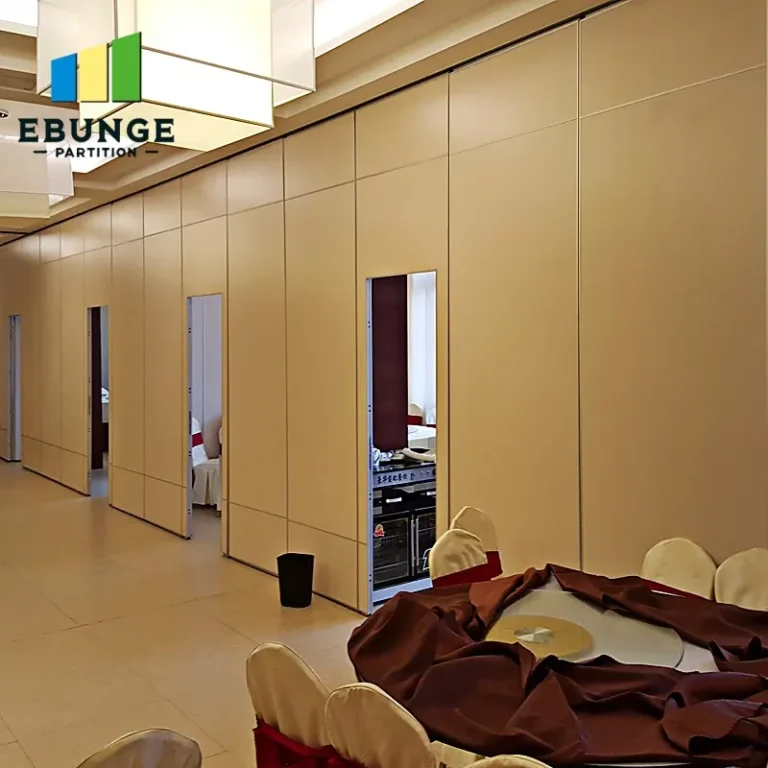
EBUNGE, for example, positions itself as a factory-direct provider, offering custom project coordination, finishes, drawings, and installation guidance. This approach ensures that your specific requirements are met without compromising quality.
9. Checklist for Quotation Readiness
Before you request quotes, ensure you have the following ready:
| Item | Details |
|---|---|
| Opening size | Width, height, and depth of each opening |
| Acoustic target | STC or Rw rating required |
| Fire rating | Local code requirements |
| Finish preference | Material, color, texture |
| Drawings | Architectural and structural drawings |
| Operation | Manual or motorized |
| Installation constraints | Access, working hours, etc. |
Having this information ready will speed up the quotation process and reduce the risk of misunderstandings.
10. Conclusion: Making an Informed Decision
Choosing the right hotel partition wall requires careful consideration of track systems, acoustic performance, fire safety, durability, and cost. By focusing on quotation readiness and understanding the key technical aspects, you can minimize project risks and ensure a successful installation. Remember to work with a manufacturer that offers factory-direct support and can provide detailed drawings and guidance. For more insights, explore our movable partition wall resources or read our blog articles on related topics. If you have specific questions, contact our team for expert advice.
Frequently Asked Questions
What is the typical warranty period for hotel partition walls?
Warranty periods vary by manufacturer and product. It’s essential to request the warranty terms in writing and understand what is covered. Look for warranties that cover both parts and labor, and ask about the duration.
Can the partition wall be installed without disrupting hotel operations?
Yes, with proper planning. Top-hung track systems minimize floor work, and installation can be scheduled during off-peak hours. Discuss the installation plan with the manufacturer to ensure minimal disruption.
Are replacement parts readily available?
It depends on the manufacturer. Factory-direct suppliers often have a more reliable supply of spare parts. Ask about the availability and lead times for replacement parts before purchasing.
How does the cost compare to competitors?
Costs vary based on size, materials, features, and manufacturer. To compare fairly, request itemized quotes from multiple suppliers and ensure they include the same specifications. Consider lifecycle costs, not just initial price.
What information do I need to provide for a quotation?
You should provide the opening size, acoustic target, fire rating, finish preferences, detailed drawings, and any special requirements. This helps the manufacturer give an accurate quote.
For more information on movable partition installation, visit our installation guide.
Send the opening size and drawings to discuss a differentiated hotel partition wall solution.