
When you are managing a training center project, the folding partition wall supplier selection for training centers is not a routine purchasing task. It is a coordination exercise that directly affects room flexibility, acoustic privacy, and long-term operational reliability. As a contractor, you are not just comparing product brochures; you are evaluating a partner who can translate your opening sizes, acoustic targets, and finish preferences into a functional operable wall system. This article focuses on the technical and commercial questions that matter during supplier evaluation, helping you prepare a clear inquiry and avoid costly misunderstandings.
Direct answer: For a training center, the most reliable folding partition wall supplier is one that offers a top-hung track system without floor rail, provides custom project coordination (including drawings and installation guidance), and clearly documents acoustic, fire, and warranty specifications in a formal quotation. The selection process should start with a detailed inquiry that includes opening dimensions, acoustic performance targets, finish materials, and project location, so the supplier can offer a tailored solution.
Folding Partition Wall Supplier Selection: Why Supplier Reliability Matters for Training Centers
Training centers have unique usage patterns: frequent room reconfiguration, varying group sizes, and a need for acoustic separation between simultaneous sessions. A movable partition wall must withstand repeated operation without compromising sound insulation or track alignment. Supplier reliability is not just about product quality; it is about consistency in manufacturing, clear communication during customization, and dependable delivery schedules. If a supplier fails on any of these, your project timeline and client satisfaction are at risk.
Need help turning the folding partition wall supplier selection requirements into a practical project layout?
Preparing Your Inquiry: Essential Technical Details
To get accurate quotations, you must provide the supplier with specific data. Incomplete inquiries lead to vague proposals and unexpected costs. At a minimum, include:
- Opening size: width, height, and number of openings.
- Acoustic target: the required sound insulation rating (e.g., Rw dB) based on your training room usage.
- Finish preference: material, color, and any special surface requirements.
- Project location: country and city, as this affects shipping and installation logistics.
- Drawings: architectural or floor plans showing partition locations and clearances.
This information allows the supplier to assess feasibility and offer a preliminary design. It also helps you compare offers on a like-for-like basis.
Evaluating the Track System: Top-Hung vs. Floor Rail
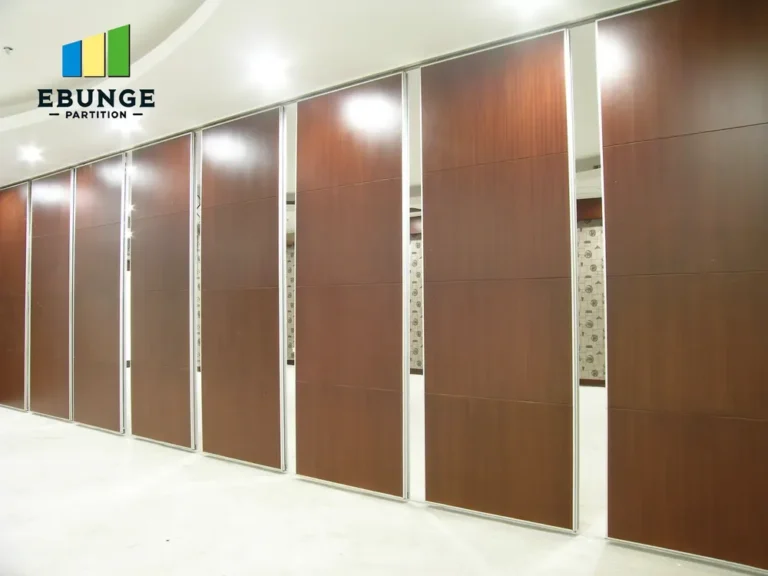
A critical differentiator is the track system. Top-hung systems, where the weight is carried by an overhead track and panels are guided at the floor without a rail, offer several advantages for training centers: no floor obstruction, easier cleaning, and reduced trip hazards. When evaluating suppliers, ask specifically about their top-hung track design, including the load capacity, the type of trolley or hanger, and the mechanism for vertical and horizontal adjustment. A robust track system ensures smooth operation and minimizes wear on moving parts.
Acoustic Performance: What to Look For
Acoustic insulation is a primary concern for training centers, especially when multiple sessions run concurrently. Suppliers should provide acoustic ratings based on standard tests (e.g., ISO 10140 or ASTM E90). However, remember that the final performance depends on the entire wall assembly, including perimeter seals, panel joints, and the ceiling and floor interfaces. Ask for detailed acoustic test reports and verify that the ratings are achievable in your specific installation conditions. A reputable supplier will guide you on achieving the target rating through proper installation.
Customization Support: Beyond Standard Panels
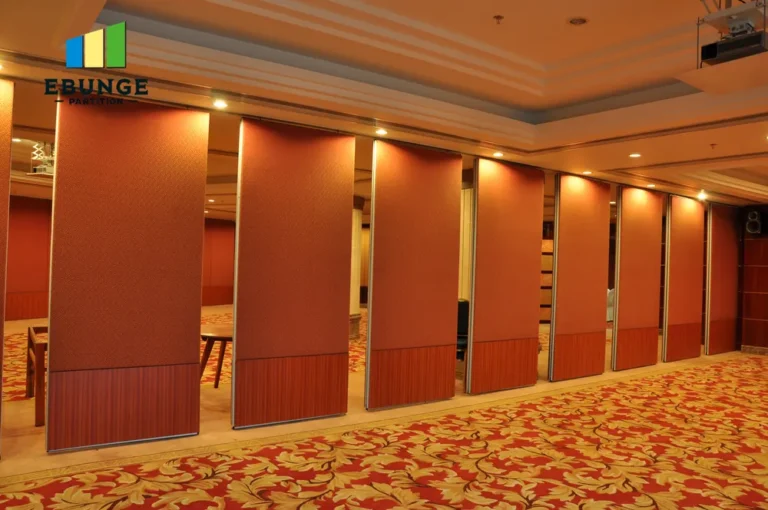
Training centers often require non-standard sizes, integrated doors, or specialized finishes. A supplier with strong customization support will offer:
- Engineering review of your drawings.
- Fabrication of panels to exact dimensions.
- Selection of finishes that match your interior design.
- Integration of features like whiteboards, projection screens, or pass-through doors.
During the inquiry, ask how the supplier handles custom requests, what additional lead time is involved, and whether they provide shop drawings for approval before production.
Quality and Durability of Moving Parts
The longevity of a movable wall depends on the quality of its moving components: trolleys, hinges, handles, and seals. Inquire about the materials used (e.g., steel vs. aluminum), the finish (e.g., galvanized or powder-coated), and the expected cycle life (e.g., number of operations). While exact numbers may vary, a supplier should be able to describe their quality control processes and any testing they perform on prototypes. Avoid suppliers who cannot provide specifics on durability.
Also, consider maintenance requirements. A top-hung system with accessible components will be easier to service. Ask about recommended maintenance schedules and the availability of spare parts.
Share the opening, drawings, finish direction, and privacy target for a project-specific review.
Fire Safety Compliance and Certifications
Training centers must comply with local fire safety regulations. Partition walls may need to meet specific fire resistance ratings (e.g., 30, 60, or 90 minutes) depending on the building codes. When selecting a supplier, request evidence of compliance, such as test certificates or declarations of performance. Ensure the supplier understands your local regulations and can provide documentation that will be accepted by local authorities. Do not assume that a product certified in one country is automatically compliant in another.
Warranty, Delivery, and Total Cost Considerations
Overseas delivery can introduce uncertainties. Clarify the following with each supplier:
- Warranty terms: what is covered, duration, and conditions.
- Delivery time: production lead time plus shipping duration.
- Shipping terms: Incoterms, packaging, and insurance.
- Total cost: include all logistics, customs, and potential import duties.
Ask for a detailed quotation that itemizes product cost, packaging, freight, and any additional fees. A transparent supplier will help you avoid surprises.
Practical Checklist for Supplier Comparison
| Criteria | Questions to Ask | Why It Matters |
|---|---|---|
| Track system | Is it top-hung? What is the load capacity? Adjustment mechanism? | Affects operation smoothness and floor layout. |
| Acoustic rating | Test standard? Achievable rating in my installation? | Ensures sound insulation meets training needs. |
| Customization | Can they adapt to my drawings? Integration options? | Ensures fit and functionality. |
| Quality of parts | Materials? Expected cycle life? QC processes? | Prevents premature failures. |
| Fire compliance | Certifications? Local code compliance? | Safety and legal approval. |
| Warranty | Coverage? Duration? Conditions? | Protects your investment. |
| Delivery | Lead time? Shipping terms? Total cost? | Avoids project delays and budget overruns. |
Use this checklist when comparing quotations from different suppliers.
Conclusion
Effective folding partition wall supplier selection for training centers requires a disciplined approach: prepare a detailed inquiry, evaluate technical specifications, and verify commercial terms. By focusing on the track system, acoustic performance, customization support, quality of moving parts, fire compliance, and logistics, you can make an informed decision that aligns with your project requirements. Remember to request all specifications in writing and review them carefully before committing. For further guidance on movable partition walls, explore our movable partition wall resources and blog articles. If you have specific questions, our contact page can connect you with a specialist. For more about our manufacturing standards, see our manufacturer category.
Frequently Asked Questions
What information should I include in a folding partition wall inquiry?
Include opening size (width, height, number), acoustic target (Rw dB), finish preference, project location, and any relevant drawings. This allows the supplier to provide a precise quotation.
How do I verify acoustic insulation ratings?
Ask for test reports from accredited labs. Confirm the test standard (e.g., ISO 10140) and ensure the rating is applicable to your installation conditions, including perimeter sealing.
What are the advantages of a top-hung track system without floor rail?
It provides a clear floor area, reduces trip hazards, and simplifies cleaning. It also allows for easier installation on existing floors without cutting tracks.
How can I ensure fire safety compliance for partitions in a training center?
Request fire resistance test certificates and check if they meet your local building codes. Provide the supplier with your specific compliance requirements.
What should I consider regarding overseas delivery?
Clarify production lead time, shipping method, Incoterms, packaging, and total cost including logistics and customs. Ask for a detailed breakdown to avoid unexpected charges.
For this buyer review, folding partition wall supplier selection should be checked against the confirmed opening, drawings, operating plan, and project specification.
Send the opening size and drawings to discuss a differentiated folding partition wall supplier selection solution.