
When you’re specifying a folding partition wall for a school hall, the cost factors can feel like a maze. You need a solution that fits the budget, meets acoustic targets, and stands up to daily use. But how do you compare quotes from different suppliers when each seems to quote differently? This article breaks down the folding partition wall cost factors for school halls, helping you prepare for quotations, avoid surprises, and make an informed decision. We’ll cover what drives costs, how to evaluate proposals, and what to ask before you commit.
Direct answer: Folding partition wall cost factors for school halls include panel size, acoustic performance, material finish, hardware (like top-hung track systems), installation complexity, and customization. To get accurate quotes, you’ll need to share your opening dimensions, drawings, acoustic target, finish preference, and project location. Costs vary widely based on these factors, and hidden fees can arise from site conditions or custom requirements, so always request a detailed breakdown.
Folding Partition Wall Cost Factors: 1. Why School Halls Have Unique Cost Drivers
School halls are high-traffic, multi-purpose spaces. They host assemblies, exams, sports, and performances, so the partition must be robust and safe. Unlike office partitions, school hall partitions often require higher acoustic insulation (to separate noisy activities) and impact resistance. These requirements directly influence material choice and engineering, which are major cost factors. Additionally, school projects often have strict timelines and compliance standards, affecting installation costs.
Understanding these drivers helps you anticipate budget range and justify expenses to decision-makers. For instance, a top-hung track system (without floor rail) is often preferred for school halls to avoid trip hazards and facilitate cleaning, but it requires a stronger overhead structure, adding to structural preparation costs.
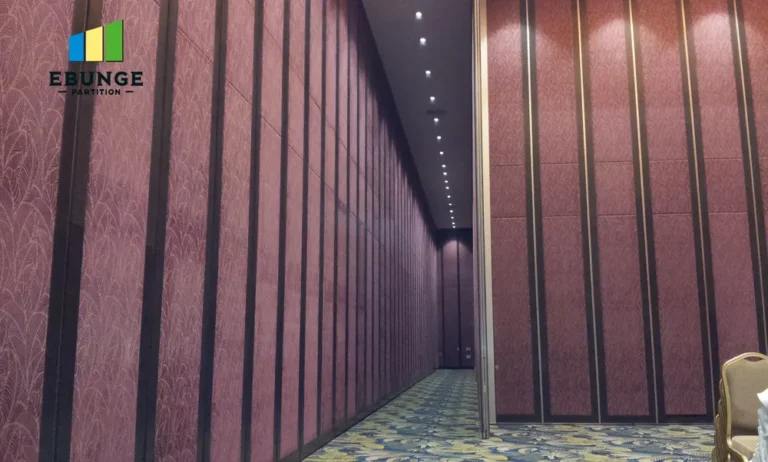
Need help turning the folding partition wall cost factors requirements into a practical project layout?
2. Key Cost Factors: From Panel to Installation
Let’s break down the primary elements that influence the price of a folding partition wall for a school hall:
2.1 Panel Size and Configuration
The total area and number of panels directly affect material and manufacturing costs. Larger spans require more panels, more hardware, and more complex engineering. Custom heights (e.g., for tall halls) may increase costs due to non-standard fabrication.
2.2 Acoustic Performance
Acoustic ratings (e.g., Rw values) are a major cost factor. Higher sound insulation requires thicker panels, additional seals, and specialized glazing or core materials. For school halls, you may need a specific acoustic target (e.g., Rw 40-50 dB) to meet building regulations, which will be reflected in the quote.
2.3 Material and Finish
Surfaces can be laminate, veneer, paint, or even tackable (for pinboards). Durable finishes like high-pressure laminate cost more but are easier to maintain in a school environment. Custom colors or branding can also increase costs.
2.4 Hardware and Track System
The track system (top-hung vs. floor-guided) and hardware quality impact both price and longevity. Top-hung systems, which are standard for school halls, require reinforced headers and precision installation, adding to labor costs.
2.5 Installation Complexity
Site conditions, such as uneven floors, limited access, or the need for structural modifications, can significantly affect installation time and cost. Always include a site survey in your budget planning.
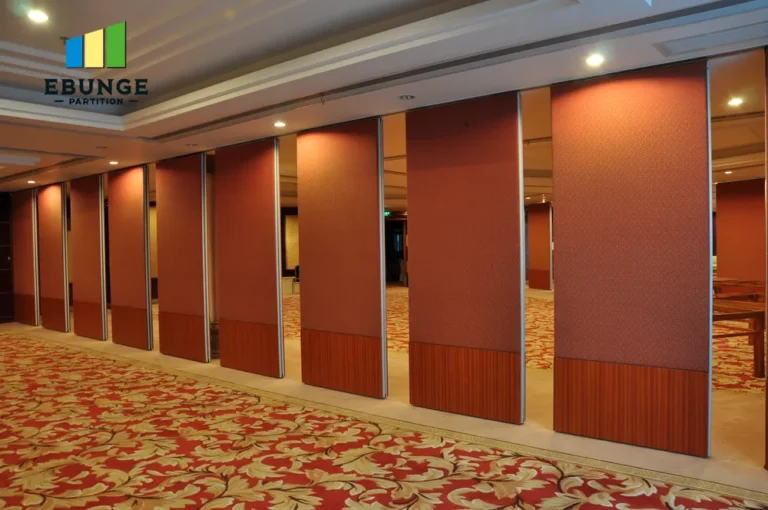
3. How to Compare Quotes from Different Suppliers
When you receive multiple quotes, they may not be directly comparable. Here’s what to look for:
| Comparison Point | Why It Matters | Questions to Ask |
|---|---|---|
| Scope of supply | Does the quote include track, panels, seals, and hardware? | What exactly is included in the price? |
| Installation | Are installation labor and site prep included? | Is installation included? What about removing old partitions? |
| Acoustic performance | Ensure the quoted acoustic rating meets your target. | What is the Rw value? How is it tested? |
| Finish options | Different finishes have different costs. | Are standard finishes included? What are upgrade costs? |
| Warranty and after-sales | Long-term reliability affects total cost of ownership. | What warranty is offered? Are spare parts available? |
Always ask for a detailed breakdown per panel or per linear meter. This helps you identify where costs differ and negotiate effectively.
4. Hidden Costs and How to Avoid Them
Hidden costs can derail your budget. Common ones include:
- Site preparation: Structural reinforcement, leveling, or electrical work for automation.
- Customizations: Non-standard sizes, special finishes, or integrated doors.
- Delivery and logistics: Especially if the site is remote or access is restricted.
- Taxes and permits: Depending on your location, these may not be in the initial quote.
- Maintenance: Some systems require more frequent servicing, increasing life-cycle costs.
To avoid surprises, request a comprehensive quotation that itemizes all potential costs. Also, consider the total cost of ownership, not just the upfront price.
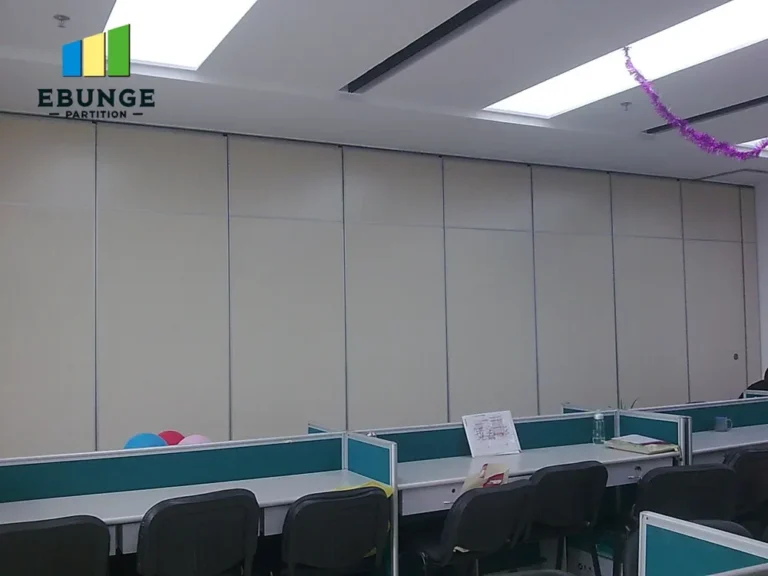
Share the opening, drawings, finish direction, and privacy target for a project-specific review.
5. The Role of Customization in Cost
Custom movable walls are often necessary for school halls due to unusual dimensions or specific design needs. While customization offers flexibility, it also adds cost. For example, a curved track or integrated whiteboard surfaces will increase engineering and manufacturing expenses. However, sometimes a standard solution can be adapted to save money. Discuss with your supplier whether a semi-custom approach could meet your needs without breaking the bank.
When requesting a quote, provide as much detail as possible: exact opening size, ceiling height, desired acoustic performance, finish preferences, and any special features. This ensures accurate pricing and reduces the risk of change orders later.
6. Return on Investment: Why Quality Matters
While initial costs are important, consider the long-term value. A well-built partition system can last decades with minimal maintenance, while a cheaper option may require frequent repairs or replacement. In a school environment, durability is crucial. Investing in a higher-quality system can reduce downtime and maintenance costs, improving your ROI.
Additionally, a partition that effectively separates spaces can increase the usability of the hall, allowing multiple activities to occur simultaneously. This can generate additional revenue or improve educational outcomes, indirectly justifying the investment.
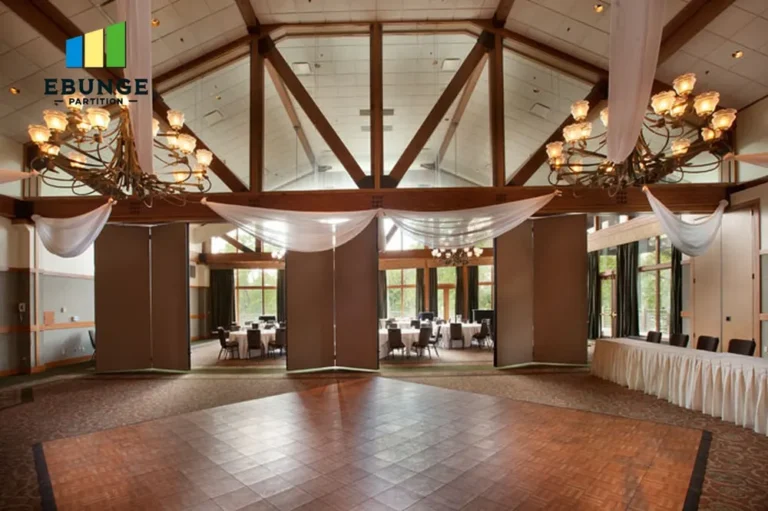
7. Practical Checklist for Budgeting and Quotation
Before you contact suppliers, prepare this checklist to ensure you get accurate quotes:
- Opening dimensions: Width, height, and depth of the opening.
- Architectural drawings: Provide floor plans and sections.
- Acoustic target: Specify the desired Rw rating or sound transmission class.
- Finish preference: Choose from standard options or request samples.
- Site access: Note any limitations for delivery and installation.
- Project timeline: When do you need the partition installed?
- Budget range: While you may not want to share, having a range helps suppliers tailor their proposal.
This preparation not only speeds up the quotation process but also ensures you receive comparable bids.
8. Frequently Asked Questions
Q1: What is the average cost per square meter for a folding partition wall?
There is no fixed average because costs vary significantly based on acoustic performance, materials, and installation complexity. For a school hall, you might see quotes ranging from $200 to $600 per square meter, but these figures are indicative only. Always get detailed quotes based on your specific requirements.
Q2: How can I reduce the cost of a folding partition wall for a school hall?
Consider standard sizes and finishes, limit custom features, and ensure the site is prepared for installation. Also, compare multiple quotes and negotiate on non-essential items. Sometimes, a simpler track system (e.g., manual instead of motorized) can reduce costs.
Q3: Are there hidden costs for installation?
Possible hidden costs include structural reinforcement, electrical work for automation, removal of existing partitions, and disposal fees. To avoid surprises, ask for a comprehensive installation quote that includes all labor and materials.
Q4: How does the acoustic rating affect the price?
Higher acoustic ratings require more materials and engineering, increasing the price. For school halls, a rating of Rw 40-50 dB is common, but if you need higher isolation, expect a premium. Always verify the rating with test certificates.
Q5: What should I include in my inquiry to get an accurate quote?
Provide your opening dimensions, architectural drawings, acoustic target, finish preference, and project location. This allows suppliers to assess technical requirements and give a precise quotation. For more guidance, you can contact us directly.
9. Conclusion: Making an Informed Decision
Understanding the folding partition wall cost factors for school halls is essential for a successful project. By preparing thoroughly, comparing quotes carefully, and considering long-term value, you can select a partition that meets your needs and budget. Remember to share all relevant details with suppliers to get accurate pricing. For more insights, explore our [movable partition wall resources](https://acoustic-partition.com/movable-partition-wall/) and [cost guides](https://acoustic-partition.com/category/Movable%20Partition%20Cost/). If you have specific questions, [contact our team](https://acoustic-partition.com/contact/) for personalized assistance.
For this buyer review, folding partition wall cost factors should be checked against the confirmed opening, drawings, operating plan, and project specification.
Send the opening size and drawings to discuss a differentiated folding partition wall cost factors solution.