
Selecting the right operable wall system for a community center is a complex decision that goes beyond aesthetics. Architects need a practical folding partition checklist to evaluate acoustic performance, ease of operation, and long-term durability, while also preparing for supplier inquiries and quotation readiness. This article serves as a comprehensive guide for architects and facility planners, focusing on the technical and procurement aspects of folding partition projects in community centers. By understanding the key decision factors and how to communicate them effectively, you can ensure your project meets both functional and budgetary requirements.
In short: A folding partition project checklist is a structured list of technical, operational, and procurement criteria used to evaluate and specify movable partition walls for community centers. It helps architects and buyers compare options based on acoustic insulation, durability, ease of use, compliance, and supplier reliability, ensuring the chosen system meets project needs and facilitates accurate quoting.
Why a Folding Partition Checklist Matters for Community Centers
Community centers are dynamic environments. They host everything from yoga classes and meetings to large events and performances. This versatility demands a partition system that can adapt quickly and reliably. A folding partition checklist helps you systematically assess whether a movable partition wall can deliver the required flexibility without compromising on sound control or safety. It also ensures you ask the right questions early, avoiding costly changes during installation.
Moreover, a checklist streamlines communication with suppliers. When you have a clear list of requirements, you can request precise quotes and compare proposals fairly. This is especially important when you need to justify investment to stakeholders or manage a tight budget.
Need help turning the folding partition checklist requirements into a practical project layout?
Acoustic Insulation: The Core of a Folding Partition Checklist
Acoustic performance is often the primary concern in community centers. A well-designed operable wall system should provide adequate sound insulation to keep activities private and noise levels acceptable. Your folding partition checklist should include:
- Target Sound Transmission Class (STC) rating: Determine the required STC based on the intended use of adjacent spaces. For example, a music room may need a higher STC than a meeting room.
- Sealing details: Check for perimeter seals and bottom seals that minimize sound leakage.
- Flanking paths: Consider how sound might travel through ceiling, floor, or adjacent walls.
Remember that the actual acoustic performance depends on the entire assembly, including the surrounding structure. Always ask suppliers for test data from accredited labs, but verify that the test conditions match your project’s construction.
Durability and Maintenance: Long-Term Considerations
Community centers experience heavy use, so durability is non-negotiable. Your checklist should address:
- Materials: Are the panels made of robust materials that can withstand frequent impacts?
- Hardware quality: Are the tracks, trolleys, and handles designed for high-cycle use?
- Finish resistance: Can the surface be easily cleaned and resist scratches?
- Maintenance requirements: What regular upkeep is needed? Are replacement parts readily available?
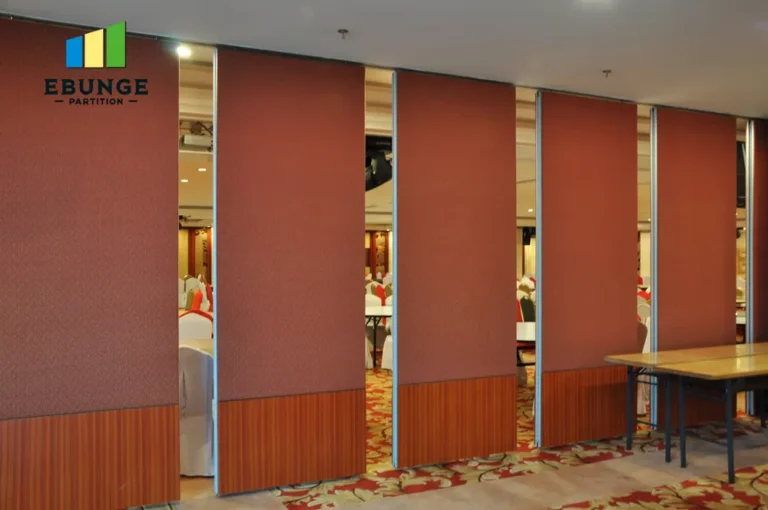
A durable system reduces lifecycle costs and minimizes disruption. For instance, a top-hung track system without floor rails often requires less maintenance and is easier to clean, as there are no floor channels to collect dirt.
Ease of Operation: Daily Usability
A partition that is difficult to operate will frustrate staff and may not be used as intended. Your checklist should include:
- Operation type: Manual, semi-automatic, or fully automatic? Consider the frequency of use and the physical capabilities of staff.
- Stacking space: How much space is needed to store the panels when open? Ensure the pocket or stacking area is adequate.
- Handling effort: Are the panels easy to move and lock into place?
For community centers, a manual system with a top-hung track is often sufficient and cost-effective. However, if the space is large, a motorized option might be worth considering for convenience.
Flexibility of Space: Adapting to Different Events
The whole point of a movable partition is to create flexible spaces. Your checklist should evaluate:
- Panel configurations: Can the system create multiple room sizes? For instance, can it divide a large hall into two, three, or more separate rooms?
- Integration with existing architecture: Does the system complement the building’s layout and aesthetic?
- Future adaptability: Can the system be reconfigured if the center’s needs change?
Think about how the space will be used on a daily basis. A checklist that covers these scenarios ensures you choose a system that truly maximizes the utility of your community center.
Compliance with Building Regulations
Safety and legal compliance are paramount. Your folding partition checklist must include:
- Fire safety: Ensure the partition meets local fire resistance ratings and smoke control requirements.
- Accessibility: Does the system comply with ADA or local accessibility standards? This may include clearances and operation ease.
- Building codes: Check for any relevant structural or safety codes that apply to movable partitions.
Suppliers should provide documentation proving compliance. Always verify that the system is certified for use in your region.
Cost Transparency and Budgeting
Budgeting for a folding partition involves more than just the initial quote. Your checklist should cover:
- Total cost of ownership: Include installation, maintenance, and potential repairs over the system’s lifespan.
- Quote breakdown: Request a detailed quote that lists each component, including panels, tracks, seals, and hardware.
- Hidden costs: Ask about delivery, installation, and any additional charges for custom finishes or structural modifications.
Be wary of quotes that seem too low—they may indicate substandard materials or hidden fees. A transparent supplier will help you understand the full cost picture.
Share the opening, drawings, finish direction, and privacy target for a project-specific review.
Installation Timeline and Project Coordination
Delays in installation can impact your project schedule. Your checklist should include:
- Lead time: How long does the supplier need to manufacture and deliver?
- Installation duration: How many days will installation take, and does it require special equipment?
- Coordination with other trades: Ensure that the partition installation is sequenced properly with electrical, HVAC, and finishing work.
A reliable supplier will provide a realistic timeline and work with your construction team to minimize disruption.
Supplier Reliability: Choosing a Trusted Partner
The quality of the supplier can make or break your project. Your checklist should evaluate:
- Experience: Does the supplier have experience with community center projects?
- References: Can they provide references from similar projects?
- Support: Do they offer design assistance, installation guidance, and after-sales service?
Consider working with a supplier that specializes in movable walls and offers custom solutions. For example, EBUNGE provides top-hung track systems without floor rails, which can be advantageous for spaces where floor tracks are inconvenient. They also offer custom project coordination, finishes, and installation guidance, ensuring your specific needs are met.
Preparing for Supplier Inquiries: Information to Have Ready
To get accurate quotes and proposals, you need to provide suppliers with detailed information. Your folding partition checklist should include a pre-inquiry document with:
- Opening size: The width and height of the opening to be divided.
- Drawings: Architectural or structural drawings showing the area.
- Acoustic target: The desired STC rating.
- Finish preference: Material, color, and texture options.
- Project location: This helps suppliers account for local codes and logistics.
Having this information ready speeds up the quotation process and ensures you receive comparable proposals. It also demonstrates that you are a serious buyer, which may lead to better service.
Practical Checklist for Folding Partition Projects
Here is a concise checklist you can use to evaluate folding partition systems for your community center:
| Category | Checklist Item |
|---|---|
| Acoustic | Required STC rating, sealing details, flanking paths |
| Durability | Material quality, hardware cycle life, finish resistance, maintenance needs |
| Operation | Type (manual/auto), stacking space, ease of handling |
| Flexibility | Configurations, integration with architecture, future adaptability |
| Compliance | Fire safety, accessibility, building codes |
| Cost | Total ownership, quote breakdown, hidden costs |
| Timeline | Lead time, installation duration, coordination |
| Supplier | Experience, references, support |
Conclusion: Making an Informed Decision
In conclusion, a well-structured folding partition checklist is essential for architects and buyers involved in community center projects. It helps you evaluate critical factors like acoustic performance, durability, ease of operation, compliance, and cost, ensuring you select a system that meets your needs and budget. By preparing detailed information for suppliers, you can streamline the quotation process and make confident decisions. Remember to verify all technical specifications with project documentation and consult with reputable suppliers to achieve the best outcome.
Frequently Asked Questions
What is a folding partition project checklist?
What are the key acoustic considerations for a community center partition?
How do I choose between manual and automatic operable walls?
What information should I provide to a supplier for an accurate quote?
How can I ensure the partition meets building regulations?
For more insights on movable partition walls, explore our movable partition wall solutions and blog articles. If you have a specific project, feel free to contact us for personalized assistance. You can also browse our operable wall system category for more resources.
Send the opening size and drawings to discuss a differentiated folding partition checklist solution.