
When planning a school hall renovation or new build, the folding partition procurement guide you follow can be the difference between a smooth project and costly delays. For hotel owners diversifying into education venues or managing multi-purpose spaces, understanding how to specify a movable partition wall for a school hall requires careful attention to acoustics, safety, and operational practicality. This guide walks you through the procurement process step by step, ensuring you ask the right questions, prepare accurate documentation, and select a system that meets your project’s unique demands.
Direct answer: A successful folding partition procurement guide for a school hall involves defining your acoustic target, measuring the opening accurately, choosing a top-hung track system for safety and flexibility, preparing detailed drawings and specifications, and requesting quotations with clear performance criteria. Prioritize systems that meet building codes, offer durable finishes, and include comprehensive after-sales support.
Folding Partition Procurement: Why School Halls Demand a Different Procurement Approach
School halls are high-traffic environments with unique acoustic needs. Unlike hotel ballrooms, they host assemblies, exams, sports, and performances, often simultaneously. The movable partition wall must not only divide space but also control noise to maintain concentration and safety. A folding partition procurement guide for schools must prioritize acoustic performance, durability against impacts, and ease of operation for staff and children. Additionally, compliance with educational building regulations is non-negotiable.
Start by defining the primary functions of the hall. Will it be used for exams requiring silence? Or for music practice needing sound isolation? This determines the acoustic rating you need. Remember, the guide is not just about choosing a product; it’s about aligning the system with your school’s operational workflow.
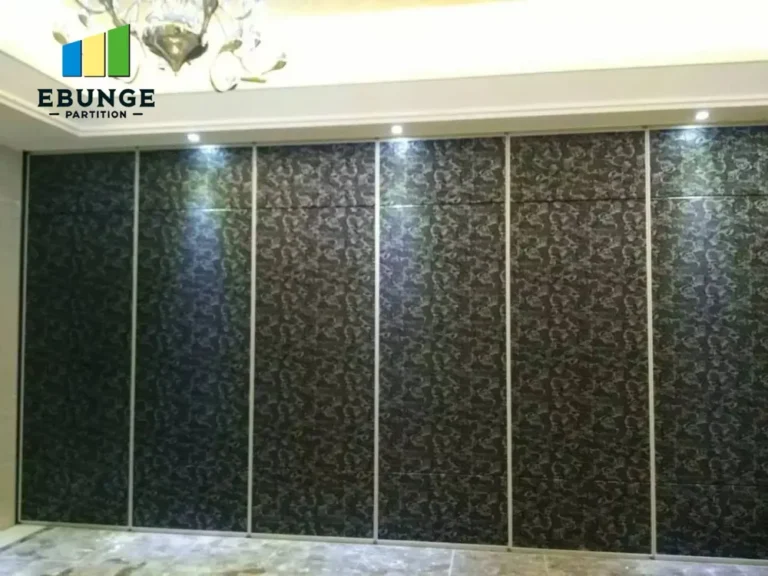
Need help turning the folding partition procurement requirements into a practical project layout?
Acoustic Performance: Setting Realistic Targets
Acoustic performance is often expressed as a Sound Transmission Class (STC) or Rw rating. For school halls, a rating of Rw 45-50 is common for general separation, but if music rooms or exam halls are involved, you may need higher. However, exact values must be confirmed from project specifications and acoustic reports. Do not rely on generic marketing numbers.
When requesting quotes, specify the target Rw value and the testing standard (e.g., EN ISO 10140-2). Ask for acoustic test reports from independent labs. Also consider flanking paths: sound can travel over the partition, through the ceiling plenum, or via gaps. A top-hung track system with perimeter seals helps mitigate these issues.
Safety and Durability in High-Traffic Areas
School halls see constant use by children, so safety is paramount. Look for partitions with pinch-proof designs, rounded edges, and soft-close mechanisms. The top-hung track system eliminates floor rails, reducing trip hazards and making cleaning easier. Ensure the partition can withstand impacts from trolleys, sports equipment, and enthusiastic students. Durable finishes, such as laminate or vinyl, resist scratches and are easy to maintain.
Ask about the panel construction and hardware quality. For high-traffic areas, a steel-reinforced frame and robust hinges are essential. Also, verify that the system meets local safety standards, such as BS 5234 in the UK or equivalent.
Top-Hung Track Systems: Why They Suit School Halls
A top-hung track system suspends the partition from an overhead rail, with no floor guide. This design offers several advantages for schools: it allows flexible space division, is easier to clean, and reduces the risk of damage to the floor. It also enables stacking of panels at one or both sides, maximizing open space when needed.
When procuring, consider the track’s load capacity and the quality of the trolleys. The system should operate smoothly with minimal effort, even with large panels. Ask for a demonstration or reference installations in similar educational settings. The track must be installed by professionals to ensure alignment and safety.
Preparing Your Quotation Request: What to Include
To get accurate quotes, you must provide detailed information. Include the opening size (width, height, and depth), ceiling and floor conditions, and the desired stacking configuration. Attach architectural drawings showing the hall layout and any obstacles like lighting or HVAC. Specify the acoustic target, finish preferences (e.g., write-on surfaces, colors), and any special requirements like pass doors or glazing.
Also, state the project timeline and installation constraints. This helps suppliers assess feasibility and provide realistic lead times. A well-prepared request reduces back-and-forth and ensures comparable quotes.
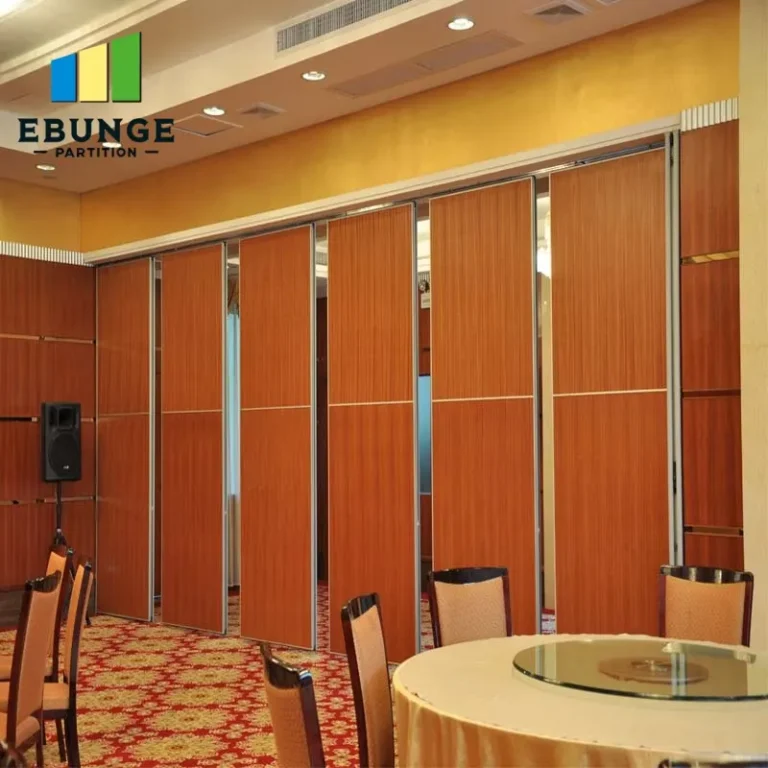
Evaluating Suppliers and After-Sales Support
Not all suppliers are equal. Look for manufacturers with experience in school projects and a track record of reliable after-sales service. Ask for references and visit completed installations if possible. Inquire about warranty terms, spare parts availability, and maintenance services. A supplier that offers installation guidance and technical support throughout the project lifecycle is invaluable.
During evaluation, consider the supplier’s responsiveness and willingness to customize. For school halls, you may need bespoke panel sizes or integrated whiteboards. Ensure the supplier can accommodate these without compromising performance.
Compliance and Building Codes
Every school hall must meet local building codes, including fire safety, accessibility, and structural requirements. The movable partition must not compromise these. Check that the partition’s fire rating aligns with the building’s fire compartmentation strategy. Ensure it can be integrated with fire alarm systems and emergency exit routes.
Also, consider accessibility: the partition should not create barriers for people with disabilities. Automatic or easy-to-operate systems can be beneficial. Your supplier should be able to provide documentation proving compliance, such as fire test certificates and CE marks.
Share the opening, drawings, finish direction, and privacy target for a project-specific review.
Installation Time and Project Coordination
Installation time affects your project schedule. Typically, a school hall partition can be installed in a few days, but this depends on complexity and site conditions. Discuss the installation process with the supplier, including any preparatory work required, like reinforcing the ceiling structure. Coordinate with other trades to avoid delays.
Ensure the supplier provides a detailed installation plan and a dedicated project manager. This ensures clear communication and timely completion. Also, plan for minimal disruption to school activities, possibly scheduling installation during holidays.
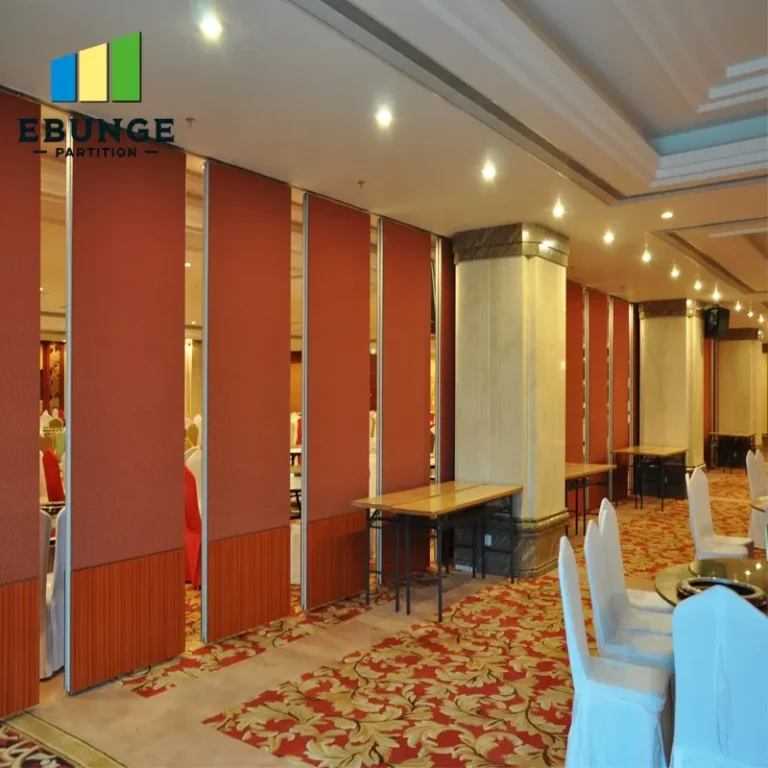
Budgeting for Your Movable Partition
Costs vary widely based on size, acoustic rating, finishes, and automation. A basic partition may cost less, but higher performance and customization increase the price. Obtain itemized quotes to understand what’s included: panels, track, seals, installation, and any extras like pass doors. Compare apples to apples by ensuring each quote includes the same specifications.
Consider the total cost of ownership: maintenance, repairs, and energy efficiency. A quality partition may have a higher upfront cost but lower long-term expenses. Also, factor in potential grants for educational improvements if applicable.
Practical Checklist for Procurement
Here’s a checklist to guide your procurement process:
- Define the hall’s primary uses and acoustic needs.
- Measure the opening accurately (width, height, depth).
- Determine stacking configuration and pass door requirements.
- Set a realistic budget, including installation and maintenance.
- Prepare a detailed specification document.
- Request quotes from at least three reputable suppliers.
- Evaluate suppliers based on experience, references, and support.
- Verify compliance with building codes and safety standards.
- Plan installation timeline and coordinate with other trades.
- Review warranty and after-sales terms before signing.
Comparison of Top-Hung vs. Floor-Guided Systems
| Feature | Top-Hung Track | Floor-Guided |
|---|---|---|
| Floor obstruction | None | Track on floor |
| Cleaning | Easy | Harder |
| Safety | No trip hazard | Potential trip hazard |
| Installation complexity | Requires strong ceiling | Simpler ceiling |
| Flexibility | High | Moderate |
| Cost | Typically higher | Lower |
Conclusion
Procuring a folding partition for a school hall requires careful planning and attention to detail. By following this folding partition procurement guide, you can ensure your movable partition wall meets acoustic, safety, and durability needs while staying within budget. Remember to gather accurate measurements, set clear specifications, and choose a supplier that offers robust after-sales support. For more insights, explore our Movable Partition Purchase Guide and blog for additional tips. If you’re ready to start your project, contact our team for personalized assistance.
Frequently Asked Questions
What acoustic rating do I need for a school hall?
The required Rw rating depends on the hall’s uses. For general separation, Rw 45-50 is common, but for music or exam rooms, you may need Rw 55 or higher. Confirm exact targets with an acoustic consultant.
How do I measure the opening for a movable partition?
Measure the width, height, and depth of the opening at multiple points. Account for any irregularities. Provide these dimensions plus drawings to the supplier for an accurate quote.
What safety features should I look for?
Look for pinch-proof panels, soft-close mechanisms, rounded edges, and a top-hung track to avoid floor obstacles. Ensure the system meets local safety standards for schools.
How long does installation take?
Installation typically takes 2-5 days, depending on the system size and site conditions. Coordinate with the supplier for a detailed schedule.
Can I customize the finish and colors?
Yes, many suppliers offer a range of laminates, vinyls, and paints. You can also opt for write-on surfaces or incorporate whiteboards. Confirm availability with your supplier.
Send the opening size and drawings to discuss a differentiated folding partition procurement solution.