
When planning a school hall that must adapt to assemblies, exams, performances, and sports, the folding partition procurement guide becomes essential. This guide helps you navigate the complexities of selecting a movable partition wall that meets acoustic, safety, and operational needs. Whether you are a facilities manager, architect, or procurement officer, understanding the key decision points before requesting quotes will save time, reduce costs, and ensure the final installation performs as expected. This article focuses on the design and planning aspects of folding partition procurement for school halls, answering common questions and preparing you for successful supplier engagement.
Direct answer: For a school hall, the ideal folding partition system is a top-hung track without a floor rail, offering flexibility and safety. Prioritize acoustic insulation, ease of operation, and customization to match your space. Prepare your opening size, drawings, acoustic target, finish preference, and project location before contacting suppliers to get accurate quotes and smooth coordination.
Why a Top-Hung Track System Is Preferred for School Halls
In school environments, safety and unobstructed floor space are paramount. A top-hung track system suspends the partition from overhead, eliminating the need for a floor rail. This design reduces trip hazards, allows for flexible floor layouts, and simplifies cleaning. Additionally, top-hung systems distribute the weight evenly, enabling larger panels and smoother operation. When evaluating folding partition procurement options, always consider the track system as a core component, as it impacts installation complexity and long-term durability.
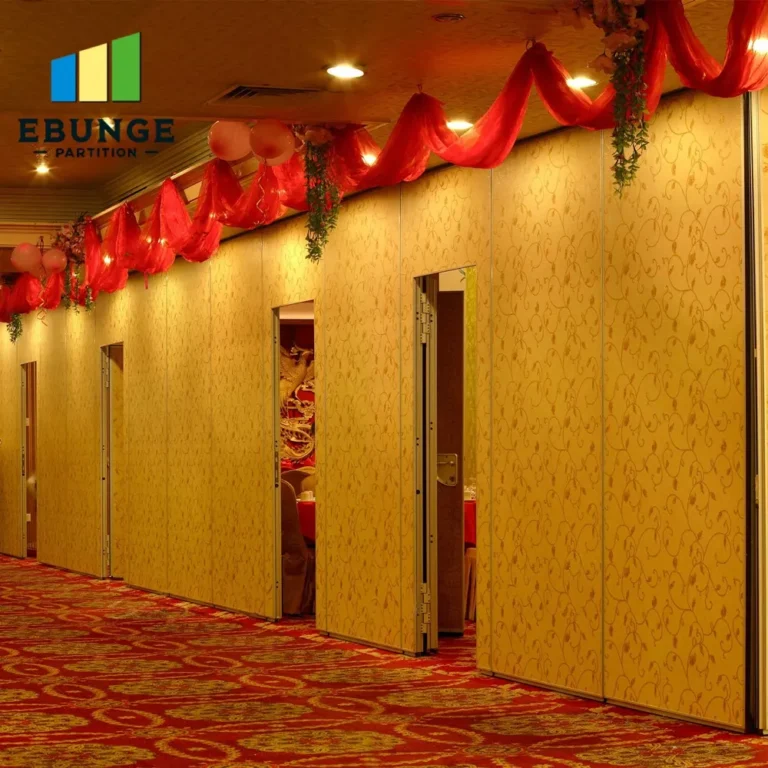
Need help turning the folding partition procurement requirements into a practical project layout?
Key Decision Factors for Folding Partition Procurement
Before diving into specifications, outline your project’s unique requirements. Each school hall has distinct dimensions, usage patterns, and acoustic needs. The following factors should guide your decision-making:
- Acoustic insulation rating (Rw): Determine the desired sound reduction between hall sections. For multipurpose use, an Rw of 45-50 dB is typical, but verify with an acoustic consultant.
- Operation and control: Manual or motorized? Consider ease of use for staff and safety for students.
- Panel stacking: How much space is available for the partition to stack when open? This affects the usable area.
- Finish options: Choose surfaces that are durable, easy to clean, and match the hall’s aesthetics.
How to Prepare a Quotation-Ready Specification
To receive accurate quotes, you must provide suppliers with comprehensive information. A well-prepared specification not only speeds up the quotation process but also ensures that all bids are comparable. Include the following in your request:
- Opening size: Width, height, and depth of the opening to be divided.
- Architectural drawings: Floor plans, elevations, and sections showing the partition location.
- Acoustic target: Specify the required Rw value based on your acoustic study.
- Finish preference: Color, material, and texture samples if available.
- Project location: This affects delivery, installation logistics, and compliance with local codes.
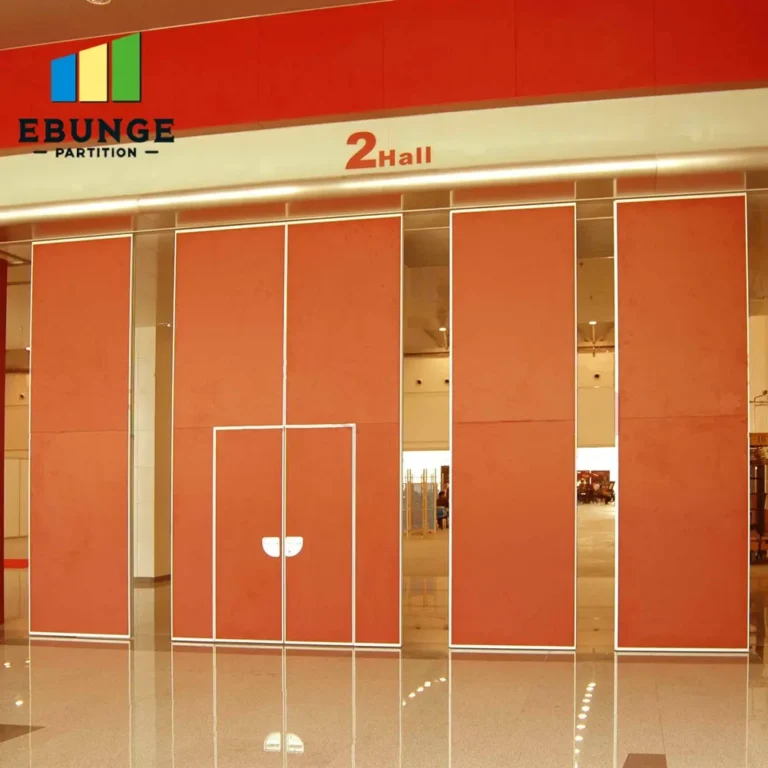
Understanding Acoustic Performance and Testing
Acoustic performance is often the most critical requirement for a school hall. However, it is also the most misunderstood. Acoustic ratings are determined through laboratory tests, but real-world performance can vary based on installation quality, flanking paths, and the surrounding structure. When reviewing folding partition procurement options, ask suppliers for acoustic test reports and clarify whether the rating includes the partition system or just the panel. Also, discuss perimeter sealing—top, bottom, and side seals—as they significantly affect sound insulation.
Customization Options for School Hall Partitions
Every school hall is unique, and off-the-shelf solutions may not suffice. Custom movable walls allow you to tailor the partition to your exact dimensions, acoustic needs, and aesthetic preferences. Customization can include:
- Panel widths and heights: To match your opening and stacking space.
- Curved or angled tracks: For non-linear partitioning.
- Integrated doors: For easy access within the partition.
- Special finishes: Such as whiteboard surfaces, tackable panels, or acoustic fabric.
When requesting custom solutions, provide detailed drawings and specifications to avoid misunderstandings.
Installation Complexity and Coordination with Other Trades
Installation of a movable partition wall is not an isolated task. It involves coordination with electricians, HVAC, ceiling installers, and flooring contractors. The top-hung track must be integrated into the building’s structure, and the partition must align with lighting and ventilation systems. Discuss installation requirements early with your supplier and general contractor to schedule work and avoid delays. The supplier should provide installation guidelines and a clear timeline.
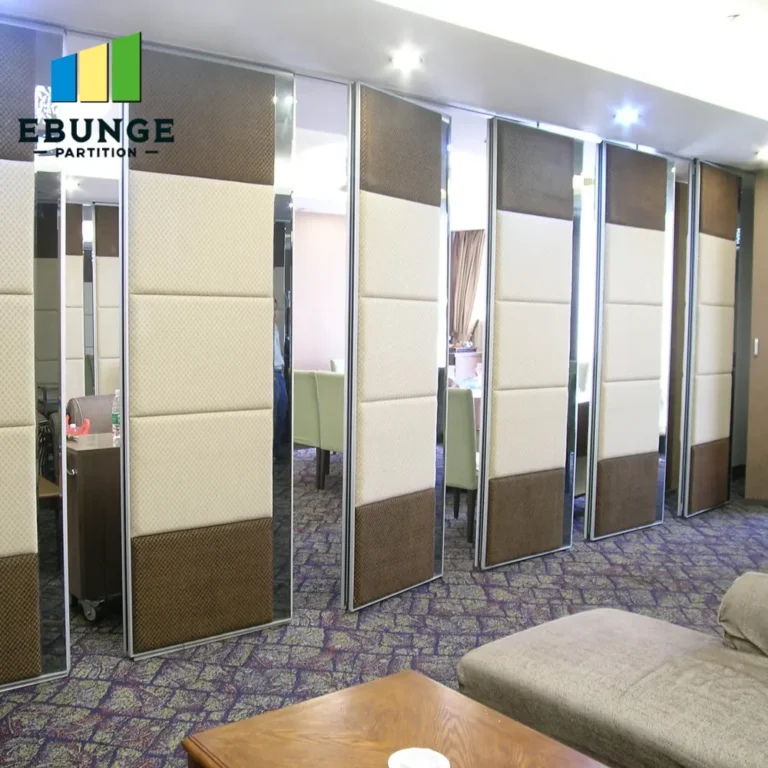
Share the opening, drawings, finish direction, and privacy target for a project-specific review.
Warranty, After-Sales Support, and Compliance
Ensure that the partition system complies with relevant building codes, fire safety regulations, and accessibility standards. Ask about warranties on components, workmanship, and acoustic performance. A reliable supplier will offer comprehensive after-sales support, including maintenance recommendations and spare parts availability. When comparing quotes, consider the total cost of ownership, not just the initial price.
Cost Transparency and Delivery Lead Times
Transparent pricing is essential for budget planning. Request itemized quotes that break down the cost of panels, tracks, seals, finishes, installation, and delivery. Be wary of quotes that seem too low, as they may indicate substandard materials or hidden costs. Similarly, clarify delivery lead times—custom partitions can take several weeks or months. Plan your project timeline accordingly and communicate any deadlines to the supplier.
Checklist for Folding Partition Procurement
Use this checklist to ensure you haven’t missed any critical steps:
| Item | Details |
|---|---|
| Opening dimensions | Width, height, depth, and any obstructions |
| Acoustic requirement | Rw value from acoustic consultant |
| Track type | Top-hung, floor rail, or motorized |
| Finish and aesthetics | Color, material, texture, and durability |
| Safety features | Edge protection, anti-finger pinch, etc. |
| Compliance | Building codes, fire safety, accessibility |
| Delivery and installation | Lead time, coordination, and site access |
| Warranty and support | Coverage period and after-sales services |
Conclusion: Making an Informed Folding Partition Procurement Decision
Choosing the right folding partition for your school hall is a significant investment. By focusing on the design and planning aspects outlined in this folding partition procurement guide, you can avoid common pitfalls and select a system that meets your functional and acoustic needs. Remember to gather all necessary information, collaborate with your team, and engage suppliers with a clear specification. For more insights on movable partition walls, explore our resources on movable partition wall solutions and partition design ideas. When you’re ready to move forward, contact our team for personalized assistance.
Frequently Asked Questions
What is the typical lead time for a custom folding partition?
Lead times vary based on complexity and supplier workload. Custom partitions can take 6-12 weeks from order to delivery, plus installation time. Always confirm with your supplier and factor in your project schedule.
Can a folding partition be installed in an existing school hall?
Yes, retrofitting is possible, but it requires structural assessment to support the top-hung track. The ceiling structure must be able to bear the partition’s weight. Consult a structural engineer and the supplier for feasibility.
How do I choose the right acoustic rating for my school hall?
Determine the intended uses of the hall. For simultaneous activities, a higher Rw (e.g., 50 dB) is recommended. For occasional separation, a lower rating may suffice. An acoustic consultant can provide specific guidance.
Are there any safety considerations for school partitions?
Yes, ensure the partition has pinch-proof edges, stable stacking, and easy operation. Motorized systems should have safety sensors. Also, comply with fire safety regulations and accessibility standards.
Can I get a folding partition with a whiteboard surface?
Yes, many suppliers offer whiteboard or magnetic finishes. Specify this in your requirements, as it may affect the acoustic performance and cost.
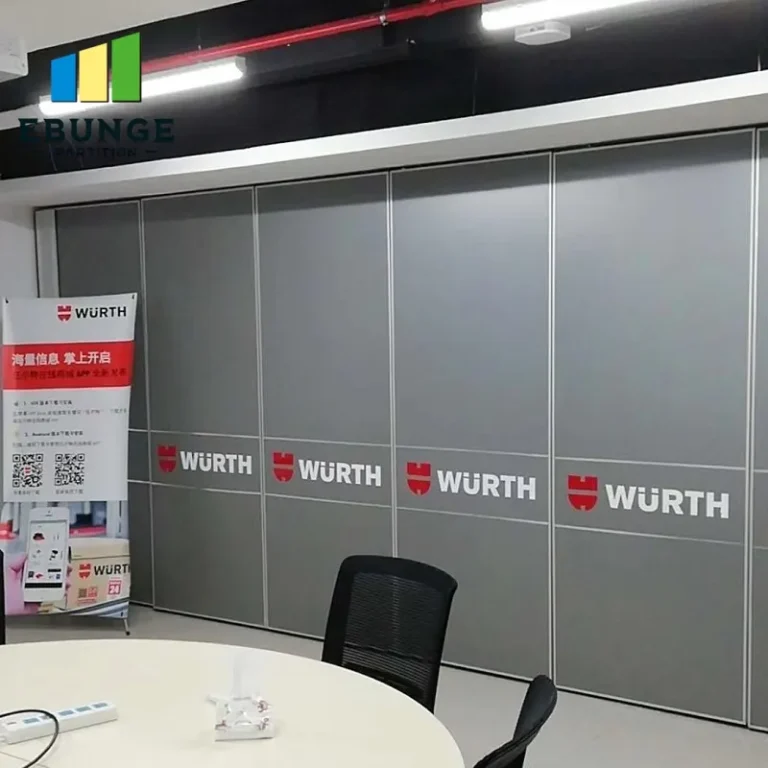
Send the opening size and drawings to discuss a differentiated folding partition procurement solution.