
When an office renovation project includes a conference room that must double as a private meeting space, the folding partition acoustic performance becomes a decisive factor. You need a wall that not only divides space but also ensures confidential conversations stay confidential. Yet, evaluating acoustic partitions is often confusing, with technical terms like STC ratings and sound transmission class thrown around without clear context. This guide will help you, as a renovation company, ask the right questions, interpret specifications, and make informed decisions that lead to a successful installation and a satisfied client.
Direct answer: To evaluate the folding partition acoustic performance for a conference room, you must verify the STC rating against your specific sound privacy needs, examine the acoustic seals’ durability, assess the top-hung track system’s reliability, and confirm the manufacturer’s ability to customize and support your project. Request detailed specifications, drawings, and references, and ensure the proposed solution complies with local building codes.
Understanding Acoustic Needs in Conference Rooms
Conference rooms are not just for presentations; they host sensitive discussions, client calls, and strategic planning. Sound privacy is paramount. The folding partition acoustic performance directly impacts whether conversations remain confidential. Begin by defining the required level of privacy. Is it for normal speech intelligibility reduction, or do you need to prevent even raised voices from being heard? This will guide your target STC rating.
STC (Sound Transmission Class) is a single-number rating that indicates how well a partition reduces airborne sound. Higher STC means better performance. For typical office conversations, an STC of 45-50 is often sufficient, but for confidential meetings, you may need STC 50 or higher. However, the actual performance depends on proper installation and sealing.
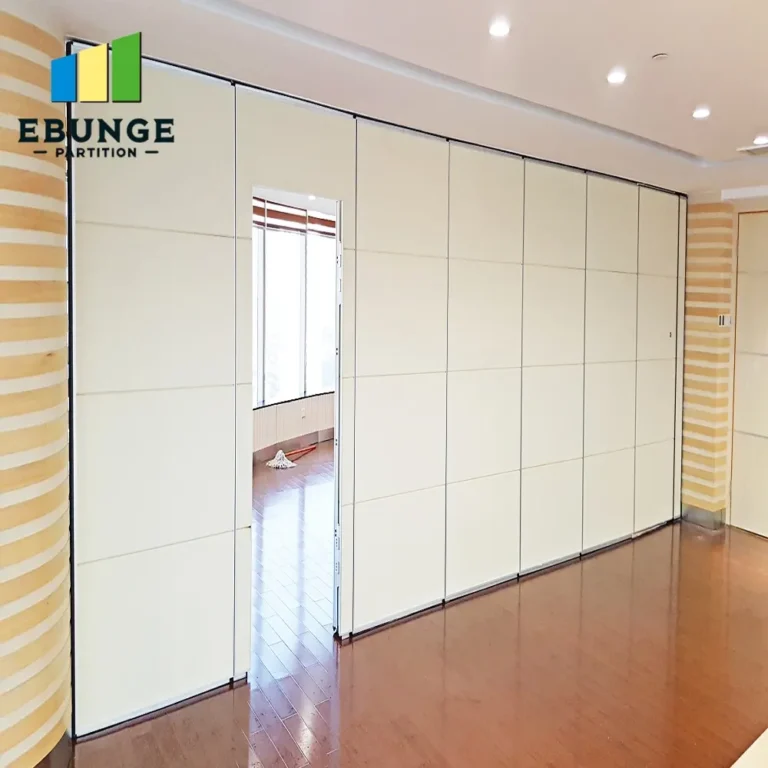
Need help turning the folding partition acoustic performance requirements into a practical project layout?
Key Factors in Evaluating Folding Partition Acoustic Performance
When you receive quotations for a movable partition wall, do not just compare prices. Scrutinize the technical details that affect acoustic performance. The following factors are critical:
- Panel construction: Look for panels with multiple layers of gypsum board or other sound-dampening materials, and check the panel thickness.
- Edge seals: The perimeter seals (top, bottom, and vertical edges) are crucial. They must be durable and compress properly to create an airtight seal when the wall is closed.
- Track system: A top-hung track system, as offered by EBUNGE, eliminates the floor rail, providing a seamless floor finish and easier cleaning. Ensure the track is robust and the trolleys are smooth and quiet.
- Acoustic glazing: If the partition includes glass, the glass type and its sealing affect performance. Double glazing with different thicknesses can improve STC.
- Manufacturer credibility: Choose a supplier with a track record in acoustic solutions. Ask for case studies or references, but verify claims independently.
Interpreting STC Ratings and Their Limitations
STC ratings are measured in laboratory conditions, which are ideal. On-site performance can be lower due to flanking paths (sound traveling around the partition), poor installation, or gaps. Therefore, do not rely solely on the STC number. Ask the supplier how they ensure the rated performance is achieved in real installations. Inquire about their installation team’s training and whether they provide on-site testing.
For a conference room, consider also the Sound Transmission Class at specific frequencies. Some partitions perform well for mid-range speech but poorly for low-frequency sounds like HVAC noise. If your conference room is near mechanical rooms, this could be an issue.
The Role of Acoustic Seals and Their Durability
Seals are often the weakest link. They wear out over time, and if they lose their compressibility, sound leaks. When evaluating folding partition acoustic performance, ask about the seal material (e.g., EPDM rubber is common), its expected lifespan, and whether it is replaceable. Also, check if the seals are automatically deployed when the wall is closed, and if they retract when opening to avoid damage.
In conference rooms, partitions are used frequently, so seals must withstand repeated use. Request information on the number of cycles the seals are tested for. EBUNGE uses high-quality seals that are designed for long-term durability, but you should always confirm with your supplier.
Top-Hung Track System: A Key to Reliability and Aesthetics
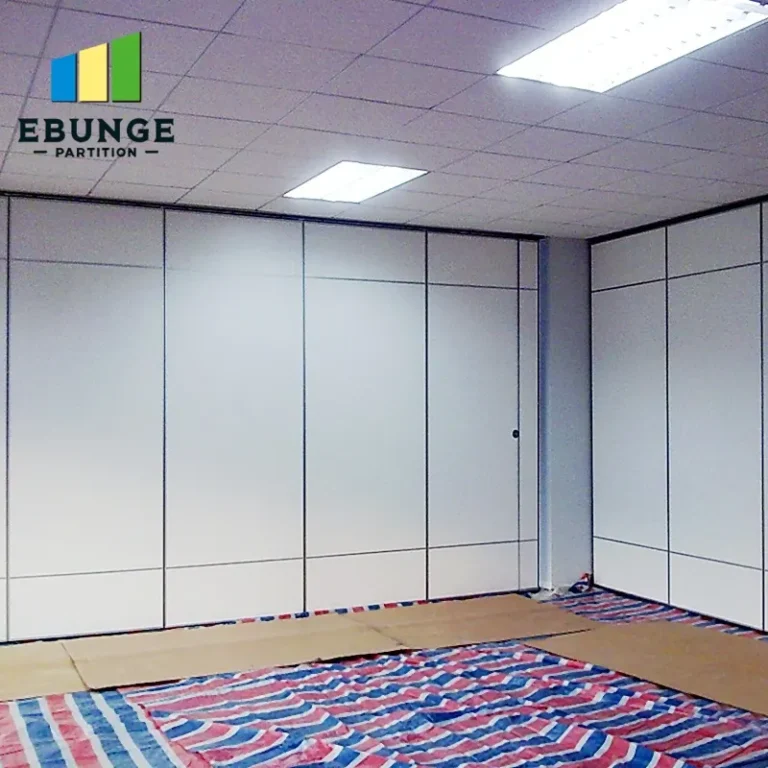
The track system is the backbone of any operable wall. A top-hung track system, where the panels hang from overhead tracks, offers several advantages for conference rooms: no floor track to trip over or collect dirt, easier maintenance, and a cleaner look. It also allows for better acoustic sealing at the bottom because the seal can drop down to meet the floor without interference.
When evaluating, ask about the track’s load capacity, the quality of the trolleys (are they ball-bearing?), and the ease of operation. A smooth, quiet operation is essential in a professional setting. Also, consider the stacking space required when the partition is open. Top-hung systems can be designed to stack in a pocket or against a wall, but this requires careful planning.
Customization Options for Your Conference Room
Every conference room is different. You may need a partition that fits a specific opening size, integrates with existing décor, or includes a whiteboard surface. An acoustic partition supplier should offer customization. For instance, EBUNGE provides various finishes, including wood veneer, laminate, or even writable surfaces. You can also specify the number of panels and the stacking configuration.
When requesting a quote, provide your opening dimensions, desired finish, and any special requirements. This ensures the quotation is accurate and reduces the risk of change orders later. Also, ask if the manufacturer can provide drawings for your review.
Share the opening, drawings, finish direction, and privacy target for a project-specific review.
Installation Complexity and Project Coordination
Installation of a folding partition is a specialized task. It involves precise alignment of tracks, leveling, and sealing. Ask the supplier if they provide installation services or if you need to hire a certified installer. Inquire about the installation timeline and whether it can be coordinated with other construction activities. A reputable supplier will guide you through the process.
Also, consider the delivery logistics. The panels are large and heavy, so access to the site must be planned. The supplier should advise on the best way to handle delivery and installation to avoid damage.
Compliance with Building Codes and Standards
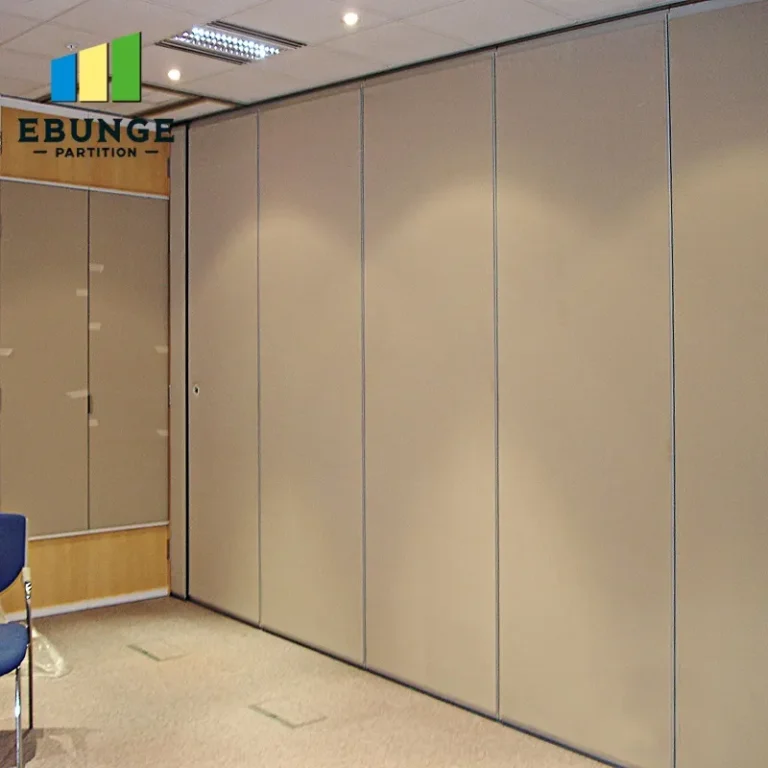
Your project must comply with local building codes, which may include fire safety, accessibility, and acoustic requirements. Ask the supplier if their partitions meet relevant standards, such as ASTM E90 for sound transmission loss. Also, check if the partition system is tested for fire resistance if required. The supplier should provide documentation upon request.
Maintenance and Long-Term Performance
Like any building component, acoustic partitions require maintenance. Ask about the recommended maintenance schedule, such as lubricating tracks and checking seals. Find out if replacement parts are available and the supplier’s warranty terms. A durable, low-maintenance system will save your client money in the long run.
Checklist for Evaluating Quotations
| Item | What to Check |
|---|---|
| STC rating | Is it lab-tested? What is the field performance expectation? |
| Seal quality | Material, durability, auto-deployment, replaceability. |
| Track system | Top-hung? Load capacity, trolley quality, operation smoothness. |
| Customization | Finishes, sizes, stacking options, glazing. |
| Installation | Who installs? Timeline, coordination with other trades. |
| Compliance | Building codes, fire safety, accessibility. |
| Maintenance | Schedule, parts availability, warranty. |
Conclusion: Making an Informed Decision
Evaluating folding partition acoustic performance is not about finding the highest STC number. It is about finding a solution that meets your client’s needs, fits the space, and is reliable over time. By focusing on the factors outlined above, you can confidently compare options and choose a supplier that offers not just a product, but a partnership. Remember to ask for detailed specifications and drawings, and to communicate your project’s specific requirements clearly.
If you are ready to discuss your project, our team at EBUNGE can assist you with technical guidance and quotations. Simply share your opening size, drawings, acoustic target, finish preference, and project location, and we will provide a tailored solution. Explore our movable partition wall options or browse our blogs for more insights. For more design ideas, visit our Movable Partition Design Ideas category. To get started, contact us today.
Frequently Asked Questions
What is a good STC rating for a conference room partition?
For general speech privacy, an STC of 45-50 is often adequate. For confidential discussions, consider STC 50 or higher. However, the actual performance depends on installation and sealing.
How can I ensure the acoustic seal remains effective over time?
Choose a system with durable seals like EPDM, and follow the manufacturer’s maintenance recommendations. Regular inspection and replacement of worn seals will maintain performance.
Are top-hung track systems better for acoustics?
Top-hung systems allow for a continuous floor seal, which improves acoustic performance. They also eliminate the floor track, reducing potential sound leaks and maintenance issues.
Can I get a partition with a whiteboard surface?
Yes, many manufacturers offer customizable finishes, including whiteboard or chalkboard surfaces. Specify your preference when requesting a quote.
How do I know if the supplier’s STC rating is reliable?
Ask for the test report from an accredited laboratory. Also, inquire about field testing and the manufacturer’s quality control processes.
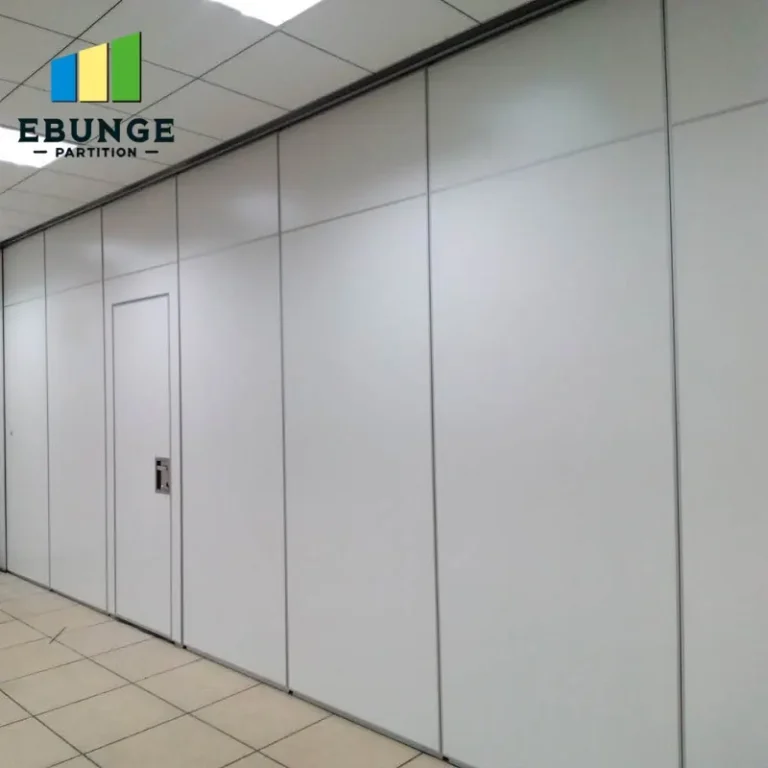
Send the opening size and drawings to discuss a differentiated folding partition acoustic performance solution.